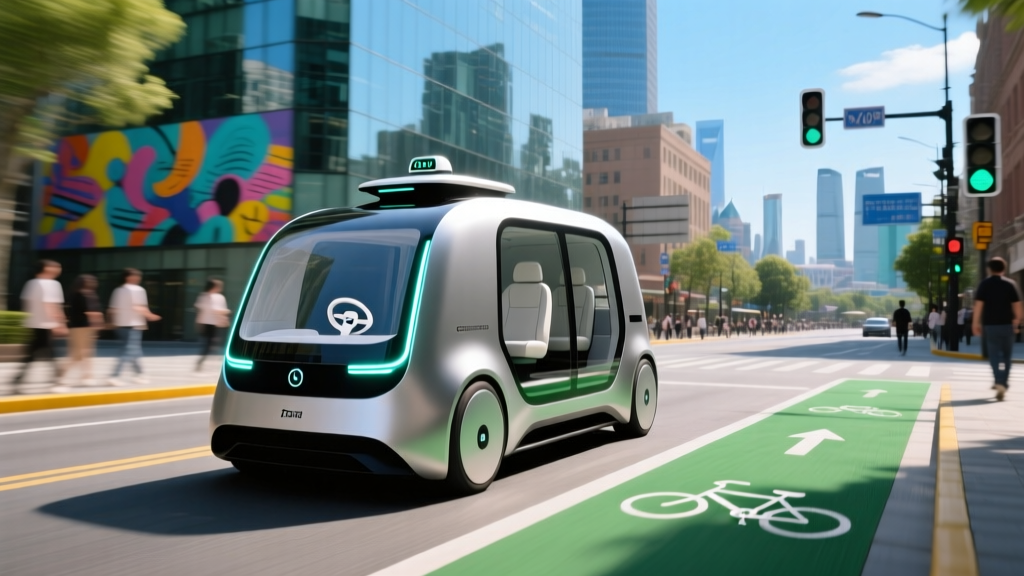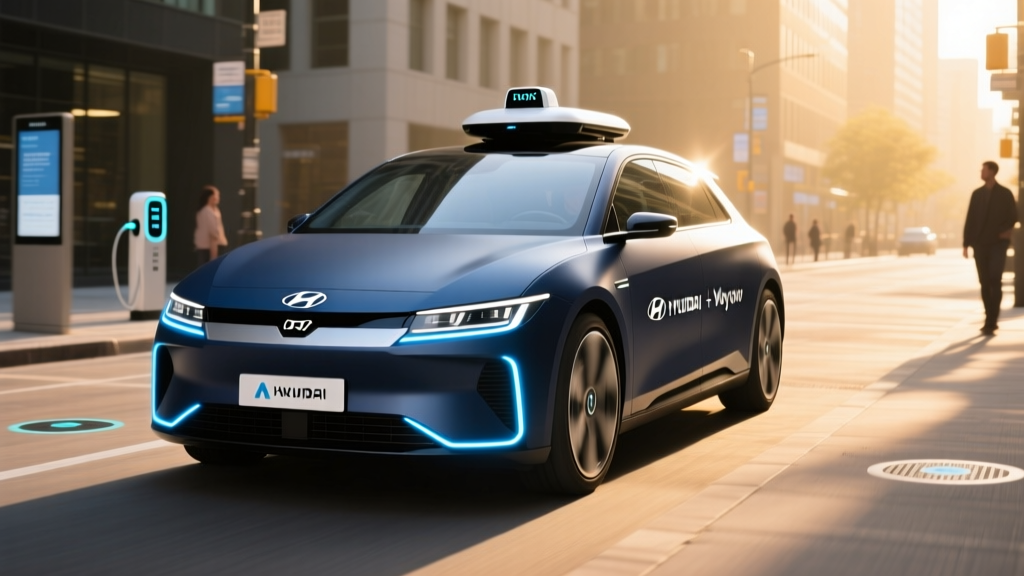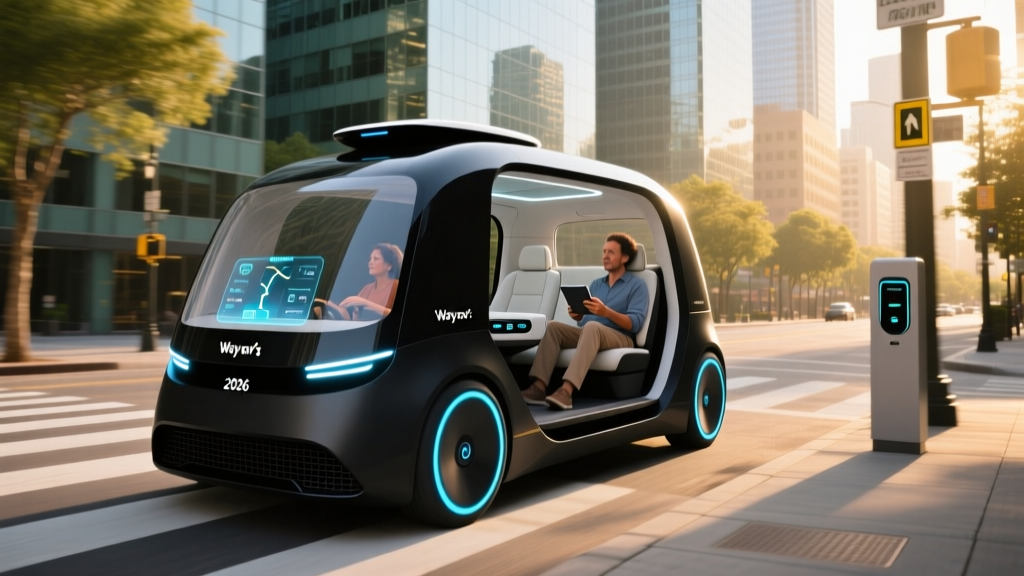
If you have seen a white Jaguar I-PACE or a Hyundai Ioniq 5 crawling through downtown traffic with a roof-mounted sensor array and no one behind the wheel, you have likely witnessed a Waymo taxi. The Alphabet-owned autonomous driving company has spent over a decade and billions of dollars building what is currently the most commercially mature robotaxi service in the United States. But maturity is relative: Waymo's service is real, paid, and operational in several metro areas, yet it remains geographically constrained, weather-sensitive, and subject to an evolving regulatory patchwork.
This guide breaks down exactly where you can hail a Waymo taxi today, what it costs compared to conventional rideshare, the hard safety data behind the service, the technology that makes it work, and the practical limitations you should understand before summoning one.
Is a Waymo Taxi Truly Self-Driving? Understanding SAE Level 4
The short answer is yes — within its operational domain, a Waymo taxi is genuinely driverless. There is no human behind the wheel, no remote teleoperator steering the car in real time, and no safety driver waiting to intervene. This places Waymo squarely at SAE Level 4 automation, a critical distinction that separates it from every consumer vehicle you can buy today.
SAE Automation Levels: Where Waymo Sits
| SAE Level | Name | Who Drives? | Example |
|---|---|---|---|
| Level 0 | No Automation | Human does everything | Basic car, no driver assist |
| Level 1 | Driver Assistance | Human, with one automated function | Adaptive cruise control |
| Level 2 | Partial Automation | Human must supervise at all times | Tesla Autopilot / FSD Supervised, GM Super Cruise, Ford BlueCruise |
| Level 3 | Conditional Automation | System drives in limited conditions; human must take over on request | Mercedes Drive Pilot (limited markets) |
| Level 4 | High Automation | System drives fully within its operational domain; no human needed | Waymo One, Zoox |
| Level 5 | Full Automation | System drives everywhere, all conditions | Does not exist commercially |
Source: SAE International J3016
This distinction matters enormously. When Tesla markets "Full Self-Driving (Supervised)," the "Supervised" is doing heavy lifting — it is a Level 2 system that requires continuous driver attention and can be disengaged at any moment. Waymo's Level 4 system, by contrast, assumes full driving responsibility within its geofenced service area. If the car encounters a situation it cannot handle, it is designed to pull over safely rather than hand control to a passenger who may not be prepared to drive.
Waymo also explicitly avoids remote driving. The company has confirmed that while remote support staff can advise the vehicle (for example, confirming that a construction zone is passable), they do not joystick the car in real time. The vehicle's AI makes all steering, braking, and acceleration decisions autonomously.
Where Can You Hail a Waymo Taxi Right Now?
Waymo's commercial ride-hailing service, branded Waymo One, operates in a growing but still finite set of metro areas. Availability has expanded steadily, but each new city requires regulatory approval, extensive mapping, and phased rollout — typically starting with a trusted tester program before opening to the general public.
Waymo One Service Areas (2026)
| Metro Area | Status | Service Area Notes |
|---|---|---|
| Phoenix, AZ (Metro) | Fully open to public | Largest operational footprint; covers Phoenix, Scottsdale, Tempe, Mesa, Chandler, and parts of Gilbert. Airport service (PHX) available. |
| San Francisco, CA | Fully open to public | Covers most of SF proper including downtown, SoMa, Mission, Sunset, Richmond. Expanded to freeway segments. |
| Los Angeles, CA | Fully open to public | Downtown LA, Hollywood, Santa Monica, Westside, Mid-Wilshire, and surrounding areas. LAX service launched. |
| Austin, TX | Open / expanding | Initial service area covers central Austin with ongoing expansion. Waymo's first non-Alphabet-partner city via Uber integration. |
| Atlanta, GA | Announced / phased rollout | Partnership with Uber; initial rides expected in select zones. Check Waymo app for live availability. |
Service areas are geofenced and subject to change. Always confirm availability in the Waymo One app before planning a trip. Source: Waymo One official page
A critical nuance: "open to the public" does not mean you can hail a Waymo from anywhere in these metro areas. The service operates within a defined geofence — a digitally mapped boundary. Both your pickup and drop-off must fall within this zone. If you try to request a ride from an address outside the geofence, the app will simply tell you the service is unavailable at that location.
Waymo has also partnered with Uber to offer Waymo vehicles as a ride option within the Uber app in select cities (initially Austin, with planned expansion). This means you may be matched with a driverless Waymo when requesting an Uber ride, depending on your location and vehicle availability.
How Much Does a Waymo Taxi Cost vs. Uber and Lyft?
Waymo One uses dynamic pricing similar to conventional rideshare — fares vary by distance, time, and demand. In practice, Waymo's pricing has been broadly competitive with UberX and Lyft Standard, though it is rarely the cheapest option on the market.
Typical Fare Comparison (Estimated, 2026)
| Route | Waymo One | UberX | Lyft Standard |
|---|---|---|---|
| Short urban trip (~3 mi, Phoenix) | $9–$13 | $8–$12 | $8–$11 |
| Medium trip (~8 mi, SF downtown to Sunset) | $18–$26 | $16–$24 | $15–$22 |
| Airport trip (~15 mi, LAX to Santa Monica) | $35–$48 | $30–$45 | $28–$42 |
| Longer cross-city (~20 mi, LA) | $45–$65 | $40–$58 | $38–$55 |
Fares are approximate and vary by time of day, demand, and exact route. Surge pricing applies to all platforms. Waymo occasionally offers promotional discounts for new riders.
How to book: Download the Waymo One app (iOS/Android), create an account, enter your pickup and destination, and confirm. The app shows an upfront price before you confirm, just like Uber or Lyft. When the vehicle arrives, you unlock it via the app — there is no driver to greet you. The in-vehicle screen displays your route, and you can pull over or contact support through the app or an in-car button at any time.
One cost advantage worth noting: Waymo does not have a driver to pay, which theoretically gives it margin flexibility as it scales. However, the company is still operating at a significant loss per ride due to the high cost of its sensor suite, vehicle platform, and remote support infrastructure. Expect promotional pricing to continue as Waymo prioritizes ridership growth over near-term profitability.
How Safe Are Waymo Robotaxis? The Real Data
Safety is the most scrutinized — and most misunderstood — aspect of robotaxi operations. Waymo has published more safety data than any other autonomous vehicle company, but interpreting that data requires context.
Waymo Safety Data Snapshot
- Total autonomous miles driven: Over 50 million fully driverless miles as of early 2026 (cumulative across all cities).
- Fatalities: Zero fatalities attributed to a Waymo vehicle operating in autonomous mode as of this writing.
- Injury-causing crashes: Waymo's published data (covering over 7 million driverless miles in a 2023 study) showed a 85% reduction in injury-causing crash rate compared to human baseline drivers in the same geographies.
- Police-reported crashes: A 57% reduction compared to human benchmarks. Most incidents involved low-speed contact with other road users (e.g., being rear-ended at a stop), not at-fault collisions.
- Contact rate: Waymo vehicles make contact with objects/other vehicles at a rate of approximately 1 per 100,000+ miles — the vast majority minor and non-injury.
Source: Waymo Safety Reports; NHTSA Standing General Order crash data
These numbers are encouraging but come with important caveats. Waymo operates primarily in geofenced urban areas with well-mapped roads, favorable weather (Phoenix, LA, Austin), and moderate speed limits. The comparison baseline matters: Waymo benchmarks against human drivers in the same cities, which include impaired, distracted, and inexperienced drivers. The robotaxi is not compared against only the best human drivers.
Incidents do occur. In San Francisco, Waymo vehicles have been documented in NHTSA reports for minor collisions — typically being rear-ended or making contact with stationary objects during complex construction-zone navigation. In one widely reported 2024 incident, a Waymo vehicle struck a pedestrian who stepped into traffic from behind a large truck; the pedestrian sustained minor injuries. NHTSA investigated and the vehicle's response was deemed consistent with physical limitations of braking distance at the speed involved.
The broader context: U.S. roads saw approximately 40,000 traffic fatalities annually in recent years, the overwhelming majority caused by human error (impairment, distraction, speeding). Waymo's fleet, at millions of driverless miles with zero fatalities, represents a dramatically different — though not zero-risk — safety profile. As the fleet scales to hundreds of millions of miles, the statistical picture will sharpen considerably.
The Technology Stack: How a Waymo Taxi Sees the World
Waymo's approach to autonomous driving is fundamentally different from Tesla's camera-centric philosophy. Waymo relies on a redundant, multi-sensor fusion system that combines lidar, cameras, and radar to build a real-time 3D understanding of the world around the vehicle.
Waymo 6th-Generation Driver System
| Sensor Type | Role | Key Specs |
|---|---|---|
| Lidar (multiple units) | 3D point-cloud mapping of surroundings; precise distance measurement independent of lighting | Custom-built, roof- and body-mounted; 360° coverage; effective range 300+ meters |
| Cameras (multiple) | Color/texture recognition, traffic light state, signage, lane markings, object classification | High-resolution, various focal lengths; operates in visible spectrum |
| Radar (multiple) | Velocity detection of moving objects, performance in rain/fog | Complements lidar in adverse conditions; measures Doppler velocity |
| Audio sensors | Detection of emergency vehicle sirens | Directional microphones for siren triangulation |
| HD Maps | Prior knowledge of road geometry, lane configuration, speed limits, curb locations | Centimeter-precision; updated continuously; geofence-dependent |
| Compute platform | Real-time sensor fusion, prediction, planning, and control | Custom hardware; processes millions of data points per second |
The lidar-first approach is Waymo's defining technical bet. Lidar provides precise depth data regardless of ambient light — a Waymo vehicle can "see" a pedestrian 150 meters away at night as clearly as at noon. This contrasts sharply with Tesla's vision-only approach, which relies on neural networks to infer depth from camera images alone. Both approaches have trade-offs: lidar adds cost and complexity (the sensor array on a Waymo vehicle adds tens of thousands of dollars to the platform), but it provides a physics-based measurement that does not depend on training data for edge cases.
Waymo also relies heavily on HD maps — pre-built, centimeter-accurate 3D maps of every road in its service area. These maps give the system prior knowledge of lane configurations, traffic signal locations, speed limits, and curb geometry. The vehicle's real-time sensor data is then layered on top of this map to detect dynamic changes (construction, parked cars, pedestrians). This map dependency is a key reason Waymo cannot simply expand to any city overnight — every new road must be mapped, validated, and geofenced before the system can operate there.
The current vehicle platforms include the Jaguar I-PACE (an all-electric SUV with a 90 kWh battery pack, EPA range approximately 234 miles) and the newer Hyundai Ioniq 5-based robotaxi variant, which Waymo has begun integrating into its fleet. The Zeekr RT (a purpose-built robotaxi from Geely's Zeekr brand) has also been announced for future fleet deployment, featuring a lower floor, sliding doors, and no steering wheel — a design optimized purely for passenger service.
Regulatory Landscape: Who Approves Robotaxi Operations?
Robotaxi regulation in the United States is a patchwork of state and local authorities, with no single federal framework governing commercial autonomous ride-hailing. Understanding who controls what is essential to understanding why Waymo operates where it does.
- California (CPUC & DMV): The California Public Utilities Commission (CPUC) issues permits for commercial robotaxi service, while the DMV issues testing and deployment permits for autonomous vehicles. Waymo holds both. San Francisco operations required contentious public hearings and approval from the CPUC, with conditions including incident reporting and service-area restrictions.
- Arizona: Arizona has been the most permissive state for autonomous vehicle deployment. Waymo has operated commercially in Phoenix since 2020 with relatively minimal regulatory friction. The state requires a Transportation Department permit but has not imposed the layered approval process seen in California.
- Texas: Texas passed autonomous vehicle legislation that allows deployment with a state permit. Austin represents Waymo's expansion into a regulatory environment that is more permissive than California but less hands-off than Arizona.
- Federal (NHTSA): The National Highway Traffic Safety Administration does not currently "approve" robotaxi services but does require crash reporting under its Standing General Order and can investigate safety defects. NHTSA has opened and closed several investigations into Waymo incidents without issuing recalls, suggesting the agency's current posture is monitoring rather than blocking.
The regulatory landscape is shifting. Following Cruise's suspension in California in late 2023 (after a serious pedestrian incident in San Francisco), regulators in several states have become more cautious. Waymo has benefited from this dynamic by positioning itself as the more conservative, safety-data-driven operator — but it also faces increased scrutiny as the dominant remaining player in commercial robotaxi service.
Current Limitations: What a Waymo Taxi Cannot Do
For all its sophistication, a Waymo taxi operates within a clearly defined set of constraints. Understanding these limitations is essential for setting realistic expectations.
Operational Limitations
- Geofence boundaries: You cannot hail a Waymo outside its mapped service area. Pickup and drop-off must both be within the geofence. Suburban and rural areas are generally excluded.
- Weather constraints: Heavy rain, dense fog, and snow degrade sensor performance (particularly lidar and cameras). Waymo may suspend service or restrict its operational area during severe weather. Phoenix's dry climate is not coincidental.
- Construction zones: While Waymo can navigate many construction zones, rapidly changing lane configurations with inconsistent signage remain challenging. The vehicle may reroute or, in rare cases, pull over and wait for remote guidance.
- Freeway driving: Waymo has expanded to include some freeway segments (notably in San Francisco and Phoenix), but freeway operation is more recent and more limited than surface-street service. Not all routes include highway segments.
- No intercity trips: Waymo is an urban ride-hailing service. You cannot take a Waymo from Phoenix to Tucson or from SF to Sacramento. The geofence does not extend to intercity corridors.
- Accessibility: Current Waymo vehicles (Jaguar I-PACE) are not wheelchair-accessible. The company has stated that future vehicle platforms (like the Zeekr RT) will address this, but as of now, riders must be able to enter a standard SUV.
- No food or pets: Because there is no driver to enforce policies, Waymo prohibits open food containers, pets (service animals excepted), and other items that could damage the interior. In-vehicle cameras monitor the cabin.
- Edge cases: Unusual road configurations, unpaved roads, private driveways, and scenarios requiring human communication (e.g., a flagger at a construction site directing traffic) can exceed the system's capabilities.
The weather limitation deserves emphasis. Waymo's sensor suite is robust, but lidar performance degrades in heavy precipitation as water droplets scatter laser pulses. Camera visibility drops in fog and heavy rain just as human visibility does. This means robotaxi service is inherently more reliable in dry, temperate climates — which explains Waymo's city selection. A robotaxi service in Minneapolis or Seattle would face substantially more weather-related downtime than one in Phoenix or Los Angeles.
Frequently Asked Questions
Can I use Waymo if I'm visiting one of its service cities?
Yes. The Waymo One app is available for download by anyone. You do not need to be a resident. Simply create an account, add a payment method, and request a ride within the geofenced service area. Visitors are a significant portion of ridership, particularly in Phoenix and San Francisco.
Is there a human watching or controlling the car remotely?
No human is steering the vehicle. Waymo employs remote support staff (called "fleet response") who can advise the vehicle on ambiguous situations — for instance, confirming whether a road is passable around an obstacle — but they do not control the steering, braking, or acceleration. The vehicle's onboard AI makes all driving decisions in real time.
What happens if the Waymo vehicle gets confused or stuck?
The vehicle is designed to enter a "minimal risk condition" — typically pulling over to the side of the road and stopping. You can contact Waymo support through the in-vehicle screen or the app at any time. In most cases, the vehicle will either resolve the situation on its own (after waiting for a construction zone to clear, for example) or safely end the trip and request that you rebook.
How does Waymo compare to Tesla's Full Self-Driving?
They are fundamentally different products at different SAE automation levels. Tesla FSD (Supervised) is a Level 2 driver-assistance system: the human driver is legally and practically responsible for the vehicle at all times and must remain attentive. Waymo is a Level 4 driverless service: the system assumes full driving responsibility within its operational domain, and no human driver is present. Tesla FSD can be used on any road; Waymo can only operate within its geofenced service areas. Neither approach is universally "better" — they serve different use cases and carry different risk profiles.
Does Waymo operate in bad weather?
Waymo can operate in light rain and overcast conditions. However, the service may be suspended or restricted during heavy rain, dense fog, or any conditions that significantly degrade sensor performance. If you request a ride during a weather event and the service is suspended, the app will notify you. This is a practical limitation of current lidar- and camera-based perception systems.
What vehicles does Waymo use?
Waymo's current fleet primarily consists of the all-electric Jaguar I-PACE (90 kWh battery, ~234 miles EPA range) equipped with the 6th-generation Waymo Driver sensor suite. The fleet is transitioning to include Hyundai Ioniq 5-based vehicles and, in the future, the purpose-built Zeekr RT robotaxi, which features a minivan-style body with sliding doors and no steering wheel.
How do I report a safety concern about a Waymo vehicle?
You can report concerns directly through the Waymo One app, by contacting Waymo's support line, or by filing a report with NHTSA. Under NHTSA's Standing General Order, Waymo is required to report certain crashes involving its autonomous vehicles, and this data is publicly accessible.