Las Vegas Robotaxis: What's Actually Running in 2026
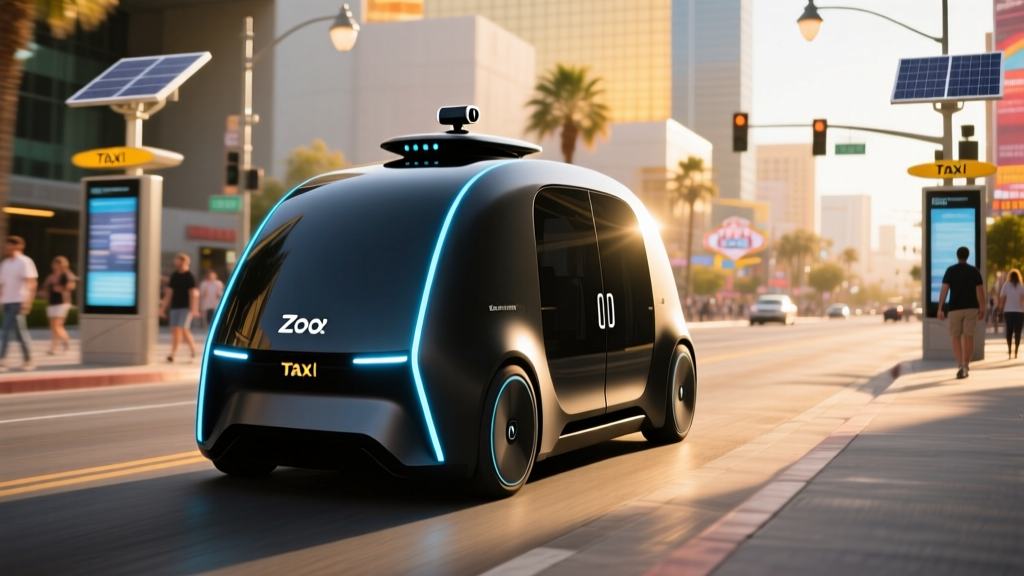
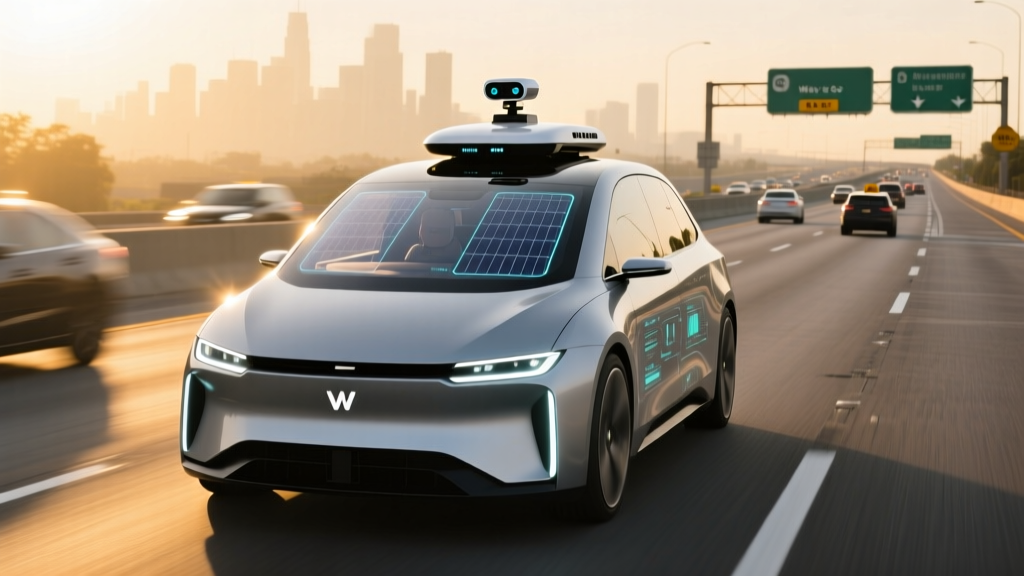
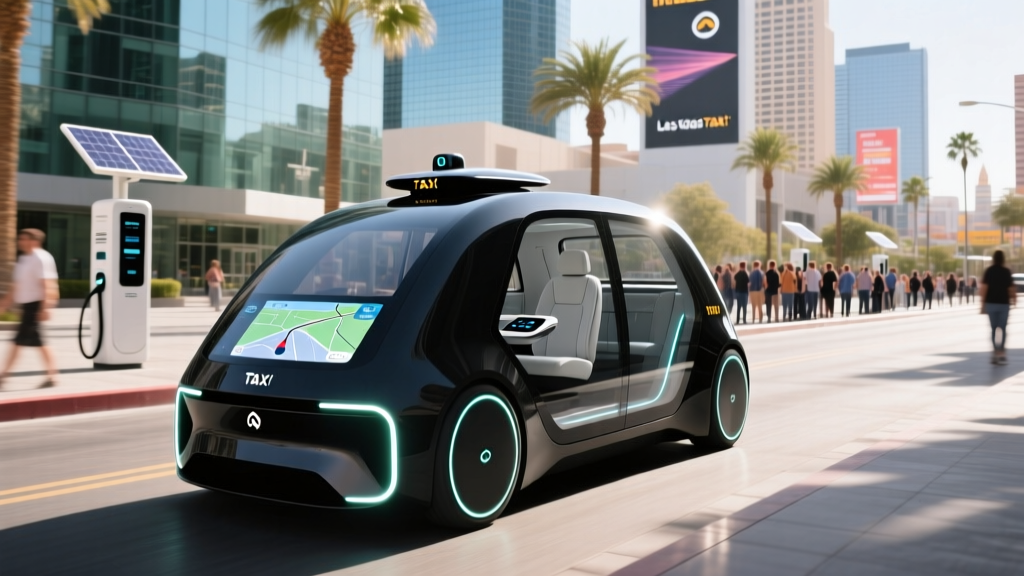
If you've visited the Las Vegas Strip recently, you may have spotted a white Jaguar I-PACE with a roof-mounted sensor array gliding through traffic — no one in the driver's seat. That's Waymo, the only company currently operating a fully driverless commercial taxi service in Las Vegas. The concept of a Vegas driverless taxi has gone from novelty to legitimate transportation option, but the reality comes with important boundaries that marketing videos rarely show.
This guide covers exactly where you can hail one, what it costs compared to Uber and Lyft, the safety data behind the technology, and the hard limitations you'll encounter. No hype, no timeline speculation — just what's on the road today.
Is This Truly Self-Driving? The SAE Level Distinction
- Level 2 (Driver Assist): Tesla Autopilot, Ford BlueCruise, GM Super Cruise. The car steers and accelerates, but you are the driver. You must stay engaged at all times. This is NOT a robotaxi.
- Level 4 (Driverless — Geofenced): Waymo, Zoox. The vehicle handles all driving tasks within a defined service area with no human behind the wheel. If the system encounters a problem it can't handle, it pulls over safely rather than handing control to a passenger.
The Vegas driverless taxis you can hail today operate at SAE Level 4. There is no human safety driver onboard, no remote teleoperator steering the car in real time (though remote staff can advise on edge cases like construction zones). This is fundamentally different from any consumer vehicle you can buy.
Where Can I Hail a Driverless Taxi in Vegas Right Now?
Waymo is currently the sole robotaxi operator in Las Vegas offering rides to the general public. The company expanded from its Phoenix and San Francisco home markets into Las Vegas, initially partnering with Uber to integrate Waymo vehicles into the Uber app before launching its own standalone Waymo One app in the market.
| Operator | Status | Service Zone | How to Book |
|---|---|---|---|
| Waymo | Live — open to public | ~60 sq mi covering the Strip, downtown, Harry Reid International Airport (LAS), and parts of Summerlin and Henderson | Waymo One app or Uber app (Waymo ride option) |
| Motional (Hyundai/Aptiv) | Limited testing — not open to public | Testing corridor near the Strip and convention center | N/A |
| Zoox (Amazon) | Testing — limited public pilot | Small geofenced area near the Strip | Invite-only pilot program |
Key geographic note: Waymo's Vegas geofence covers the primary tourist corridor — you can ride between most major Strip hotels, the Convention Center, downtown Fremont Street, and the airport. However, the service boundary ends well short of suburban areas like Summerlin's outer edges, North Las Vegas, or Boulder City. If your destination falls outside the geofence, the app will flag it before you confirm the ride.
How Much Does a Vegas Robotaxi Cost vs. Uber and Lyft?
Waymo prices its rides to be competitive with standard UberX and Lyft fares — not premium tiers. During typical demand periods, you'll find Waymo fares within $1-3 of an equivalent UberX ride. During surge pricing on Uber/Lyft, Waymo has often been notably cheaper because it does not implement traditional surge multipliers in the same way.
| Route | Waymo (est.) | UberX (est.) | Lyft (est.) |
|---|---|---|---|
| McCarran Airport (LAS) → Bellagio | $18–$24 | $16–$28 | $15–$26 |
| Mandalay Bay → Fremont Street | $22–$28 | $20–$35 | $19–$32 |
| Caesars Palace → Convention Center | $10–$14 | $9–$18 | $9–$16 |
Important context: These are ballpark figures based on observed pricing. Waymo's fares include a base rate, per-mile charge, and per-minute charge — the same structure as rideshare. Tipping is not expected (there's no driver), though the app provides an option. Unlike Uber/Lyft, you won't encounter a 2.5x surge multiplier at 2 AM leaving a club; Waymo's pricing remains more stable, though it does use modest demand-based adjustments.
How Safe Are Driverless Taxis? The Real Data
- Over 50 million fully driverless miles completed across all markets (Phoenix, San Francisco, Los Angeles, Austin, Las Vegas) as of early 2026, per Waymo's published safety reports.
- Fatalities involving a Waymo robotaxi: Zero as a direct cause of autonomous system failure. One incident in San Francisco (2024) involved a Waymo vehicle in a multi-car collision; the robotaxi was not determined to be the at-fault party by NHTSA investigation.
- Contact rate: Waymo reports its vehicles are involved in police-reported crashes at roughly 85% lower rate than human benchmark drivers for the same urban environments, based on internal analysis cross-referenced with NHTSA data.
- Minor incidents: Most reported Waymo contacts are low-speed, low-severity — typically being rear-ended at stoplights or sideswiped in parking areas, consistent with urban driving exposure.
The safety question deserves nuance. Robotaxis operate in dense urban environments at relatively low speeds (the Waymo I-PACE is speed-limited to around 65 mph in most geofenced areas). They don't drive drunk, they don't text, and their 360-degree sensor arrays don't have blind spots. The comparison is most favorable against human drivers in the same urban, low-speed contexts.
Where the data is less clear: robotaxis have not accumulated meaningful mileage in extreme weather, high-speed highway merging at 80+ mph, or rural two-lane roads. The safety advantage is demonstrated in the specific conditions where they operate — which, for Vegas, means dry, well-mapped urban streets.
The Technology Stack: What's Actually on the Roof
- LiDAR: Multiple solid-state and spinning LiDAR units providing a 360-degree 3D point cloud out to 500+ meters. LiDAR gives precise distance measurement independent of lighting — critical for night driving on the Strip.
- Cameras: High-resolution camera suite covering all directions, used for object classification (pedestrian vs. cyclist vs. vehicle), reading traffic signals, and detecting construction signage.
- Radar: Imaging radar units for velocity detection of moving objects and redundancy in conditions where camera or LiDAR performance degrades (heavy rain, direct sun glare).
- Audio sensors: External microphones that detect emergency vehicle sirens from any direction, triggering appropriate pull-over behavior.
- HD Maps: Centimeter-accurate pre-mapped data for every street in the geofence. The vehicle knows the exact location of every curb, lane marking, and signal head before it arrives.
Camera-only vs. multi-sensor: Tesla's consumer FSD system uses cameras only (no LiDAR). Waymo's robotaxi uses LiDAR + cameras + radar + HD maps. The multi-sensor approach provides hardware redundancy — if one sensor type is degraded (sun glare on cameras, for example), LiDAR and radar continue functioning. This redundancy is why Level 4 operations are possible without a human backup driver.
Current Limitations: What a Vegas Robotaxi Cannot Do
The technology is impressive within its domain. That domain is narrow. Here are the hard constraints you'll encounter:
- Geofence boundaries: You cannot ride to Red Rock Canyon, Lake Mead, the Hoover Dam, or anywhere outside the mapped service area. The app simply won't let you book.
- Weather restrictions: While Las Vegas is mostly dry, during rare heavy monsoon rain events, Waymo may suspend service. The system is not validated for heavy precipitation, flooding, or visibility-reducing dust storms (haboobs).
- Construction zones: Major road construction with shifted lanes, temporary barriers, or flaggers can confuse the system. Waymo may route around these areas or, in rare cases, pull over and wait for remote guidance.
- No highway driving at speed: The Vegas service operates primarily on surface streets. You won't take a robotaxi on I-15 at 85 mph from the Strip to Primm.
- Pickup/dropoff precision: The vehicle pulls to a designated spot, usually a curb or parking area. It won't pull into a hotel's porte-cochère in all cases — you may need to walk a short distance to the vehicle's stopping point.
- No food, no pets, no extra stops: Waymo's rider policies prohibit eating, open containers (yes, even in Vegas), and pets (service animals excepted). You also can't add intermediate stops to a ride.
- Wait times: During peak tourist hours (Friday/Saturday nights, convention weeks), wait times can stretch to 15-20 minutes. Fleet size is still limited compared to Uber/Lyft driver pools.
The Regulatory Landscape: Who Approves Robotaxis in Nevada?
Nevada was actually the first state to pass legislation enabling autonomous vehicle testing and operation, signing Assembly Bill 511 back in 2011. The state's framework is among the most permissive in the country, which is partly why Las Vegas became an early robotaxi market.
Key regulatory facts:
- Nevada DMV issues autonomous vehicle testing and deployment permits. Companies must demonstrate safety cases, maintain insurance, and report disengagement and incident data.
- No federal preemption: The NHTSA sets vehicle safety standards but does not currently regulate the operation of robotaxi services — that authority falls to states and municipalities.
- Local jurisdiction: Clark County and the City of Las Vegas have their own traffic ordinances that apply. The Las Vegas Metropolitan Police Department responds to robotaxi incidents like any other vehicle collision.
- No passenger safety driver requirement: Nevada law permits fully driverless commercial operation — no human behind the wheel is mandated, provided the operator holds the appropriate deployment permit.
Practical Tips for Your First Vegas Robotaxi Ride
- Download the Waymo One app before your trip. Account setup takes a few minutes and requires a payment method. You can also request a Waymo vehicle through the Uber app if you already have Uber installed.
- Confirm your pickup spot. The app shows a pin and often a photo of where the vehicle will stop. On the Strip, this is usually a side street or designated ride-app zone — not the main hotel entrance.
- Check the geofence before planning. If you're staying at a hotel near the edge of the service area, verify that both your origin and destination are inside the boundary.
- The vehicle will confirm your identity. When the car arrives, you'll tap your phone or enter a PIN on a rear-seat screen to unlock the doors. The car won't move until all doors are closed and seatbelts are fastened.
- Ride screens show the vehicle's "thinking." The rear-seat displays show what the car sees — other vehicles, pedestrians, cyclists, traffic signals — rendered in real time. It's genuinely fascinating to watch and builds confidence in the system's awareness.
Frequently Asked Questions
Can I hail a driverless taxi directly on the Las Vegas Strip?
Yes, but the vehicle typically picks up on adjacent side streets or designated ride-app zones rather than stopping in the middle of Las Vegas Boulevard. The app will guide you to the exact pickup point, which is usually a short walk from the main hotel entrance.
Are Vegas driverless taxis available 24/7?
Waymo operates around the clock in Las Vegas, including late-night hours. However, vehicle availability drops during very late hours (2–5 AM) due to fleet charging cycles, so wait times may be longer.
What happens if the robotaxi gets confused or breaks down?
If the vehicle encounters a situation it cannot resolve — an unmapped construction zone, a blocked road, or a system fault — it will safely pull to the curb and stop. You can contact Waymo support through the in-car screen or app. In most cases, the ride is canceled with no charge, and you'll need to book alternative transportation.
Is a Vegas driverless taxi cheaper than a regular taxi?
Generally, yes. Waymo fares are competitive with UberX/Lyft and typically 15–30% cheaper than traditional metered Las Vegas taxis, especially for longer rides. Traditional taxis also add airport pickup surcharges that robotaxis do not.
Can I ride alone, or do I need a group?
You can ride solo or with up to 3 passengers (4 total including you) in the Waymo I-PACE. There's no minimum passenger requirement. Solo riders often find the experience more relaxing — the entire back seat is yours.
How does Waymo compare to Tesla's Full Self-Driving in Vegas?
They are fundamentally different products. Tesla FSD (Supervised) is a Level 2 driver-assist system — you own the car, you sit in the driver's seat, and you are legally responsible for the vehicle at all times. Waymo's robotaxi is Level 4 — there is no driver, and Waymo (the company) bears operational responsibility. You cannot currently hail a Tesla as a driverless taxi in Las Vegas or anywhere else.