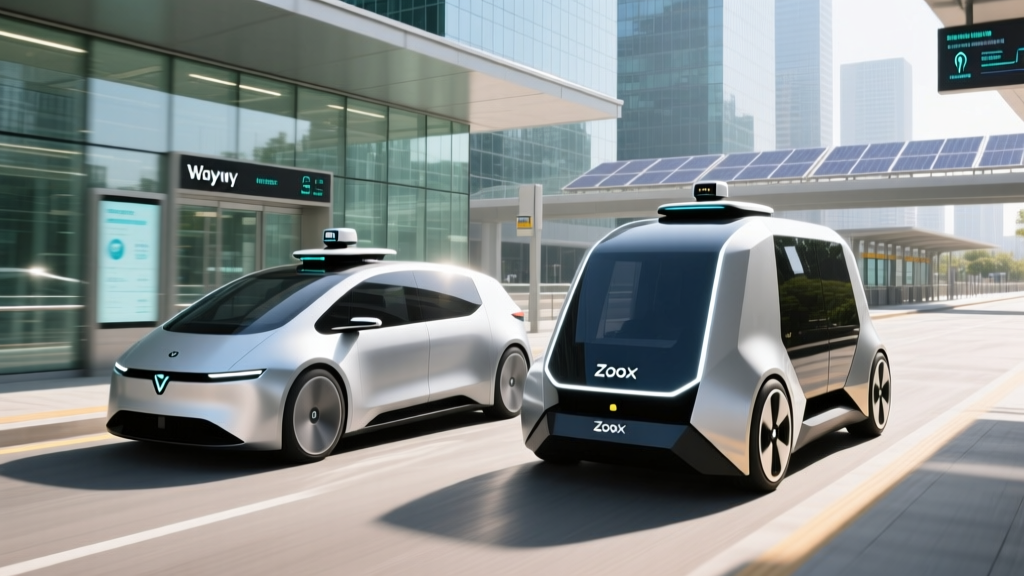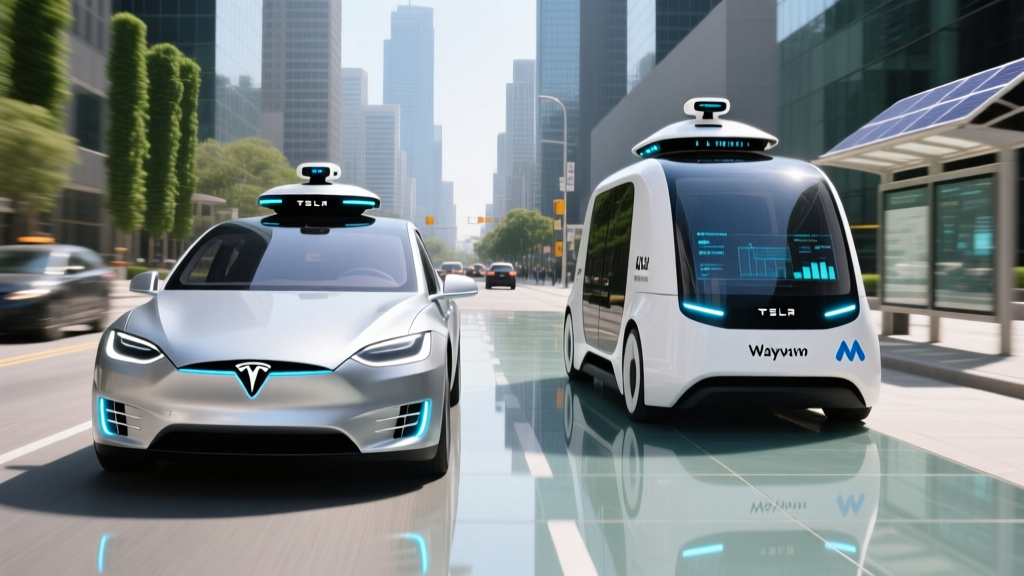
If you've searched "how much is Tesla self driving car," you've likely found a tangle of conflicting answers — and that confusion is exactly the problem. Tesla sells Full Self-Driving (Supervised) as a $8,000 option or $99/month subscription, but it is not a robotaxi. It's a Level 2 driver-assistance system that requires your full attention at all times. Meanwhile, actual driverless robotaxis from Waymo and Zoox operate in select U.S. cities with no one behind the wheel.
This guide untangles what Tesla's FSD actually costs, what it can and cannot do, and how it compares to real Level 4 robotaxi services you can hail today. We'll cover pricing, safety data, service areas, and the technology gaps that separate a supervised assist system from a truly autonomous ride.
Tesla FSD Supervised: What You're Actually Buying
Tesla's Full Self-Driving (Supervised) is an advanced driver-assistance system available on all current Tesla vehicles — Model 3, Model Y, Model S, and Model X. As of 2026, Tesla offers FSD in two purchase formats:
- One-time purchase: $8,000 added to your vehicle's MSRP
- Monthly subscription: $99/month, cancelable anytime
Every new Tesla also includes Basic Autopilot at no extra charge, which handles lane centering and adaptive cruise control on highways. FSD (Supervised) adds features like automatic lane changes, navigation-guided on-ramp-to-off-ramp driving, traffic light and stop sign recognition, and limited city-street steering assistance.
Tesla FSD (Supervised) is an SAE Level 2 system. This means the driver must remain fully engaged — eyes on the road, hands available to take over instantly — at all times. The "Supervised" label Tesla adopted in 2024 is not marketing; it's a legal and functional designation. The car does not drive itself. You are the driver.
By contrast, Waymo's robotaxi service operates at SAE Level 4 — no driver present, no human intervention required within its operational design domain. These are fundamentally different products.
| SAE Level | Name | Who Drives? | Examples |
|---|---|---|---|
| Level 0 | No Automation | Human does everything | Basic cruise control |
| Level 1 | Driver Assistance | Human, with one assist | Adaptive cruise OR lane keeping |
| Level 2 | Partial Automation | Human supervises | Tesla FSD, GM Super Cruise, Ford BlueCruise |
| Level 3 | Conditional Automation | System drives; human on standby | Mercedes Drive Pilot (limited markets) |
| Level 4 | High Automation | No driver needed (geofenced) | Waymo One, Zoox |
| Level 5 | Full Automation | No driver, anywhere | Does not exist commercially |
How Much Does Tesla FSD Actually Cost Over Time?
The sticker price of FSD (Supervised) is only part of the equation. Here's how the costs break down depending on how long you plan to keep your Tesla:
| Timeframe | One-Time ($8,000) | Subscription ($99/mo) | Better Deal |
|---|---|---|---|
| 1 year | $8,000 | $1,188 | Subscription |
| 3 years | $8,000 | $3,564 | Subscription |
| 5 years | $8,000 | $5,940 | Subscription |
| 6+ years | $8,000 | $7,128+ | One-time purchase |
The breakeven point is roughly 68 months. If you plan to keep your Tesla beyond ~5.5 years, the one-time purchase saves money. But there's a catch: Tesla's FSD purchase does not transfer to a new vehicle if you trade in, while the subscription simply stops when you sell.
Important note on the vehicle itself: FSD (Supervised) requires a Tesla with Hardware 4 (HW4) — standard on all 2023+ Model S/X and 2024+ Model 3/Y. Older vehicles with HW3 may receive limited FSD functionality. The base MSRP for a 2026 Tesla Model 3 starts at $38,990 (Rear-Wheel Drive), meaning an FSD-equipped Model 3 costs at minimum $46,990 before any incentives.
Real Robotaxi Services: Where Can You Ride Driverless Right Now?
Unlike Tesla's supervised system, Level 4 robotaxis operate with no driver in the vehicle. As of 2026, two major services are commercially available to the public in the United States:
| Service | Cities | Vehicle | Hours | How to Book |
|---|---|---|---|---|
| Waymo One | Phoenix, San Francisco, Los Angeles, Austin | Jaguar I-PACE (custom 5th-gen sensor suite) | 24/7 in most markets | Waymo app (open to public) |
| Zoox | Las Vegas, Foster City (CA), limited SF areas | Zoox purpose-built carriage (no steering wheel) | Limited hours, expanding | Invite-only / waitlist |
| Tesla Robotaxi | Not commercially available | Announced "Cybercab" concept | N/A | Not bookable |
Waymo One is the only service you can open an app and hail right now, today, as a member of the general public in multiple major cities. Waymo has logged over 50 million fully autonomous miles across its operational markets, making it the most data-rich robotaxi fleet in the U.S.
Tesla's much-hyped "Robotaxi" (often referred to as the Cybercab) was unveiled as a concept in October 2024 but has no announced commercial launch date, no regulatory approvals for driverless operation, and no confirmed pricing. As of 2026, you cannot hail a driverless Tesla anywhere.
Robotaxi Pricing vs. Uber and Lyft: The Real Cost Per Ride
For riders in Waymo's service areas, the cost comparison with traditional rideshare is surprisingly competitive:
| Service | Base Fare | Per-Mile Rate | Est. 5-Mi Trip | Surge Pricing? |
|---|---|---|---|---|
| Waymo One | ~$3.50 | ~$1.25/mi | $10–$14 | No surge (fixed pricing) |
| UberX | ~$2.80 | ~$1.40/mi | $10–$18 | Yes, 1.2x–3x common |
| Lyft | ~$2.50 | ~$1.35/mi | $9–$17 | Yes, variable |
| Tesla FSD (your car) | N/A | ~$0.04/mi (electricity) | $0.20 + ownership | No — you're the driver |
Waymo's pricing advantage is consistency: no surge multipliers during rush hour or bad weather. On a typical 5-mile trip in Phoenix, a Waymo ride costs roughly $10–$14, which is comparable to or slightly less than an UberX during non-surge periods and significantly cheaper during peak demand. Longer trips (10+ miles) tend to favor Waymo more because the per-mile rate stays flat.
Of course, owning a Tesla with FSD is cheapest per trip if you already have the car — but you're still driving. That's the fundamental difference: FSD is a driver-assist feature for your personal vehicle, not a ride-hailing service.
Robotaxi Safety: What the Data Actually Shows
- 50+ million fully driverless miles completed across all markets
- ~85% reduction in injury-causing crash rates vs. human benchmarks (per Waymo's published safety data and Swiss Re partnership study)
- ~57% reduction in police-reported crash involvement vs. human drivers in comparable urban conditions
- NHTSA Standing General Order requires all ADS operators to report crashes — Waymo's reported incidents are overwhelmingly low-speed, minor-contact events during complex urban maneuvers
Waymo's safety record is the most rigorously documented in the industry. The company publishes periodic safety reports and has partnered with insurers like Swiss Re to benchmark its crash rates against human driver baselines. The data consistently shows Waymo vehicles are involved in fewer injury-causing collisions per million miles than average human drivers in the same cities.
That said, robotaxis are not incident-free. Waymo vehicles have been involved in low-speed collisions — typically when other human drivers rear-end them or when the Waymo vehicle makes an overly cautious stop. Under NHTSA's Standing General Order, all automated driving system operators must report crashes involving their vehicles, providing a transparency layer that human-driver incidents don't have.
Tesla's FSD (Supervised) safety data is more contested. Tesla reports that vehicles with Autopilot engaged experience fewer crashes per million miles than the U.S. average, but this comparison is criticized because Autopilot is primarily used on highways (inherently safer roads) and by a self-selecting group of drivers. NHTSA has opened multiple investigations into Tesla's Autopilot and FSD systems regarding crashes involving stationary emergency vehicles and the adequacy of driver-monitoring safeguards.
Technology Stack: Camera-Only vs. Lidar + Sensor Fusion
The technology approaches behind Tesla's FSD and Level 4 robotaxis are fundamentally different — and this gap explains why one requires a human supervisor and the other doesn't.
Tesla FSD (Supervised) — Camera-Only ("Tesla Vision")
- Sensors: 8 cameras (surround-view), no lidar, no radar (removed in HW4 vehicles)
- Processing: Custom Tesla FSD chip (HW4), neural network-based perception
- Mapping: Vision-based lane detection, no HD pre-mapped routes required
- Geofencing: None — FSD can be activated on any road, which is both its strength and its risk
- Redundancy: Single perception modality (vision); no independent sensor cross-check
Waymo 5th-Gen System — Lidar + Camera + Radar Fusion
- Sensors: Custom lidar arrays (360° coverage), cameras, radar units
- Processing: Custom computing platform, sensor fusion across all modalities
- Mapping: HD pre-mapped routes with centimeter-level precision
- Geofencing: Strictly limited to pre-approved operational design domains (ODDs)
- Redundancy: Multiple independent sensor types cross-verify each other; if one fails, others compensate
This distinction matters practically. Tesla's camera-only approach can theoretically work anywhere — but it's also more vulnerable to edge cases like blinding sun glare, faded lane markings, construction zones with novel signage, and heavy rain or fog that obscures camera vision. Waymo's lidar sees in 3D regardless of lighting conditions, but the system is confined to areas it has meticulously mapped in advance.
Current Limitations: What Neither System Can Handle
Whether you're using Tesla FSD (Supervised) or riding in a Waymo, these scenarios remain problematic:
- Severe weather: Heavy snow, ice-covered roads, and torrential rain degrade all sensor systems. Waymo suspends service in these conditions; Tesla FSD performance degrades unpredictably and the driver must take over.
- Construction zones: Temporary lane shifts, cone patterns, and flaggers presenting novel gestures challenge both camera and lidar systems.
- Unmapped areas (Waymo): Waymo vehicles cannot operate outside their geofenced service areas. Request a ride to an address beyond the boundary and the app will decline.
- Complex unprotected turns: Multi-lane intersections with ambiguous right-of-way remain high-intervention scenarios for all systems.
- Emergency vehicle interactions: Approaching emergency vehicles with flashing lights have been a documented failure mode, particularly for Tesla's Autopilot/FSD — the subject of multiple NHTSA investigations.
- No Level 5 exists: No commercially available system — from any manufacturer — can drive everywhere, in all conditions, without a human. Anyone claiming otherwise is selling hype, not hardware.
The Regulatory Landscape: Who Approves Robotaxi Operations?
Robotaxi deployment in the U.S. is governed by a patchwork of state and local regulations — there is no single federal "robotaxi license." Here's how it works:
- State-level approval: States like Arizona, California, and Texas have created regulatory frameworks allowing driverless commercial operations. Arizona was first (Waymo launched in Phoenix in 2020 under a permissive regulatory environment). California requires permits from both the DMV (testing) and the CPUC (commercial passenger service).
- NHTSA oversight: The federal government regulates vehicle safety standards but does not currently have a comprehensive framework for ADS operations. NHTSA's primary tool is post-incident investigation and the Standing General Order crash-reporting mandate.
- Tesla's regulatory gap: Tesla sells FSD (Supervised) as a consumer driver-assist feature, which classifies it under existing ADAS regulations — not under robotaxi/ADS rules. For Tesla to launch a true driverless robotaxi service, it would need state-by-state approval similar to what Waymo obtained, plus demonstrated safety data that satisfies regulators. As of 2026, Tesla has not applied for or received any driverless commercial operation permits in any U.S. state.
Decision Framework: Which Option Fits Your Situation?
- You already own or plan to buy a Tesla and want highway driving assistance
- You'll keep the vehicle 5+ years (making the $8,000 purchase worthwhile vs. subscription)
- You understand you are the driver — legally and functionally — at all times
- You want a system that works on any road, not just in geofenced cities
- You live in or visit Phoenix, San Francisco, Los Angeles, or Austin
- You want a truly driverless ride with no human in the vehicle
- You want predictable pricing with no surge multipliers
- You don't want the responsibility (or liability) of supervising an automation system
- You're banking on Tesla's "Robotaxi" or Cybercab — no launch date, no regulatory approval, and no confirmed pricing exist
- You live outside current Waymo markets and need a driverless option now
Frequently Asked Questions
Is Tesla FSD truly self-driving?
No. Tesla Full Self-Driving (Supervised) is an SAE Level 2 driver-assistance system. The driver must remain fully attentive with eyes on the road and hands available to take over at any moment. Tesla itself uses the "Supervised" label to make this clear. Only Level 4 services like Waymo operate without a human driver.
How much does Tesla FSD cost in 2026?
Tesla FSD (Supervised) costs $8,000 as a one-time purchase or $99 per month as a subscription. The subscription breakeven vs. purchase is approximately 68 months. FSD is available on all current Tesla models with Hardware 4.
Can I hail a driverless Tesla like an Uber?
No. Tesla does not operate a robotaxi service. The "Cybercab" concept was unveiled in late 2024, but as of 2026, Tesla has no commercial driverless ride-hailing service, no regulatory approvals for driverless operation, and no confirmed timeline for launch.
Where can I ride in a real robotaxi right now?
Waymo One is open to the public in Phoenix, San Francisco, Los Angeles, and Austin. Zoox operates a limited service in Las Vegas and parts of the San Francisco Bay Area, primarily by invitation. These are the only Level 4 driverless services currently available to riders in the U.S.
How safe are Waymo robotaxis compared to human drivers?
Waymo reports an approximately 85% reduction in injury-causing crash rates compared to human driver benchmarks, based on over 50 million fully autonomous miles. This data has been validated through a partnership with insurer Swiss Re. However, robotaxis still experience low-speed incidents, particularly in complex urban environments, and all crashes are reported to NHTSA under the Standing General Order.
Does Tesla FSD work in rain and snow?
Tesla FSD performance degrades in heavy rain, fog, and snow because the system relies entirely on cameras (Tesla Vision). In these conditions, the system may issue frequent takeover requests or disengage. Waymo's lidar-equipped vehicles handle rain better but also suspend service in severe weather. No current system handles heavy snow or ice reliably.
Is the $8,000 FSD purchase worth it?
It depends on your ownership horizon and expectations. If you want highway cruise assistance with automatic lane changes and keep your Tesla 5+ years, the one-time purchase beats the subscription. But if you expect "self-driving" in the robotaxi sense, no Tesla currently delivers that — and paying $8,000 for a Level 2 system is a personal value judgment, not a technology guarantee.