Why the 5 Levels of Self-Driving Cars Matter More Than Marketing Claims
Every automaker wants you to believe their vehicle is "self-driving." Tesla markets Full Self-Driving (Supervised). Mercedes-Benz offers Drive Pilot. Waymo operates driverless taxis. But these systems occupy completely different rungs on the autonomy ladder, and confusing them can be dangerous — or at minimum, a waste of money.
The SAE International J3016 standard defines six levels of driving automation, from Level 0 (no automation) to Level 5 (full autonomy in all conditions). Understanding the 5 levels of self-driving cars — really Levels 1 through 5 — is the single most important thing you can do before buying a vehicle with advanced driver-assistance or hailing a robotaxi.
This guide cuts through the marketing to explain what each level actually does, where true driverless vehicles operate today, what they cost, and how safe the data shows them to be.
The SAE Autonomy Scale: All 5 Levels of Self-Driving Cars Defined
The SAE framework hinges on one critical question: who is responsible for monitoring the driving environment? At Levels 0–2, the human driver must remain engaged at all times. At Levels 3–5, the system takes over monitoring — with significant caveats at Level 3.
| Level | Name | Who Drives | Who Monitors | Current Examples |
|---|---|---|---|---|
| 0 | No Automation | Human | Human | Any car without ADAS |
| 1 | Driver Assistance | Human + System (one axis) | Human | Adaptive cruise control OR lane-keeping |
| 2 | Partial Automation | System (steering + speed) | Human | Tesla Autopilot, GM Super Cruise, Ford BlueCruise |
| 3 | Conditional Automation | System (in limited ODD) | System (fallback to human) | Mercedes Drive Pilot (approved highways, ≤40 mph) |
| 4 | High Automation | System (within geofence) | System | Waymo One, Zoox, Baidu Apollo Go |
| 5 | Full Automation | System (all conditions) | System | None in production |
Level 2 vs. Level 4: The Chasm Most Headlines Ignore
The most common mistake in autonomous-vehicle coverage is grouping Tesla's FSD (Supervised) with Waymo's driverless taxis. They are fundamentally different products with different liability models.
Level 2 systems — including Tesla Autopilot, FSD (Supervised), GM Super Cruise, Ford BlueCruise, and BMW Highway Assistant — control steering and acceleration simultaneously but require the driver to remain attentive. If a crash occurs, the human driver is liable. These systems are widely available on consumer vehicles priced from roughly $35,000 to $100,000+.
Level 4 robotaxis — operated by Waymo (Alphabet), Zoox (Amazon), and Baidu Apollo Go in China — have no human driver in the loop within their operational design domain (ODD). The company operating the vehicle bears liability. You cannot purchase these vehicles; you hail them through an app.
Where Robotaxis Actually Operate in 2026
Level 4 robotaxi services have expanded steadily but remain confined to specific geofenced areas in a handful of cities. Here's where you can actually hail a driverless ride today:
| Operator | Cities | Service Hours | Vehicle | Access |
|---|---|---|---|---|
| Waymo One | Phoenix, San Francisco, Los Angeles, Austin | 24/7 (Phoenix, SF); limited hours (LA, Austin) | Jaguar I-PACE (custom-upfitted), Zeekr RT | Open to public via Waymo app |
| Zoox | Las Vegas (Strip corridor), Foster City, CA (limited) | Daytime/evening hours | Zoox purpose-built vehicle (no steering wheel) | Invite-only / expanding public access |
| Baidu Apollo Go | Wuhan, Beijing, Chongqing, Shenzhen (China) | Extended hours, some 24/7 zones | Apollo RT6 | Open to public via Apollo Go app |
| Motional (Hyundai/Aptiv) | Las Vegas (limited), suspended expansion | Limited | Hyundai Ioniq 5 robotaxi | Rideshare partner integration (Uber) |
Waymo leads the US market by a wide margin. As of early 2026, Waymo reports completing over 10 million paid autonomous trips across its four US cities, with Phoenix being the most mature market (operating driverless since 2020). Austin and Los Angeles represent newer expansions with more restricted geofences.
The Technology Stack: How Robotaxis See the Road
Level 4 robotaxis rely on sensor suites far more comprehensive than anything available on consumer vehicles. The technology approaches diverge sharply between camera-centric and multi-sensor fusion philosophies.
Waymo's Multi-Sensor Fusion Approach
Waymo's 5th-generation and 6th-generation sensor suites combine:
- LiDAR: Multiple roof- and fender-mounted units providing 360° 3D point clouds with range exceeding 200 meters. LiDAR works in darkness and is not fooled by direct sunlight.
- Cameras: High-resolution visual cameras for lane markings, traffic-light state recognition, and object classification.
- Radar: Millimeter-wave radar for velocity detection of moving objects, particularly useful in rain where LiDAR reflectivity increases.
- Audio sensors: External microphones to detect emergency-vehicle sirens.
- HD maps: Centimeter-precision pre-mapped routes within the geofenced ODD.
Tesla's Camera-Only Vision Approach (Level 2)
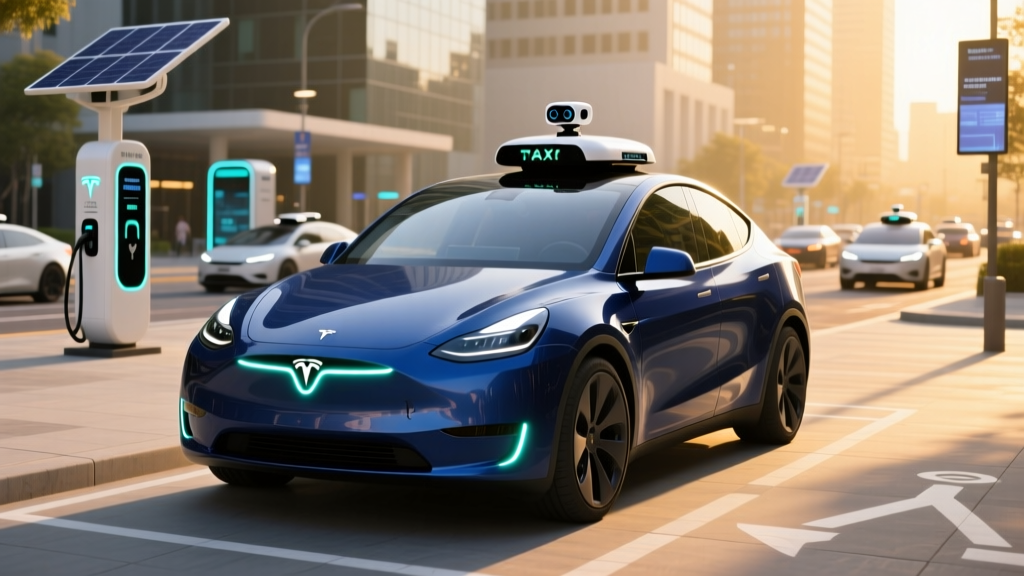
Tesla's FSD (Supervised) relies entirely on cameras — no LiDAR, no radar (removed in 2021+ models). Tesla argues that neural networks trained on billions of miles of camera data can achieve human-level perception. This approach powers a Level 2 system where the driver remains responsible. Tesla has not achieved Level 4 with this stack as of 2026.
Zoox's Purpose-Built Design
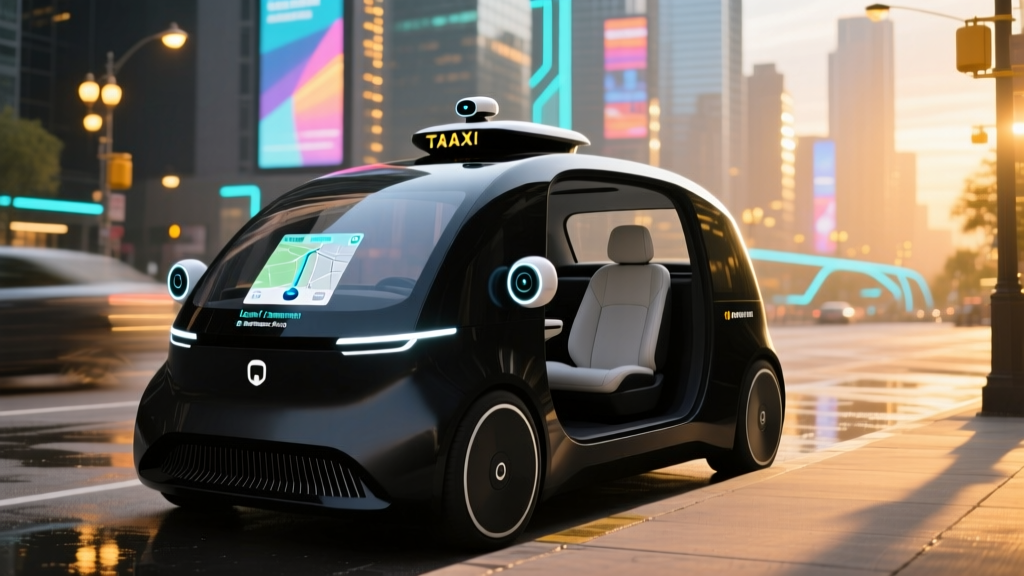
Zoox takes a different path: rather than retrofitting an existing vehicle, it designed a symmetrical, bidirectional pod with no steering wheel. The sensor suite is integrated from the ground up with overlapping LiDAR, camera, and radar coverage at every corner, providing redundant perception with no blind spots.
Robotaxi Pricing: How Does It Compare to Uber and Lyft?
Robotaxi pricing varies by city, time of day, and trip distance, but the general pattern is competitive with — and sometimes cheaper than — conventional rideshare, particularly for short urban trips.
| Trip Type | Waymo One | UberX | Lyft Standard |
|---|---|---|---|
| Short (2-3 miles, off-peak) | $7–$10 | $9–$14 | $8–$13 |
| Medium (5-7 miles, off-peak) | $12–$18 | $15–$22 | $14–$20 |
| Medium (5-7 miles, peak/surge) | $16–$24 | $22–$38 | $20–$35 |
| Airport run (12-15 miles) | $28–$40 | $35–$55 | $32–$50 |
Key pricing dynamics:
- Waymo does not currently implement surge pricing the way Uber and Lyft do, making it more predictable during peak demand.
- Waymo frequently offers promotional credits for new users, sometimes bringing the first few rides to $0–$5.
- There is no tipping expectation with a robotaxi (no driver), which removes 15–20% from the effective cost compared to rideshare.
- Wait times vary: in Phoenix's core service area, Waymo pickups average 3–5 minutes. In newer markets like Austin, waits can stretch to 8–12 minutes outside peak zones.
Safety Data: What the Numbers Actually Show
Safety is the most contested question in autonomous vehicles. Both proponents and critics selectively cite data. Here's what the available evidence shows:
• Over 50 million autonomous miles driven across all markets
• NHTSA Standing General Order data shows Waymo vehicles involved in fewer injury-causing crashes per million miles than the US human-driver average
• A 2024 study published by the Insurance Institute for Highway Safety (IIHS) and partner researchers found Waymo's crash rate for injury-causing incidents was approximately 85% lower than human benchmarks in comparable urban environments
• Property-damage-only crash rate also significantly below human baseline
Context and Caveats
Raw crash-rate comparisons require nuance:
- Geofencing advantage: Robotaxis operate in mapped, pre-approved areas and avoid the most dangerous roads (unpaved, poorly marked, extreme terrain). Human drivers don't have this restriction.
- Weather avoidance: Waymo vehicles pull over or refuse service in heavy rain, fog, or flooding — conditions where human crash rates spike.
- Conservative driving: Robotaxis drive below speed limits, maintain large following distances, and execute cautious unprotected left turns. This reduces crash severity but frustrates other drivers and can cause rear-end incidents.
- Reporting bias: Autonomous vehicles are required to report every incident under NHTSA's Standing General Order, while human fender-benders frequently go unreported.
Notable Incidents
Robotaxi operations have not been incident-free. In San Francisco during 2023–2024, Waymo vehicles were involved in several publicized incidents including contact with pedestrians in crosswalks (at low speed) and interactions with emergency-response scenes. The NHTSA and California DMV have investigated, and Waymo implemented software updates to improve emergency-vehicle recognition and pedestrian-prediction models.
Cruise (GM's robotaxi division) had its California permit suspended in late 2023 after a serious incident in San Francisco where a pedestrian was dragged by a Cruise vehicle following a collision with another car. Cruise subsequently paused all nationwide operations, restructured leadership, and resumed limited testing in 2024–2025 with enhanced safety protocols. As of 2026, Cruise operates at reduced scale compared to Waymo.
Current Limitations: What Robotaxis Still Cannot Do
Level 4 autonomy is impressive within its operational design domain — but that domain has hard boundaries. Understanding these limitations is essential for anyone considering robotaxi use.
- Weather: Heavy rain, snow, ice, fog, and flooding cause robotaxis to pull over or refuse trips. Waymo's Phoenix operations work year-round partly because Phoenix rarely sees precipitation. San Francisco fog can trigger service reductions.
- Geofencing: You can only hail a robotaxi within the mapped service area. Request a ride outside the boundary and the app simply won't let you. Service areas expand gradually but remain a fraction of metro-area road networks.
- Construction zones: Unplanned road closures, temporary lane shifts, and unmarked construction zones can cause the vehicle to stop and wait for remote-assistance guidance, adding minutes to your trip.
- Emergency scenes: While improved, robotaxis still occasionally struggle with complex multi-vehicle accident scenes, police-directed traffic, and fire-truck positioning.
- Unpaved roads: No Level 4 service operates on dirt roads, gravel driveways, or unmapped private roads.
- Pickup/dropoff precision: You may need to walk a short distance to a safe pullover point rather than being deposited at an exact doorstep.
- No intercity travel: Robotaxis are urban and suburban. You cannot take a Waymo from San Francisco to Los Angeles.
Regulatory Landscape: Who Approves Robotaxi Operations?
Autonomous vehicle regulation in the US is a patchwork of federal and state authority:
- Federal (NHTSA): Sets vehicle safety standards (FMVSS) and requires crash reporting via Standing General Order. NHTSA does not currently "approve" autonomous driving software but can issue recalls and investigate defects.
- State DMVs: California's DMV issues testing and deployment permits, requires annual disengagement reports, and can suspend operations (as happened with Cruise in 2023). Other states have varying frameworks.
- State PUCs: Public Utilities Commissions (like the California PUC/CPUC) regulate robotaxis as commercial transportation services, approving fare structures and service areas.
- Local governments: Cities negotiate operating agreements covering fleet size, service zones, accessibility requirements, and data-sharing.
Arizona takes a permissive approach (no state permit required for testing or deployment), which is why Phoenix became Waymo's launch market. California has the most rigorous oversight, requiring both DMV and CPUC approval. Texas (Austin) and Nevada (Las Vegas) fall in between.
Frequently Asked Questions
Is Tesla FSD really self-driving?
No. Tesla's Full Self-Driving (Supervised) is a Level 2 driver-assistance system. The driver must remain attentive, keep hands available, and is legally responsible for all driving decisions. Despite the "Full Self-Driving" name, it does not meet SAE Level 3, 4, or criteria. The "(Supervised)" qualifier Tesla adopted in 2024 reflects this reality.
Can I buy a Level 4 self-driving car?
No. As of 2026, Level 4 vehicles are operated as fleet services (Waymo, Zoox) and are not available for consumer purchase. The sensor suites, computing hardware, and software licensing make individual ownership impractical, and manufacturers have not offered them for retail sale.
Will Level 5 full autonomy ever arrive?
Level 5 — a vehicle that can drive anywhere, in any condition, with no human fallback — remains a research goal, not a production reality. Most industry experts have pushed back Level 5 timelines significantly. The challenge is not just perception but edge-case reasoning: a human driver can improvise through an unmapped construction zone in a blizzard using contextual understanding that current AI cannot reliably replicate. Expect Level 4 expansion to more cities before Level 5 arrives.
What is the difference between Mercedes Drive Pilot and Waymo?
Mercedes Drive Pilot is a Level 3 system available on the S-Class and EQS — it allows hands-off, eyes-off driving on approved highways at speeds up to 40 mph in traffic jams. The system handles driving, but the human must be ready to resume control when prompted. Waymo is Level 4: fully driverless within its geofence, with no human in the vehicle at all. You buy Drive Pilot as a feature on your car; you hail Waymo as a ride service.
How do robotaxis handle emergencies?
Robotaxis are programmed to pull over safely when they detect conditions beyond their capability — severe weather, sensor obstruction, or system faults. Waymo vehicles can connect to remote-assistance operators who can guide the vehicle through complex scenarios (though the remote operator does not "drive" the car in real-time; they approve planned maneuvers). All vehicles carry emergency-contact information and can be opened by first responders using standardized procedures.
Are robotaxis accessible for wheelchair users?
This is an active area of development. Waymo has begun testing wheelchair-accessible vehicles in select markets and offers WAV (wheelchair-accessible vehicle) options through its app in limited areas. Zoox's purpose-built vehicle was designed with level-floor entry intended to accommodate mobility devices. ADA compliance remains a regulatory requirement, and advocates continue to push for broader accessible-vehicle availability in robotaxi fleets.