The Austin Robotaxi Landscape: Tesla vs. Waymo in 2026
Austin has become one of the most closely watched cities for autonomous vehicle deployment. Waymo operates a commercial Level 4 driverless service across a defined geofence, while Tesla's approach — built on its Full Self-Driving (Supervised) software — occupies a fundamentally different category. For Austin residents and visitors trying to understand the real safety picture, the distinction between these two approaches isn't academic. It determines who is responsible when something goes wrong.
This guide breaks down the technology, the safety data, the regulatory framework, and the practical realities of hailing an autonomous ride in Austin — separating marketing claims from verifiable numbers.
SAE Automation Levels: Why the Distinction Matters
The single most important fact about Tesla's FSD (Supervised) is that it is SAE Level 2 driver-assist technology, not a Level 4 robotaxi system. This isn't a semantic quibble — it defines the legal and safety framework entirely.
| Level | Name | Who Drives | Who Is Liable | Austin Example |
|---|---|---|---|---|
| Level 2 | Partial Automation | Human (must supervise) | Human driver | Tesla FSD (Supervised), GM Super Cruise, Ford BlueCruise |
| Level 3 | Conditional Automation | System (in limited conditions) | Manufacturer (when engaged) | Mercedes DRIVE PILOT (not available in TX) |
| Level 4 | High Automation | System (in geofenced area) | Operator/company | Waymo One (Austin), Zoox (testing) |
| Level 5 | Full Automation | System (everywhere) | Operator/company | Does not exist commercially |
Tesla's Robotaxi Ambitions: Announced vs. Available
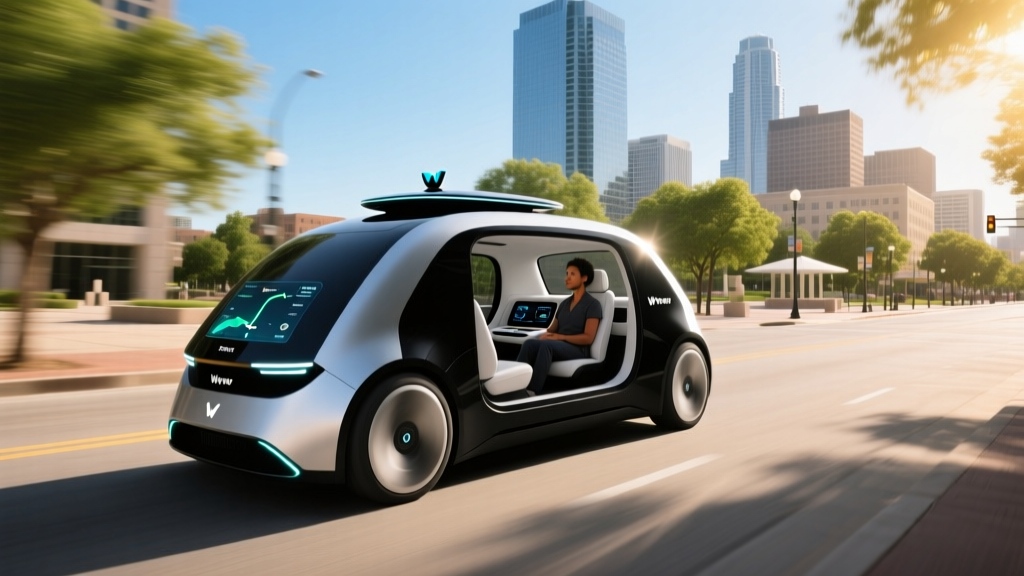
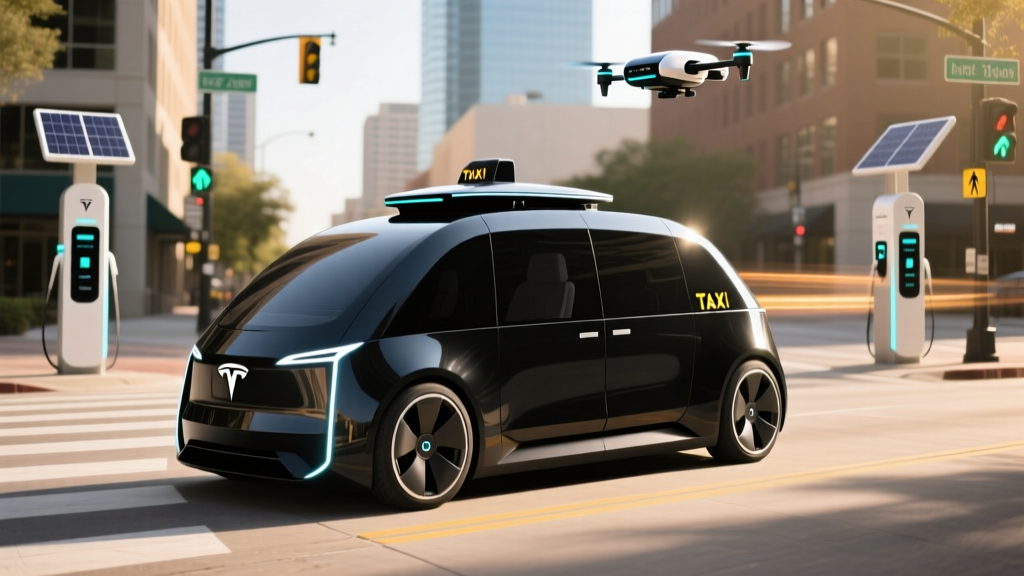
Tesla unveiled its dedicated "Cybercab" robotaxi concept in October 2024 — a two-seat, steering-wheel-free vehicle designed for Level 4 operation. As of early 2026, Tesla has announced plans for limited production and has been conducting supervised testing in select cities. However, a commercially available, driverless Tesla robotaxi service in Austin does not yet exist.
What Austin Tesla owners can use is FSD (Supervised) — a $8,000 add-on (or $99/month subscription as of 2026) that provides advanced driver-assist on city streets and highways. Tesla has also discussed a future "Tesla Network" rideshare concept where FSD-equipped vehicles could operate autonomously, but regulatory approval for such a service has not been granted in Texas.
Waymo One in Austin: The Operational Level 4 Baseline
To understand the safety conversation around Tesla's robotaxi aspirations, you need the baseline that Austin's actual operating robotaxi — Waymo One — provides.
| Attribute | Detail |
|---|---|
| Service Area | ~80 sq miles covering downtown, South Congress, East Austin, Domain, parts of South Lamar |
| Hours | 24/7 availability within geofence |
| Vehicle | Jaguar I-PACE EV with 5th-gen Waymo Driver sensor suite |
| SAE Level | Level 4 (no human driver in vehicle) |
| How to Ride | Waymo One app (iOS/Android) — request, confirm, ride |
| Pricing | Comparable to UberX; typical downtown trips $8–$18 |
Waymo expanded its Austin service area incrementally through 2025, and as of 2026 covers a meaningful portion of central Austin. The service operates in rain and moderate weather but will pull vehicles from service during severe conditions (flash flooding, ice storms — relevant for Austin's occasional winter events).
Safety Data: What the Numbers Actually Show
This is where Austin's Tesla robotaxi safety concerns deserve careful, data-driven examination rather than headline-driven fear or hype.
According to NHTSA standing general orders and Waymo's published safety reports, Waymo vehicles have completed over 30 million fully driverless miles across Phoenix, San Francisco, Los Angeles, and Austin combined. Waymo reports an at-fault crash rate approximately 76% lower than human benchmarks for comparable urban driving (per their analysis published with Swiss Re insurance data). No fatalities have occurred in a driverless Waymo vehicle as of early 2026.
Tesla FSD (Supervised) Safety Data:
Tesla publishes a quarterly Vehicle Safety Report citing approximately one crash per 4–5 million miles driven with FSD engaged. However, this data has significant limitations:
- Self-reported: Tesla collects this data from its own fleet; it is not independently verified by NHTSA or a third party.
- Engagement bias: FSD is predominantly used on highways and controlled-access roads — statistically the safest driving environments. City-street data (where Austin robotaxi concerns concentrate) is a smaller portion of total FSD miles.
- NHTSA investigations: As of 2026, NHTSA has opened and continued multiple investigations into Tesla's Autopilot and FSD systems, including crashes involving stationary emergency vehicles and the adequacy of driver-monitoring systems.
- Recall actions: Tesla issued a major recall in late 2023 affecting over 2 million vehicles to add additional driver-engagement safeguards to Autopilot. Subsequent over-the-air updates have added more attentiveness checks, but the fundamental Level 2 architecture — human is responsible — has not changed.
| Metric | Waymo (Level 4, Driverless) | Tesla FSD (Level 2, Supervised) |
|---|---|---|
| Total driverless/driver-assist miles | 30M+ driverless miles | Billions of Autopilot/FSD miles (fleet-wide) |
| At-fatal incidents | 0 fatalities (driverless mode) | Multiple fatalities under investigation |
| At-fault crash rate vs. human baseline | ~76% lower (Swiss Re study) | Not independently verified at city-street level |
| Driver present? | No | Yes (required) |
| Data verification | Third-party insurance analysis + NHTSA reports | Self-reported by Tesla |
Technology Stack: Camera-Only vs. Multi-Sensor Fusion
The technology divide between Tesla and Waymo is foundational — and it directly informs safety capabilities and limitations.
| Component | Tesla FSD (Supervised) | Waymo 5th-Gen Driver |
|---|---|---|
| Primary perception | Camera-only (8 cameras, vision neural nets) | LiDAR + cameras + radar (redundant sensor fusion) |
| LiDAR | None (removed in 2022+ vehicles) | Custom spinning + solid-state LiDAR units |
| Radar | Removed from 2022+ vehicles (Tesla Vision only) | Imaging radar for all-weather redundancy |
| HD mapping | No pre-mapped routes; real-time inference | Pre-mapped geofenced areas with centimeter precision |
| Driver monitoring | Cabin camera (attentiveness alerts) | N/A (no driver in vehicle) |
| Geofencing | None (operates on any road) | Strict geofence (service area boundaries enforced) |
Why this matters for Austin safety: Tesla's camera-only approach relies entirely on neural-network inference from visual data. In Austin's challenging conditions — direct sun glare on I-35, heavy rain on MoPac, construction-zone lane shifts on Lamar Boulevard — the absence of LiDAR or radar means there is no sensor redundancy if camera perception degrades. Waymo's multi-sensor stack provides overlapping perception: if heavy rain scatters LiDAR returns, radar and cameras still function. If a camera is blinded by sun glare, LiDAR still maps the environment.
Tesla's counterargument is scalability: cameras are cheap and ubiquitous, and neural networks improve with fleet-scale data. Waymo's counterargument is safety-critical redundancy: a Level 4 vehicle with no human fallback must have sensor overlap to handle edge cases.
Pricing: Robotaxi vs. Rideshare in Austin
| Service | Downtown → Airport (AUS, ~8 mi) | South Congress → Domain (~12 mi) | Short downtown hop (~2 mi) |
|---|---|---|---|
| Waymo One | $18–$26 | $22–$32 | $8–$12 |
| UberX | $16–$28 | $20–$35 | $7–$14 |
| Lyft | $15–$27 | $19–$34 | $7–$13 |
Waymo's pricing in Austin is broadly competitive with UberX and Lyft, though surge pricing dynamics differ. Waymo does not currently implement surge multipliers the way Uber and Lyft do during peak demand, which can make it cheaper during high-demand windows (Austin FC match days, ACL Festival, SXSW). However, Waymo's geofence limits where you can go — a trip from downtown to Georgetown or San Marcos is not available.
Tesla's future robotaxi pricing remains speculative. Elon Musk has suggested sub-$1-per-mile operating costs, but no published rate card exists because no commercial service is operational.
Regulatory Framework: Who Approves Robotaxi Operations in Texas?
Texas regulates autonomous vehicles through a combination of state law and local coordination:
- Texas Transportation Code §547.601–604: Permits operation of autonomous vehicles on public roads if the vehicle can comply with all traffic laws and is insured. No state-level permit or license is required for AV testing or deployment, making Texas one of the more permissive jurisdictions.
- Texas Department of Transportation (TxDOT): Maintains a voluntary AV testing registry. Companies are encouraged but not mandated to register testing activities.
- City of Austin: The Austin Transportation and Public Works Department coordinates with AV operators on local road access, curb management, and incident reporting. Austin does not issue its own operating permits but can restrict operations on specific corridors.
- NHTSA (Federal): Oversees vehicle safety standards. The Standing General Order requires manufacturers and operators to report crashes involving Level 2–5 systems within 24 hours for serious incidents.
For Tesla to launch a driverless robotaxi service in Austin, it would need to demonstrate that the vehicle can operate without a human driver in compliance with all traffic laws, carry appropriate insurance, and meet NHTSA reporting requirements. As of 2026, Tesla has not announced a timeline for regulatory submission for a driverless service in Texas.
Current Limitations: Where Robotaxis (Both Tesla and Waymo) Fall Short
- Heavy rain and flooding: Waymo vehicles may suspend service during Austin's flash-flood events. Tesla's camera-only system is particularly vulnerable to reduced visibility in heavy downpours on roads like I-35 and US-183.
- Construction zones: Austin's perpetual road construction (MoPac Express Lanes, I-35 Cap-and-Stitch project) creates shifting lane markings and temporary barriers. Both systems handle these with reduced confidence; Tesla FSD may disengage and hand control back to the driver.
- Unprotected left turns: High-traffic unprotected lefts (common on Lamar, Airport Blvd) remain challenging edge cases for all AV systems.
- Geofence boundaries: Waymo cannot take you to Round Rock, Pflugerville, Cedar Park, or Buda. Service is strictly within the mapped Austin geofence.
- Emergency vehicles: NHTSA investigations have highlighted Level 2 systems' difficulty recognizing and responding to stationary emergency vehicles with flashing lights — a documented crash pattern for Tesla Autopilot/FSD.
- Pedestrian-rich areas: Dense pedestrian environments (6th Street on weekends, Rainey Street) require cautious, slow operation that can frustrate human drivers sharing the road.
Frequently Asked Questions
Can I hail a driverless Tesla robotaxi in Austin right now?
No. As of 2026, Tesla does not operate a commercial driverless robotaxi service in Austin or any other city. Tesla's Cybercab remains in pre-production, and its FSD (Supervised) software is a Level 2 driver-assist system that requires an attentive human driver at all times.
Is Tesla FSD self-driving?
No. FSD (Supervised) is SAE Level 2 partial automation. The human driver is legally and operationally responsible for the vehicle. You must keep your hands available and your attention on the road. Tesla's own documentation and the vehicle's user interface state this explicitly.
How safe is Waymo's robotaxi service in Austin?
Waymo has published data showing a 76% lower at-fault crash rate compared to human drivers in comparable urban environments, based on third-party analysis with Swiss Re. Waymo has completed over 30 million driverless miles with zero fatalities. However, no autonomous system is risk-free, and minor contact incidents have occurred.
Why doesn't Tesla use LiDAR like Waymo?
Tesla's engineering philosophy holds that a camera-only, neural-network-based approach is sufficient and more scalable. CEO Elon Musk has publicly called LiDAR a "crutch." The trade-off is the absence of sensor redundancy — if cameras are degraded by glare, rain, or obstruction, there is no backup perception layer. Whether this approach can achieve Level 4 reliability remains unproven in production deployment.
What should Austin drivers worried about Tesla robotaxi safety do?
Understand the distinction: the vehicles you see testing in Austin with Tesla branding may have FSD engaged, but they have human safety operators. If you own a Tesla with FSD, you are the driver — stay engaged. For a genuinely driverless ride in Austin today, Waymo One is the only commercially available option, operating within a defined geofence under Level 4 autonomy with an established safety record.
Sources: NHTSA Automated Vehicles Safety, Waymo Safety Report, Tesla Vehicle Safety Report