The Short Answer: Tesla's Robotaxi Isn't Here Yet
If you've been searching for when the Tesla robotaxi will be available, the honest answer in early 2026 is: not yet for public use. Tesla unveiled its dedicated "Cybercab" concept in October 2024 and has targeted a production start in 2026, but as of this writing, no member of the public can hail a driverless Tesla ride in any city. Meanwhile, Level 4 robotaxi services from Waymo and Zoox are already operating daily in multiple U.S. metros. Understanding where Tesla's ambitions sit relative to live competitors requires unpacking autonomy levels, technology choices, regulatory hurdles, and the gap between a concept vehicle and a commercially deployed fleet.
This guide breaks down Tesla's announced timeline, compares it against robotaxi services you can actually ride today, and explains the engineering and regulatory factors that will determine when — and if — a Tesla robotaxi reaches your city.
SAE Autonomy Levels: Why the Distinction Matters
Before evaluating any robotaxi timeline, you need to understand the SAE International automation levels. This framework separates driver-assistance features from true driverless operation, and it's the single most important filter for evaluating Tesla's claims.
| Level | Name | Who Drives | Example |
|---|---|---|---|
| Level 0 | No Automation | Human | Conventional car |
| Level 1 | Driver Assistance | Human (system assists steering OR speed) | Adaptive cruise control |
| Level 2 | Partial Automation | Human (system assists steering AND speed) | Tesla Autopilot, FSD (Supervised), GM Super Cruise, Ford BlueCruise |
| Level 3 | Conditional Automation | System (human must take over on request) | Mercedes Drive Pilot (limited markets/conditions) |
| Level 4 | High Automation | System (no human driver needed in defined area) | Waymo One, Zoox, Cruise (pre-suspension) |
| Level 5 | Full Automation | System (everywhere, all conditions) | Does not exist commercially |
Tesla Cybercab: What We Know for 2026
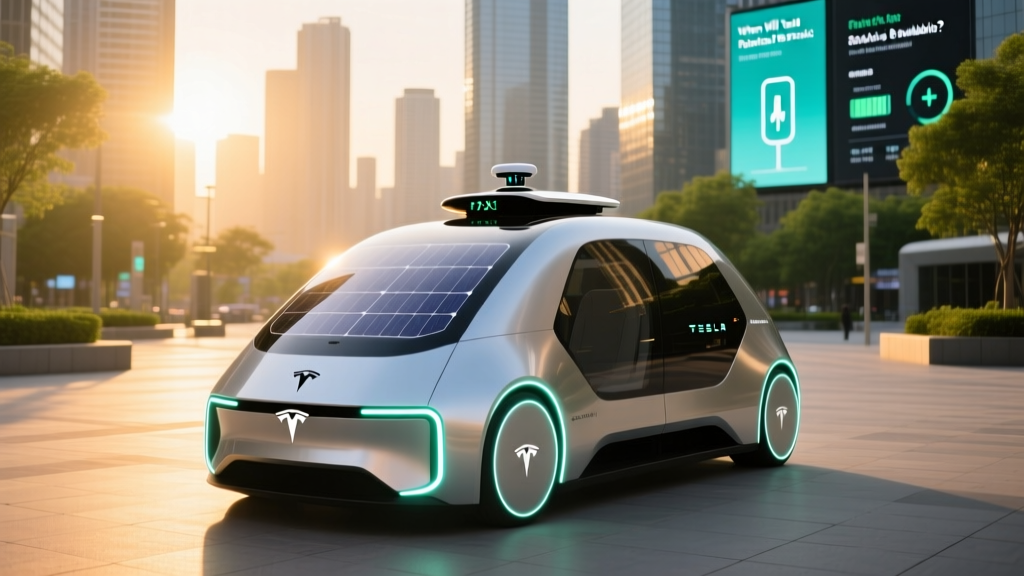
Tesla's robotaxi strategy centers on the Cybercab, a two-seat vehicle with no steering wheel or pedals, unveiled at the "We, Robot" event in October 2024. Here's what Tesla has announced versus what remains unverified:
| Attribute | Tesla's Claim | Verified Status (Early 2026) |
|---|---|---|
| Production Start | 2026 | Announced — no confirmed date or factory tooling confirmation |
| Seats | 2 passengers | Concept shown; production interior not confirmed |
| Steering Wheel/Pedals | None | Concept only — this configuration requires regulatory exemptions |
| Autonomy Level Target | Level 4 / Level 5 (unsupervised) | Not demonstrated on public roads |
| Sensor Suite | Camera-only (Tesla Vision) | Consistent with Tesla's approach; no lidar planned |
| Estimated Cost Per Mile | ~$0.20/mile (Tesla claim) | Unverified — no fleet operations data exists |
| Price (if sold to consumers) | Under $30,000 (announced) | Preliminary — no production pricing confirmed |
| Regulatory Approval | Not obtained | NHTSA has not approved a no-steering-wheel vehicle for commercial passenger service |
Tesla CEO Elon Musk has historically set aggressive timelines that have not materialized on schedule. Tesla first promised a coast-to-coast autonomous drive in 2016, and FSD (Supervised) remains a Level 2 system requiring driver oversight as of 2026. Buyers and enthusiasts should treat the Cybercab timeline as aspirational until production vehicles are seen in certified fleet testing.
Where Can You Actually Ride a Robotaxi Right Now?
While Tesla's robotaxi remains in development, several Level 4 services are operational today. Here's where you can hail a driverless ride in 2026:
| Service | Operator | Cities | Hours | Vehicle |
|---|---|---|---|---|
| Waymo One | Waymo (Alphabet) | Phoenix, San Francisco, Los Angeles, Austin (expanding) | 24/7 in most markets | Jaguar I-PACE (Gen 6 sensor suite) |
| Zoox | Zoox (Amazon) | Las Vegas, Foster City (CA), limited Phoenix testing | Limited hours / invite-based in some areas | Zoox purpose-built bidirectional vehicle |
| Cruise | Cruise (GM) | Relaunching gradually post-2023 suspension; Phoenix, Dallas testing | Limited / phased | Chevrolet Bolt EV / Origin (pending) |
How to use Waymo One (the most widely available service): Download the Waymo app, create an account, enter your pickup and destination within the service geofence, and a vehicle arrives — typically within 3–8 minutes. No human driver is present. The vehicle handles all driving tasks within its approved operational design domain (ODD).
Robotaxi Pricing: Cost vs. Uber and Lyft
One of Tesla's core claims is that a Cybercab fleet will deliver rides at roughly $0.20 per mile — dramatically cheaper than human-driven rideshare. Let's compare that against current market pricing:
| Service | Cost Per Mile (Avg) | 5-Mile Trip Estimate | Notes |
|---|---|---|---|
| Waymo One | $1.00–$1.50/mi | $8–$12 | Comparable to UberX; varies by city and time of day |
| UberX | $1.20–$2.00/mi | $10–$15 | Surge pricing can double or triple cost |
| Lyft Standard | $1.10–$1.80/mi | $9–$14 | Similar surge dynamics |
| Tesla Cybercab (claimed) | ~$0.20/mi | ~$2–$3 | Tesla's projection; unverified and dependent on fleet economics |
| Personal Vehicle (IRS rate) | $0.67/mi (2024 IRS standard) | $3.35 | Includes depreciation, fuel, maintenance, insurance |
Waymo's current pricing is roughly on par with UberX — it has not yet undercut rideshare dramatically. The path to Tesla's claimed $0.20/mile requires not only Level 4 autonomy at scale, but also massive fleet deployment, low vehicle acquisition costs, minimal remote-operator overhead, and favorable insurance economics. Waymo, with years of operational data, has not reached that price point.
How Safe Are Robotaxis? Real Data, Not Marketing
Safety is the most scrutinized question in autonomous driving. Here's what the data shows for the largest deployed fleet:
• Over 50 million fully driverless miles completed across Phoenix, San Francisco, and Los Angeles.
• A Waymo-published safety report (peer-reviewed methodology) showed an 85% reduction in injury-causing crash rates compared to human benchmarks in comparable urban environments.
• Waymo vehicles recorded ~0.41 police-reported crashes per million miles, compared to the human benchmark of ~2.78 per million miles in the same cities (data from 2024 Waymo/Insurance Institute for Highway Safety collaboration).
• Most incidents involved low-speed contact with other human-driven vehicles, cyclists, or pedestrians — the robotaxi was typically not the at-fault party per police reports.
For context, the NHTSA Fatality Analysis Reporting System records approximately 1.35 fatalities per 100 million vehicle miles traveled across all U.S. roads. Waymo has reported zero fatalities in its driverless fleet operations to date, though its total mileage is still far below the statistical threshold needed to prove superiority at that level of severity.
Tesla FSD (Supervised) safety context: Tesla's quarterly safety reports show approximately one crash per 4–5 million miles driven with FSD engaged. However, this data includes Level 2 supervised driving where a human is present and can intervene. It is not directly comparable to Level 4 driverless operations. Tesla has not published third-party-verified, disengagement-rate data comparable to California DMV reports filed by Waymo and Cruise.
Tesla's Camera-Only Approach vs. Multi-Sensor Stacks
The most significant technical divergence between Tesla and every other robotaxi operator is the sensor strategy:
Tesla (Tesla Vision):
• 8–11 cameras (varies by vehicle generation)
• No lidar, no radar (radar removed starting 2021, ultrasonic sensors removed 2022)
• Neural network–based perception using camera imagery alone
• End-to-end AI approach trained on billions of miles of fleet driving data
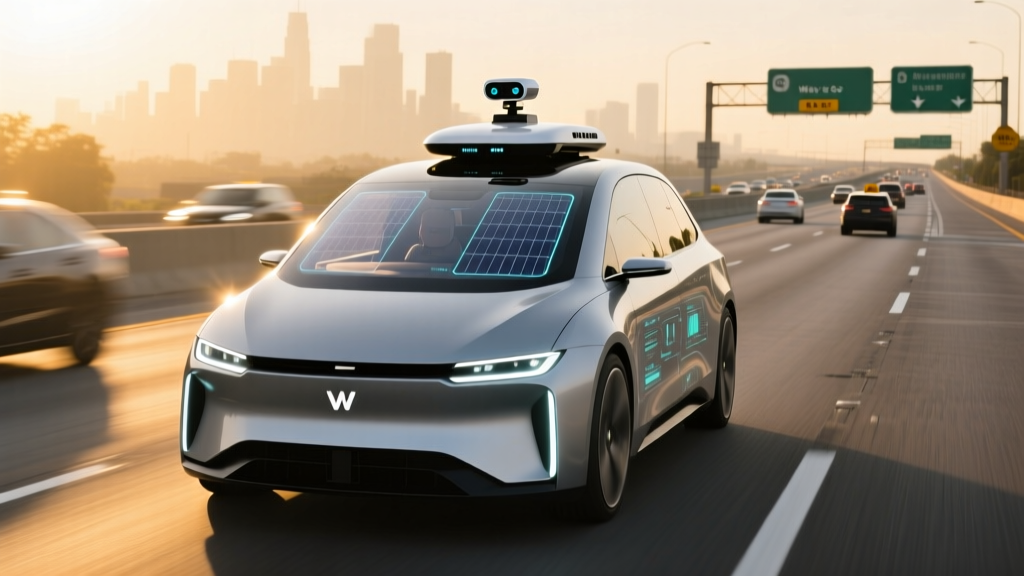
Waymo (Gen 6):
• LiDAR arrays (custom-built, 360° coverage)
• Multiple cameras (visible and infrared)
• Radar units
• HD pre-mapped routes within geofenced areas
• Redundant computing and braking systems
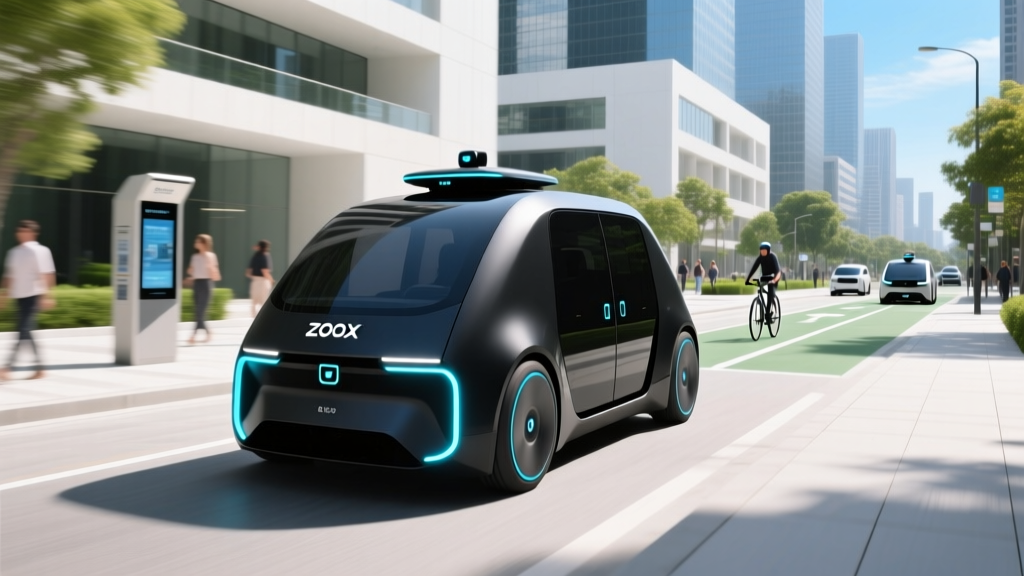
Zoox:
• LiDAR, cameras, and radar in a symmetric sensor layout
• Purpose-built vehicle with redundant steering, braking, and power
• Bidirectional driving capability
The camera-only approach gives Tesla a massive cost advantage — lidar suites still add thousands of dollars per vehicle — and benefits from Tesla's enormous real-world driving dataset collected from millions of customer vehicles. However, camera-only systems face inherent limitations in low-visibility conditions (heavy rain, fog, direct sun glare, snow occlusion) where lidar and radar provide redundant depth perception. Every Level 4 operator currently running commercial service has chosen multi-sensor redundancy as a safety requirement.
Regulatory Landscape: Who Approves Robotaxi Operations?
Deploying a robotaxi in the U.S. requires navigating overlapping federal, state, and local regulations:
- Federal (NHTSA): Sets vehicle safety standards (FMVSS). Current standards assume a human driver — steering wheels, mirrors, pedals are mandated. A vehicle like the Cybercab with no steering controls requires an FMVSS exemption petition. NHTSA has granted limited exemptions (e.g., to Nuro for low-speed delivery vehicles), but not for high-speed passenger transport at scale.
- State Level: States control deployment permits. California (DMV and CPUC), Arizona, and Texas have been the most permissive. California requires a driverless testing permit, then a deployment permit, with incident reporting to the DMV. Arizona has minimal state-level restrictions, which is why Phoenix became Waymo's first commercial market.
- Local/Municipal: Cities negotiate operating agreements covering pickup zones, emergency response protocols, accessibility requirements, and data sharing. San Francisco's Board of Supervisors has held contentious hearings over Waymo expansion, reflecting local political dynamics.
For Tesla to launch the Cybercab as a robotaxi, it needs: (1) NHTSA FMVSS exemption for a no-steering-wheel vehicle, (2) state-level deployment permits in each target market, and (3) local operating agreements. None of these have been obtained as of early 2026.
Current Limitations of All Robotaxi Services
- Heavy weather: Waymo and others suspend or limit service during heavy rain, snow, fog, or flooding. Phoenix's dry climate was chosen partly for this reason.
- Geofence boundaries: Service is restricted to pre-mapped areas. Drive outside the zone and the service is unavailable.
- Construction zones: Temporary lane shifts, missing lane markings, and flaggers can confuse perception systems. Vehicles may pull over and wait for remote assistance.
- Complex unprompted scenarios: Emergency vehicle interactions, unusual road configurations, and off-map areas (parking garages, private driveways) remain challenging.
- Accessibility: Current robotaxis cannot independently accommodate wheelchair users or passengers requiring assistance entering/exiting the vehicle.
- Highway driving: Most robotaxi services operate on surface streets. Highway merges and high-speed driving add complexity that limits expansion.
Realistic Timeline: When Will Tesla Robotaxi Actually Launch?
Piecing together the technical, regulatory, and operational requirements, here's a grounded projection:
| Milestone | Optimistic (Tesla's Narrative) | Realistic (Based on Current Evidence) |
|---|---|---|
| Cybercab production begins | Late 2026 | 2027–2028 (new vehicle program ramp) |
| FMVSS exemption for no steering wheel | 2026 | 2027–2029 (NHTSA rulemaking is slow) |
| Limited driverless testing (no passengers) | 2026–2027 | 2027–2028 |
| Commercial passenger service (1 city) | 2027 | 2029–2031 |
| Multi-city fleet deployment | 2028 | 2031+ (if successful) |
The realistic timeline assumes Tesla must: prove Level 4 reliability through millions of supervised and unsupervised test miles, obtain regulatory approvals in each jurisdiction, build fleet operations infrastructure (cleaning, charging, remote assistance centers), and demonstrate an insurance and liability model acceptable to regulators. Waymo took roughly 15 years from founding (2009, as the Google Self-Driving Car Project) to its first commercial driverless service in Phoenix (2020, limited) and scaled service (2023–2024).
Frequently Asked Questions
Is Tesla FSD (Supervised) a robotaxi?
No. Tesla Full Self-Driving (Supervised) is an SAE Level 2 driver-assistance system. The driver must remain fully attentive, keep their hands available, and bears all legal liability. A robotaxi is a Level 4 service with no human driver present. You cannot currently summon a driverless Tesla through any app or service.
Can I buy a Tesla Cybercab?
Not yet. The Cybercab was unveiled as a concept in October 2024. Tesla has not opened reservations, confirmed production specs, or set a firm production date. Tesla has stated the vehicle would cost under $30,000 if sold to consumers, but this is preliminary.
Why doesn't Tesla use lidar?
Tesla's leadership has argued that a camera-only system, trained on massive real-world driving data, can replicate human-level perception at lower cost. Elon Musk has famously called lidar a "crutch." However, every company currently operating a Level 4 robotaxi commercially uses lidar as part of a redundant sensor suite, citing safety requirements in edge cases where cameras alone struggle.
How does Tesla's approach compare to Waymo's?
Waymo uses lidar, radar, cameras, and HD pre-mapping within geofenced areas — a redundant, constrained approach that has achieved Level 4 commercial deployment. Tesla uses cameras only with neural-network perception, aiming for a generalizable system that works anywhere without pre-mapping. Tesla's approach has greater potential scale but has not yet demonstrated Level 4 reliability. Waymo's approach is proven but harder to expand rapidly to new cities.
Where can I ride a robotaxi today?
Waymo One operates commercially in Phoenix, San Francisco, Los Angeles, and Austin (expanding). Zoox operates a limited service in Las Vegas. These are the only options for a truly driverless ride in the U.S. as of early 2026. Download the respective apps to check availability at your specific address.
What would a Tesla robotaxi ride cost?
Tesla has claimed approximately $0.20 per mile, which would make a 5-mile trip cost around $2–$3. For comparison, Waymo One currently charges roughly $1.00–$1.50 per mile, similar to UberX. Tesla's claimed pricing has not been validated by any operational data and depends on achieving massive fleet scale with very low operating costs.