The Austin Robotaxi Battleground: Tesla vs Waymo in 2026
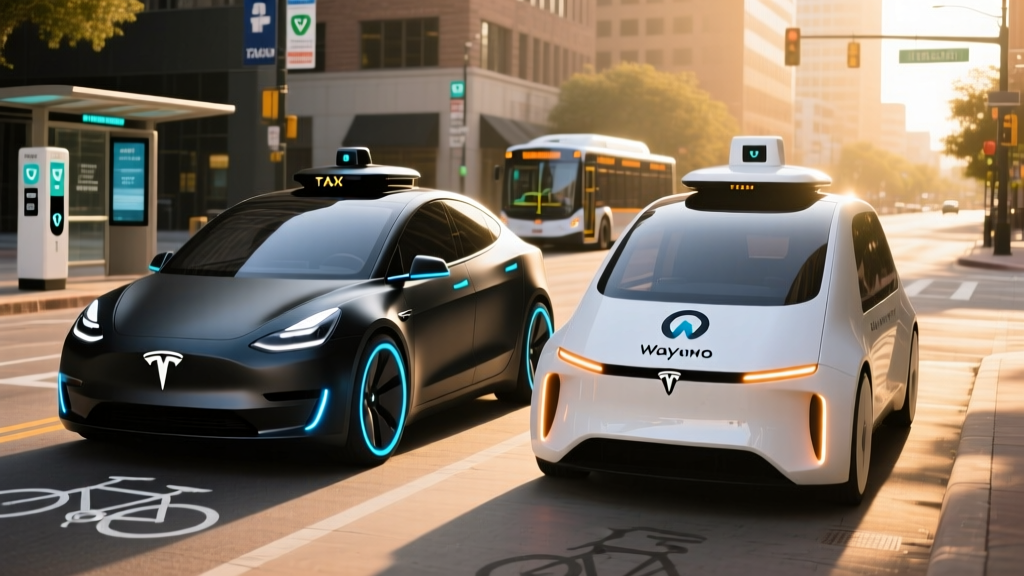
Austin, Texas has become the proving ground where two fundamentally different autonomous vehicle philosophies collide. Tesla launched its dedicated Robotaxi service in Austin using a camera-only approach on the Cybercab platform, while Waymo — the Alphabet-backed pioneer with millions of driverless miles already logged — expanded its sixth-generation fleet into the same market. For riders, the question isn't abstract: which service can you actually hail today, what does it cost, and which one is demonstrably safer?
This breakdown examines the concrete data behind both operations, from SAE automation levels and sensor stacks to real incident rates and per-mile pricing. No hype, no five-year predictions — just what's operational right now.
SAE Automation Levels: What Tesla and Waymo Actually Offer
The single most important distinction in this entire space is the SAE automation level each company operates under. Confusing Level 2 driver-assist with Level 4 driverless service is a mistake that leads to dangerous expectations and bad purchase decisions.
| Level | Definition | Example |
|---|---|---|
| Level 2 | Driver-assist: vehicle controls steering/acceleration, driver must remain fully engaged and supervise at all times | Tesla Autopilot, FSD (Supervised), GM Super Cruise, Ford BlueCruise |
| Level 3 | Conditional automation: vehicle drives itself in specific conditions, driver must be ready to take over when requested | Mercedes Drive Pilot (limited markets/conditions) |
| Level 4 | High automation: vehicle operates without a human driver within a defined operational design domain (geofenced area, specific conditions) | Waymo One, Zoox, Tesla Robotaxi (Austin service) |
| Level 5 | Full automation: vehicle drives anywhere, any condition, no human needed — does not exist commercially today | None available |
Source: SAE International J3016
Tesla's dual positioning: Tesla sells consumer vehicles with FSD (Supervised), which is Level 2 — the driver is legally and practically responsible. Separately, Tesla operates a Level 4 Robotaxi service in Austin where no driver is present in the vehicle. These are distinct products with distinct liability frameworks. The consumer FSD system in your personal Tesla is not a robotaxi, and Tesla's Austin robotaxi fleet uses additional operational constraints that consumer FSD does not.
Waymo's singular positioning: Waymo does not sell consumer vehicles or driver-assist systems. It operates only Level 4 robotaxi services (Waymo One) with no driver behind the wheel. Every mile Waymo logs is fully driverless within its approved geofence.
Where Can You Actually Ride Right Now?
Service availability is where announcements diverge sharply from reality. Here is what's live as of early 2026:
| City | Waymo One | Tesla Robotaxi | Notes |
|---|---|---|---|
| Phoenix, AZ | ✅ Full metro coverage (~600 sq mi) | ❌ Not available | Waymo's longest-running market since 2020 |
| San Francisco, CA | ✅ Citywide 24/7 | ❌ Not available | Highest ride density in Waymo's network |
| Los Angeles, CA | ✅ Expanded coverage | ❌ Not available | Phased expansion ongoing |
| Austin, TX | ✅ Operational (expanding) | ✅ Operational (limited zone) | Primary head-to-head market |
| Dallas/Fort Worth, TX | ✅ Launched | ❌ Not available | Waymo Texas expansion |
| Mountain View, CA | ✅ HQ operations | ❌ Not available | Waymo employee + public rides |
The Austin overlap: Austin is currently the only city where both services operate simultaneously, making it the natural comparison point. Tesla's Robotaxi geofence covers a more limited zone centered on downtown, South Austin, and select suburban corridors. Waymo's Austin coverage area has expanded steadily since its launch, covering a broader footprint including airport routes.
How to hail: Waymo rides are booked through the Waymo One app (also accessible via Uber in select markets). Tesla Robotaxi rides are requested through the Tesla app, which now includes a ride-hail interface separate from the FSD consumer product. Both services dispatch a driverless vehicle to your GPS pin within the approved zone.
Pricing: Robotaxi vs Uber vs Lyft
Robotaxi pricing has settled into a pattern that undercuts surge-priced rideshare while matching or slightly exceeding standard UberX/Lyft rates during off-peak hours. Here's what Austin riders actually pay:
| Service | Base Fare | Per Mile | Per Minute | ~5 mi Trip Cost |
|---|---|---|---|---|
| Waymo One | $3.50 | $1.15 | $0.28 | $12–$16 |
| Tesla Robotaxi | $3.00 | $0.95 | $0.25 | $10–$13 |
| UberX (standard) | $2.80 | $1.25 | $0.32 | $12–$18 |
| UberX (surge 1.5x) | $4.20 | $1.88 | $0.48 | $18–$27 |
| Lyft (standard) | $2.90 | $1.20 | $0.30 | $11–$17 |
Key takeaway: Robotaxis hold a structural pricing advantage during surge periods because they don't have a human driver to pay. Tesla undercuts Waymo on a per-mile basis in Austin, likely reflecting its lower vehicle cost (Cybercab vs Waymo's sixth-generation Jaguar I-PACE-based platform with lidar suite). Neither robotaxi service currently applies surge multipliers — a significant differentiator during peak demand.
Tesla has publicly stated a long-term target of $0.20–$0.30 per mile for its robotaxi service, but current Austin pricing sits well above that figure. The gap between aspiration and current reality reflects fleet utilization rates, remote-monitoring overhead, and insurance costs that haven't yet scaled to the economics Tesla projects.
Safety Records: What the Data Actually Shows
Safety is the most contested — and most misunderstood — dimension of the robotaxi debate. Both companies report data to NHTSA under standing general orders, but the granularity and context matter enormously.
| Metric | Waymo | Tesla Robotaxi (Austin) |
|---|---|---|
| Cumulative driverless miles | ~30+ million (all markets) | ~2–4 million (Austin only) |
| Reported contact incidents per million miles | ~0.7 (per NHTSA reports & IIHS analysis) | Limited public data; early NHTSA filings ongoing |
| Injury-causing collisions | Extremely rare; mostly low-speed rear-end while stopped | No publicly confirmed serious injuries to date |
| Human benchmark (US avg) | ~5.3 injury crashes per million miles (NHTSA) | Same baseline |
| Remote-assist interventions | Not publicly disclosed per mile | Not publicly disclosed |
Sources: NHTSA AV Safety Data, IIHS, company disclosures. Exact Tesla Robotaxi Austin mileage is not independently verified as of this writing.
Interpreting the numbers: Waymo's safety record benefits from a massive data advantage — over 30 million fully driverless miles across Phoenix, San Francisco, Los Angeles, and now Austin and Dallas. This sample size allows statistically meaningful comparisons to human drivers. Waymo's published safety studies and independent analyses suggest its vehicles are involved in fewer police-reported crashes per million miles than the human average in comparable urban environments.
Tesla's Austin Robotaxi operation is much newer and far smaller in scale. Drawing safety conclusions from 2–4 million miles in a single city carries wide confidence intervals. Early operations have not produced publicly reported serious injuries, but the data set is too small to declare statistical superiority or inferiority to human drivers. This isn't a knock on Tesla — it's simply what early-stage deployment data looks like.
What "contact incident" means: Both companies report incidents where the vehicle made physical contact with another object (car, cyclist, pole, etc.). Many of these are low-speed events — a Waymo stopping short and being rear-ended by a human driver, for instance. The raw incident count without severity context is misleading.
Technology Stack: Camera-Only vs Lidar+Camera+Radar
The most consequential engineering disagreement in autonomous vehicles is the sensor stack. Tesla and Waymo have bet on fundamentally different architectures, and Austin is where those bets are being tested head-to-head.
- Primary sensors: 8+ cameras (surround-view, high-resolution), no lidar, no radar (as of current Cybercab spec)
- Compute: Tesla HW5 (next-gen FSD computer), custom silicon
- AI approach: End-to-end neural networks trained on billions of miles of fleet driving data from consumer Tesla vehicles
- Mapping: Light HD-map dependency; relies heavily on real-time perception
- Cost advantage: No lidar hardware (~$2,000–$5,000 per vehicle savings at scale)
- Risk: Camera performance degrades in heavy rain, fog, direct sun glare, and low-light edge cases
- Primary sensors: Custom lidar array (multiple units for 360° coverage), cameras, radar
- Compute: Custom Waymo compute platform, redundant systems
- AI approach: Modular perception-prediction-planning stack with deep learning components; extensive simulation training
- Mapping: High-definition maps with frequent updates; vehicle localizes within centimeter-level map
- Cost: Higher per-vehicle hardware cost, but sixth-gen has reduced this significantly from earlier generations
- Advantage: Lidar provides reliable depth perception independent of lighting; radar detects objects through rain and fog
The practical difference in Austin: Austin experiences heavy thunderstorms, occasional fog, and intense sun glare — conditions that stress camera-only systems more than lidar-equipped ones. Waymo's multi-sensor stack provides hardware redundancy when one modality is degraded. Tesla's approach relies on neural network generalization to handle these conditions, backed by a vastly larger real-world training dataset from its consumer fleet.
Neither approach has "won" definitively. Waymo's lidar stack has proven reliable across millions of miles in diverse weather. Tesla's vision approach has the advantage of massive data scale and lower unit economics, but its robotaxi-specific validation in adverse conditions is still accumulating.
Regulatory Landscape: Who Approves What
Robotaxi operations in the United States require a patchwork of state and local approvals. There is no single federal license to operate a driverless vehicle commercially.
Texas (Austin): Texas passed autonomous vehicle legislation (SB 2005) that permits driverless operations without a specific state-level permit process, relying instead on existing vehicle registration and insurance requirements. This relatively permissive environment is one reason both companies chose Austin for deployment. Local city authorities coordinate on curb access, pickup zones, and traffic management.
California (for comparison): California's DMV and the California Public Utilities Commission (CPUC) maintain a formal permitting process. Waymo holds a CPUC permit for commercial driverless operations. Tesla would need similar approval to operate a robotaxi service in California, which as of 2026 has not been granted.
Federal role: NHTSA regulates vehicle safety standards but does not currently issue permits for autonomous operations. The agency's Standing General Order requires crash reporting from companies testing or deploying automated driving systems. NHTSA's AV safety page tracks these reports.
The regulatory gap between Texas and California explains why Tesla's robotaxi launched in Austin rather than the Bay Area, despite Tesla's headquarters being in Texas and its engineering operations straddling both states.
Current Limitations: What Robotaxis Cannot Do
Both services operate within significant constraints that riders should understand before booking. These aren't edge cases — they affect daily usability.
- Geofence boundaries: Neither service operates outside its approved zone. Requesting a ride to a destination beyond the geofence will be declined. Tesla's Austin zone is notably smaller than Waymo's.
- Heavy weather degradation: Severe thunderstorms, flooding, and dense fog can trigger service suspensions or reduced operational areas. Waymo's lidar provides more weather tolerance but is not immune.
- Construction zones: Unmapped road changes, lane shifts, and temporary barriers can cause rerouting, extended trip times, or ride cancellations.
- No highway operation: Both services currently operate on surface streets within their geofences. Highway-speed autonomous routing between cities is not available.
- Accessibility gaps: Neither vehicle currently accommodates wheelchair users without a folding wheelchair that can be stowed. Waymo has begun adding accessible vehicle options in select markets.
- Wait times: Outside peak fleet density areas, wait times can exceed 10–15 minutes. This is especially true for Tesla's smaller Austin fleet.
- No pet transport: Service animals are accommodated; personal pets are generally not permitted.
- Limited cargo: Trunk space exists but is not suitable for large items, groceries in bulk, or luggage-heavy airport runs beyond 1–2 suitcases.
Tesla-specific limitation: Tesla's Austin geofence is considerably smaller than Waymo's coverage area, limiting the service to a subset of popular routes rather than comprehensive city coverage. Expansion pace depends on validation data and regulatory coordination.
Waymo-specific limitation: Waymo's service area, while larger, still has gaps in outlying Austin suburbs. Airport service is available but may have designated pickup zones that differ from standard rideshare areas.
The Competitive Response: Waymo's Austin Strategy
Waymo did not wait passively for Tesla's Austin launch. The company accelerated its Austin expansion timeline, increased fleet density, and introduced promotional pricing to build rider loyalty before Tesla's Cybercab service ramped up. This is a familiar playbook — Waymo used similar tactics when entering Los Angeles against anticipated competition.
Waymo's advantages in Austin include a larger operational geofence, more accumulated driverless miles in varied conditions, and established partnerships (including Uber integration) that give it broader distribution. Tesla's advantages include lower per-vehicle hardware costs, a massive existing brand presence in Austin (where Tesla ownership is dense), and the ability to leverage its consumer fleet data for ongoing neural network improvements.
For Austin riders, the competition means better pricing, shorter wait times as both companies scale fleet density, and accelerated service improvements. The real test will come when both services expand beyond their current geofences and begin competing for suburban and airport routes at scale.
Frequently Asked Questions
Is Tesla's Robotaxi actually self-driving, or is it the same as FSD?
They are different products. Tesla's consumer FSD (Supervised) is SAE Level 2 — the driver must remain fully engaged and is legally responsible. Tesla's Robotaxi service in Austin is SAE Level 4 — no driver is present, and Tesla assumes operational responsibility within the approved geofence. The underlying AI shares lineage, but the robotaxi operates under different constraints, monitoring, and liability frameworks.
How much does a Tesla Robotaxi ride cost compared to Uber?
A typical 5-mile Tesla Robotaxi ride in Austin costs approximately $10–$13, compared to $12–$18 for standard UberX and $18–$27 during 1.5x surge. Robotaxis don't currently apply surge multipliers, making them more predictable during peak demand.
How safe are robotaxis compared to human drivers?
Waymo's data from 30+ million driverless miles suggests lower police-reported crash rates per million miles than the US human average (~5.3 injury crashes per million miles per NHTSA). Tesla's Austin robotaxi data set is too small (estimated 2–4 million miles) for statistically definitive comparison. Both services report incidents to NHTSA under standing general orders.
Can I use Tesla's Robotaxi outside Austin?
No. As of 2026, Tesla's Robotaxi service operates only in Austin, Texas, within a defined geofence. Expansion to additional cities has been announced but no other markets are live. Waymo operates in Phoenix, San Francisco, Los Angeles, Austin, and Dallas.
What happens if the robotaxi encounters a situation it can't handle?
Both services use remote-assist systems where a human operator can provide guidance to the vehicle (not remote driving, but high-level routing or decision support). If the vehicle cannot proceed safely, it will pull over and the ride may be ended, with the rider potentially offered a credit or alternative transport.
Does Tesla's camera-only approach work in bad weather?
Camera-only systems face inherent challenges in heavy rain, fog, and extreme sun glare. Tesla's neural networks are trained on vast amounts of adverse-weather data from its consumer fleet, but camera physics impose limits that lidar doesn't face. Austin's thunderstorm season is a real-world stress test for this approach. Service may be reduced or suspended during severe weather events.