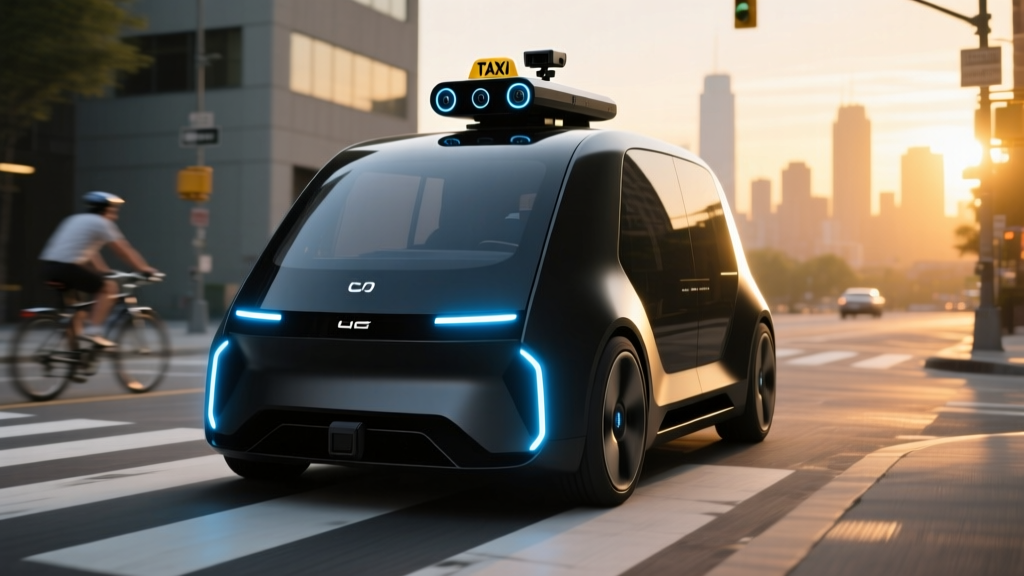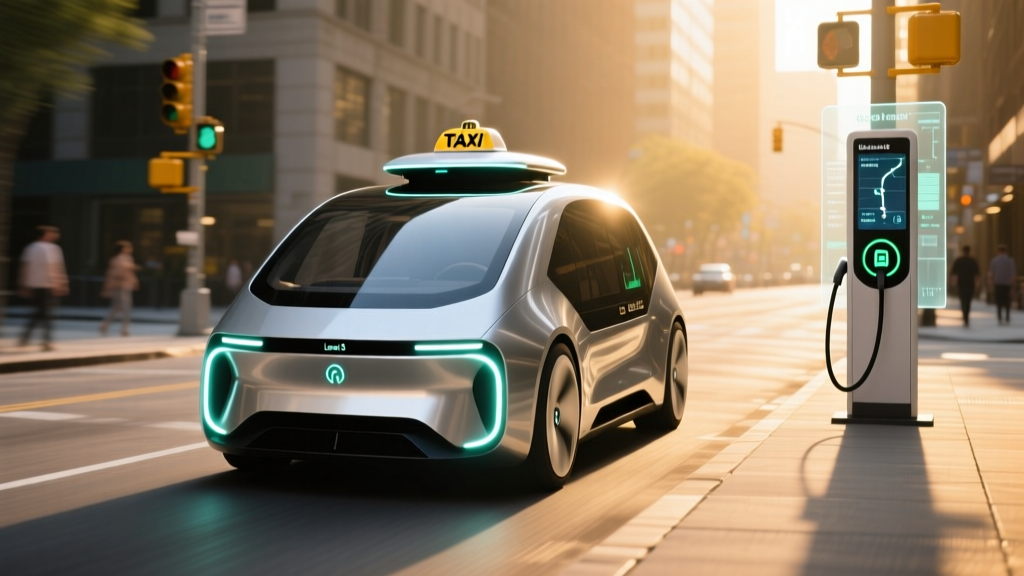
Honda made global headlines when it became the first automaker to sell a production vehicle with certified Level 3 autonomy. But if you're searching for a "Honda self-driving car," you need to understand exactly what that means — and what it doesn't. Honda's system is a fundamentally different technology from the driverless robotaxis operated by Waymo, Cruise, and Zoox. This guide separates Honda's conditional automation from true driverless services, with hard data on where each technology stands in 2026.
What Honda's "Self-Driving" System Actually Is
Honda's autonomous driving technology is branded as Honda SENSING Elite, and it debuted on the Honda Legend sedan in Japan. The critical distinction: this is an SAE Level 3 system, not Level 4 or Level 5. That distinction changes everything about how you interact with the car.
| Level | Name | Who Drives | Example |
|---|---|---|---|
| Level 2 | Driver Assist | You — always | Tesla Autopilot, GM Super Cruise, Honda SENSING |
| Level 3 | Conditional Automation | Car (in strict limits), you on standby | Honda SENSING Elite (Legend) |
| Level 4 | High Automation | Car — no driver needed in zone | Waymo One, Zoox |
| Level 5 | Full Automation | Car — everywhere, all conditions | Does not exist commercially |
At Level 3, the Honda Legend's Traffic Jam Pilot feature allows the driver to legally take their eyes off the road — but only under narrowly defined conditions: speeds below approximately 19 mph (30 km/h), on divided expressways, in congested traffic, with clear lane markings and favorable weather. The moment conditions change, the system issues a takeover request and the driver must resume control within seconds. This is not a car you can nap in.
Honda Legend SENSING Elite: Specs and Availability
The Honda Legend equipped with SENSING Elite launched in Japan in March 2021 as a limited lease-only model — just 100 units were initially offered. Honda later expanded availability but kept the system exclusive to the Japanese domestic market. As of 2026, Honda has not introduced Level 3 capability on any vehicle sold in the United States.
| Specification | Detail |
|---|---|
| Autonomy Level | SAE Level 3 (Traffic Jam Pilot) |
| Operational Speed | 0–30 km/h (~19 mph) |
| Operational Domain | Divided expressways, congestion, clear weather |
| Sensor Suite | 5 lidar units, cameras, millimeter-wave radar, HD 3D maps |
| Takeover Request Time | ~10 seconds warning before mandatory handover |
| Driver Monitoring | Interior camera tracking eye gaze and head position |
| US Availability | Not available — Japan only as of 2026 |
| Powertrain | 3.5L V6 hybrid, ~315 HP |
| Price (Japan Lease) | ~¥11,000,000 MSRP (~$73,000 USD equivalent) |
Honda's sensor approach is notable for its reliance on lidar — five units mounted around the vehicle — combined with high-definition 3D mapping. This contrasts sharply with Tesla's camera-only philosophy and aligns more closely with the sensor stacks used by Waymo and Cruise for their Level 4 robotaxis.
Level 3 vs Level 4 Robotaxis: A Fundamental Divide
If you want a vehicle that drives itself with no human backup required, you're looking for a Level 4 robotaxi — and Honda doesn't currently operate one. The Level 4 services in the US are operated by technology companies, not traditional automakers selling to consumers.
| Factor | Honda SENSING Elite (L3) | Waymo One (L4) | Zoox (L4) |
|---|---|---|---|
| Driver Required? | Yes — must be ready to take over | No — fully driverless | No — fully driverless |
| Operational Area | Specific Japanese expressways | Phoenix, SF, LA, Austin (expanding) | Las Vegas, Foster City, SF (limited) |
| Speed Range | Under 19 mph only | Up to 65+ mph | Up to ~75 mph |
| Ownership Model | Personal vehicle (lease) | Rideshare service | Rideshare service |
| Weather Limits | Clear conditions only | Light rain OK; heavy rain/snow restricted | Moderate conditions; severe weather paused |
| Lidar | 5 units | Custom roof-mounted array + cameras + radar | 4-corner lidar + cameras + radar |
Where Can You Actually Use a Robotaxi Right Now?
While Honda's Level 3 system remains Japan-exclusive, Level 4 robotaxi services have expanded across several US metro areas. Here's where you can hail a truly driverless ride as of early 2026:
| Service | City | Status | Hours |
|---|---|---|---|
| Waymo One | Phoenix, AZ | Fully driverless, open to public | 24/7 |
| Waymo One | San Francisco, CA | Fully driverless, open to public | 24/7 |
| Waymo One | Los Angeles, CA | Fully driverless, open to public | 24/7 |
| Waymo One | Austin, TX | Fully driverless, open to public | Expanded hours |
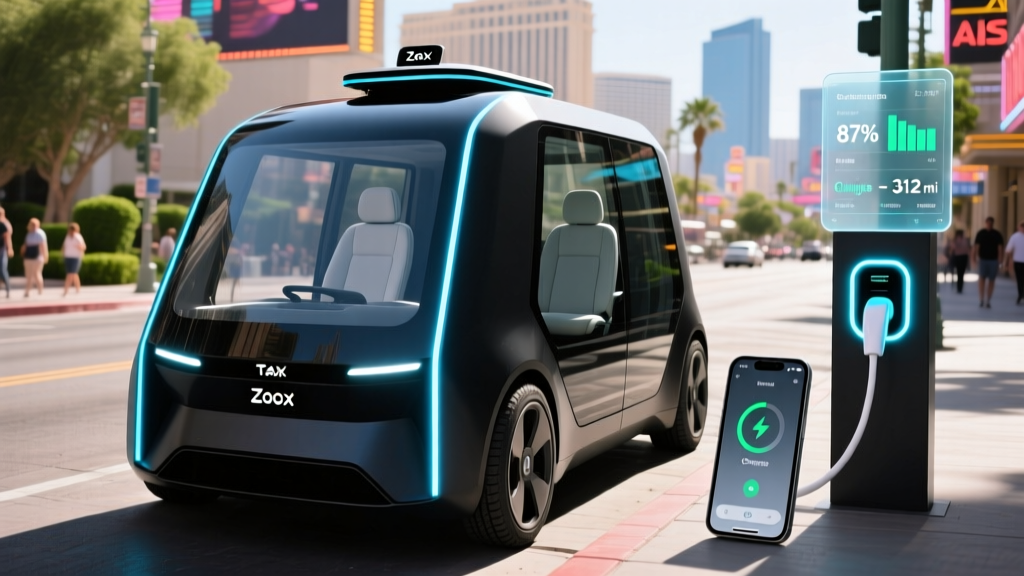
| Zoox | Las Vegas, NV | Driverless, invite/employee focus | Limited hours |
| Zoox | Foster City, CA | Testing/early service | Limited |
| Cruise | — | Operations suspended/restructuring post-2023 incident; limited supervised testing only | N/A |
How to use Waymo One: Download the Waymo app (iOS/Android), create an account, enter your pickup and drop-off within the service geofence, and a Jaguar I-PACE–based robotaxi arrives without a driver. The experience is similar to Uber, minus the human behind the wheel.
Robotaxi Pricing: How Does It Compare to Uber and Lyft?
One of the most common questions is whether robotaxis cost more than conventional rideshare. Based on aggregated rider reports and published pricing from Phoenix and San Francisco markets, here's the comparison:
| Route | Waymo One | UberX | Lyft Standard |
|---|---|---|---|
| Short (3–5 mi) | $8–$14 | $9–$16 | $9–$15 |
| Medium (8–12 mi) | $18–$28 | $17–$30 | $16–$28 |
| Airport (15–20 mi) | $35–$55 | $35–$60 | $33–$55 |
| Surge Pricing? | No dynamic surge currently | Yes — can 1.5–3x | Yes — Prime Time surges |
| Tipping | Not applicable (no driver) | Expected ($2–$5+) | Expected ($2–$5+) |
Waymo pricing is broadly competitive with UberX and Lyft Standard on comparable routes. The absence of surge pricing and tipping can make Waymo cheaper during peak demand periods. However, Waymo's geofence limits your drop-off options — you can't ride outside the mapped service area, and airport availability varies by city.
Safety Record: What the Real Data Shows
- Waymo cumulative driverless miles: Over 10 million fully autonomous miles driven across Phoenix, SF, LA, and Austin as of late 2025 (source: Waymo Safety Report).
- Waymo crash rate vs human benchmark: Waymo's published data (peer-reviewed through insurance claims analysis) shows an approximately 85% reduction in injury-causing crash frequency per million miles compared to human drivers in comparable urban environments.
- Cruise October 2023 incident: A Cruise robotaxi in San Francisco struck a pedestrian who had been thrown into its path by a human-driven vehicle, then dragged the person ~20 feet while attempting to pull over. This led to NHTSA scrutiny and California DMV suspension of Cruise's permit. Cruise suspended nationwide driverless operations and has not fully resumed as of early 2026.
- NHTSA Standing General Order: Since June 2021, all ADS-equipped vehicles must report crashes. The NHTSA Standing General Order data provides the most comprehensive public record of robotaxi incidents.
The safety picture is nuanced. Robotaxis have demonstrated lower crash rates per mile than human drivers in controlled urban environments, but the sample size remains small relative to the billions of human-driven miles annually. The Cruise incident exposed edge-case vulnerabilities — specifically, how autonomous systems handle chaotic multi-vehicle scenarios involving pedestrians thrown into the roadway. No system, human or machine, handles every edge case perfectly.
Current Limitations of Autonomous Driving Technology
Whether you're looking at Honda's Level 3 or a Level 4 robotaxi, significant limitations remain. Understanding these prevents unrealistic expectations.
- Heavy rain, snow, or fog: Lidar and camera performance degrades in precipitation. Waymo operates in light rain but suspends service in severe weather. Honda's Level 3 requires clear conditions.
- Construction zones with altered lane markings: Temporary barriers, shifted lanes, and missing paint confuse mapping systems. Most services route around known construction, but unexpected work zones force conservative behavior or remote-assist intervention.
- Unprotected left turns across heavy traffic: Some systems struggle with gap acceptance at complex intersections. Waymo has improved here, but riders report occasional long waits or circuitous rerouting.
- Geofence boundaries: Level 4 services cannot operate outside their HD-mapped zones. Drive to the edge of the map and the service simply won't dispatch. Honda's Level 3 only works on designated Japanese expressways.
- Emergency vehicle interaction: While systems detect sirens and pull over, complex scenarios (multiple emergency vehicles, accidents blocking the route) can require remote human assistance.
- Pedestrian intent prediction: Jaywalkers, crowds, and unpredictable human behavior in dense urban areas force conservative driving that can feel overly cautious to riders.
The Technology Stack: How Honda Compares to Robotaxi Operators
Honda's approach to autonomous driving reveals a philosophical choice shared with most robotaxi companies — and opposed by Tesla.
Honda SENSING Elite uses:
- 5 lidar units ( Continental-supplied short-range and mid-range)
- Forward-facing cameras and surround-view cameras
- Millimeter-wave radar for long-range object detection
- HD 3D maps with centimeter-level lane geometry
- Redundant braking, steering, and power systems for fail-safe operation
- Driver monitoring camera ensuring eyes can redirect to road within takeover window
Waymo's 5th/6th-gen system uses:
- Custom-designed long-range lidar on roof plus short-range lidar on corners
- 29+ cameras providing overlapping 360° coverage
- 6 radar units for velocity and weather-penetrating detection
- Proprietary HD maps updated continuously by fleet vehicles
- Redundant compute, steering, braking — no driver fallback needed
Tesla's FSD (Supervised) uses:
- Camera-only vision system (8 cameras, no lidar, no radar on current HW4 vehicles)
- No HD maps — relies on real-time neural network inference
- Driver must remain attentive at all times (Level 2)
The lidar-vs-camera debate matters because lidar provides precise depth measurement independent of lighting conditions. Honda and Waymo both concluded that lidar is essential for the safety margins required when the human is not supervising. Tesla's bet is that neural networks trained on billions of camera-miles will eventually match lidar's depth precision — but as of 2026, Tesla remains firmly at Level 2 with mandatory driver supervision.
Regulatory Landscape: Who Approves These Systems?
Autonomous vehicle regulation in the US is fragmented between federal and state authority:
- NHTSA (federal): Sets vehicle safety standards (FMVSS) and issues crash investigations. NHTSA does not currently "approve" ADS software but can issue recalls and mandates crash reporting via the Standing General Order.
- State DMVs and PUCs: States like California, Arizona, Texas, and Nevada have their own permitting frameworks. California's DMV issues testing permits and deployment permits. The California Public Utilities Commission (CPUC) regulates commercial passenger service. Arizona has taken a permissive approach, enabling Waymo's Phoenix operations with minimal state oversight.
- Japan (Honda's market): Japan's Ministry of Land, Infrastructure, Transport and Tourism (MLIT) certified Honda's Level 3 system under revised road transport vehicle laws — making Japan one of the first nations to create a legal framework for conditional automation in production vehicles.
For US consumers, this means robotaxi availability depends entirely on your state and city. Even if you live in a major metro, the service may not have a permit for your jurisdiction.
Honda's Future Autonomous Plans and the Acura Partnership
Honda has not abandoned its autonomy ambitions. The company has invested in Cruise (alongside GM) and continues developing next-generation SENSING systems for global markets. Honda's goal, as stated in corporate roadmaps, is to achieve Level 4-capable vehicles by the late 2020s — but these remain in development, not on sale.
For US buyers interested in Honda's most advanced driver-assist technology available today, the Honda Sensing suite (Level 2) is standard or available across the lineup — including the Prologue EV, Accord Hybrid, CR-V Hybrid, and Pilot. These systems offer adaptive cruise control, lane-keeping, and traffic jam assist, but they require constant driver attention. They are not self-driving in any legal or technical sense.
Frequently Asked Questions
Is the Honda self-driving car available in the US?
No. The Honda Legend with SENSING Elite (Level 3 Traffic Jam Pilot) is only available in Japan as a limited lease. Honda does not sell any Level 3 or higher vehicle in the United States as of 2026. All Honda vehicles sold in the US feature Level 2 driver-assist (Honda Sensing), which requires the driver to remain fully engaged.
Can I ride in a robotaxi without a driver today?
Yes — if you're in Phoenix, San Francisco, Los Angeles, or Austin, you can use Waymo One for fully driverless rides. Zoox operates limited driverless service in Las Vegas. These are Level 4 services — no human driver is present. Availability is limited to specific geofenced areas within those cities.
How much does a Waymo ride cost compared to Uber?
Waymo pricing is comparable to UberX and Lyft Standard for similar routes, typically $8–$14 for short trips and $35–$55 for airport runs. Waymo currently does not apply surge pricing, and there's no driver to tip, which can make it cheaper during high-demand periods.
Are robotaxis safer than human drivers?
Waymo's published and peer-reviewed data indicates approximately 85% fewer injury-causing crashes per million miles compared to human benchmarks in similar urban environments. However, total autonomous miles driven (tens of millions) are a tiny fraction of human-driven miles (trillions annually), and edge-case incidents — such as the Cruise pedestrian drag incident in October 2023 — demonstrate that the technology is not infallible.
What's the difference between Honda SENSING Elite and Tesla FSD?
Honda SENSING Elite is certified Level 3 — the car takes full driving responsibility under narrow conditions (under 19 mph, divided expressways, clear weather, Japan only). Tesla FSD (Supervised) is Level 2 — the driver must remain attentive and is legally responsible at all times, despite the "Full Self-Driving" name. Honda uses lidar; Tesla uses cameras only. Neither is Level 4 or Level 5.
Will Honda bring Level 3 or Level 4 to the US?
Honda has announced goals for Level 4 capability by the late 2020s and continues to invest in autonomous technology through its partnership with Cruise/GM. However, no specific US-market vehicle with Level 3 or higher has been announced with a firm release date. Regulatory approval in the US would also need to be secured state by state.
What sensor technology do robotaxis use?
Level 4 robotaxis (Waymo, Zoox) and Honda's Level 3 system both rely on lidar combined with cameras, radar, and HD maps. Tesla's FSD is the notable outlier, using cameras only. Lidar provides precise 3D depth perception independent of lighting, which most safety engineers consider essential for systems where no human is monitoring the road.
Sources: NHTSA Standing General Order, Waymo Safety Data, Honda Motor Co. press archives. Pricing data reflects aggregated rider reports from Phoenix and San Francisco markets, Q4 2025–Q1 2026. Autonomous vehicle regulations and service availability are subject to change — verify current status with your state DMV and service provider.