The Austin Battleground: Why Texas is Ground Zero
Austin, Texas, has rapidly evolved from a quirky college town into the undisputed epicenter of the autonomous vehicle industry. With Tesla relocating its global headquarters to the Austin Gigafactory and competitors like Waymo expanding their commercial footprints, the city has become the ultimate proving ground for the future of mobility. For data analysts, EV enthusiasts, and prospective robotaxi riders, understanding the nuances of the Tesla Robotaxi Austin launch timeline and service details requires looking past the hype and examining the hard metrics. In this data-driven comparison analysis, we break down Tesla's projected deployment schedule, hardware economics, and the regulatory arbitrage that makes Texas the most critical battleground for unsupervised Full Self-Driving (FSD).
Tesla Robotaxi Austin Launch Timeline: A Data-Driven Breakdown
During the highly anticipated We, Robot event in late 2024, Tesla CEO Elon Musk outlined a roadmap that hinges on a staggered rollout of unsupervised FSD and the dedicated Cybercab. According to Reuters, Tesla targets unsupervised FSD deployment in California and Texas by 2025, with dedicated Cybercab production slated for 2026 to 2027. However, industry analysts note that Tesla's timelines historically experience delays. To understand the realistic Austin launch window, we must map the developmental milestones against local regulatory constraints and fleet readiness.
| Milestone | Target Date | Current Status | Data Confidence Level |
|---|---|---|---|
| Unsupervised FSD (Model 3/Y) | Mid 2025 | Internal Testing / Shadow Mode | Medium |
| Texas Regulatory Approval | Late 2025 | Pending TxDOT Framework Finalization | High |
| Cybercab Prototype Testing in Austin | Early 2026 | Pre-Production Mules Spotted | Medium |
| Dedicated Cybercab Austin Launch | 2027 | Factory Tooling Setup | Low-Medium |
Service Architecture: Cybercab vs. Existing Fleet
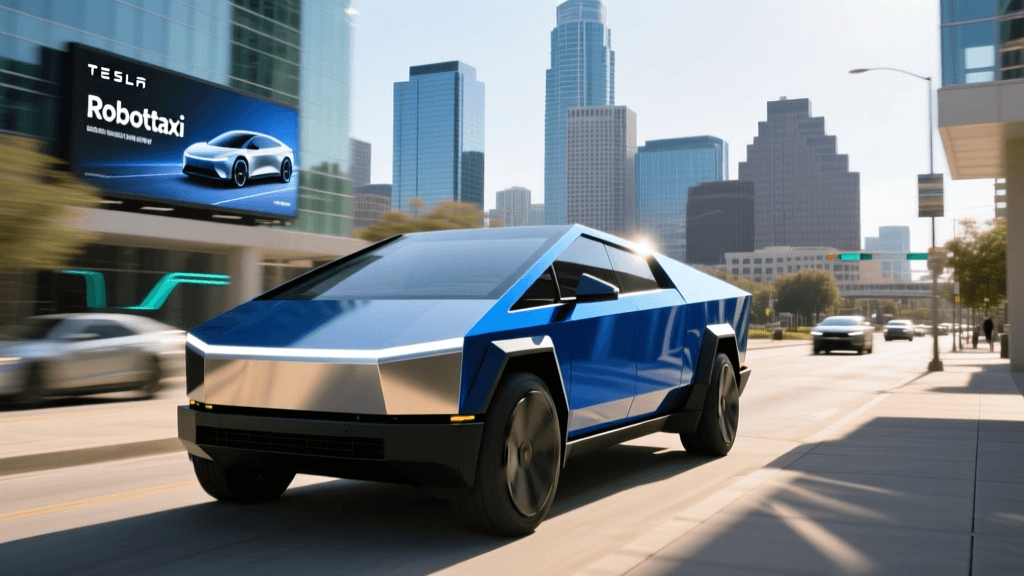
Tesla's Austin service model relies on a dual-pronged approach. The immediate data suggests that before the dedicated Cybercab hits the roads, Tesla will leverage its existing fleet of Model 3 and Model Y vehicles equipped with the Hardware 4 (HW4) AI suite. This allows Tesla to instantly scale its Austin network without waiting for new manufacturing lines to reach peak efficiency. The Cybercab, designed without a steering wheel or pedals, represents the long-term economic endgame. Tesla claims the Cybercab will operate at an estimated cost of $0.20 per mile, a staggering reduction compared to traditional ridesharing and current autonomous alternatives. This cost reduction is driven by the elimination of the driver, the removal of expensive LiDAR sensors, and the utilization of Tesla's proprietary end-to-end neural network architecture, which relies solely on high-resolution cameras and the upcoming AI5 inference chip.
Head-to-Head Data: Tesla vs. Waymo in Austin
To contextualize Tesla's ambitions, we must compare its projected metrics against Waymo, which announced its expansion into Austin in mid-2024. As detailed in the Waymo Official Blog, the Alphabet-backed company is bringing its sixth-generation driver system to Texas, aiming for a gradual, geofenced commercial rollout. The contrast in operational philosophy and hardware economics is stark.
- Hardware Cost per Vehicle: Tesla Cybercab (Projected under $30,000) vs. Waymo 6th Gen (Estimated $50,000 to $70,000+ with LiDAR and Radar suite).
- Sensor Architecture: Tesla (Vision-Only, 8+ Cameras) vs. Waymo (Redundant LiDAR, Radar, and Vision).
- Mapping Requirements: Tesla (Real-time neural net generalization, no HD maps required) vs. Waymo (Pre-mapped HD geofenced zones).
- Projected Consumer Cost: Tesla ($0.20/mile target) vs. Waymo (Currently comparable to or slightly above Uber/Lyft pricing in launch markets).
- Austin Coverage Area: Tesla (Aiming for city-wide, including unmapped suburban sprawl) vs. Waymo (Starting in high-density, pre-mapped corridors like South Austin and Downtown).
The Regulatory Arbitrage: Texas vs. California
One of the most significant data points favoring Tesla's Austin launch is the regulatory environment. Unlike California, which requires stringent Autonomous Vehicle Testing (AVT) permits, mandatory disengagement reporting, and lengthy approval processes through the DMV and CPUC, Texas operates on a more permissive framework. Texas law allows autonomous vehicles to operate on public roads provided they comply with standard traffic laws and carry adequate insurance. This regulatory arbitrage means Tesla can iterate, test, and deploy unsupervised FSD updates in Austin at a significantly faster cadence than in its legacy California testing grounds. According to CNBC, Musk has explicitly cited the ease of working with Texas regulators as a primary catalyst for targeting the state for early unsupervised deployments.
Actionable Advice for Austin Riders and Investors
For Austin locals, the arrival of Tesla's robotaxi network will likely occur in phases. Expect to see data-collection vehicles with prominent camera arrays and safety drivers mapping the complex I-35 construction zones and the unpredictable downtown grid before true driverless rides become available. Riders should prepare for a Tesla-integrated ride-hailing interface within the existing Tesla app, which will likely undercut competitors on price during the initial market-capture phase. For investors and industry analysts, the key performance indicators (KPIs) to monitor are not just the launch date, but the FSD take-rate in Texas and the intervention rate per 10,000 miles in Austin's unique weather and traffic conditions. If Tesla can prove a sub-$0.30 per mile operating cost in Austin by late 2026, it will fundamentally disrupt the unit economics of the global transportation sector.