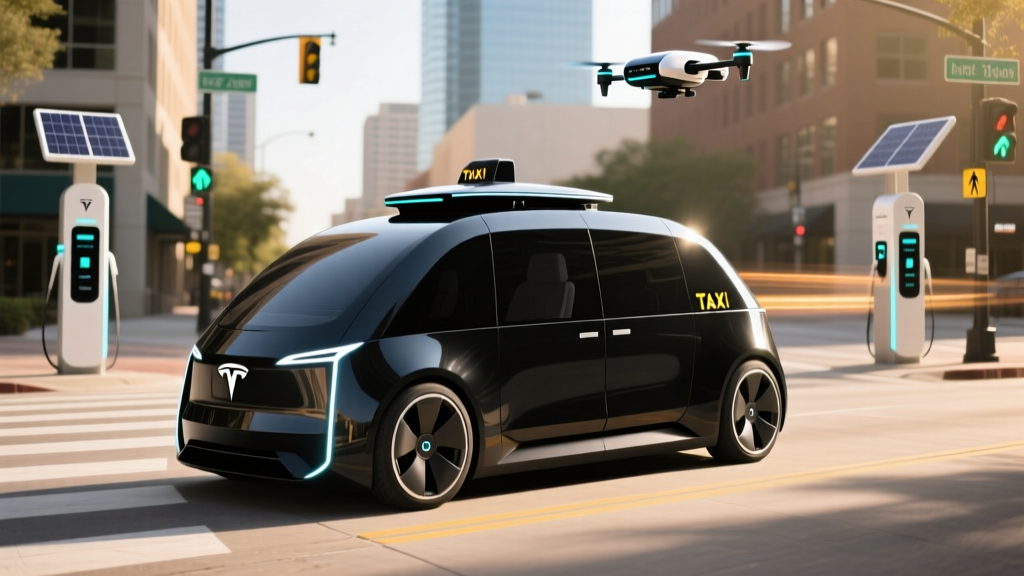
Tesla's promise of a driverless robotaxi network has been a cornerstone of its valuation story for years. Yet as of early 2026, the much-anticipated Tesla robotaxi Austin delay continues to dominate EV headlines. What was initially teased as a mid-2025 commercial launch in Austin, Texas — Elon Musk's adopted home base and a city with favorable autonomous-vehicle legislation — has slipped repeatedly. The Cybercab, unveiled in October 2024 without a steering wheel or pedals, remains in limited testing, and paying riders cannot yet hail one.
This article breaks down exactly where Tesla's robotaxi ambitions stand in Austin, why the delays persist, and how the effort compares to Level 4 services that are already operating commercially in the U.S. right now.
SAE Automation Levels: Why the Distinction Matters
Before analyzing the delay, it's critical to separate what Tesla currently sells consumers from what a robotaxi requires. The terminology is frequently conflated in media coverage, and that confusion benefits no one making a purchase or policy decision.
| Level | Name | Who Drives | Current Examples |
|---|---|---|---|
| Level 2 | Driver Assistance | Human (must monitor at all times) | Tesla Autopilot, FSD (Supervised), GM Super Cruise, Ford BlueCruise |
| Level 3 | Conditional Automation | System in defined conditions; human on standby | Mercedes Drive Pilot (limited markets, low speed) |
| Level 4 | High Automation | System (no human needed in geofenced area) | Waymo One, Zoox, Cruise (pre-suspension) |
| Level 5 | Full Automation | System (all conditions, no geofence) | Does not exist commercially |
Tesla's consumer-facing Full Self-Driving (Supervised) software is SAE Level 2. The driver is legally and operationally responsible at all times. A robotaxi — a vehicle with no steering wheel that picks up strangers — requires Level 4 capability at minimum. Tesla has not yet demonstrated Level 4 performance in any public, independently verified setting. The Austin delay is fundamentally a gap between Level 2 and Level 4.
Where the Austin Robotaxi Timeline Stands in 2026
Here is a timeline of key milestones and setbacks:
- October 2024: Tesla unveils the Cybercab concept at Warner Bros. Studios. Musk promises "production starting before 2027" and a ride-hailing network launching in Austin "by mid-2025."
- Q1 2025: Tesla begins limited testing of prototype Cybercabs on closed courses and restricted public roads near its Austin engineering offices. No permit for commercial passenger service.
- Mid-2025: The promised Austin launch window passes without a commercial service. Tesla pivots messaging to "late 2025 or early 2026."
- Q4 2025: Texas Department of Motor Vehicles and the Texas Department of Public Safety indicate Tesla has not yet submitted a complete application for driverless commercial operation. Musk acknowledges the Cybercab timeline is "aspirational."
- Early 2026: Tesla continues testing with safety drivers in a limited Austin geofence. No date announced for paid, driverless rides. The term "Tesla robotaxi Austin delay" trends in EV forums and financial media.
As of this writing, no paying rider has been transported in a driverless Tesla vehicle anywhere in the world. The Cybercab itself has not entered volume production. Tesla's existing Model Y and Model 3 vehicles used for testing retain steering wheels and require a safety operator.
Why the Delay? Regulatory, Technical, and Operational Hurdles
The Austin delay is not a single-issue problem. It's a convergence of three distinct challenge categories.
1. Texas Regulatory Framework
Texas passed Senate Bill 207 in 2021, establishing a framework for autonomous vehicles. However, the law requires operators to:
- Maintain a valid Texas autonomous vehicle permit
- Carry minimum liability insurance ($5 million for driverless vehicles)
- Comply with all traffic laws and report collisions within 10 days
- Meet data-recording and remote-assistance requirements
Tesla has not publicly confirmed receiving a Texas AV testing or commercial deployment permit as of early 2026. The application process involves the Texas Department of Public Safety and local municipalities — Austin included — each of which can impose additional operational restrictions.
2. Camera-Only Sensor Stack
Tesla's approach to autonomy is uniquely reliant on a vision-only architecture. The Cybercab prototype uses a suite of cameras (no lidar, no radar in the latest hardware revision). This is a deliberate philosophical and cost decision by Tesla, but it contrasts sharply with every other commercially operating Level 4 robotaxi.
| Platform | Cameras | Lidar | Radar | Ultrasonic | HD Maps |
|---|---|---|---|---|---|
| Tesla Cybercab (testing) | 8+ cameras | None | None (removed in HW4) | None (removed) | Lane-level, vision-derived |
| Waymo 6th-Gen | 29 cameras | 5 lidar units | 6 radar units | Yes | Pre-mapped geofences |
| Zoox Gen 3 | Multi-camera array | 4 lidar units | Multiple radar | Yes | Pre-mapped geofences |
Camera-only systems face inherent limitations in low-light conditions, heavy rain, fog, and direct sun glare — all conditions Austin experiences. Lidar provides depth perception independent of lighting, which is why Waymo and Zoox retain it despite the higher per-vehicle cost (estimated at $5,000–$15,000 per unit for automotive-grade lidar). Tesla's bet is that neural-network processing of camera data can match or exceed lidar's depth accuracy. That bet remains unproven at Level 4 in a commercial deployment context.
3. Disengagement and Intervention Rates
Tesla does not publish standardized disengagement reports in the format that California's DMV requires of AV testers (Tesla ceased filing California DMV disengagement reports after 2021, arguing the metric is misleading). Without comparable public data, it's difficult to assess how Tesla's system performs relative to Waymo's published figures. Waymo's 2024 California disengagement report showed a mean distance between disengagements of approximately 17,000 miles — a figure built on over a decade of iterative development and billions of simulated miles.
Robotaxi Services Actually Operating Today
While Austin waits on Tesla, other cities have had commercial Level 4 robotaxi service for years. Here's what's live right now:
| Service | Operator | Cities | Hours | Geofenced | Vehicle |
|---|---|---|---|---|---|
| Waymo One | Waymo (Alphabet) | Phoenix, San Francisco, Los Angeles, Austin (limited) | 24/7 in most markets | Yes | Jaguar I-PACE, Zeekr RT (incoming) |
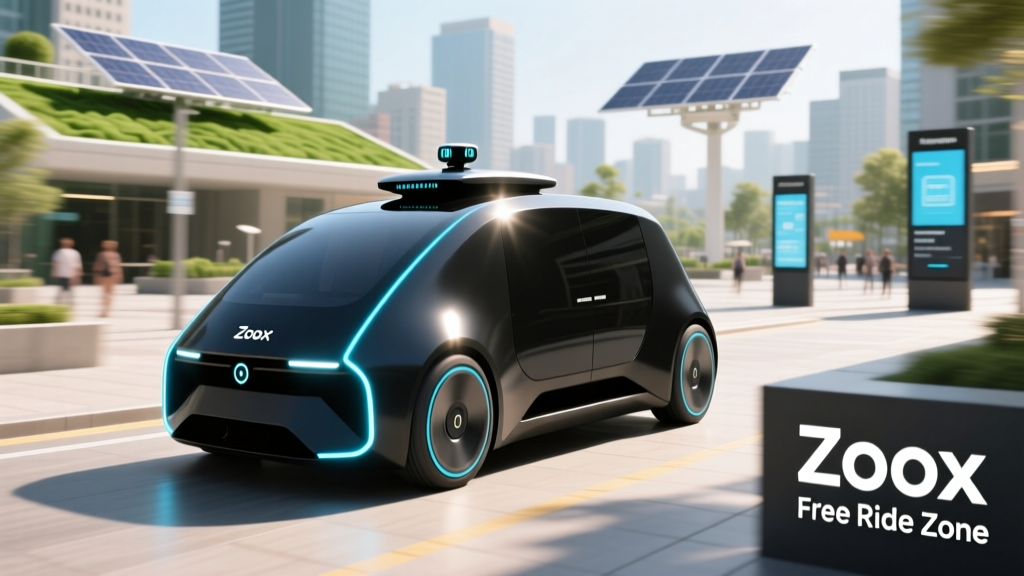
| Zoox | Zoox (Amazon) | Las Vegas, Foster City (CA) | Limited hours | Yes | Zoox Gen 3 (purpose-built) |
| Waymo One (Austin) | Waymo | Austin (downtown + select corridors) | Limited rollout, expanding | Yes | Jaguar I-PACE |
Notably, Waymo has already launched in Austin — the very city where Tesla's robotaxi remains delayed. Waymo One Austin began limited operations in late 2025, serving a defined geofence with a safety driver initially, with driverless rides expected to expand through 2026. For Austin residents seeking an actual robotaxi experience today, Waymo is the only option.
How to Use a Robotaxi and What It Costs
For the services that are live, the experience is straightforward:
- Download the operator's app (e.g., Waymo One)
- Set your pickup and dropoff within the geofenced service area
- Confirm the ride — the vehicle arrives autonomously
- Enter using the app (doors unlock when the vehicle confirms your identity)
- Start the ride via an in-cabin screen; the vehicle handles all driving
- Pay automatically through the app at trip's end
| Service Type | Base Fare | Per-Mile Rate | Per-Minute Rate | Avg. 5-Mile Trip |
|---|---|---|---|---|
| Waymo One | $3.50 | $1.10 | $0.35 | $12–$16 |
| UberX (national avg.) | $2.50 | $1.30 | $0.35 | $11–$15 |
| Lyft Standard (national avg.) | $2.50 | $1.25 | $0.33 | $10–$14 |
Robotaxi pricing is currently comparable to or slightly above standard rideshare, not below it. Waymo has subsidized rides in some markets to build adoption, but the long-term economic thesis — that removing the driver cuts costs by 50%+ — depends on achieving very high vehicle utilization (15+ hours/day) and reducing per-vehicle hardware costs. Tesla has argued its camera-only approach would allow a $30,000 Cybercab, undercutting competitors whose sensor stacks push vehicle costs above $70,000. Whether that cost advantage translates to cheaper rides remains speculative without a live service.
Safety Data: What the Numbers Actually Show
Safety is the most consequential — and most debated — dimension of robotaxi deployment. Here is what we know from verifiable data:
Waymo Safety Record (through Q4 2025):
- Over 10 million fully driverless miles completed across Phoenix, San Francisco, and Los Angeles
- NHTSA Standing General Order data shows Waymo vehicles involved in fewer at-fault collisions per million miles than the U.S. human-driver average
- A 2024 IIHS-cited study found Waymo's at-fault crash rate was approximately 85% lower than the human benchmark in comparable urban environments
- Notable incidents: a 2024 San Francisco collision with a semi-truck at an intersection; a 2023 school bus contact (no injuries). Each prompted software updates and operational reviews.
For Tesla's robotaxi program specifically, no comparable safety data exists. Tesla does not publish disengagement metrics, collision rates, or miles driven in a driverless configuration (because driverless miles have not been logged commercially). Tesla's FSD (Supervised) fleet does generate billions of miles of driving data, but those miles are logged with a human driver responsible — a fundamentally different operational profile from Level 4.
The National Highway Traffic Safety Administration requires all Level 2+ and Level 4 systems to report crashes under its Standing General Order. Any future Tesla robotaxi deployment would fall under this requirement, but until vehicles are operating without safety drivers, there is no Level 4 safety record to evaluate.
Current Limitations of Robotaxi Technology
Even the services that are live face significant constraints. These are not edge cases — they define the practical boundaries of what's available today:
- Geofencing: Every operating Level 4 robotaxi is restricted to a pre-mapped service area. Drive outside the boundary and the vehicle will pull over and end the ride.
- Weather: Heavy rain, snow, fog, and dust storms degrade sensor performance. Waymo and Zoox will suspend service or refuse rides in severe conditions. Austin's occasional flash-flood events and dust storms are operational challenges.
- Construction zones: Temporary lane closures, detours, and unpaved surfaces remain difficult for pre-mapped systems. Waymo has improved here but still occasionally reroutes or requests remote assistance.
- Emergency vehicles: Robotaxis must detect and yield to ambulances, fire trucks, and police. False positives (pulling over for a distant siren) and false negatives (failing to yield) both occur, though rates have decreased with each software generation.
- Pickup/dropoff precision: Identifying a safe, legal stop location — especially on crowded urban streets or large parking lots — remains imperfect. Riders sometimes walk a short distance to the vehicle.
- No highway driving: Current Level 4 services are limited to surface streets. Highway-speed merging and lane changes at 70+ mph are not yet part of commercial robotaxi operations.
The Regulatory Landscape: Who Decides When Tesla Can Launch?
Autonomous vehicle regulation in the U.S. is a patchwork of federal and state authority:
- Federal (NHTSA): Sets vehicle safety standards (FMVSS). The Cybercab, with no steering wheel or pedals, requires an exemption from several FMVSS requirements. NHTSA has granted limited exemptions in the past (e.g., to Nuro for a low-speed delivery pod), but a high-speed passenger vehicle exemption is a more complex process.
- State (Texas): Texas SB 207 allows AV operation but requires permitting, insurance, and compliance with local ordinances. The Texas DPS is the primary state-level gatekeeper.
- Municipal (City of Austin): Austin can impose additional requirements on AV operators, including operating hours, geographic restrictions, and data-sharing mandates. The Austin City Council and Austin Transportation Department both have input.
Tesla's path to commercial robotaxi service in Austin requires clearing all three layers. The FMVSS exemption for a steering-wheel-free Cybercab is arguably the largest single regulatory unknown, and as of early 2026, Tesla has not publicly disclosed the status of any such application.
Frequently Asked Questions
Where can I use a Tesla robotaxi right now?
Nowhere. As of early 2026, Tesla has no commercially available robotaxi service in any city. The Cybercab is in limited testing in Austin with safety drivers. No paying rider has been transported in a driverless Tesla vehicle.
How much will the Tesla robotaxi cost vs. Uber or Lyft?
Tesla has not published pricing. Elon Musk has suggested rides could cost less than a bus ticket, but no fare structure has been announced. For reference, Waymo One currently prices rides comparably to UberX ($12–$16 for a typical 5-mile urban trip). Tesla's claimed vehicle-cost advantage ($30,000 Cybercab vs. $70,000+ for competitors) could theoretically allow lower fares, but this depends on achieving high utilization and proving safety at scale.
How safe are robotaxis — is there real data?
Yes, for operating services. Waymo has completed over 10 million driverless miles with an at-fault crash rate significantly below the U.S. human-driver average, according to NHTSA and IIHS-cited studies. For Tesla's robotaxi program, no Level 4 safety data exists because no driverless commercial miles have been driven.
What are the current limitations of robotaxi technology?
Geofencing (restricted service areas), weather sensitivity (rain, fog, dust), construction zone handling, emergency vehicle interactions, imprecise pickup/dropoff, and no highway-speed operation. These constraints apply to all current Level 4 services, including Waymo and Zoox.
Is Tesla FSD (Supervised) the same as the robotaxi?
No. Tesla FSD (Supervised) is SAE Level 2 driver-assistance software. It requires an attentive human driver at all times and is available in consumer vehicles today. A robotaxi is a Level 4 driverless service. The two are fundamentally different in capability, regulatory classification, and legal liability.
When will the Tesla robotaxi actually launch in Austin?
Tesla has not provided a confirmed date. Initial promises of mid-2025 slipped to late 2025, then to "2026 or later." The FMVSS exemption for the steering-wheel-free Cybercab, Texas state permitting, and Austin municipal approval are all outstanding. A realistic estimate based on current regulatory and technical progress places the earliest possible commercial launch in late 2026 or 2027 — and that assumes Tesla resolves its Level 4 capability gap.