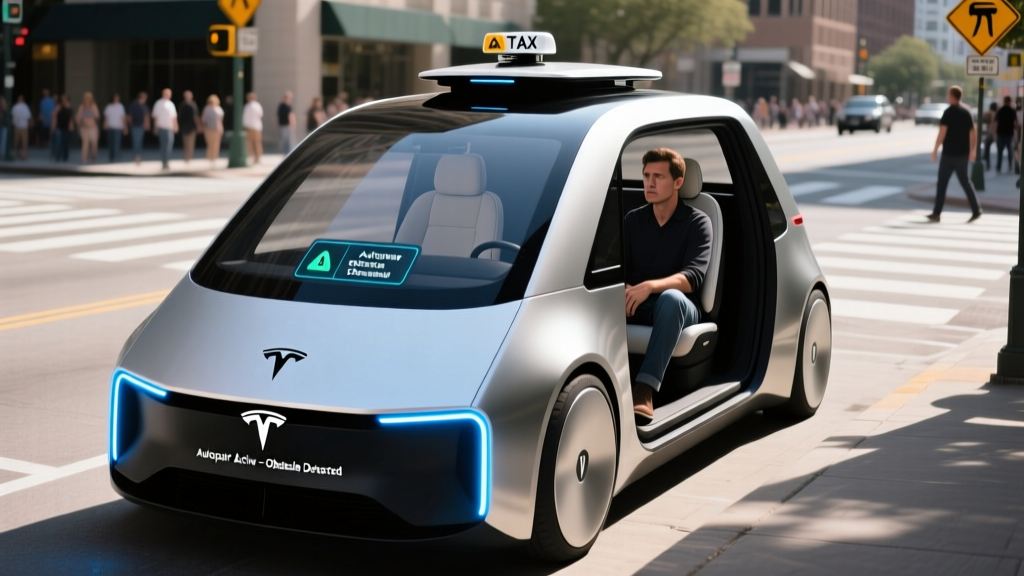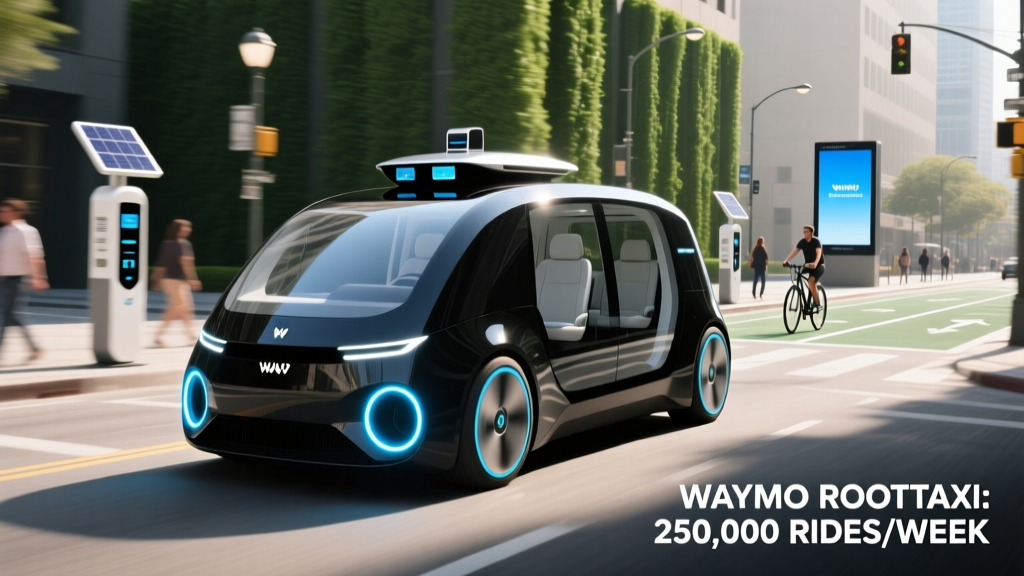
Tesla's unveiling events generate enormous attention, and the Tesla Model 2 robotaxi event was no exception. Promises of a sub-$25,000 autonomous vehicle operating without a driver behind the wheel captured headlines and investor imagination alike. But for consumers trying to figure out whether they can actually hail a driverless Tesla ride today — and how this compares to services already running — the gap between announcement and asphalt remains significant.
This analysis separates what Tesla has demonstrated, what regulators have approved, and what riders can actually access in 2026. We'll compare Tesla's robotaxi ambitions against the operational reality of Level 4 services like Waymo, examine the technology stack differences, and provide concrete data on safety, pricing, and availability.
Understanding SAE Automation Levels: Where Tesla Actually Sits
The most critical distinction in autonomous driving is the SAE International automation level. Marketing language frequently obscures this, but the engineering and legal implications are enormous.
| Level | Name | Who Drives | Current Examples | Availability |
|---|---|---|---|---|
| Level 0 | No Automation | Human | Basic cruise control | Universal |
| Level 1 | Driver Assistance | Human (system assists steering OR speed) | Adaptive cruise, lane-keeping | Most new vehicles |
| Level 2 | Partial Automation | Human (system assists steering AND speed) | Tesla Autopilot, FSD Supervised, GM Super Cruise, Ford BlueCruise | Widely available |
| Level 3 | Conditional Automation | System (human must take over when requested) | Mercedes Drive Pilot (limited conditions) | Limited markets/conditions |
| Level 4 | High Automation | System (no human needed in geofenced area) | Waymo One, Zoox | Specific cities only |
| Level 5 | Full Automation | System (everywhere, all conditions) | None operational | Not available |
Where Can You Actually Use Robotaxi Services Right Now?
As of early 2026, fully driverless commercial robotaxi service (Level 4, no safety driver) operates in limited U.S. markets. Here's the current landscape:
| Service | Operator | Cities with Driverless Service | Hours of Operation | Public Access |
|---|---|---|---|---|
| Waymo One | Waymo (Alphabet) | Phoenix (metro), San Francisco, Los Angeles, Austin (expanding) | 24/7 in most markets | Open to public via app |
| Zoox | Zoox (Amazon) | Las Vegas (limited area), Foster City, CA (testing) | Limited hours | Invite-only/employee |
| Cruise | Cruise (GM) | Service suspended late 2023; gradual restart with safety drivers in 2024-2025; driverless status TBD 2026 | N/A | Limited |
| Tesla Robotaxi | Tesla | None (announced, not approved for driverless commercial service) | N/A | Not available |
Waymo remains the only service offering truly driverless rides to the general public at scale. According to Waymo's official reporting, the company surpassed 10 million paid rider-only trips by early 2024, with continued expansion through 2025-2026.
Tesla has announced plans for robotaxi service, but as of this writing, no Tesla vehicle operates commercially without a human driver present. The Tesla Model 2 robotaxi event demonstrated vehicle design and software capabilities, but commercial deployment requires regulatory approval from state authorities (in California, the CPUC and DMV; in Arizona, the state has taken a lighter regulatory approach).
Tesla's Technology Stack vs. Waymo: Camera-Only vs. Multi-Sensor
The Tesla Model 2 robotaxi event emphasized Tesla's vision-only approach — a suite of cameras feeding neural networks, with no lidar or radar. This represents a fundamental philosophical and technical divergence from Waymo and most other Level 4 operators.
Tesla Vision-Only Approach
- Sensors: 8 cameras (surround-view), no lidar, no radar (removed from newer models)
- Processing: Custom Tesla FSD computer (Hardware 4), neural network inference
- Mapping: Minimal reliance on HD maps; real-time perception-based navigation
- Strengths: Lower hardware cost, scalable to any road, mimics human vision
- Concerns: Depth perception accuracy, performance in adverse weather (heavy rain, fog, snow), camera occlusion (dirt, glare)
Waymo Multi-Sensor Approach
- Sensors: Lidar array (custom 5th-gen), cameras, radar, audio sensors
- Processing: Custom computing platform, sensor fusion algorithms
- Mapping: High-definition geofenced maps with real-time updates
- Strengths: Redundant sensing, superior depth accuracy, better adverse-weather performance
- Concerns: Higher hardware cost (~$100K+ per vehicle historically), geofencing limits operational area
Waymo's lidar provides precise 3D depth data independent of lighting conditions. Tesla's vision system must infer depth from 2D camera data — a task humans perform effortlessly but which remains computationally challenging in edge cases (e.g., a white truck against a bright sky, as seen in a fatal 2016 Autopilot crash).
Both approaches have accumulated billions of real-world miles, but the validation challenge differs: Tesla must prove its system works everywhere without geofencing, while Waymo must expand its geofenced territory city by city.
Safety Data: What Do the Numbers Actually Show?
Safety claims in autonomous driving are frequently contested, and context matters enormously. Here's what we know from reported data:
Waymo Safety Record (Reported Data)
- Total autonomous miles driven: Over 50 million driverless miles (cumulative through 2025, per company reports)
- Fatality record: Zero confirmed fatalities in driverless mode as of early 2026
- Injury-involved crashes: Low single digits per million miles, significantly below human baseline (~1.5 injury crashes per million miles per NHTSA data)
- Disengagement rate: Not directly comparable to Tesla, as Waymo vehicles operate without human drivers to "disengage" — remote assistance interventions occur but are infrequent
Tesla FSD (Supervised) Safety Context
- SAE Level: Level 2 — driver supervision required at all times
- NHTSA reporting: Tesla has reported crashes involving Autopilot/FSD through Standing General Order 2021-01, but data interpretation is complicated by the human-driver-present context
- Fatalities: Multiple confirmed fatalities in vehicles operating on Autopilot/FSD Supervised, with NTSB investigations citing driver inattention and system limitations
- Key caveat: Tesla's safety statistics often compare Autopilot miles to general population averages, but Autopilot is predominantly used on highways (safer roads), making direct comparison problematic
For robotaxi service (Level 4, no driver), the safety bar is different. Regulators and the public expect performance significantly better than human drivers, not merely comparable. Waymo's published data suggests it has met this threshold in its operational domains, though incidents like the 2023 Cruise pedestrian-dragging event in San Francisco demonstrate that even a single high-profile failure can halt an entire service.
The NHTSA maintains resources on automated vehicle safety, and California's DMV publishes disengagement reports from companies testing in the state — though these reports have limitations and are not standardized across operators.
Pricing: Robotaxi vs. Uber/Lyft vs. Personal Vehicle
Current robotaxi pricing varies by market, time, and demand, but here's a representative comparison:
| Service | Typical Fare | Notes |
|---|---|---|
| Waymo One | $12–$18 | Competitive with Uber/Lyft; surge pricing during peak demand |
| Uber (UberX) | $14–$22 | Varies heavily by city, time, surge |
| Lyft (standard) | $13–$20 | Similar variability |
| Tesla Robotaxi (announced target) | ~$0.20/mile → $1.00 for 5 miles (long-term vision) | Not currently available; pricing unconfirmed |
Waymo has priced competitively with traditional rideshare to build market share, not undercut it dramatically. Tesla's stated long-term vision involves per-mile costs far below current rideshare — potentially $0.20/mile or less — enabled by eliminating the driver's share of the fare (typically 50-70% of the cost).
However, achieving that pricing requires:
- Mass production of the Model 2 platform at sub-$25,000 cost
- Regulatory approval for driverless operation in multiple jurisdictions
- Sufficient fleet density to minimize deadhead (empty) miles
- Proven safety record to avoid service suspensions
For personal ownership, a Model 2 (if produced at announced pricing) would likely fall in the $25,000–$30,000 range before incentives. The IRS §30D federal tax credit offers up to $7,500 for qualifying new EVs, subject to MSRP caps ($55,000 for sedans, $80,000 for SUVs/trucks), buyer income limits ($150K single / $300K joint), and battery-sourcing requirements. A $25,000 Model 2 would clear the MSRP cap easily, but battery sourcing and income eligibility would determine actual credit availability.
Current Limitations: Where Robotaxis Can't Go (Yet)
Even operational Level 4 services like Waymo face significant constraints:
Geographic Limitations
- Geofencing: Waymo operates within mapped, approved zones. Venture outside the geofence (e.g., from San Francisco into Marin County) and the service is unavailable
- Expansion pace: Each new city requires extensive mapping, testing, and regulatory approval — a process taking 12-24+ months
Environmental Limitations
- Heavy rain/flooding: Sensor performance degrades; services may suspend operations
- Snow/ice: Lane markings obscured, road surface unpredictable — most robotaxi services avoid winter-weather markets
- Fog: Lidar performance degrades in dense fog; camera systems struggle similarly
- Construction zones: Unmapped changes to road layout require real-time adaptation; some systems handle this well, others reroute or request remote assistance
Edge Cases
- Unprotected left turns: Across high-speed traffic remains challenging
- Emergency vehicles: Detection and appropriate response (pulling over, yielding) has improved but isn't foolproof
- Unusual road users: Animals, debris, pedestrians behaving unpredictably
- Pickup/dropoff precision: Finding safe, legal, convenient stops in dense urban environments
Tesla's proposed approach — no geofencing, operate anywhere — would theoretically eliminate geographic limitations but faces a steeper validation challenge. Proving safety in Phoenix's clear, gridded streets is fundamentally different from proving it in Boston's snow, rural Montana's unmarked roads, or New York City's chaos.
Regulatory Landscape: Who Approves Robotaxi Service?
Autonomous vehicle regulation in the U.S. is fragmented:
- Federal (NHTSA): Sets vehicle safety standards but does not currently "approve" Level 4 systems for deployment. NHTSA investigates crashes and can issue recalls or orders.
- State level: Most deployment authority rests with states. California requires permits from the DMV (testing) and CPUC (commercial passenger service). Arizona has taken a permissive approach, enabling Waymo's Phoenix launch. Texas, Nevada, and others have varying frameworks.
- Local level: Cities can impose additional requirements (operating hours, geographic limits, data-sharing) or ban service entirely.
For Tesla to operate a driverless robotaxi service, it would need state-by-state (and potentially city-by-city) approval. California's CPUC has established a phased permitting process, and Tesla's relationship with California regulators has been complicated by factory-location decisions and past Autopilot marketing disputes.
The IIHS (Insurance Institute for Highway Safety) has tested various Level 2 systems and raised concerns about driver monitoring and over-reliance — concerns that become moot at Level 4 (no driver) but relevant to the transition period and public trust.
Frequently Asked Questions
Where can I use Tesla's robotaxi service right now?
You cannot. As of early 2026, Tesla does not operate a commercial driverless robotaxi service anywhere. Tesla vehicles with FSD (Supervised) require a human driver to remain engaged at all times — this is Level 2 automation, not Level 4 robotaxi service. The Tesla Model 2 robotaxi event showcased future intentions, but regulatory approval and commercial deployment have not occurred.
How much does a robotaxi ride cost compared to Uber or Lyft?
Waymo One (the only widely available Level 4 service) typically charges $12–$18 for a 5-mile urban trip, competitive with Uber/Lyft base fares. Tesla has suggested long-term per-mile costs as low as $0.20, which would dramatically undercut rideshare — but this pricing depends on achieving driverless operation at scale with the Model 2 platform, which has not yet happened.
How safe are robotaxis? Is there real data?
Waymo reports zero confirmed fatalities in driverless mode across over 50 million autonomous miles and injury-involved crash rates significantly below human averages. Tesla's FSD (Supervised) has been involved in multiple fatalities, though these occurred with a human driver present and responsible. The safety comparison is complicated by different operational contexts (Level 4 driverless vs. Level 2 driver-supervised) and reporting methodologies.
What are the current limitations of robotaxi service?
Operational Level 4 services like Waymo are geofenced (limited to specific mapped areas), affected by severe weather (heavy rain, snow, fog), and may struggle with unmapped construction zones or unusual edge cases. Tesla's proposed approach aims to eliminate geofencing but faces a much higher validation burden to prove safety across all conditions without geographic restrictions.
Is Tesla FSD really self-driving, or is it still driver-assist?
Tesla's Full Self-Driving (Supervised) is SAE Level 2 driver-assist, not self-driving. The driver must remain attentive, keep hands on or near the wheel (depending on monitoring system), and be prepared to take over immediately. Tesla's own documentation and the "Supervised" label make this clear, despite marketing language that can create confusion. Only Level 4 services like Waymo (with no human driver present) qualify as truly self-driving within their operational domains.
The Bottom Line: Patience and Realistic Expectations
The Tesla Model 2 robotaxi event generated excitement about a future of affordable, ubiquitous autonomous transportation. Tesla's vision is compelling: a low-cost vehicle platform, a neural-network approach that could theoretically scale globally without geofencing, and per-mile pricing that could democratize autonomous mobility.
But the gap between demonstration and deployment is where timelines stretch and promises face regulatory, technical, and safety-validation realities. Waymo has spent over a decade and billions of dollars to reach limited commercial operation in a handful of cities. Tesla's path — while potentially faster due to its manufacturing scale and software iteration speed — still requires proving Level 4 safety to regulators without the geofenced constraints that made Waymo's validation tractable.
For consumers in 2026: if you want a driverless ride today, Waymo One in Phoenix, San Francisco, Los Angeles, or Austin is your option. If you want Tesla's advanced driver-assist, FSD (Supervised) is available — with the understanding that you remain the driver, legally and practically. The robotaxi future Tesla envisions may arrive, but the timeline remains Tesla's to prove and regulators' to approve.