Tesla's FSD Transfer Policy: What Changed and Why It Matters
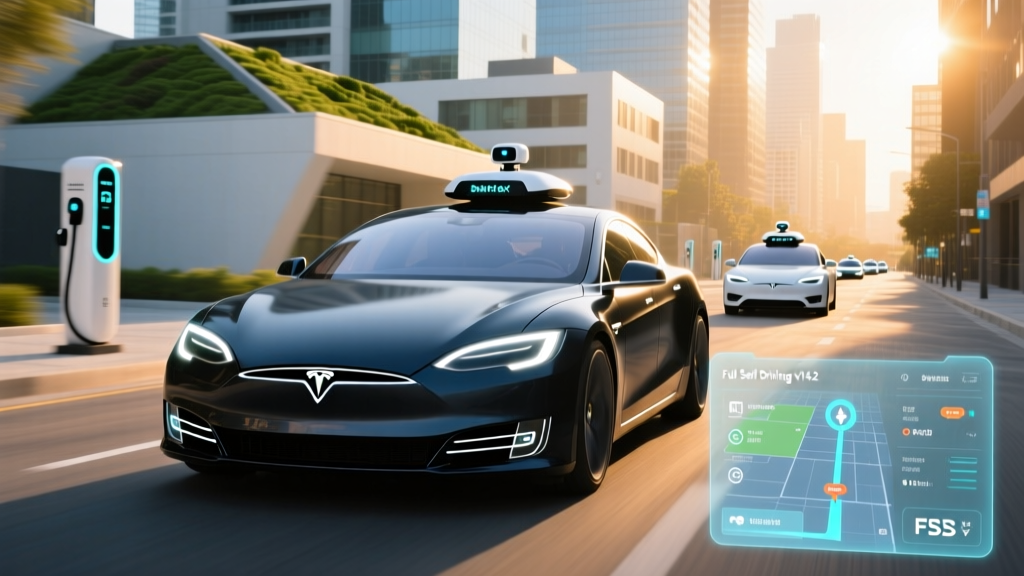
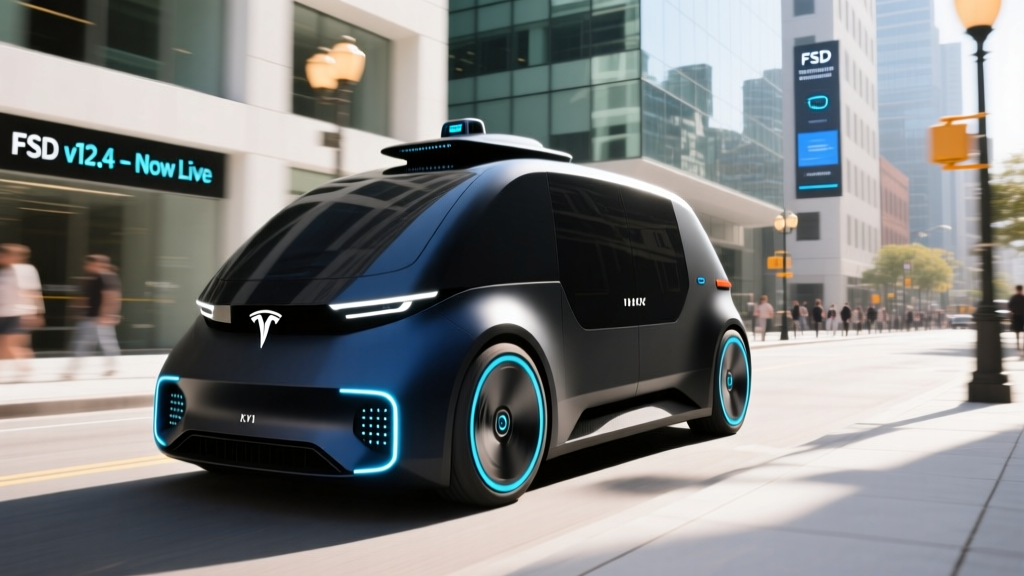
Tesla quietly updated its Full Self-Driving (FSD) transfer rules in early 2026, extending the order deadline for buyers who want to move their existing FSD license from a trade-in vehicle to a new Tesla. The policy shift gives current FSD owners a wider window to upgrade without losing the $8,000 investment they made in the software — a move that addresses one of the most common complaints among loyal Tesla buyers.
Under the previous policy, FSD transfers were only available during narrow promotional windows and typically required delivery of the new vehicle within a strict timeframe. The updated rules extend the deadline by which you must place and take delivery of a qualifying new Tesla order while retaining your FSD (Supervised) license. This matters because FSD is a one-time purchase tied to the original buyer, not the car — and without a transfer, trading in your Tesla meant losing that software investment entirely.
Before we break down the new transfer mechanics, let's clarify exactly what FSD (Supervised) does, what it costs, and why the SAE automation level matters for your expectations.
Tesla's FSD (Supervised) is classified as SAE Level 2 driver-assist technology. This means the system can manage steering, acceleration, and braking under certain conditions, but the driver must remain fully engaged, monitor the road at all times, and be prepared to take over instantly. FSD is not "self-driving" — that term applies to Level 4 systems like Waymo's robotaxi service, which operates without a human driver in geofenced areas. With FSD (Supervised), you are the driver. Tesla and the NHTSA require continuous supervision.
What Tesla FSD (Supervised) Actually Does in 2026
Tesla's Full Self-Driving (Supervised) package builds on the base Autopilot system that comes standard on every new Tesla. Here's how the technical stack works:
Sensors and hardware: Tesla relies on a pure vision approach using 8 cameras (front, rear, and side-facing) paired with the Hardware 4 (HW4) computer. Earlier vehicles used Hardware 3 (HW3), which Tesla has offered free upgrades for in some cases. Tesla removed ultrasonic sensors and radar from newer vehicles, relying entirely on neural-network-processed camera data for object detection, lane recognition, and path planning.
Software capabilities: FSD (Supervised) adds several features beyond basic Autopilot:
| Feature | What It Does | Limitation |
|---|---|---|
| Navigate on Autopilot | Automatic highway lane changes, on/off-ramp navigation | Requires clear lane markings; struggles in construction zones |
| Auto Lane Change | Suggests and executes lane changes on highways | Driver must confirm via stalk tap or setting |
| Autosteer on City Streets | Traffic light and stop sign recognition, turns at intersections | Inconsistent with unprotected left turns; disengages in heavy rain |
| Smart Summon | Car navigates parking lots to reach you | Low-speed only; requires line of sight; erratic around pedestrians |
| Autopark | Parallel and perpendicular parking assistance | Requires visible curb/space markings; fails in tight spots |
| Traffic Light & Stop Sign Control | Detects and responds to signals automatically | May miss temporary signals or obscured signs |
The Updated FSD Transfer Rules: Deadline, Eligibility, and Fine Print
Here's what Tesla's updated FSD transfer policy means in practical terms as of 2026:
Who qualifies: The transfer is available to the original purchaser of a Tesla vehicle with an active FSD (Supervised) license. The FSD must have been purchased outright (not a subscription) and must be associated with your Tesla account. The license transfers to a new or used Tesla ordered and delivered within the extended deadline window.
The extended deadline: Tesla has pushed the order-and-delivery window further into 2026, giving FSD owners additional time to configure and take delivery of a new Tesla without forfeiting their software investment. Previously, transfer promotions typically required ordering within 30–60 days and delivery within 90 days. The updated rules relax these constraints, though Tesla reserves the right to modify or end the program at any time — as they have done historically with transfer promotions.
Key restrictions to know:
- The FSD license transfers only once — you cannot move it again from the second vehicle to a third.
- The transfer applies only to FSD purchased as a one-time license, not monthly subscriptions.
- Both the trade-in and the new vehicle must be registered to the same Tesla account holder.
- Transferred FSD is tied to the new vehicle and cannot be reassigned if you sell that car (the FSD stays with the vehicle upon resale).
- The policy applies to Tesla-purchased vehicles only — third-party sales or private-party transactions don't qualify.
For the most current policy language, check Tesla's official FSD support page, as terms can change without advance notice.
FSD Costs: One-Time Purchase vs. Subscription
Tesla offers FSD (Supervised) in two pricing formats, and the transfer policy only applies to the one-time purchase option:
| Option | Cost | Transferable? | Notes |
|---|---|---|---|
| One-time purchase | $8,000 | Yes, under current transfer policy | Permanent license; stays with vehicle on resale |
| Monthly subscription | $99/month | No | Cancel anytime; no equity in the software |
| Base Autopilot | Included (standard) | N/A | Adaptive cruise + lane centering on highways only |
The math on whether to buy or subscribe depends on your ownership timeline. If you plan to keep your Tesla for more than 81 months (~6.75 years), the one-time purchase is cheaper. If you upgrade every 2–3 years, the $99/month subscription avoids the sunk-cost problem — but you also lose transfer eligibility.
Which Tesla Models Include FSD Capability?
FSD (Supervised) is available across Tesla's entire 2026 lineup, but the hardware generation matters for performance:
| Model | Base MSRP (2026) | Hardware | FSD Availability |
|---|---|---|---|
| Model 3 (Rear-Wheel Drive) | $38,990 | HW4 | Available ($8,000 or $99/mo) |
| Model 3 Long Range AWD | $45,990 | HW4 | Available ($8,000 or $99/mo) |
| Model Y Long Range AWD | $44,990 | HW4 | Available ($8,000 or $99/mo) |
| Model S Dual Motor | $79,990 | HW4 | Available ($8,000 or $99/mo) |
| Model X Dual Motor | $84,990 | HW4 | Available ($8,000 or $99/mo) |
| Cybertruck AWD | $79,990 | HW4 | Available ($8,000 or $99/mo) |
Note on MSRP caps and tax credits: If you're purchasing FSD alongside a new Tesla, remember that the IRS §30D federal tax credit has MSRP caps ($55,000 for sedans, $80,000 for SUVs/trucks). Adding FSD to your order does not affect the MSRP cap calculation, but buyer income limits ($150K single / $300K joint) and battery-sourcing requirements still apply. Consult a tax professional for your specific eligibility.
Real-World Limitations: What FSD Cannot Do
- Driver supervision is mandatory. Tesla's cabin camera monitors your attention. Repeated warnings for inattention will result in FSD being temporarily suspended (a "strike" system).
- Weather degradation. Heavy rain, fog, snow, and direct sun glare can impair camera-based detection. FSD may disengage unexpectedly in these conditions.
- Construction zones. Temporary lane markings, cones, and altered road geometry frequently confuse the system. Expect manual takeover.
- Unprotected left turns. FSD still struggles with judging gaps in oncoming traffic at uncontrolled intersections.
- Faded or missing lane markings. Rural roads and poorly maintained urban streets can cause erratic steering behavior.
- Emergency vehicles. While Tesla has improved detection of stationary emergency vehicles, the system does not reliably yield to first responders in all scenarios.
- This is not a Level 4 system. You cannot sleep, read, or look at your phone. You are legally and practically the driver at all times.
In real-world driving across a mix of highway, suburban, and city routes, FSD (Supervised) handles well-marked freeway interchanges and stop-and-go traffic competently. City street performance has improved with Tesla's v13 software updates, but edge cases — delivery trucks blocking lanes, four-way stops with ambiguous right-of-way, and roundabouts — still require frequent driver intervention. Plan on touching the wheel or taking over roughly every 10–20 miles in urban environments, and less frequently on well-maintained highways.
How FSD Compares to Competing Driver-Assist Systems
Tesla's FSD isn't the only advanced driver-assist system on the market. Here's how it stacks up against key competitors in 2026:
| System | SAE Level | Hands-Free? | Cost | Where It Works |
|---|---|---|---|---|
| Tesla FSD (Supervised) | Level 2 | No (hands-on required) | $8,000 or $99/mo | Highways + city streets (broadest coverage) |
| GM Super Cruise | Level 2 | Yes (on mapped roads) | $2,200 + $25/mo after trial | 750,000+ mi of pre-mapped roads |
| Ford BlueCruise | Level 2 | Yes (on mapped highways) | $2,100 or $75/mo | 130,000+ mi of divided highways |
| Mercedes Drive Pilot | Level 3 (limited) | Yes (under 40 mph, specific conditions) | $2,500/year | Approved highways in CA and NV only |
| Waymo (Robotaxi) | Level 4 | Yes (no driver needed) | Per-ride fare | Geofenced zones in Phoenix, SF, LA |
The key differentiator: Tesla's FSD covers the widest geographic area (it works on virtually any road), while Super Cruise and BlueCruise offer true hands-free driving on pre-mapped routes. Mercedes' Drive Pilot is the only consumer Level 3 system available in the US, but its operational design domain is extremely narrow. For more on SAE automation levels, see NHTSA's automated vehicle safety overview.
Should You Transfer FSD or Start Fresh?
If you're an existing FSD owner considering a new Tesla in 2026, the extended transfer deadline gives you breathing room. Here's a practical decision framework:
Transfer your FSD if:
- You purchased FSD outright and it's active on your current vehicle
- You're upgrading to a newer Tesla within the extended deadline window
- You drive in environments where FSD's city-street capability adds value (urban/suburban commuting)
- You want to avoid paying $8,000 again or committing to a subscription
Skip the transfer (or switch to subscription) if:
- You rarely use FSD beyond basic Autopilot on highways
- You're switching to a non-Tesla EV and want to try GM Super Cruise or Ford BlueCruise instead
- You upgrade vehicles every 2–3 years and prefer the flexibility of a $99/month subscription on your next Tesla
- The transfer deadline has passed by the time you're ready to order (confirm current terms on Tesla's site)
Frequently Asked Questions
Is Tesla FSD actually self-driving?
No. Tesla FSD (Supervised) is an SAE Level 2 driver-assist system. You must remain attentive, keep your hands available for steering, and be prepared to take over at any moment. Tesla's cabin monitoring camera enforces this with attention warnings and temporary suspensions for repeated inattention. Only Level 4 systems like Waymo's robotaxi operate without a human driver.
How much does FSD cost in 2026?
Tesla FSD (Supervised) costs $8,000 as a one-time purchase or $99 per month as a subscription. Base Autopilot (adaptive cruise control and lane centering on highways) is included standard on all new Tesla vehicles.
Can I transfer my FSD to a non-Tesla vehicle?
No. FSD licenses are exclusive to Tesla vehicles and tied to your Tesla account. The updated transfer rules only allow moving the license from one Tesla to another Tesla under the specified deadline conditions.
Does FSD work in bad weather?
FSD performance degrades in heavy rain, snow, fog, and conditions with poor visibility. The camera-only system cannot see through obstructions the way radar-equipped systems can. Expect more frequent disengagements and be prepared to drive manually in adverse weather.
What happens to my FSD if I sell my Tesla?
If you purchased FSD outright, the license stays with the vehicle when you sell it — it transfers to the new owner. You cannot move it to a different car you own unless you use Tesla's FSD transfer program (when available) to move it to a new Tesla purchase before selling the original vehicle.
Which Tesla models support FSD in 2026?
All current-production Tesla vehicles (Model 3, Model Y, Model S, Model X, Cybertruck) with Hardware 4 support FSD (Supervised). Older vehicles with Hardware 3 may also run FSD, though some features may perform differently. Tesla has offered HW3-to-HW4 upgrades in select cases.
Is the FSD transfer policy permanent?
No. Tesla has historically offered FSD transfers as time-limited promotions. The 2026 extended deadline is the current policy, but Tesla reserves the right to modify, extend, or discontinue the transfer program at any time. Always verify current terms directly on Tesla's support page before making a purchase decision based on transfer eligibility.