If you've followed Tesla's Full Self-Driving package over the years, you know the sticker price has been a moving target. Since its introduction as an optional upgrade over basic Autopilot, FSD's cost has swung dramatically — sometimes climbing to capitalize on promised features, sometimes dropping to boost adoption. For buyers evaluating whether FSD is worth the money in 2026, understanding the Tesla FSD price history provides essential context for what you're actually getting at today's price point.
This guide traces every major FSD pricing milestone, breaks down the current purchase and subscription options, and pairs that financial picture with an honest technical assessment of what FSD Supervised can and cannot do on real roads.
What Tesla FSD Actually Is (and Isn't)
Tesla Full Self-Driving (Supervised) is an advanced driver-assistance system that layers additional capabilities on top of Tesla's standard Autopilot. Where basic Autopilot handles adaptive cruise control and lane-centering on highways, FSD adds features like Navigate on Autopilot (automated highway interchanges), Auto Lane Change, Autopark, Smart Summon, and traffic light and stop sign recognition and response.
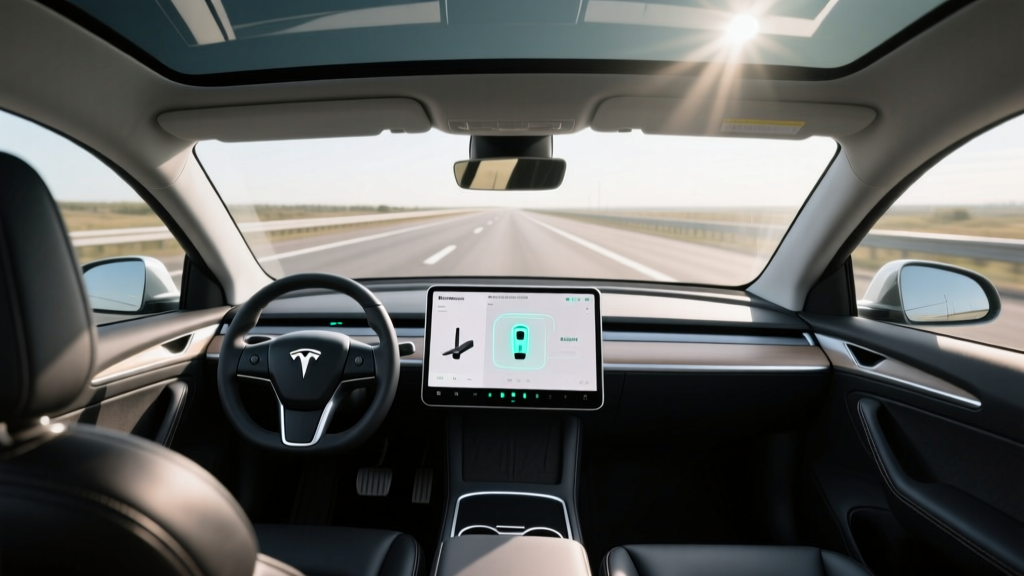
Despite the "Full Self-Driving" name, Tesla FSD Supervised is classified as SAE Level 2 driver-assist — the same category as Ford BlueCruise and GM Super Cruise. The driver must remain fully engaged, keep hands on the steering wheel (or demonstrate attention via the cabin camera), and be prepared to take over instantly. FSD is not autonomous. Only Level 4 services like Waymo operate without a human driver in the loop.
Tesla's FSD stack runs on a vision-only architecture. Since late 2022, Tesla removed radar and ultrasonic sensors from its vehicles, relying entirely on a suite of external cameras (typically eight) feeding neural networks processed by the HW4 (Hardware 4) computer. The system constructs a real-time 3D understanding of the environment from camera data alone — a fundamentally different approach than the lidar-and-radar fusion used by Waymo or the camera-plus-radar setups in competitors like Ford BlueCruise.
The Complete Tesla FSD Price History Timeline
FSD pricing has never been static. Here's a chronological breakdown of every major price change since the package launched:
| Date | One-Time Price | Monthly Subscription | Notes |
|---|---|---|---|
| Oct 2016 (Launch) | $8,000 | N/A | Announced as Enhanced Autopilot + FSD bundle |
| Mar 2019 | $5,000 (FSD alone) | N/A | Separated from Enhanced Autopilot |
| May 2019 | $6,000 | N/A | Price increase ahead of promised features |
| Jul 2020 | $8,000 | N/A | Second major increase |
| Jan 2021 | $10,000 | N/A | Peak purchase price |
| Jul 2021 | $12,000 | N/A | Highest-ever FSD purchase price |
| Jan 2022 | $12,000 | $199/mo launched | Subscription option introduced (non-transferable) |
| Sep 2022 | $15,000 | $199/mo | All-time high; widespread criticism |
| Sep 2023 | $12,000 | $199/mo | Reduced to spur adoption |
| Apr 2024 | $8,000 | $99/mo | Major cut; subscription halved |
| 2025–2026 (Current) | $8,000 | $99/mo | Stable pricing; FSD transfers offered periodically |
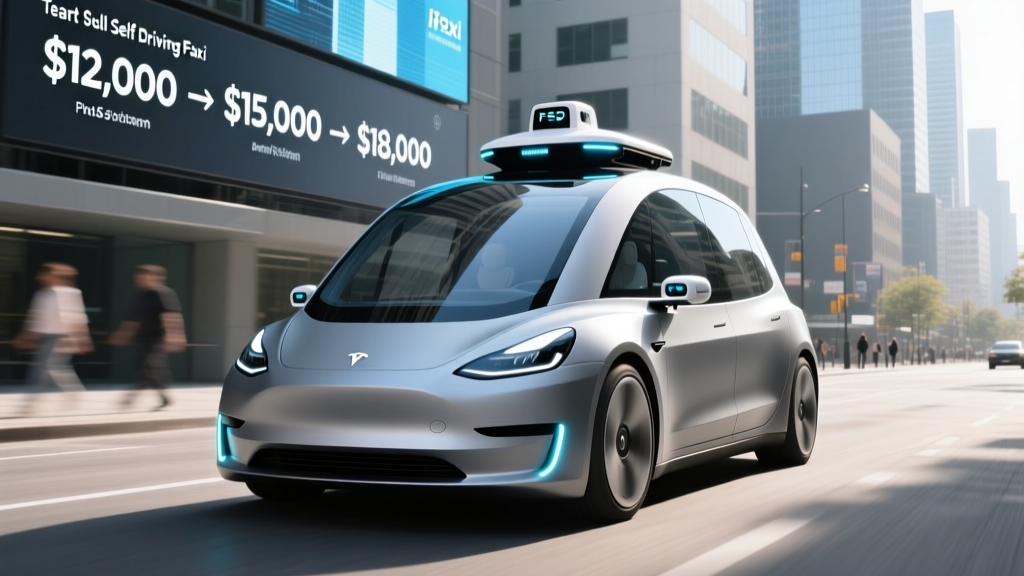
The arc is clear: Tesla pushed the purchase price aggressively upward between 2019 and 2022 — reaching $15,000 — before reversing course. The current $8,000 purchase price matches FSD's original 2016 launch cost, though the feature set has expanded substantially since then. The subscription halving from $199 to $99 in April 2024 was a significant signal that Tesla shifted strategy toward recurring revenue and broader adoption rather than extracting maximum upfront value.
Current FSD Cost Breakdown: Purchase vs. Subscription in 2026
As of 2026, Tesla offers two ways to access FSD Supervised. The choice between them depends on ownership horizon, resale plans, and whether you want the flexibility to cancel.
| Factor | One-Time Purchase | Monthly Subscription |
|---|---|---|
| Cost | $8,000 | $99/month |
| Break-Even Point | ~81 months (6.75 years) | N/A |
| Transfers with Vehicle at Sale | Yes — tied to VIN | No — subscription ends with owner |
| Cancel Anytime | No (permanent purchase) | Yes — cancel and re-subscribe |
| Financing | Can be rolled into vehicle loan | Charged to credit card monthly |
| Best For | Long-term owners (5+ years) | Lease holders, short-term owners, skeptics |
Ownership math: If you plan to keep your Tesla for five or more years, the outright purchase is cheaper. At $99/month, you'll spend $5,940 over five years — still under the $8,000 purchase price. But the purchase adds residual value to the car at trade-in or sale, since FSD is VIN-locked and transfers to the next owner. Subscription payments build no equity.
Tesla has periodically offered limited-time FSD transfer promotions (allowing purchased FSD to move from an old Tesla to a new one), but these are not permanent policy. Check Tesla's current terms before assuming transferability between your own vehicles.
Which Tesla Models and Trims Include FSD?
FSD Supervised is available across the entire Tesla lineup, but it is never included as standard equipment — it is always an add-on, either purchased or subscribed. Here's how availability breaks down by model in the 2026 model year:
| Model | Base MSRP | Standard Autopilot | FSD (Supervised) | HW4 Computer |
|---|---|---|---|---|
| Model 3 (RWD / Long Range / Performance) | ~$38,990 | Included | +$8,000 or $99/mo | Standard |
| Model Y (Long Range / Performance) | ~$44,990 | Included | +$8,000 or $99/mo | Standard |
| Model S (Long Range / Plaid) | ~$74,990 | Included | +$8,000 or $99/mo | Standard |
| Model X (Long Range / Plaid) | ~$79,990 | Included | +$8,000 or $99/mo | Standard |
| Cybertruck (AWD / Cyberbeast) | ~$79,990 | Included | +$8,000 or $99/mo | Standard |
All new Tesla vehicles ship with the HW4 computer and the camera suite required for FSD. Older vehicles with HW3 received a free hardware upgrade to support the latest FSD neural network, though some HW3 owners reported the transition was not seamless. If you're buying used, verify which hardware generation is installed — it affects FSD performance and future feature eligibility.
FSD Supervised vs. Competitors: How Does It Stack Up?
FSD doesn't exist in a vacuum. Several other automakers offer advanced Level 2 driver-assist systems, each with different pricing models, hardware approaches, and capability ceilings.
| Feature | Tesla FSD (Supervised) | Ford BlueCruise | GM Super Cruise | Mercedes Drive Pilot |
|---|---|---|---|---|
| SAE Level | Level 2 | Level 2 | Level 2 | Level 3 (limited) |
| Cost | $8,000 / $99/mo | ~$2,100 + $75/yr after trial | ~$2,200–$2,500 + subscription | ~$2,500/yr subscription |
| Operational Domain | Any road (with limitations) | Pre-mapped divided highways (~130,000 mi) | Pre-mapped divided highways (~750,000 mi) | Specific highways, <40 mph, good weather |
| Hands-Off Allowed | No — hands on wheel required | Yes (eyes monitored by camera) | Yes (eyes monitored by camera) | Yes (eyes monitored; driver can disengage) |
| Sensors | Cameras only (8) | Cameras + radar | Cameras + radar + lidar (map-based) | Cameras + radar + lidar + HD maps |
| City Street Capability | Yes (traffic lights, turns, stops) | No | No | No |
The key differentiator: Tesla FSD attempts to handle the widest range of driving scenarios — highways, city streets, parking lots, traffic lights — on any road, without pre-mapping. BlueCruise and Super Cruise restrict hands-free operation to pre-mapped divided highways but allow true hands-off driving within those domains. Mercedes Drive Pilot is the only system here that reaches SAE Level 3, meaning the automaker accepts liability during activation, but it's limited to low-speed congestion on specific highway segments.
FSD's city-street capability is unique among consumer ADAS, but it's also where the system faces its steepest challenges — unprotected left turns, construction zones, and ambiguous right-of-way situations remain edge cases that demand driver vigilance.
Real-World Capabilities and Honest Limitations
- Drive autonomously — you are the driver and bear full legal responsibility
- Handle all weather conditions — heavy rain, fog, snow, and direct sun glare degrade camera performance
- Navigate construction zones reliably — temporary lane shifts and missing markings confuse the system
- Read temporary or handwritten signs — only standard regulatory signage is consistently recognized
- Operate safely on unmapped rural roads with no lane markings
- Replace an attentive, sober, licensed driver — ever
Where FSD excels: Highway driving remains FSD's strongest domain. On well-marked interstates, the system handles lane changes, on-ramp merges, and speed adjustments with fluid competence. Navigate on Autopilot suggests and executes lane changes and interchange exits, though drivers should verify each maneuver. The system's ability to manage stop-and-go traffic reduces fatigue on congested commutes.
City-street reality: FSD's city driving capability has improved substantially since the v12 neural-network rewrite, which moved from hand-coded rules to end-to-end learning. The system handles traffic lights, four-way stops, and right turns on red more naturally than earlier versions. However, complex scenarios — a pedestrian stepping off a curb mid-block, a delivery truck double-parked in a bike lane, an unprotected left turn across oncoming traffic — still require the driver to intervene, sometimes abruptly.
Cold-weather and visibility constraints: Because FSD relies entirely on cameras, any condition that obscures lens clarity impacts performance. Ice buildup on camera housings, heavy road spray, and direct low-angle sunlight can cause the system to disengage or reduce confidence. Tesla has added camera heater elements to newer vehicles to mitigate icing, but this remains a physical limitation of a vision-only approach that lidar-equipped systems handle more gracefully.
Phantom braking: A persistent complaint across Tesla's Autopilot and FSD systems is phantom braking — unexpected deceleration when the system detects a nonexistent obstacle. While NHTSA has investigated this behavior, Tesla has issued software updates to reduce its frequency. Drivers should remain prepared for sudden deceleration events, especially at highway speeds where following traffic may not expect it.
Safety Context: What the Data Shows
Tesla publishes quarterly safety reports showing crash rates per million miles driven with Autopilot engaged versus disengaged. Tesla's data consistently shows lower crash rates with Autopilot/FSD active. However, these figures are self-reported and not independently verified by NHTSA in a standardized testing framework. The data also does not fully account for the fact that Autopilot is predominantly used on divided highways — inherently safer driving environments than urban streets.
The Insurance Institute for Highway Safety (IIHS) has raised concerns about driver monitoring adequacy in Level 2 systems broadly, including Tesla's cabin-camera-based approach. IIHS research shows that drivers using partial automation systems can become over-reliant, with degraded reaction times when the system encounters a scenario it cannot handle. This is the core risk of any Level 2 system marketed with aspirational naming.
Is FSD Worth the Price in 2026? A Decision Framework
- You plan to keep your Tesla for 5+ years (break-even vs. subscription)
- You drive long highway commutes regularly and value reduced fatigue
- You want FSD to transfer with the vehicle at resale
Subscribe ($99/month) If:
- You lease your Tesla or plan to sell within 3 years
- You want to evaluate FSD before committing $8,000
- You only need FSD for occasional road trips (subscribe for the month, cancel after)
Skip FSD Entirely If:
- Basic Autopilot (included) already meets your needs — ACC and lane-centering cover most highway driving
- You primarily drive in dense urban environments with complex scenarios
- You're uncomfortable paying for a Level 2 system regardless of cost
Frequently Asked Questions
Does Tesla FSD transfer to a new Tesla if I buy another one?
FSD purchased outright is tied to the vehicle's VIN, not to you as the owner. When you sell the car, FSD stays with it. Tesla has occasionally offered limited-time promotions allowing FSD transfers between your own vehicles, but this is not standard policy. Subscription-based FSD does not transfer — it ends when you cancel.
Is Tesla FSD actually self-driving?
No. FSD Supervised is SAE Level 2 driver-assist. You must remain fully attentive, keep your hands on the steering wheel, and be ready to take over at any moment. The "Full Self-Driving" name is aspirational branding, not a description of current capability. Only Level 4 robotaxi services like Waymo operate without a human driver.
Why did Tesla lower the FSD price from $15,000 to $8,000?
Tesla reduced FSD pricing in April 2024 to accelerate adoption. At $15,000, the take rate was low — most buyers declined the package. The lower price, combined with the $99/month subscription, was designed to increase the installed base, generate more real-world driving data for training, and shift toward recurring software revenue.
Can I use FSD in any weather condition?
FSD's camera-only system is sensitive to visibility conditions. Heavy rain, fog, snow, and direct sun glare can degrade performance or cause the system to disengage. Camera heaters on newer models help with ice, but the fundamental limitation of optical sensors in poor visibility remains. Always be prepared to assume full control in adverse weather.
How does FSD compare to Waymo or Cruise robotaxis?
Waymo and Cruise (when operational) are SAE Level 4 services — fully driverless in geofenced areas with no human in the loop. Tesla FSD is Level 2, requiring constant driver supervision. They are fundamentally different products: Waymo replaces the driver; FSD assists the driver. Waymo uses lidar, radar, and cameras with HD maps; Tesla uses cameras only with neural networks. The gap between Level 2 and Level 4 is not incremental — it's a categorical difference in responsibility and capability.
Does FSD improve over time with software updates?
Yes. Tesla continuously deploys over-the-air updates to FSD, with major version changes (like the v12 end-to-end neural network) representing significant capability leaps. However, improvement is not linear — some updates introduce regressions in specific scenarios. Your experience with FSD today may differ from six months ago, in either direction.