Quick Verdict: What You're Actually Paying For
If you've searched "how much is full self driving tesla" expecting a driverless car you can nap in, the answer requires an important reality check first. Tesla's Full Self-Driving (FSD) capability — currently branded FSD (Supervised) — is a Level 2 driver-assistance system, not a robotaxi. You remain the driver, legally and operationally, at all times. In 2026, Tesla offers FSD (Supervised) as either a $8,000 one-time purchase or a $99/month subscription on top of the vehicle's base price.
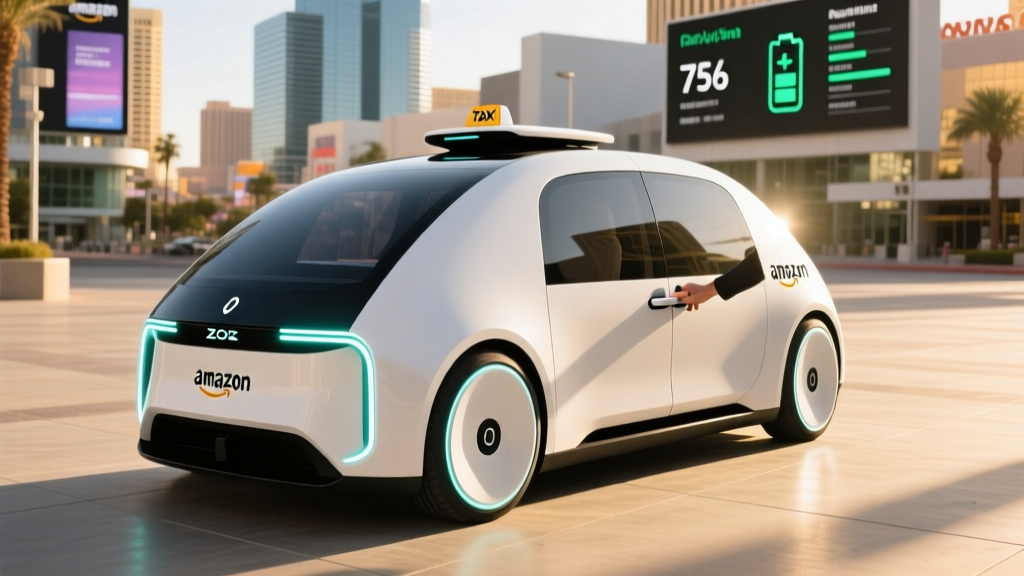
Meanwhile, actual driverless robotaxi services from Waymo and Zoox operate at SAE Level 4 — no human behind the wheel — but only in geofenced cities. This guide breaks down exactly what Tesla FSD costs, what it does, what it doesn't do, and how it stacks up against true autonomous ride-hailing services now available in select U.S. metros.
- Level 2 (Tesla FSD Supervised, GM Super Cruise, Ford BlueCruise): The system assists with steering and speed, but the driver must remain fully engaged, eyes on the road, hands available. You are legally responsible.
- Level 4 (Waymo, Zoox, Cruise pre-suspension): The vehicle drives itself without a human driver within a defined operational design domain (geofenced area, specific conditions). No steering wheel required in purpose-built vehicles.
Tesla FSD is not Level 4 or Level 5. No Tesla vehicle can currently operate without an attentive driver.
Tesla FSD (Supervised): Complete 2026 Pricing Breakdown
Tesla has adjusted FSD pricing and packaging several times. As of early 2026, here's what buyers and owners face:
| FSD Option | Cost | Details |
|---|---|---|
| FSD (Supervised) — One-Time Purchase | $8,000 | Permanently tied to the vehicle; transfers if you sell the car |
| FSD (Supervised) — Monthly Subscription | $99/month | Cancel anytime; tied to your Tesla account, not the vehicle |
| Basic Autopilot | Included | Traffic-Aware Cruise Control + Autosteer (lane centering on highways) |
| Enhanced Autopilot | $6,000 | Adds Navigate on Autopilot, Auto Lane Change, Autopark, Summon |
Is FSD worth $8,000? That depends on your use case. If you commute 60+ miles daily on highways and value reduced fatigue, the subscription at $99/month ($1,188/year) lets you test it without a major commitment. The outright purchase makes more sense only if you plan to keep the vehicle 7+ years — and if Tesla eventually delivers true unsupervised autonomy, which remains unproven and unguaranteed.
What's Included in FSD (Supervised)
- Traffic-Aware Cruise Control and Autosteer (highway lane centering)
- Navigate on Autopilot (highway on/off-ramp navigation with suggested lane changes)
- Auto Lane Change (initiates lane changes when turn signal is activated)
- Autopark (parallel and perpendicular parking assist)
- Smart Summon (vehicle navigates a parking lot to your phone's location — limited range)
- Traffic Light and Stop Sign Control
- FSD Streets (city-street driving with intersection navigation, turn execution)
FSD vs. Robotaxi: Technology Stack Comparison
Understanding why Tesla FSD differs fundamentally from Waymo or Zoox requires examining the sensor and software approach each takes.
| Feature | Tesla FSD (Supervised) | Waymo (Level 4 Robotaxi) | Zoox (Level 4 Robotaxi) |
|---|---|---|---|
| SAE Level | Level 2 | Level 4 | Level 4 |
| Primary Sensors | 8 cameras (vision-only) | LiDAR + cameras + radar | LiDAR + cameras + radar |
| HD Mapping | No (real-time vision) | Yes (centimeter-level) | Yes (centimeter-level) |
| Geofencing | None (drives anywhere) | Yes (defined metro areas) | Yes (defined zones) |
| Driver Required | Yes — full attention | No | No |
| Weather Handling | Degraded in rain/fog/snow | LiDAR penetrates light rain; pulls over in heavy conditions | Similar to Waymo; conservative in adverse weather |
| Redundancy | Human driver is the redundancy | Dual compute, redundant braking/steering, remote assistance | Dual compute, redundant systems, remote guidance |
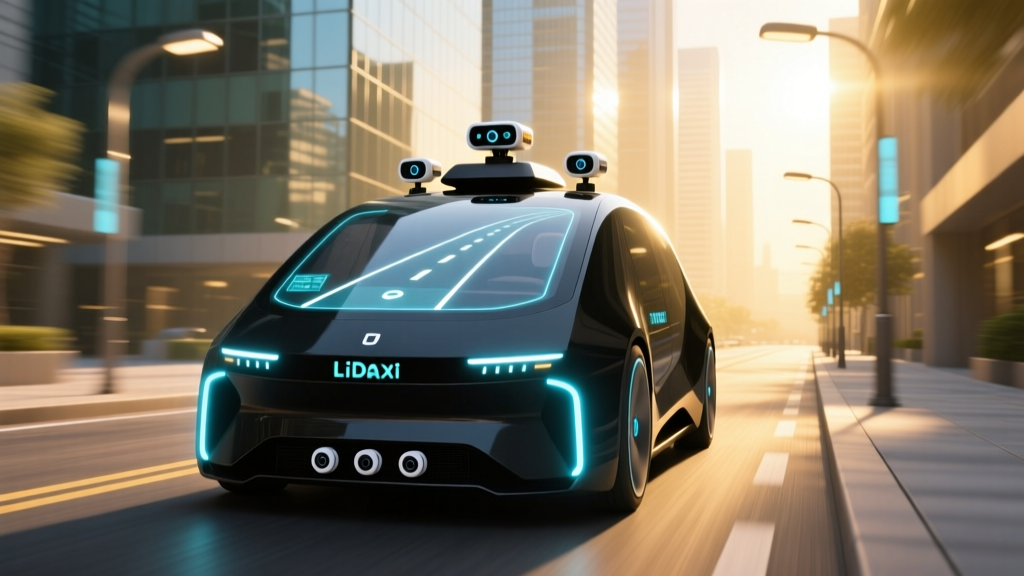
Tesla's camera-only "Tesla Vision" approach is the most controversial in the industry. LiDAR-equipped robotaxis from Waymo and Zoox can build precise 3D maps of their surroundings regardless of lighting, while Tesla relies entirely on neural networks processing camera imagery. Tesla argues this mirrors human driving; critics note that humans also have depth perception from binocular vision and decades of contextual reasoning that neural networks still struggle to replicate in edge cases.
Where Can You Actually Use a Robotaxi Right Now?
While Tesla FSD (Supervised) works on any road in the U.S., true Level 4 robotaxi services are limited to specific geofenced cities. Here's current availability as of 2026:
| Service | Live Cities | Hours | How to Access |
|---|---|---|---|
| Waymo One | Phoenix (metro-wide), San Francisco, Los Angeles, Austin (expanding) | 24/7 in most zones | Waymo One app (open to public in most cities) |
| Zoox | Las Vegas (Strip corridor + downtown), Foster City, CA (limited) | Limited hours | Invite-only / early rider programs |
| Tesla FSD (Supervised) | Anywhere in the U.S. (you drive) | Anytime | Purchase or subscribe via Tesla app |
Where can I use a robotaxi service right now? If you live in or visit Phoenix, San Francisco, Los Angeles, or Austin, Waymo One is the most accessible driverless ride-hailing option. Zoox remains largely in testing phases with limited public access. Tesla's announced "Robotaxi" service (unveiled as the Cybercab concept in late 2024) has not launched a commercial driverless service as of 2026 — Tesla vehicles still require an attentive driver.
Robotaxi Pricing vs. Uber and Lyft: What Does a Ride Cost?
One of the most common questions is whether robotaxis undercut traditional rideshare. Here's how pricing compares in markets where both operate:
| Service | Avg. Cost (5-mile ride) | Pricing Model | Notes |
|---|---|---|---|
| Waymo One | $12–$18 | Per-ride (base + per mile + per min) | Comparable to UberX; promotional discounts common for new users |
| UberX | $11–$17 | Dynamic (surge pricing applies) | Varies heavily by demand, time of day |
| Lyft Standard | $10–$16 | Dynamic | Similar variability to Uber |
| Tesla FSD (Supervised) | N/A (you own the car) | $99/mo subscription or $8,000 purchase + vehicle cost | Not a ride-hailing service; you're the driver |
How much does a robotaxi cost vs. Uber/Lyft? Currently, Waymo rides are priced similarly to UberX and Lyft — the cost advantage of removing the driver hasn't yet translated into dramatically cheaper fares. Waymo has offered introductory promotions (e.g., 50% off first rides, flat-rate airport trips), but standard pricing is competitive, not disruptive. The long-term thesis is that robotaxis will undercut human-driven rideshare once fleet costs decrease, but that price war hasn't materialized at scale yet.
Robotaxi Safety Record: What the Data Shows
- Waymo: Over 30 million driverless miles completed as of late 2025. Published safety reports show lower rates of police-reported crashes and injury-causing crashes compared to human benchmarks in comparable urban environments.
- Cruise (GM): Suspended operations in October 2023 after a pedestrian-dragging incident in San Francisco. NHTSA investigation found the vehicle's post-collision behavior inadequate. Cruise has since restructured and relaunched limited testing with human safety drivers.
- Tesla Autopilot/FSD: NHTSA has investigated multiple crashes involving Tesla vehicles operating on Autopilot/FSD, particularly involving stationary emergency vehicles. Tesla's quarterly safety reports cite approximately 1 crash per 4-5 million miles with Autopilot engaged, but these figures are self-reported and not independently verified against comparable driving conditions.
Sources: NHTSA, Waymo safety publications, manufacturer reports.
How safe are robotaxis? The data suggests Waymo's Level 4 vehicles perform comparably to or better than average human drivers in their geofenced urban environments — particularly in avoiding the types of crashes most common in city driving (rear-end, intersection conflicts). However, the sample size remains small relative to the billions of miles humans drive annually, and robotaxis face different edge cases than highway-dominant human driving.
Tesla FSD's safety record is harder to evaluate objectively. Tesla reports aggregate Autopilot engagement data but does not separate FSD (Supervised) city-street driving from basic highway Autopilot in its public reports. The National Highway Traffic Safety Administration has issued standing general orders requiring all manufacturers to report crashes involving Level 2+ systems, which has improved transparency but doesn't yet provide the apples-to-apples comparison consumers need.
Current Limitations: What Tesla FSD and Robotaxis Cannot Do
Both Level 2 driver-assist and Level 4 robotaxi systems have significant operational boundaries. Understanding these is essential for setting realistic expectations.
Tesla FSD (Supervised) Limitations
- Driver attention required at all times. The cabin camera monitors your eyes; repeated inattention warnings will lock you out of FSD for increasing durations.
- Performance degrades in poor visibility. Heavy rain, fog, snow, and direct sun glare can impair camera-only perception. FSD may disengage unexpectedly.
- Construction zones and temporary lane changes. FSD can struggle with non-standard road configurations, temporary barriers, and flaggers.
- Unprotected left turns in heavy traffic. A known challenging scenario where FSD may be overly cautious or hesitate.
- No highway-to-highway navigation without driver confirmation. Despite "Navigate on Autopilot," lane changes and off-ramp exits require driver confirmation or active supervision.
- Does not handle private roads, parking garages (beyond Smart Summon), or off-road terrain.
Level 4 Robotaxi (Waymo/Zoox) Limitations
- Geofenced to specific cities and zones. You cannot hail a Waymo from Phoenix to Tucson — it operates only within its mapped service area.
- Weather restrictions. Heavy rain, flooding, or snow can cause the service to pause operations in affected zones.
- No highway driving (in most deployments). Waymo's current fleet primarily handles surface streets; highway-capable robotaxi service is still in development.
- Limited pickup/dropoff points. Some areas within the geofence may not be serviceable due to mapping gaps or regulatory restrictions.
- Cannot respond to verbal instructions or gestures. Unlike a human driver, you can't ask the car to "wait here for a minute" or make an unscheduled stop.
Regulatory Landscape: Who Approves These Systems?
Autonomous vehicle regulation in the U.S. is a patchwork of federal and state authority:
- Federal (NHTSA): Sets vehicle safety standards (FMVSS) and investigates crashes. NHTSA does not currently "approve" or "certify" autonomous driving systems before deployment — it regulates reactively through investigations and recalls.
- State Level: States control licensing, insurance, and operational permits. Arizona has taken a permissive approach (enabling Waymo's Phoenix operations), while California's DMV and CPUC jointly regulate testing and commercial deployment permits. Texas passed legislation enabling autonomous vehicle operations in 2017.
- Tesla's Position: Tesla FSD (Supervised) is sold as a consumer driver-assist feature under existing Level 2 regulations, which do not require pre-market approval. This differs from Level 4 operators like Waymo, which must obtain state-level deployment permits and carry commercial insurance.
The regulatory gap between Level 2 (sold to consumers with minimal pre-market oversight) and Level 4 (requires state permits, commercial insurance, and operational reporting) is a significant factor in why Tesla can offer FSD nationwide while Waymo is limited to a handful of cities.
The Bottom Line: Is Tesla FSD a Robotaxi?
No. Tesla Full Self-Driving (Supervised) is a $8,000 purchase or $99/month subscription for an advanced Level 2 driver-assistance system that can handle highway and city-street driving with your constant supervision. It is a genuinely useful fatigue-reduction tool for long commutes and road trips, and the city-street capability has improved substantially through 2025-2026 software updates. But it does not replace you as the driver, and Tesla has not launched a commercial driverless ride-hailing service.
If you want a true driverless ride today, Waymo One in Phoenix, San Francisco, Los Angeles, or Austin is your best option — at roughly the same per-ride cost as Uber or Lyft. The robotaxi cost advantage that many predicted has not yet arrived, but the safety data from millions of driverless miles is encouraging.
- Choose Tesla FSD (Supervised) if: You already own or plan to buy a Tesla, drive 40+ miles daily on mixed roads, and want reduced driving fatigue — while accepting you remain the responsible driver.
- Choose the $99/month subscription if: You want to try FSD without committing $8,000, or you only need it for road trips (subscribe for the month, cancel after).
- Choose Waymo One if: You live in or visit a supported city and want a genuinely driverless experience for point-A-to-B urban trips.
- Wait if: You're expecting Tesla to deliver unsupervised Level 4 autonomy soon. Tesla has projected this for years without meeting announced timelines.
Frequently Asked Questions
Is Tesla Full Self-Driving really self-driving?
No. Tesla FSD (Supervised) is an SAE Level 2 driver-assistance system. The "Supervised" designation means you must remain fully attentive, with eyes on the road and hands available to take over at any moment. You are legally and operationally the driver. Only Level 4 services like Waymo operate without a human driver.
How much is Full Self-Driving Tesla in 2026?
Tesla FSD (Supervised) costs $8,000 as a one-time purchase or $99/month as a subscription. Basic Autopilot (highway cruise control and lane centering) is included with every new Tesla at no additional cost. Enhanced Autopilot, which adds Navigate on Autopilot and Autopark without city-street FSD, is $6,000.
Can I make money with Tesla FSD as a robotaxi?
Not currently. Tesla has discussed a future "Tesla Network" where owners could add their vehicles to a ride-hailing fleet, but this service does not exist as of 2026. Since FSD still requires a human driver, it cannot function as a driverless robotaxi under current regulations.
Where can I ride in a real driverless robotaxi?
Waymo One operates commercially in Phoenix, San Francisco, Los Angeles, and Austin. Zoox has limited rider programs in Las Vegas. These are the only SAE Level 4 passenger services available to the public in the U.S. as of 2026.
How does Tesla FSD handle bad weather?
Tesla's camera-only vision system is more susceptible to degraded performance in heavy rain, fog, snow, and sun glare than LiDAR-equipped robotaxis. In practice, FSD may disengage or make conservative decisions (slower speeds, earlier braking) in poor conditions. Always be prepared to take over immediately in adverse weather.
Is Tesla FSD safer than a human driver?
Tesla reports lower crash rates per million miles when Autopilot/FSD is engaged, but these figures are self-reported and not independently verified against comparable driving scenarios (Autopilot is predominantly used on highways, which are inherently safer than city streets). NHTSA data shows Tesla vehicles involved in crashes while using Autopilot/FSD, including fatalities. There is no consensus independent study confirming FSD is safer than an attentive human driver across all conditions.
Does the FSD subscription transfer if I sell my Tesla?
No. The $99/month subscription is tied to your Tesla account and does not transfer to a new owner. The $8,000 one-time purchase is tied to the vehicle and transfers with it if you sell — which may add resale value, though typically less than the purchase price.