The Incident That Reignited the Autonomy Debate
A viral 2024 dashcam clip showed Tesla's Full Self-Driving software attempting to drive its owner into a lake — the vehicle steering toward a boat ramp as if it were a standard roadway. The driver intervened before the Model S reached the water, but the incident crystallized a question that has shadowed the EV industry ever since: how close are consumer driver-assist systems to genuine self-driving capability, and how do they compare to purpose-built robotaxi services?
As of 2026, that gap remains enormous. Tesla's FSD (Supervised) remains a SAE Level 2 driver-assistance system that requires continuous human oversight. Meanwhile, Level 4 robotaxi services from Waymo operate driverless vehicles across several U.S. cities with fundamentally different technology, regulatory approval, and safety records. Understanding this distinction is critical for any EV owner or prospective buyer evaluating autonomous driving claims.
SAE Automation Levels: Where Tesla FSD and Robotaxis Actually Sit
The Society of Automotive Engineers defines six levels of driving automation. Confusion between these levels is the single largest source of misunderstanding — and risk — in the autonomous vehicle space.
| Level | Name | Who Drives? | Example Systems |
|---|---|---|---|
| Level 0 | No Automation | Human does everything | Standard cruise control |
| Level 1 | Driver Assistance | Human + one assist (steering OR speed) | Adaptive cruise, lane-keep |
| Level 2 | Partial Automation | Human + combined assists (steering AND speed) | Tesla FSD (Supervised), GM Super Cruise, Ford BlueCruise |
| Level 3 | Conditional Automation | System drives in limited conditions; human must take over when asked | Mercedes DRIVE PILOT (limited markets) |
| Level 4 | High Automation | System drives fully within geofence; no human needed | Waymo One, Zoox (limited areas) |
| Level 5 | Full Automation | System drives everywhere, all conditions | None commercially available |
The lake incident is a textbook Level 2 failure mode: the camera-based system misidentified a boat ramp as a drivable surface, and the human driver — as required — had to catch the error. At Level 4, the system itself must detect and avoid such edge cases without any human in the loop, which demands fundamentally different redundancy and sensor architecture.
Technology Stack: Camera-Only vs. Multi-Sensor Fusion
The root cause of incidents like the lake scenario traces directly to sensor philosophy. Tesla has committed to a camera-only (Tesla Vision) approach since removing radar and ultrasonic sensors from production vehicles. Waymo, Cruise (now mothballed), Zoox, and nearly every other robotaxi developer use multi-sensor fusion combining lidar, radar, and cameras.
- Cameras (Tesla Vision): High-resolution visual data processed by neural networks. Excellent at reading signs, lane markings, and classifying objects in good lighting. Vulnerable to glare, darkness, fog, and ambiguous surfaces like water or construction zones.
- Lidar (Waymo, Zoox): Laser-based 3D mapping that measures exact distance to objects regardless of lighting. Creates a real-time point cloud of the environment. Cannot "be fooled" by a painted surface or reflective water — it sees the physical geometry.
- Radar: Long-range detection of moving objects, robust in rain and fog. Provides velocity data via Doppler effect.
- HD Maps + Geofencing: Robotaxis operate within pre-mapped zones where every curb, lane, and intersection is cataloged at centimeter precision. Tesla FSD operates on any road without pre-mapping.
The lake incident illustrates the camera-only limitation: without lidar to confirm that the "road" ahead drops off into water, the neural network relied on visual patterns that resembled a roadway. A lidar-equipped robotaxi would have detected the absence of a solid surface and refused the route, regardless of what the camera suggested.
Where Robotaxis Actually Operate in 2026
Unlike Tesla FSD, which can be activated on virtually any road in the U.S., Level 4 robotaxi services operate only within tightly regulated, geofenced zones approved by state and local authorities.
| Service | City | Service Area | Hours | Regulator |
|---|---|---|---|---|
| Waymo One | Phoenix, AZ | ~315 sq mi metro area | 24/7 | ADOT / CPUC-equivalent |
| Waymo One | San Francisco, CA | Most of SF proper | 24/7 | CPUC / SFMTA |
| Waymo One | Los Angeles, CA | ~80 sq mi (Santa Monica, Hollywood, downtown) | 24/7 | CPUC |
| Waymo One | Austin, TX | Limited downtown zone | Limited hours | TxDOT / City of Austin |
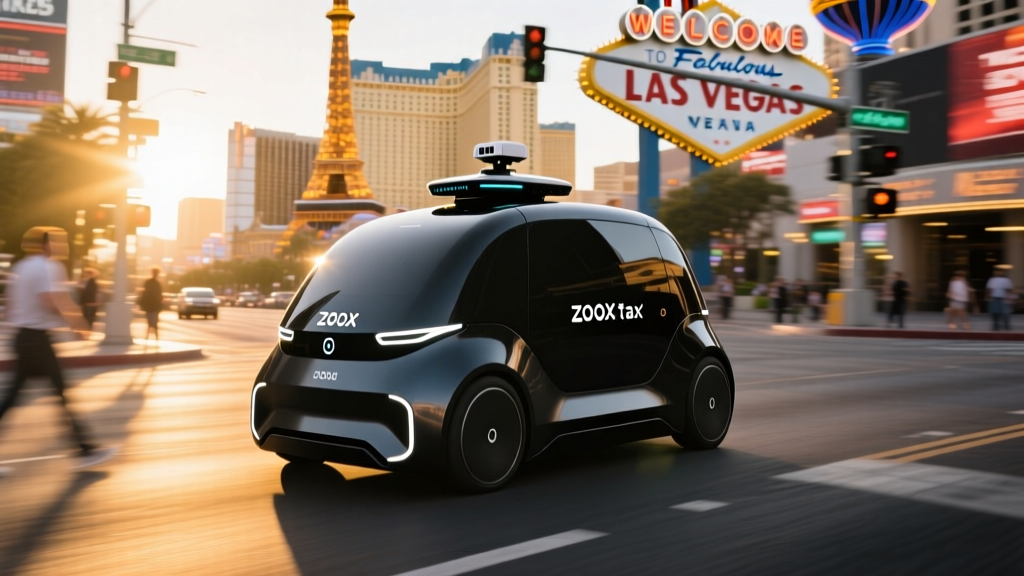
| Zoox | Las Vegas, NV (testing) | Limited corridor | Invite-only | Nevada DMV |
Tesla's FSD (Supervised) has no geographic restriction — it activates on highways, city streets, and parking lots nationwide. This universality is a feature, but it also means the system encounters far more edge cases (like unmapped boat ramps) than a geofenced robotaxi ever would.
Safety Data: What the Numbers Actually Show
Comparing Tesla FSD safety to robotaxi safety requires care because the systems operate under fundamentally different conditions. Tesla FSD accumulates billions of miles across every road type and weather condition, with a human supervisor required. Robotaxis accumulate millions of miles in mapped, controlled environments with no human backup.
- Waymo: Over 50 million fully driverless miles completed as of early 2026. According to NHTSA standing general orders, Waymo's driverless fleet reports contact and collision incidents at rates below the human benchmark for comparable urban environments. Waymo published a study claiming a 85% reduction in injury-causing crash rates per million miles vs. human drivers in the same cities.
- Tesla FSD (Supervised): Tesla's 2025 Q4 Vehicle Safety Report claimed one crash per 4.91 million miles driven with FSD engaged. However, this data includes highway miles (statistically safer) and is not independently audited. NHTSA has opened multiple investigations into FSD-related incidents, including crashes into stationary emergency vehicles and situations where drivers failed to maintain supervision.
- Cruise (suspended): After a October 2023 incident in San Francisco where a Cruise robotaxi dragged a pedestrian, California DMV suspended Cruise's permit. GM shut down Cruise operations in late 2024, illustrating the regulatory consequences of Level 4 safety failures.
The lake incident did not result in a crash — the driver intervened. But it joined a growing catalog of NHTSA-documented events where Tesla Vision misidentified drivable surfaces, failed to recognize construction barriers, or did not respond to stopped emergency vehicles. Each incident reinforces the Level 2 reality: the system is not infallible, and the human must be the fail-safe.
Pricing: Robotaxi vs. Rideshare vs. Owning with FSD
For consumers in robotaxi cities, the cost comparison is practical and immediate:
| Service | Estimated Fare | Surge Pricing? | Tip Expected? |
|---|---|---|---|
| Waymo One (Phoenix) | $14–$20 | Yes (demand-based) | No (in-app optional) |
| Uber / Lyft (same city) | $16–$24 | Yes | Yes (15–20% typical) |
| Tesla FSD (owner cost per mile) | $0.08–$0.12/mi electricity + depreciation | No | No |
Waymo has priced competitively with Uber/Lyft to build ridership, often offering promotional discounts for new users. For EV owners with FSD, the per-mile cost of driving yourself is substantially lower than any ride-hail option — but you remain the driver, legally and functionally.
Tesla's FSD package costs $8,000 as a one-time purchase or $99/month as a subscription (2026 pricing). Tesla has announced plans for a "Robotaxi" service using customer vehicles, but as of 2026, no regulatory approval for driverless Tesla operations exists in any U.S. jurisdiction. Until Tesla obtains Level 4 certification from state regulators, FSD remains a driver-assist product — not a robotaxi platform.
Regulatory Landscape: Who Approves What
Autonomous vehicle regulation in the U.S. is a patchwork of federal and state oversight:
- NHTSA (federal): Sets vehicle safety standards (FMVSS) and investigates defects. NHTSA does not "approve" autonomous driving systems but can issue recalls and mandate standing general orders for crash reporting. In 2025, NHTSA expanded its investigation into Tesla Autopilot/FSD engagement monitoring.
- State DMVs and PUCs: California's CPUC and DMV, Arizona's ADOT, Nevada's DMV, and Texas regulators each set their own rules for testing and commercial deployment of Level 4 vehicles. Waymo holds commercial permits in CA, AZ, and TX. Tesla holds no Level 4 deployment permits anywhere.
- Insurance: Level 2 incidents are the driver's liability. Level 4 incidents may shift liability to the operator (Waymo), depending on jurisdiction and circumstances.
The lake incident, had it resulted in a crash, would have been the driver's legal responsibility — not Tesla's. This is the defining consequence of Level 2 classification: regardless of the product name, the human is the responsible party.
Current Limitations: What Neither System Can Do
Tesla FSD (Supervised) — Level 2:
- Can misidentify non-road surfaces (boat ramps, dirt shoulders, flooded areas)
- Performance degrades in heavy rain, snow, fog, and direct sun glare
- Construction zones with changed lane markings remain a known weakness
- Emergency vehicles stopped in travel lanes have been repeatedly missed
- Driver monitoring (cabin camera) can be circumvented; engagement drift is a documented risk
- No geofencing means the system encounters unlimited edge cases
Waymo One — Level 4 (within geofence):
- Cannot operate outside approved service areas
- Heavy rain, dense fog, or snow can trigger pull-overs and service suspensions
- Unusual road closures or major unplanned events may cause the vehicle to stop and wait for remote assistance
- Cannot make unprotected left turns in some complex intersections (routes around them)
- No highway operation in most markets
- Requires cellular connectivity; dead zones can delay operations
Is This Truly Self-Driving or Just Driver-Assist?
The question at the heart of the lake incident — and every FSD controversy — has a definitive answer as of 2026:
Tesla FSD (Supervised) is driver-assist, not self-driving. It is an SAE Level 2 system. The driver must remain attentive, hands available, and ready to intervene at any moment. The "Full Self-Driving" name is a product branding choice that has drawn scrutiny from consumer advocacy groups, the FTC, and multiple state regulators. In 2025, Tesla added the "(Supervised)" qualifier to the product name in most markets, acknowledging the legal and functional reality.
Waymo One is genuinely self-driving within its geofence. It is an SAE Level 4 system. There is no driver in the front seat. The vehicle handles all aspects of driving within its approved operational design domain, and a remote support team can assist with edge cases. Outside that geofence, the vehicle will not operate.
These are not different versions of the same thing. They are fundamentally different categories of technology with different risk profiles, different regulatory statuses, and different expectations for the human in or near the vehicle.
Frequently Asked Questions
Where can I use a robotaxi service right now?
Waymo One operates commercially in Phoenix, San Francisco, Los Angeles, and Austin. Zoox has limited invite-only testing in Las Vegas. No robotaxi service is available outside these specific geofenced areas. Tesla FSD (Supervised) works nationwide but requires a fully attentive driver.
How much does a robotaxi cost vs. Uber or Lyft?
Waymo fares are generally comparable to or slightly below Uber/Lyft pricing in the same market, typically $14–$20 for a 10-mile urban trip. Promotional pricing for new riders is common. There is no driver to tip, though in-app tipping is available.
How safe are robotaxis compared to human drivers?
Waymo's published data indicates injury-causing crash rates approximately 85% below human benchmarks in comparable urban environments across 50+ million driverless miles. However, robotaxis operate in favorable, pre-mapped conditions — a direct comparison to all human driving (including rural highways and adverse weather) is not apples-to-apples. IIHS continues to monitor and publish on AV safety outcomes.
What happened when Tesla's FSD drove toward a lake?
A Tesla owner's FSD (Supervised) system steered toward a boat ramp, apparently misidentifying it as a roadway. The driver intervened before reaching the water. The incident demonstrated a known camera-only limitation: without lidar to verify surface geometry, the system can be confused by surfaces that visually resemble roads. No crash occurred, and no injuries were reported.
Is Tesla's FSD going to become a robotaxi service?
Tesla has announced intentions to launch a ride-hailing network using FSD-equipped customer vehicles. As of 2026, no U.S. state regulator has approved Tesla for driverless (Level 4) commercial operations. Achieving this would require Tesla to demonstrate to state authorities that FSD can operate safely without a human supervisor — a standard that camera-only systems have not yet met in regulatory proceedings. Timeline remains unconfirmed.
What should I do if my FSD system behaves unexpectedly?
Immediately take control of the steering wheel and brakes. Report the incident to Tesla via the in-app reporting tool and, if a crash or near-crash occurred, file a report with NHTSA's Safety Complaint portal. Remember: under Level 2, you are the responsible driver at all times.