What Is the Tesla FSD Board and Why Does It Matter?
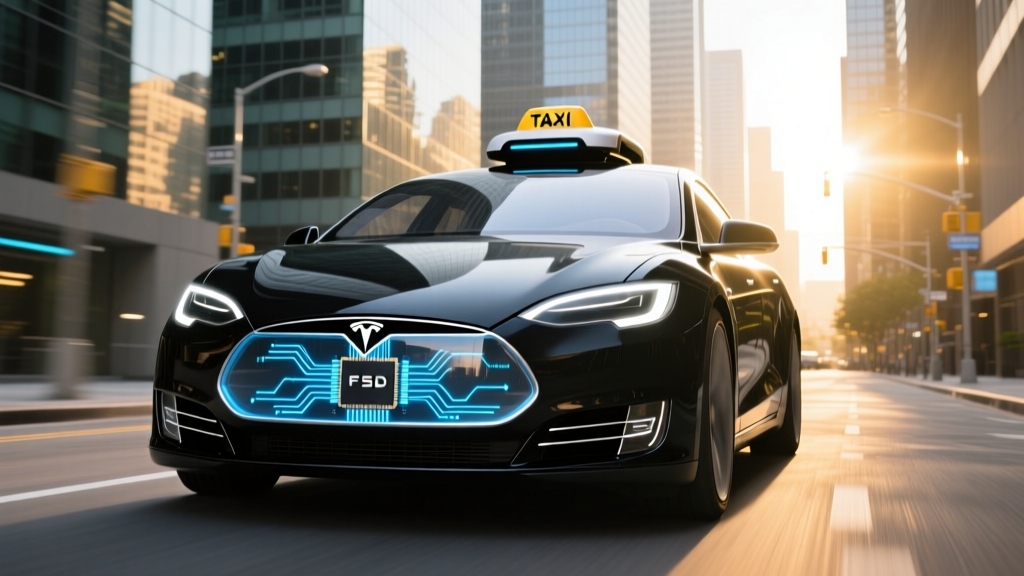
When Tesla owners and prospective buyers talk about the FSD board, they're referring to the onboard computer that powers Tesla's Full Self-Driving (Supervised) software suite. Officially designated by Tesla as the Hardware 4 (HW4) computer — sometimes called AI4 — this compute module is the physical brain behind every camera-based perception task the vehicle performs: lane centering, adaptive cruise control, automatic lane changes, traffic-light recognition, and the neural-network processing that underpins FSD Supervised.
The FSD board matters because Tesla's entire driver-assistance strategy is vision-only. Unlike competitors such as GM's Super Cruise or Ford's BlueCruise, which supplement cameras with radar, ultrasonic sensors, or LiDAR in some configurations, Tesla removed ultrasonic sensors (USS) from new production starting in late 2022 and radar by mid-2022 on most models. That means the HW4 computer carries the entire perception workload using camera input and neural-net inference alone. The compute density, camera resolution, and inference speed of that board directly define what the car can and cannot see.
As of the 2026 model year, Hardware 4 ships in every new Tesla: Model 3 (Highland and Juniper refreshes), Model Y (Juniper), Model S, Model X, and the latest Cybertruck builds. The older Hardware 3 (HW3) board, which powered vehicles from April 2019 through early-to-mid 2023, is no longer installed in new production.
Tesla's Autopilot, Enhanced Autopilot, and Full Self-Driving (Supervised) are all classified as SAE Level 2 driver-assistance systems per SAE International's J3016 taxonomy. This means the system can simultaneously control steering and acceleration/braking under certain conditions, but the driver must remain fully engaged, monitor the environment, and be prepared to take over instantly. Tesla's renaming of the product to "FSD (Supervised)" reflects this legal and technical reality. No Tesla vehicle currently sold is a Level 3, 4, or 5 autonomous vehicle.
Hardware 4 FSD Board: Technical Specifications
Hardware 4 represents a significant generational leap over HW3 in both sensor input quality and onboard compute. Tesla has not published a single spec sheet for the board, but teardowns, FCC filings, and Tesla's own AI Day presentations provide a reliable picture of the HW4 FSD board's architecture.
| Specification | Hardware 4 (AI4) | Hardware 3 (Legacy) |
|---|---|---|
| Camera count | 7 active (reduced from 8; passenger-side repeater removed) | 8 cameras |
| Camera resolution | 5 MP (main forward cameras); higher-resolution sensor for primary front | 1.2 MP across all cameras |
| Inference compute | ~2x–3x HW3 (dual custom FSD chips, 7nm-class process) | Dual FSD chips (14nm Samsung) |
| Radar | None (Tesla Vision only) | None on later builds; early HW3 had front radar |
| Ultrasonic sensors (USS) | None (Tesla Vision occupancy network replaces) | 12 sensors (removed from production ~Oct 2022) |
| Thermal management | Active liquid cooling loop for compute module | Passive/limited cooling |
| Models equipped | All 2023+ production (Model S/X/3/Y, Cybertruck) | 2019–early 2023 vehicles |
The jump from 1.2 MP to 5 MP cameras is arguably the most consequential change. Higher resolution gives the neural network more pixel data to identify distant objects, read lane markings at range, and distinguish road debris from shadows — all of which directly affect FSD Supervised's real-world behavior on highway and urban roads.
What FSD (Supervised) Actually Does on the Road
Tesla's driver-assistance stack is tiered into three product levels, each building on the one below it. All three run on the same FSD board hardware:
- Basic Autopilot (standard on every new Tesla): Traffic-Aware Cruise Control (TACC) and Autosteer for lane centering on marked roads. This is the baseline Level 2 experience.
- Enhanced Autopilot (optional add-on, currently unavailable as a standalone purchase in the US as of early 2026, folded into FSD tier): Historically included Auto Lane Change, Autopark, Summon, and Navigate on Autopilot.
- Full Self-Driving (Supervised) (optional): Includes everything above plus traffic-light and stop-sign recognition and response, autosteer on city streets (no longer geofenced), and the FSD neural-network driving stack that handles complex intersections, unprotected turns, and roundabouts.
In practical terms, FSD Supervised on a 2026 Model Y with HW4 can navigate from a residential driveway to a highway on-ramp, merge into traffic, execute a lane change to prepare for an exit, navigate a suburban four-way stop, and pull into a destination parking spot — all with the driver seated, hands on the wheel (or applying periodic steering torque, depending on the model's cabin camera monitoring configuration), and eyes on the road.
The system is impressive in moderate suburban and highway conditions. In our experience, FSD Supervised handles well-marked suburban arterials and divided highways with a competence that reduces driver fatigue substantially on long trips. City-street performance has improved with each software update through 2025 and into 2026, particularly in handling unprotected left turns and multi-lane intersections.
Real-World Limitations: Where FSD Supervised Falls Short
- Not autonomous: You are the driver. You are legally and physically responsible for every action the car takes. NHTSA requires continuous supervision.
- Vision-only vulnerability: Without radar or LiDAR, heavy rain, fog, snow, and direct sun glare can degrade camera perception. Expect more frequent disengagements in adverse weather.
- Faded or missing lane markings: Construction zones, rural roads with worn paint, and temporary lane shifts remain challenging.
- Phantom braking: The system can brake unexpectedly for shadows, overpasses, or perceived obstacles. This is less common on HW4 than HW3 but not eliminated.
- Complex intersections: Multi-lane unprotected turns, unusual signal configurations, and non-standard signage can cause hesitation or incorrect maneuvers.
- Low-speed obstacles: Without ultrasonic sensors, close-proximity parking relies on the vision occupancy network, which can occasionally misjudge distances to thin objects like bollards or trailer hitches.
On a 200-mile highway drive in a 2025 Model 3 Highland with HW4, we typically observed 1–3 disengagements (moments requiring driver takeover) in clear, dry conditions. In moderate rain, that number rose to 5–8. These disengagements were mostly conservative system requests for the driver to take over rather than emergency interventions, but they underscore that FSD Supervised is an assistive tool, not a replacement for an attentive driver.
For NHTSA safety context, Tesla vehicles equipped with Autopilot are involved in crashes that the agency tracks through its Standing General Order crash-reporting database. Tesla's own Vehicle Safety Report claims that vehicles driving with Autopilot engaged record fewer crashes per million miles than the US average, but these figures combine highway Autopilot use with overall driving data and should be interpreted carefully.
Cost Breakdown: FSD Purchase vs. Subscription
Tesla has adjusted FSD pricing multiple times. As of the 2026 model year, here is how the cost structure works for US buyers:
| Option | Price | Notes |
|---|---|---|
| FSD (Supervised) — One-time purchase | $8,000 | Price reduced from earlier $12,000/$15,000 tiers. Tied to the vehicle, transferable on Tesla-to-Tesla trade (limited conditions). |
| FSD (Supervised) — Monthly subscription | $99/month | Cancel anytime. Requires the vehicle to already have HW4 (or HW3) capability. Not available on all older vehicles. |
| Basic Autopilot | Included (standard) | TACC + Autosteer. No additional purchase required. |
At $99/month, the subscription breaks even with the $8,000 purchase at roughly 81 months (6.75 years). If you plan to keep your Tesla beyond that horizon, the outright purchase makes financial sense. If you lease, trade frequently, or simply want to test the feature before committing, the subscription is the pragmatic choice.
Important: FSD is not required to get a solid Level 2 experience. Basic Autopilot, which is standard, handles highway cruising and lane centering competently. Many Tesla owners find Basic Autopilot sufficient for daily driving and reserve FSD for those who want city-street automation or frequent highway lane-change assistance.
How FSD Supervised Compares to Competing Level 2 Systems
Tesla's FSD board and vision-only approach is unique in the market. Here's how it stacks up against other major Level 2+ systems available in 2026:
| System | Brand | SAE Level | Sensors | Hands-Free? | Cost |
|---|---|---|---|---|---|
| FSD (Supervised) | Tesla | Level 2 | Cameras only (HW4) | No (torque/camera monitored) | $8,000 or $99/mo |
| Super Cruise | GM (Cadillac, Chevy, GMC) | Level 2 | Cameras + radar + LiDAR-mapped HD roads | Yes (on mapped roads, eye-tracked) | Included or ~$2,500 package; $25/mo after trial |
| BlueCruise | Ford / Lincoln | Level 2 | Cameras + radar + driver-facing camera | Yes (on pre-qualified highways, eye-tracked) | $2,100 (2-yr) or $75/mo subscription |
| ProPILOT Assist 2.0 | Nissan | Level 2 | Cameras + radar | Yes (on mapped highways, eye-tracked) | Included in higher trims |
| Toyota Safety Sense / Teammate Drive | Toyota / Lexus | Level 2 | Cameras + radar + LiDAR (Lexus LS) | Limited hands-free (Lexus, highway only) | Included / trim-dependent |
The key differentiator: Tesla's FSD Supervised operates on any road the car can physically drive — it is not geofenced to pre-mapped highway segments. GM's Super Cruise and Ford's BlueCruise, by contrast, offer true hands-free driving but only on hundreds of thousands of miles of pre-mapped divided highways. On unmapped surface streets, those systems revert to basic lane-keep and cruise control.
This means Tesla offers broader geographic coverage, while Super Cruise and BlueCruise offer a more relaxed (hands-free) experience within their operational domains. Neither approach is categorically superior — the right choice depends on whether you prioritize coverage breadth or hands-free comfort on long highway stretches.
Which Tesla Models Include the HW4 FSD Board?
As of the 2026 model year, every new Tesla vehicle rolls off the line with Hardware 4. Here is the current lineup:
- Model 3 (Highland/Juniper): All trims — Standard Range, Long Range, Performance. HW4 standard. Base MSRP starts at ~$38,990 (Standard Range RWD).
- Model Y (Juniper): All trims — Long Range, Performance. HW4 standard. Base MSRP starts at ~$44,990 (Long Range AWD).
- Model S: All trims — Long Range, Plaid. HW4 standard. Base MSRP starts at ~$79,990.
- Model X: All trims — Long Range, Plaid. HW4 standard. Base MSRP starts at ~$84,990.
- Cybertruck: All trims. HW4 standard. Base MSRP starts at ~$60,990 (AWD).
If you are buying a used Tesla, the hardware generation matters. Vehicles built before approximately March 2023 may have HW3. Tesla has offered (and at times subsidized) HW3-to-HW4 retrofits for vehicles that originally purchased FSD, but retrofit availability and cost vary. Confirm the hardware version in the vehicle's Software menu (Controls → Software → Additional Vehicle Information) before purchasing a used Tesla with FSD expectations.
Frequently Asked Questions
Is the FSD board the same thing as the FSD software?
No. The FSD board (Hardware 4 / AI4) is the physical compute module — the computer with custom inference chips, camera interfaces, and cooling. FSD (Supervised) is the software stack that runs on that hardware. You need the capable hardware to run the latest software effectively, but owning the HW4 board does not automatically give you FSD — you must purchase or subscribe to the FSD software license separately.
Can HW3 vehicles get FSD (Supervised) updates in 2026?
Tesla has continued to push limited FSD updates to HW3 vehicles, but the compute and camera-resolution gap means HW3 receives a degraded version of the stack compared to HW4. Tesla CEO Elon Musk has indicated that eventually, HW3 may not support the full FSD neural-net pipeline. If you are buying today and want the full FSD experience, HW4 is the board to have.
Does FSD (Supervised) make my Tesla a self-driving car?
No. Tesla's FSD (Supervised) is an SAE Level 2 system. The driver must remain attentive, monitor the road, and intervene at any time. True self-driving vehicles — like Waymo's Level 4 robotaxis operating in Phoenix, San Francisco, and Los Angeles — have no steering wheel requirement and no driver-supervision expectation. Tesla's system does not approach this capability.
Is the FSD subscription worth it?
At $99/month, the subscription is a low-risk way to evaluate FSD Supervised on your typical routes. If you commute on well-marked suburban roads or take frequent highway trips, the reduction in driver fatigue can be meaningful. If you primarily drive in dense urban environments with complex, non-standard intersections, or in regions with heavy winter weather, you may find yourself disengaging the system often enough that Basic Autopilot (free and included) serves you just as well.
Does the FSD board affect my Tesla's insurance cost?
Possibly. Some insurers factor ADAS features into premium calculations, and Tesla's own insurance product (available in select states) uses real-time driving data, including Autopilot/FSD usage, in its Safety Score pricing model. According to the Insurance Institute for Highway Safety (IIHS), the impact of Level 2 systems on insurance premiums varies by provider and state. Check with your insurer before assuming FSD will lower your rate.
What happens if the FSD board fails?
The HW4 compute module is covered under Tesla's New Vehicle Limited Warranty (4 years / 50,000 miles) and, if a failure is related to the Autopilot system, may fall under the broader restraint and safety-system warranty provisions. Out-of-warranty replacement costs for the FSD computer are not officially published by Tesla but have been reported in the $1,500–$3,000 range at service centers. This is a component failure scenario, not a routine maintenance item.