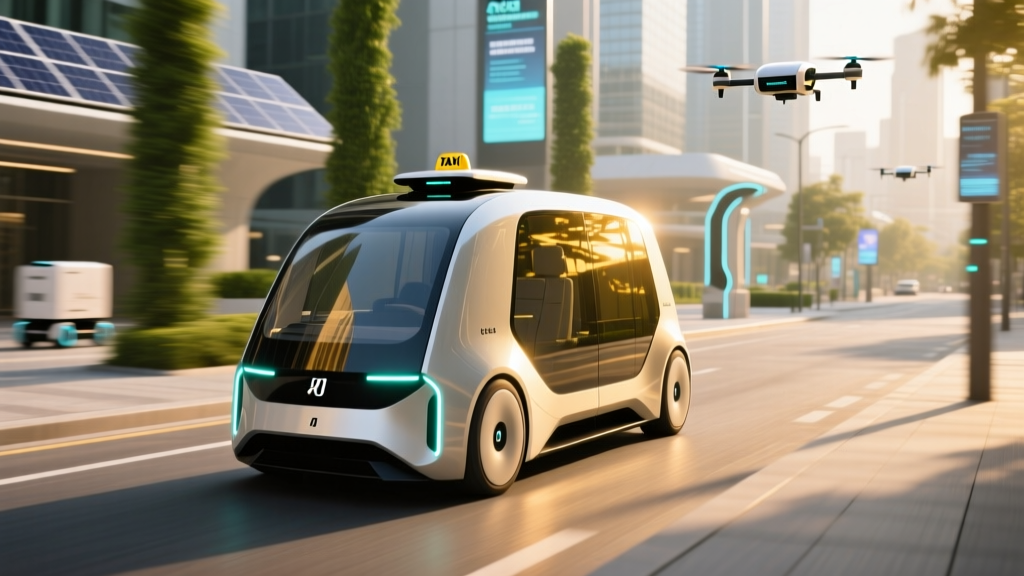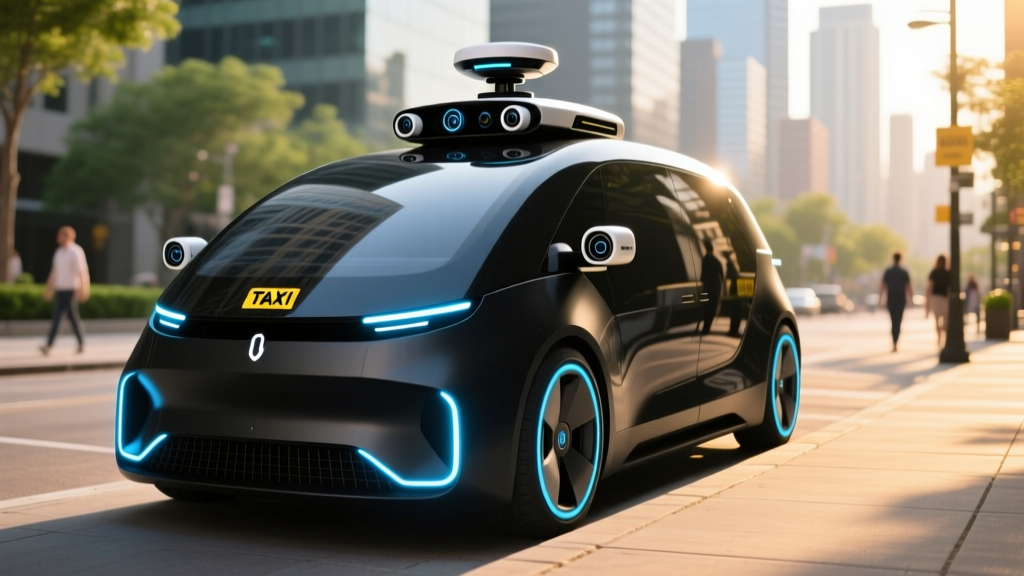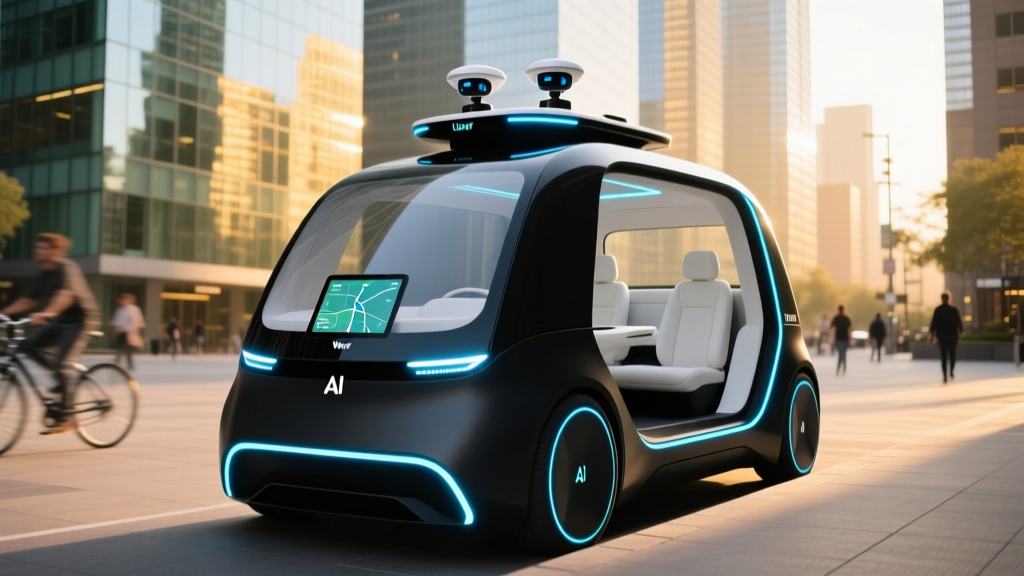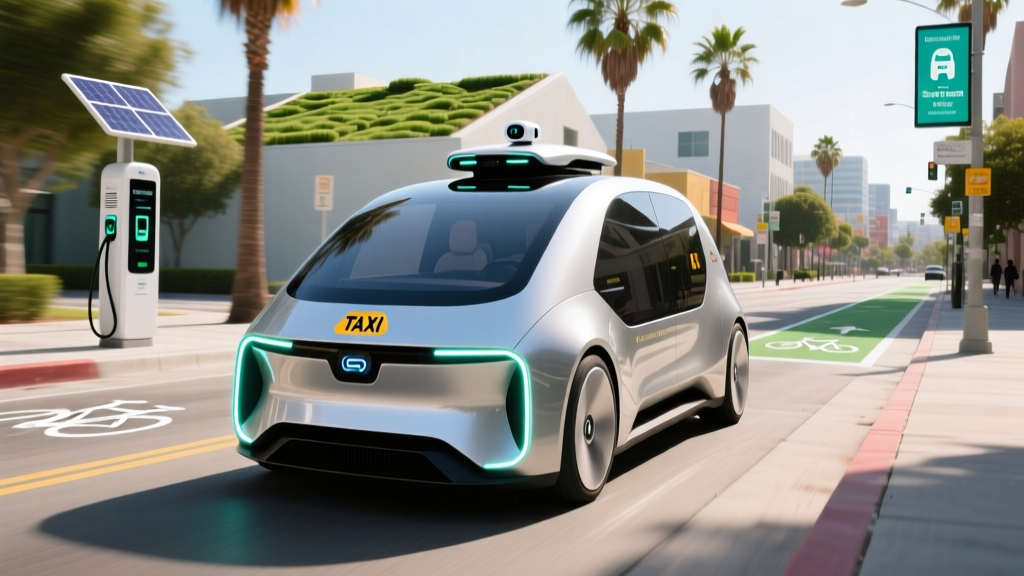
If you live in or near the South Bay, you have probably seen a Jaguar I-PACE with a roof-mounted sensor pod gliding down Stevens Creek Boulevard or a boxy, steering-wheel-free Zoox vehicle creeping through downtown. San Jose sits at the heart of California's autonomous-vehicle testing corridor, and in 2026 it is one of the few U.S. cities where you can actually summon a vehicle with nobody behind the wheel. Here is exactly which services operate, where they go, what they cost, and what the safety record shows.
Where Can I Use Self-Driving Taxis in San Jose Right Now?
As of mid-2026, two Level 4 robotaxi services are open to the public in San Jose proper, with a third in late-stage testing:
| Operator | Vehicle | San Jose Status | Service Area (approx.) | Hours |
|---|---|---|---|---|
| Waymo One | Jaguar I-PACE (5th-gen sensor suite) | Live — open to all riders | ~120 sq mi: Downtown, Santana Row, Diridon, Willow Glen, Berryessa, parts of Milpitas & Sunnyvale | 24/7 |
| Zoox | Zoox Gen-3 (purpose-built, no steering wheel) | Live — limited public rollout | Downtown core + SoFA district (~15 sq mi geofence) | Thu–Sun, 10 AM–midnight |
| Cruise (GM) | Cruise Origin | Announced — supervised testing only | Not yet open for public hailing | N/A |
Waymo's San Jose footprint expanded significantly in late 2025, adding North San Jose and the Berryessa BART area. Zoox launched its first fare-charging rides in the city in early 2026 after establishing operations in San Francisco, Las Vegas, and Foster City. Cruise is running safety-driver validation miles on San Jose streets but has not reopened commercial service following its late-2023 suspension.
Is This Truly Self-Driving or Just Driver-Assist?
No. Robotaxis are a fundamentally different class of technology from the driver-assist features in consumer cars. Here is how the Society of Automotive Engineers (SAE) defines the levels relevant to this conversation:
| SAE Level | Name | Who Drives | Example |
|---|---|---|---|
| Level 2 | Partial Automation | Human (must monitor constantly) | Tesla Autopilot, Ford BlueCruise, GM Super Cruise |
| Level 3 | Conditional Automation | System in narrow conditions; human on standby | Mercedes DRIVE PILOT (limited markets) |
| Level 4 | High Automation | System handles all driving within its ODD (operational design domain) | Waymo One, Zoox public rides |
| Level 5 | Full Automation | System drives everywhere, all conditions | Does not exist commercially |
Waymo and Zoox both operate at SAE Level 4. The vehicle handles steering, braking, route planning, and edge-case response within a mapped geofence, and there is no expectation that a passenger will intervene. This is categorically different from Tesla FSD (Supervised) or any other Level 2 system, which requires an attentive driver at all times. Calling a Level 2 car "self-driving" is inaccurate and dangerous.
How Much Does a Robotaxi Cost vs. Uber or Lyft?
Robotaxi pricing in San Jose is competitive with rideshare but not dramatically cheaper yet. Here is a snapshot of typical fares for a midday ride from Santana Row to downtown San Jose (approx. 4 miles):
| Service | Typical Fare (4-mi trip) | Per-Mile Avg | Surge Pricing? | Tip Expected? |
|---|---|---|---|---|
| Waymo One | $11–$16 | ~$2.75/mi | Occasional demand pricing | No (in-app option available) |
| Zoox | $10–$14 | ~$2.50/mi | No surge currently | No |
| UberX | $12–$19 | ~$3.10/mi | Frequent surge | Yes (15–20%) |
| Lyft Standard | $11–$18 | ~$3.00/mi | Frequent surge | Yes (15–20%) |
After factoring in no tip and less surge volatility, a Waymo or Zoox ride typically lands 10–25% below an equivalent UberX trip in San Jose. Waymo also offers a $5 introductory credit for new riders through the Waymo One app. Zoox is currently running promotional pricing as it scales its San Jose fleet.
How to ride: Download the Waymo One app (iOS/Android) or the Zoox app, set your pickup and dropoff within the geofence, and confirm. Waymo provides a PIN to unlock the car; Zoox uses QR-code entry. Wait times average 4–8 minutes in the core service zone.
How Safe Are Robotaxis? Real Data.
Autonomous vehicle safety is measured differently from human-driver statistics. California's DMV requires all AV operators to publish annual disengagement reports, and the National Highway Traffic Safety Administration (NHTSA) collects crash data under a standing general order for Level 2–4 systems.
Waymo — cumulative through Q1 2026:
- Over 35 million fully driverless miles completed across all markets (Phoenix, San Francisco, Los Angeles, Austin, San Jose).
- Waymo's peer-reviewed study (published with Swiss Re) found a 76% reduction in property-damage-claim frequency and a 92% reduction in bodily-injury-claim frequency compared to human-driven benchmarks.
- In California DMV disengagement reports, Waymo averages roughly one intervention per 15,000–20,000 miles — and the vast majority are precautionary (e.g., a construction zone not yet mapped), not emergency stops.
Zoox — cumulative through Q1 2026:
- Approximately 1.5 million driverless miles across San Francisco, Las Vegas, Foster City, and San Jose.
- No reported at-fatal at-fault incidents in driverless mode as of the latest California DMV reports.
- Disengagement rate: roughly one per 8,000–10,000 miles (smaller fleet, earlier in scaling curve).
For context, the U.S. human-driver fatality rate is approximately 1.27 per 100 million vehicle miles (NHTSA FARS data). Robotaxi fleets have not yet accumulated enough driverless miles to produce statistically comparable fatality rates, but the claims-frequency data from insurers and the disengagement trends point in a positive direction. No data source supports the claim that robotaxis are "safer than humans in every scenario" — the honest answer is that they are safer in common urban driving within their geofence, and their limitations are well-defined.
Under the Hood: Sensor Suite and Tech Stack
Both Waymo and Zoox rely on a multi-modal sensor approach — a critical distinction from Tesla's camera-only FSD system. Here is how the hardware breaks down:
| Component | Waymo (5th-Gen I-PACE) | Zoox (Gen-3 Purpose-Built) |
|---|---|---|
| LiDAR | Custom roof-mounted + side units (360°, ~250m range) | 4 corner-mounted + roof units (360°, ~150m range) |
| Cameras | 29 cameras (visible spectrum, overlapping FOV) | ~30 cameras including cabin-facing |
| Radar | 6 radar units (long + short range) | Multiple radar modules |
| Audio sensors | External microphones (sirens, horns) | External microphones |
| HD Mapping | Pre-mapped geofence; real-time localization | Pre-mapped geofence; real-time localization |
| Redundancy | Dual compute, redundant braking/steering | Dual compute, fully redundant drive-by-wire |
LiDAR gives these vehicles a direct 3D distance measurement that cameras alone cannot reliably provide in low-light or high-glare conditions. Both systems also use geofencing: the vehicle will only operate inside a pre-mapped zone where every lane, signal, and curb has been cataloged. If you ask Waymo to take you outside its San Jose geofence, the app simply will not let you set that destination.
Regulatory Landscape: Who Approves These Operations?
Robotaxi operations in San Jose fall under a layered regulatory framework:
- California DMV: Issues the Autonomous Vehicle Testing Permit and the Deployment Permit (required for commercial, driverless service). Both Waymo and Zoox hold active deployment permits.
- California Public Utilities Commission (CPUC): Regulates the commercial ride-hail aspect — fare structures, insurance minimums, accessibility requirements. CPUC approved Waymo's statewide commercial operations in 2024.
- NHTSA (federal): Sets vehicle safety standards (FMVSS). Zoox received a limited FMVSS exemption for its steering-wheel-free design. NHTSA also mandates crash reporting for all ADS-equipped vehicles.
- City of San Jose: Controls local permitting for curb pickup zones, fleet staging, and coordination with local law enforcement and fire services.
California remains the most permissive major state for Level 4 robotaxi deployment. Arizona (Phoenix) and Texas (Austin) also allow commercial driverless operations. Most other states either restrict AVs to testing with a safety driver or have no explicit regulatory framework.
Current Limitations: Where Robotaxis Fall Short
Level 4 autonomy is impressive inside its operational envelope, but that envelope has real edges. Here is what you need to know before booking:
- Geofence boundaries: You cannot hail a ride to destinations outside the mapped zone. Waymo covers ~120 sq mi in San Jose; Zoox covers ~15 sq mi. Trips to San Francisco, Mountain View, or Santa Clara are not available from San Jose pickups (yet).
- Heavy rain and fog: Both services will slow down, reroute, or suspend operations during significant precipitation. LiDAR performance degrades in heavy rain, and sensor fusion confidence drops. San Jose's occasional winter atmospheric rivers can trigger service pauses.
- Construction zones: Unmapped lane shifts or temporary barriers may cause the vehicle to stop and wait for remote-assist guidance, adding minutes to your trip.
- Airport service: Waymo does serve SJC (San Jose Mineta International Airport) for pickups and dropoffs as of early 2026. Zoox has not yet added airport service in San Jose.
- Child seats and accessibility: Waymo vehicles are standard I-PACE SUVs with no integrated child seats — you must bring your own if required by law. Zoox's purpose-built vehicle is wheelchair-accessible but has limited cargo space.
- Wait times at the fringe: If you are near the edge of the geofence (e.g., East San Jose near Alum Rock), expect 10–15 minute waits or occasional "no vehicles available" messages during peak hours.
- No highway driving (Zoox): Zoox's Gen-3 vehicle is designed for urban streets and is capped at 75 mph. Waymo's I-PACE can handle freeway segments within the geofence (e.g., portions of I-280 and US-101 that fall inside the zone).
Frequently Asked Questions
Can I hail a self-driving taxi in San Jose right now without a waitlist?
Yes. Waymo One is open to all riders in San Jose — no waitlist required. Download the app, create an account, and request a ride. Zoox is also open to the public but has a smaller fleet and more limited hours (Thu–Sun, 10 AM–midnight).
How do robotaxis handle an emergency or accident?
Both Waymo and Zoox vehicles have 24/7 remote-assist teams. If the vehicle encounters a situation it cannot resolve autonomously, it pulls over safely and contacts a remote operator who can provide guidance. In a collision, the vehicle automatically contacts emergency services and the rider can speak with a support agent through the in-car screen.
Are self-driving taxis in San Jose cheaper than Uber?
On average, yes — about 10–25% cheaper for comparable trips, primarily because there is no driver tip and less surge pricing. A typical 4-mile trip costs $10–$16 on Waymo or Zoox vs. $12–$19 on UberX (before tip).
What happens if the robotaxi breaks down mid-trip?
The vehicle will pull to a safe stop, unlock the doors, and the app will notify you. You will not be charged for the incomplete trip. A replacement vehicle or alternative ride arrangement is offered through the app.
Can I use a robotaxi for my daily commute across San Jose?
It depends on your route. If both your origin and destination fall within the Waymo geofence (~120 sq mi covering downtown, Santana Row, Berryessa, and parts of North San Jose), yes. If your commute goes outside the zone — say, to Palo Alto or Cupertino — you will need to use a different service for at least part of the trip.
Is Tesla FSD the same as a Waymo robotaxi?
No. Tesla FSD (Supervised) is an SAE Level 2 driver-assist system. A human driver must remain attentive, hands available, and ready to take over at any moment. Waymo and Zoox are SAE Level 4 — there is no driver, and the system handles all driving tasks within its geofence without human intervention. They are fundamentally different categories.