The Evolution of Tesla’s Austin Autonomous Strategy
Austin, Texas, has long served as the crucible for Tesla’s most ambitious engineering and software experiments. With the Gigafactory Texas operating at full capacity and the city’s tech-forward demographic providing an ideal testing ground, Austin is slated to be the primary launchpad for the highly anticipated Tesla Robotaxi network. Following the October 2024 'We, Robot' event, Tesla finally provided concrete data points regarding its autonomous future, shifting the narrative from speculative promises to a structured, albeit aggressive, timeline.
For consumers, investors, and autonomous vehicle (AV) analysts, understanding the Austin rollout requires a data-driven approach. How does Tesla’s camera-only, end-to-end neural network strategy compare to the LiDAR-heavy, geofenced approach of competitors like Waymo? By analyzing the projected launch timelines, operational service details, and hardware economics, we can map out exactly what the Tesla Robotaxi service will look like when it hits the streets of the Texas capital.
Decoding the Timeline: From FSD to Cybercab
Tesla’s path to a fully autonomous ride-hailing service in Austin is bifurcated into two distinct phases: the deployment of unsupervised Full Self-Driving (FSD) in existing consumer vehicles, and the mass production of the dedicated 'Cybercab' platform. Based on recent corporate disclosures and industry analysis, the timeline is structured as follows:
- Phase 1: Late 2024 to Mid-2025 (Data Harvesting & Supervised FSD): Tesla continues to accumulate billions of miles of real-world driving data in Austin using FSD v12 and v13. This phase relies on human-in-the-loop supervision to train the end-to-end neural networks on complex Austin scenarios, such as the chaotic traffic corridors of I-35 and the dense pedestrian zones around Rainey Street.
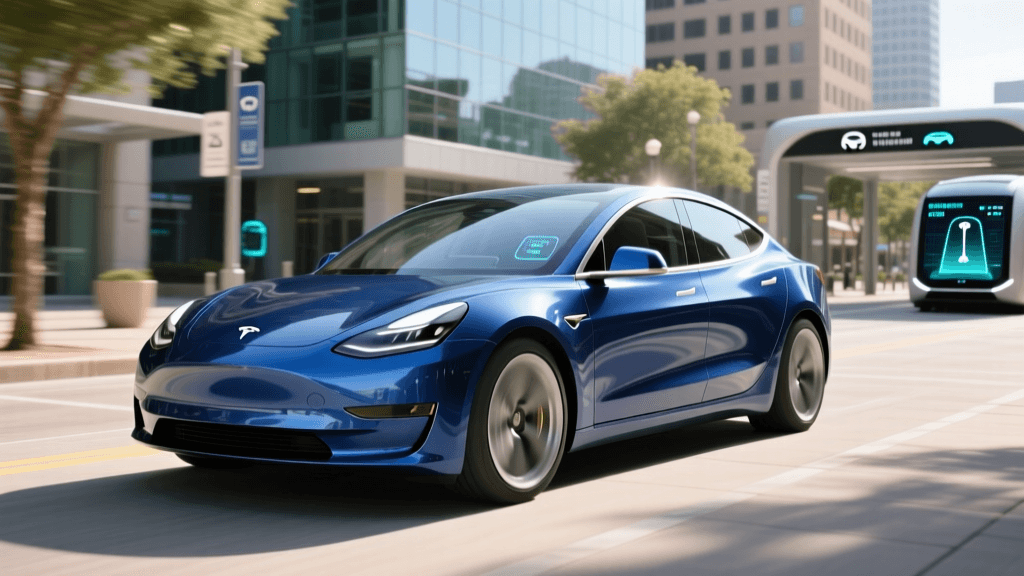
- Phase 2: Mid-to-Late 2025 (Unsupervised FSD Rollout): Tesla has officially targeted 2025 for the release of unsupervised FSD in Texas and California. This will initially utilize existing Model 3 and Model Y fleets, allowing early adopters to summon their vehicles or allow them to operate autonomously without a driver behind the wheel.
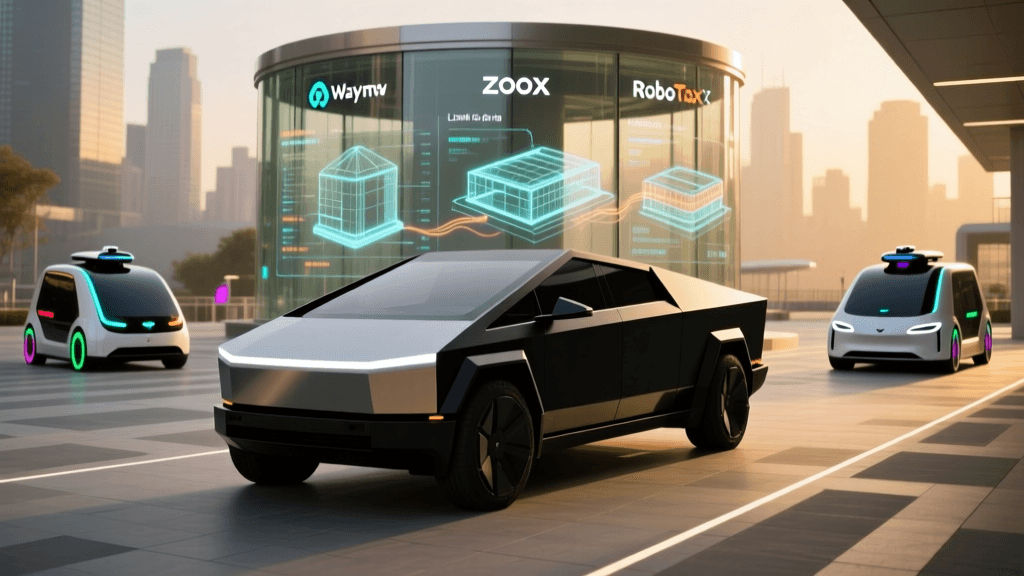
- Phase 3: 2026 and Beyond (Cybercab Production): The dedicated Robotaxi, dubbed the Cybercab, is scheduled to enter production in 2026. As Reuters reported following Tesla's October 2024 event, this vehicle will lack a steering wheel and pedals, relying entirely on the AI5 hardware suite and inductive charging infrastructure to operate as a true, continuous-duty fleet vehicle.
Service Architecture: How the Austin Fleet Will Operate
The operational mechanics of the Tesla Robotaxi service in Austin will mirror traditional ride-hailing apps like Uber or Lyft, but with a fundamentally different underlying economic model. Tesla intends to operate a hybrid network, blending a company-owned fleet with a peer-to-peer 'Airbnb on wheels' model, where existing Tesla owners can add their vehicles to the network when not in use.
Pricing and Unit Economics
Tesla’s stated goal is to achieve an operating cost of approximately $0.20 per mile. For Austin riders, this translates to drastically reduced fares. A typical trip from Austin-Bergstrom International Airport to the Downtown Convention Center (roughly 8 miles) could cost the operator less than $1.60 in energy and depreciation, allowing Tesla to undercut traditional ride-hailing services while maintaining high gross margins.
Charging and Fleet Uptime
Unlike Waymo, which relies on manual plug-in charging or specialized depot operations, Tesla’s Cybercab is designed around inductive (wireless) charging. The vehicle will autonomously navigate to designated charging pads scattered across Austin, eliminating the need for human handlers to plug in vehicles. This data point is critical: it theoretically increases fleet uptime by 15-20%, a massive advantage in unit economics.
Data-Driven Comparison: Tesla vs. Waymo in the Texas Market
Waymo is already operating in Austin, albeit in a limited, geofenced capacity with human safety operators, and is expanding its fully driverless footprint. Comparing Tesla’s projected service data against Waymo’s current 6th-generation hardware provides a clear picture of the competing philosophies in the AV space.
| Metric | Tesla Cybercab (Projected 2026) | Waymo 6th Gen (Current Austin Ops) |
|---|---|---|
| Primary Sensor Suite | Vision-Only (Cameras + AI5 Compute) | LiDAR, Radar, Cameras, Audio Sensors |
| Estimated Hardware Cost | ~$25,000 - $30,000 (Total Vehicle) | ~$100,000+ (Sensor Suite + Vehicle) |
| Mapping Dependency | None (Real-time End-to-End Neural Net) | High (Requires HD Pre-Mapping) |
| Target Cost Per Mile | $0.20 | $0.80 - $1.20 (Estimated Industry Avg) |
| Scalability Speed | Instant (Software update deployment) | Slow (Requires physical mapping & hardware) |
| Weather Limitations | Moderate (Heavy rain/fog degrades vision) | Low (LiDAR/Radar penetrate precipitation) |
The data highlights a stark contrast. Tesla’s vision-only approach offers unparalleled scalability and lower capital expenditure per vehicle. If the AI5 chip can achieve human-level reliability using only optical data, Tesla’s marginal cost to expand from Downtown Austin to the sprawling suburbs of Round Rock and Cedar Park is virtually zero. Conversely, Waymo’s reliance on HD maps and expensive LiDAR ensures robust redundancy but severely limits the speed and geographic breadth of their expansion.
Navigating the Regulatory and Safety Data Landscape
Operating a driverless fleet in Texas requires strict adherence to both state and federal safety reporting mandates. The Texas Department of Transportation (TxDOT) maintains a relatively permissive environment for AV testing compared to California, but federal oversight remains stringent. Under the National Highway Traffic Safety Administration (NHTSA) Standing General Order, all manufacturers and operators of Automated Driving Systems (ADS) must report crashes involving their vehicles. As noted in the NHTSA crash reporting guidelines, this data is crucial for identifying systemic software failures.
Tesla’s challenge in Austin will be proving the statistical safety of its vision-only system to regulators. According to safety analyses by organizations like the Insurance Institute for Highway Safety (IIHS), the transition from supervised to unsupervised driving introduces complex edge cases that require billions of miles of validation. Tesla’s shadow mode data—where the AI makes silent decisions in the background of human-driven Teslas in Austin—will be the primary dataset used to convince the Texas DMV and NHTSA that the Cybercab is ready for public deployment without a steering wheel.
Actionable Insights for Consumers and Fleet Observers
For Austin residents and industry watchers, the impending arrival of the Tesla Robotaxi network presents several actionable takeaways:
- For Commuters and Riders: Expect the initial unsupervised FSD rollout in 2025 to be restricted to specific, lower-complexity zones before expanding to dense urban cores. Keep an eye on the Tesla app, which will likely integrate a 'Summon Network' tab, allowing you to hail nearby consumer-owned Teslas before the official Cybercab fleet arrives in 2026.
- For Real Estate and Urban Planners: The introduction of inductive charging Cybercabs will require municipal cooperation. Commercial real estate developers in Austin should begin evaluating the integration of wireless charging pads in parking garages and curbside pickup zones to attract fleet operators.
- For Investors: Do not focus solely on the 2026 Cybercab production date. The leading indicator for Tesla’s Austin Robotaxi success is the disengagement rate of FSD v13 in complex Texas traffic. If Tesla can demonstrate a mean-time-between-failures (MTBF) that exceeds human benchmarks in their Q1 and Q2 2025 safety reports, the regulatory pathway for the 2026 Cybercab launch will be secured.
Conclusion
The Tesla Robotaxi launch in Austin represents a high-risk, high-reward gamble on the supremacy of artificial intelligence over physical sensor redundancy. While Waymo has proven that robotaxis can work today using expensive, mapped hardware, Tesla is betting that a $30,000, camera-only vehicle driven by a neural network can achieve the same safety outcomes at a fraction of the cost. As we move through 2025 and toward the 2026 Cybercab production target, the streets of Austin will serve as the ultimate proving ground, generating the definitive data that will decide the future of autonomous transportation.