Why a Tesla Collision in Fort Myers Raises Bigger Questions About Driver-Assist Tech
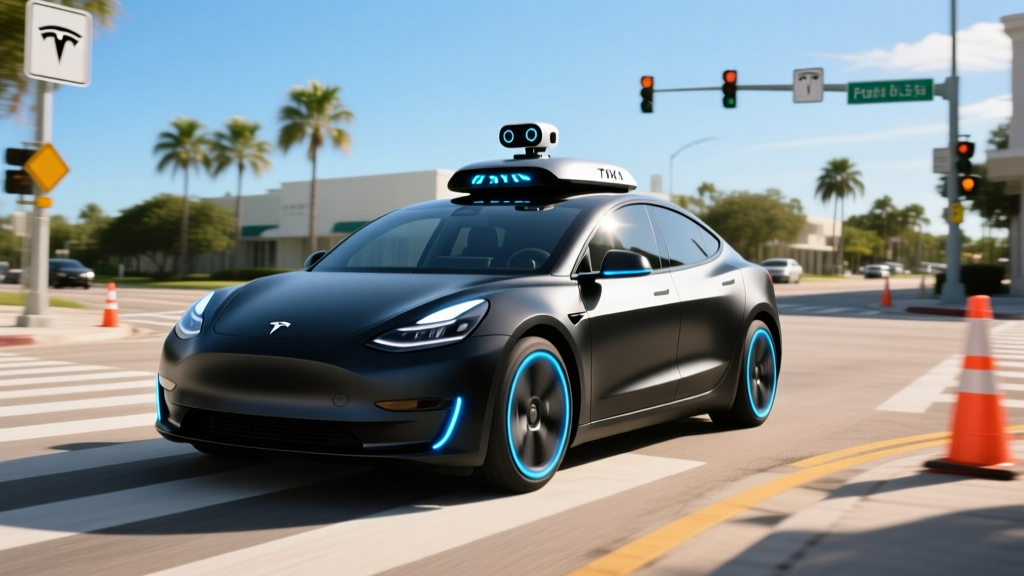
When news surfaces about a Tesla collision in Fort Myers — or any Florida city where Tesla's driver-assist systems are heavily used — the immediate reaction tends to split into two camps: those who blame the technology, and those who blame the driver. The truth, as is almost always the case with advanced driver-assistance systems (ADAS), lives in the gap between what the software can do and what the driver assumes it can do.
This isn't unique to Fort Myers. Southwest Florida's wide multi-lane boulevards (think US-41/Tamiami Trail), sudden afternoon downpours, and a high concentration of Tesla owners make it a natural flashpoint for ADAS-related incidents. But understanding what happened — and what's likely to happen in similar scenarios — requires a precise look at Tesla's Autopilot and Full Self-Driving (FSD) Supervised systems as they exist in 2026, not the marketing headlines.
Below, we break down exactly what these systems do, the hard technical limitations that can contribute to collisions, the costs involved, and how Tesla's ADAS compares to competing systems from Ford, GM, and others.
What Tesla Autopilot and FSD Supervised Actually Do
Tesla offers two tiers of driver-assistance technology on its 2026 vehicles. The naming is critical, because confusing them is one of the most common — and potentially dangerous — mistakes owners make.
Basic Autopilot (Standard on All 2026 Teslas)
Autopilot is a Level 2 driver-assist system that includes:
- Traffic-Aware Cruise Control (TACC): Maintains a set speed and following distance using forward-facing cameras and neural-net object detection.
- Autosteer: Provides lane-centering on clearly marked roads, primarily designed for divided highways.
- Automatic Emergency Braking (AEB): Detects imminent forward collisions and applies brakes if the driver does not react.
- Lane Departure Avoidance: Applies corrective steering if the vehicle drifts over lane markings without a turn signal.
Full Self-Driving (FSD) Supervised — Subscription or Purchase
FSD Supervised builds on Autopilot with additional capabilities:
- Automatic lane changes on highways (initiated by turn signal or autonomously in newer versions).
- Navigate on Autopilot: Suggests and executes highway exits and interchanges based on navigation.
- City Streets driving: Handles traffic lights, stop signs, and turns on surface streets — including complex intersections.
- Smart Summon: Low-speed parking lot navigation to the driver's location.
- Autopark: Parallel and perpendicular parking assistance.
Both Autopilot and FSD Supervised are classified as SAE Level 2 under the SAE J3016 standard. This means the system can control steering and acceleration simultaneously, but the driver must remain fully engaged, attentive, and ready to take over at any moment. The vehicle does not monitor the driving environment in a way that relieves the human of responsibility. This is not self-driving. For comparison, Waymo's robotaxi service operates at SAE Level 4 — high automation in defined geographic areas with no driver needed.
How Tesla's Vision-Only Sensor Suite Works (and Where It Falls Short)
Since 2022, Tesla has used a camera-only (Tesla Vision) approach, removing radar and ultrasonic sensors from all new production vehicles. The 2026 Model 3, Model Y, Model S, and Model X rely on a suite of external cameras processed through Tesla's custom HW4 (Hardware 4) computer:
| Sensor/Component | Details |
|---|---|
| External Cameras | 8 cameras (front narrow/wide, left/right forward, left/right rear, backup) — 5 MP resolution |
| Compute Platform | Tesla HW4 (AI inference chip, ~300+ TOPS processing) |
| Radar | None (removed from production starting 2022) |
| Ultrasonic Sensors | None (removed starting 2022; replaced by vision-based parking) |
| Driver Monitoring | Cabin camera (steering-wheel torque detection on older models) |
The vision-only approach has advantages — cameras provide rich contextual data (reading signs, detecting traffic light colors, identifying lane markings) that radar cannot. But it also introduces specific failure modes that are directly relevant to collisions in places like Fort Myers:
Known Vision-System Limitations
- Heavy rain and standing water: Fort Myers averages 55+ inches of rain annually, with intense afternoon thunderstorms from June through September. Camera lenses can be obscured by water droplets, and lane markings become invisible under standing water. Tesla's system will issue a "Camera visibility reduced" warning and may disengage Autosteer.
- Direct sun glare: Westbound driving on Colonial Blvd or Daniels Parkway at sunset can saturate forward-facing cameras, reducing object detection reliability.
- Faded or non-standard lane markings: Construction zones, recently repaved roads, and older surface streets in Lee County often have degraded lane markings that confuse the lane-centering algorithm.
- Stationary object detection: Vision-only systems have historically struggled with detecting stationary objects (parked fire trucks, disabled vehicles, road barriers) at highway speeds — a limitation documented in multiple NHTSA investigations.
- Phantom braking: The system occasionally applies emergency braking when no obstacle is present, often triggered by shadows, overpasses, or roadside objects misidentified as threats. This can cause rear-end collisions when following drivers don't expect sudden deceleration.
- Does NOT drive autonomously — you are the driver, legally and functionally.
- Does NOT guarantee detection of all obstacles, especially stationary ones at speed.
- Does NOT perform reliably in heavy rain, fog, or when camera lenses are dirty/obstructed.
- Does NOT handle all construction zones, detours, or temporary traffic patterns.
- Does NOT replace attentive driving — NHTSA data shows the majority of ADAS-involved crashes occur when drivers are over-reliant on the system.
Tesla ADAS Pricing and Availability: 2026 Breakdown
Understanding what you're paying for — and what's included by default — matters both for purchase decisions and for understanding the feature set involved in any collision incident.
| Feature Tier | Included Features | Cost (2026) | Availability |
|---|---|---|---|
| Basic Autopilot | TACC, Autosteer, AEB, Lane Departure Avoidance | Included (no extra cost) | All 2026 Model 3, Y, S, X |
| FSD Supervised (Subscription) | All Autopilot features + City Streets, Navigate on Autopilot, Smart Summon, Autopark | $99/month | All 2026 Teslas (requires HW3 or HW4) |
| FSD Supervised (Lifetime Purchase) | Same as subscription | $8,000 one-time | All 2026 Teslas |
The $8,000 lifetime purchase price has come down from the $15,000 Tesla once charged. For most buyers, the $99/month subscription makes more financial sense unless you plan to keep the vehicle for 7+ years — and FSD's value proposition continues to evolve with over-the-air updates.
Real-World Safety Data: What NHTSA and Crash Statistics Show
Tesla publishes quarterly safety reports claiming that vehicles driving with Autopilot engaged record fewer crashes per million miles than the U.S. average. However, these reports have significant methodological limitations:
- Tesla's data compares Autopilot highway miles (the system's strongest use case) against the national average, which includes all road types, weather conditions, and driver demographics.
- The data does not separately report FSD (Supervised) City Streets performance from basic Autopilot highway performance.
- NHTSA's Standing General Order (SGO) crash reporting data, required since 2021, provides a more independent look. According to NHTSA's automation crash data, Tesla vehicles have been involved in a significant share of reported Level 2 ADAS crashes — though this partly reflects Tesla's market share in the ADAS-equipped vehicle segment.
The Insurance Institute for Highway Safety (IIHS) has repeatedly found that partial automation systems, including Tesla's, do not demonstrate clear safety benefits over non-automated driving when real-world crash data is analyzed. IIHS has also rated the 2026 Model Y and Model 3 as Top Safety Picks in crashworthiness, but has been critical of Tesla's driver-monitoring approach compared to systems that use eye-tracking (like GM's Super Cruise).
For a Tesla collision in Fort Myers specifically, the relevant factors often include:
- Driver over-reliance: Engaging Autosteer or FSD on surface streets and disengaging attention, especially on familiar routes like Cleveland Avenue or Six Mile Cypress Parkway.
- Weather-related disengagement: System limitations during Florida's frequent heavy rain, where the driver may not react quickly enough when the system hands back control.
- Intersection complexity: FSD on City Streets still occasionally misjudges unprotected left turns, multi-lane intersections, and non-standard signal configurations common in Lee County.
- Phantom braking events: Unexpected deceleration on I-75 or US-41, leading to rear-end impacts from following vehicles.
How Tesla's ADAS Compares to Ford BlueCruise, GM Super Cruise, and Others
Tesla isn't the only automaker offering Level 2 driver-assistance. Understanding the competitive landscape helps contextualize where Tesla's system excels and where it lags.
| System | SAE Level | Hands-Free? | Driver Monitoring | Geo-Fenced? | Cost |
|---|---|---|---|---|---|
| Tesla Autopilot | Level 2 | No (hands-on) | Cabin camera + torque | No | Included |
| Tesla FSD (Supervised) | Level 2 | No (hands-on) | Cabin camera | No | $99/mo or $8,000 |
| GM Super Cruise | Level 2 | Yes (mapped highways) | Eye-tracking IR camera | Yes (~750,000+ mi mapped) | $2,200 + $25/mo after 3 yrs |
| Ford BlueCruise | Level 2 | Yes (mapped highways) | Eye-tracking camera | Yes (~130,000+ mi mapped) | $2,100 or $75/mo |
| Hyundai/Kia HDA2 | Level 2 | No (hands-on) | Steering torque | No | Included (select trims) |
The key differentiator: GM Super Cruise and Ford BlueCruise allow true hands-free driving on pre-mapped divided highways, but they use infrared eye-tracking cameras to ensure the driver is looking at the road. Tesla's system works on more road types (including city streets with FSD) but requires hands on the wheel and uses a less rigorous driver-monitoring approach. This distinction matters in collision analysis — systems with stricter monitoring tend to show fewer over-reliance incidents.
What Fort Myers Tesla Drivers Should Know Before Engaging Autopilot or FSD
If you own or are considering a Tesla in the Fort Myers / Cape Coral / Estero area, here's a practical framework for using ADAS safely in local conditions:
- I-75 between Fort Myers and Tampa/Miami — clear lane markings, divided highway, predictable traffic patterns.
- Dry-weather highway driving on US-41 or Daniels Parkway with good visibility.
- Low-speed parking lot navigation with Smart Summon (remain within line of sight).
- During heavy rain, thunderstorms, or when roads have standing water.
- Construction zones (common on I-75 expansion projects and local road resurfacing).
- Unmarked or poorly marked surface streets, especially in older neighborhoods.
- Westbound driving directly into sunset glare without polarized sunglasses.
- Complex multi-lane intersections with non-standard signal timing.
Also keep your camera lenses clean. Florida's combination of rain, road spray, and insect buildup (especially on the Gulf Coast) can degrade camera visibility faster than in drier climates. A quick wipe of all external cameras before a long drive is a simple but effective habit.
The Legal and Insurance Reality After a Tesla ADAS Collision
When a collision involves an engaged driver-assist system, liability remains with the driver. Tesla's owner's manual is explicit: the driver is responsible for the vehicle at all times, regardless of whether Autopilot or FSD is active. This has been upheld in multiple court cases and NHTSA findings.
Insurance implications are real. Tesla vehicles carry higher-than-average insurance premiums — partly due to repair costs (aluminum body panels, sensor recalibration after bodywork) and partly due to the vehicle's performance characteristics. In Florida, where the average full-coverage auto insurance premium runs around $2,500-$3,000/year, Tesla owners should expect to pay $3,500-$5,000+/year depending on model, trim, and driving history. Tesla's own insurance product, available in Florida, uses real-time driving data (including Autopilot engagement frequency and safety scores) to adjust premiums.
FAQ: Tesla ADAS and Collision Safety
Is Tesla Autopilot or FSD self-driving?
No. Both systems are SAE Level 2, meaning the driver must remain fully attentive and in control at all times. The "Full Self-Driving" name refers to the feature set, not the automation level. True self-driving (Level 4) is currently only available through services like Waymo in select cities — not in any consumer vehicle you can buy.
What causes Tesla collisions when Autopilot or FSD is engaged?
The most common factors are driver inattention (over-reliance on the system), system limitations detecting stationary objects at speed, phantom braking events, adverse weather degrading camera performance, and complex road environments (construction zones, faded markings) that exceed the system's capabilities.
Does Tesla's camera-only system perform worse than radar-equipped competitors?
In some conditions, yes. Camera-only systems are more susceptible to weather degradation (heavy rain, fog, direct sun glare) and have shown higher rates of phantom braking compared to radar-fusion systems used by competitors like Mercedes-Benz and BMW. However, cameras provide richer contextual understanding (reading signs, identifying traffic light states) that radar alone cannot match.
How much does FSD cost in 2026?
Tesla FSD (Supervised) costs $99/month as a subscription or $8,000 as a one-time purchase. Basic Autopilot (TACC + Autosteer) is included at no additional cost on all new 2026 Teslas.
If I'm in a collision with Autopilot engaged, who is liable?
The driver. Tesla's terms and NHTSA guidance both place full responsibility on the human driver when Level 2 systems are in use. The system is an assist, not a replacement for an attentive driver. Tesla's event data recorder logs system state at the time of a collision, which can be subpoenaed in legal proceedings.
Has NHTSA investigated Tesla Autopilot/FSD crashes?
Yes. NHTSA has opened and closed multiple investigations into Tesla's Autopilot system. In 2024, NHTSA concluded a major investigation finding that Tesla's driver engagement monitoring was inadequate in some scenarios, leading to a recall (addressed via over-the-air software update) to increase driver attentiveness alerts. NHTSA continues to monitor ADAS-related crashes through its Standing General Order reporting requirement.
Sources: NHTSA Vehicle Safety & Automation, IIHS Vehicle Ratings, SAE J3016 Automation Levels. All pricing and specs reflect 2026 model year as of publication. Tax credit and incentive eligibility varies — consult IRS.gov and a tax professional.