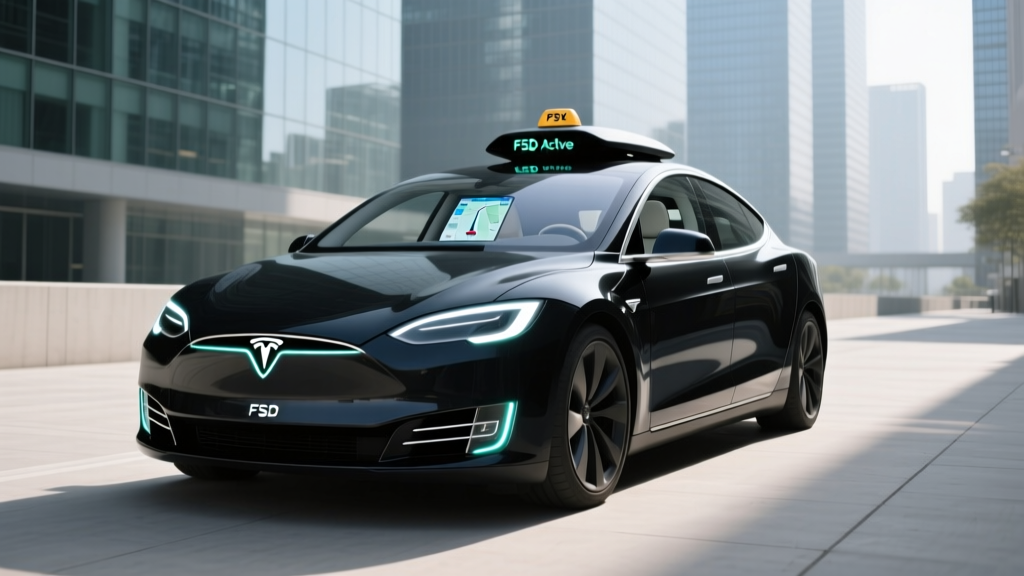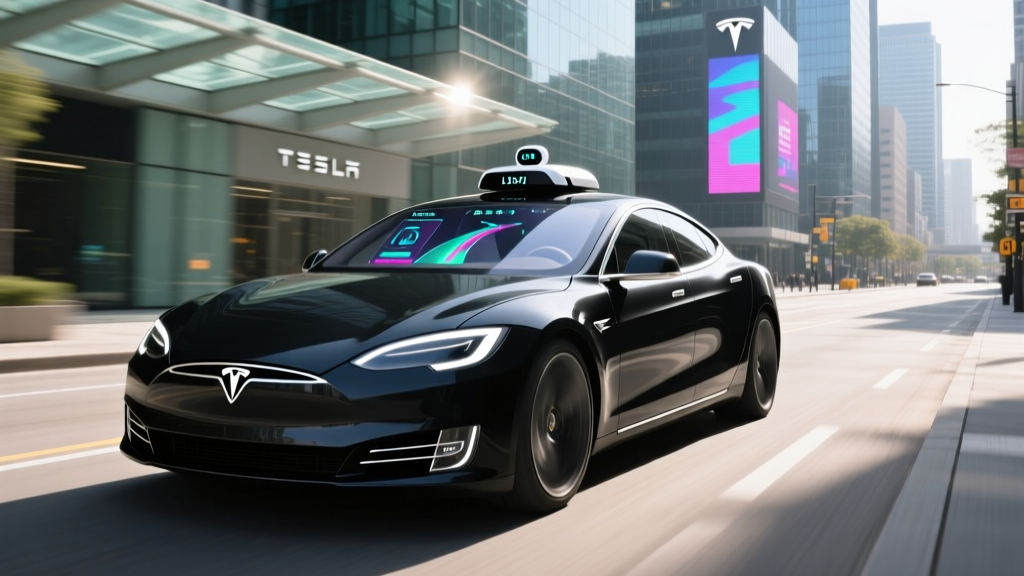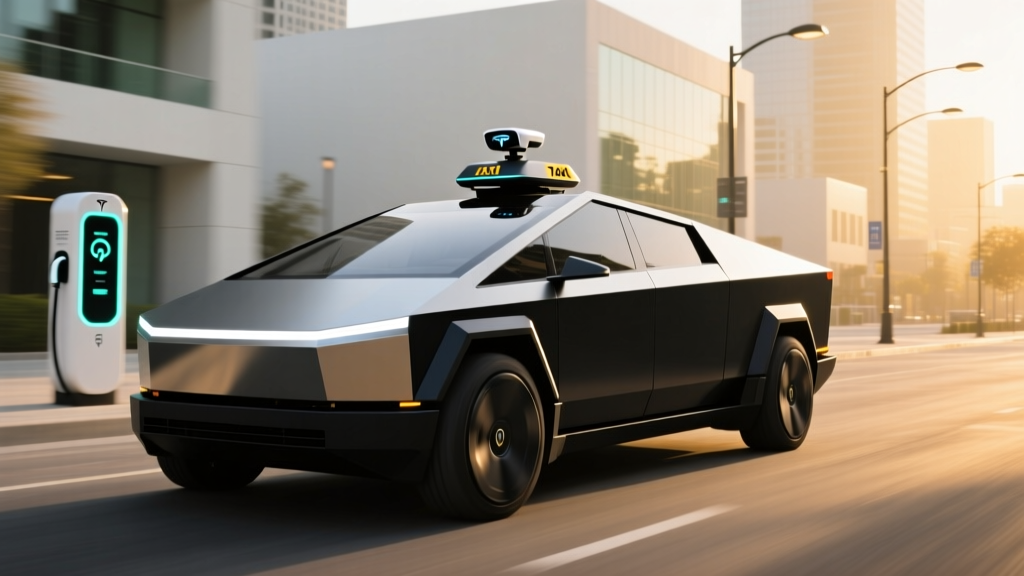
Every new Tesla leaves the factory with Basic Autopilot included, but the moment you open the Tesla app or configure a car online, you're hit with upgrade options that can add thousands to the bottom line. The Tesla Autopilot price structure has shifted several times since 2019, and as of the 2026 model year, there are effectively three tiers: the free baseline, a $6,000 Enhanced Autopilot package, and Full Self-Driving (FSD) at $8,000 one-time or $99 per month. This guide breaks down exactly what each tier does, what it doesn't do, and whether the upgrade cost makes sense for your driving patterns.
What Tesla Autopilot Actually Does (and Doesn't Do)
Basic Autopilot bundles two core SAE Level 2 driver-assistance features: Traffic-Aware Cruise Control (TACC) and Autosteer. TACC uses the vehicle's forward cameras and neural-net processing to maintain a set following distance from the car ahead, handling stop-and-go traffic without driver throttle or brake input. Autosteer adds lane-centering on clearly marked roads, applying small steering corrections to keep the vehicle centered in its lane.
Enhanced Autopilot ($6,000) layers on Navigate on Autopilot (automatic highway interchange and off-ramp guidance), Auto Lane Change (initiated by turn-signal stalk or automatically with user settings), Autopark (parallel and perpendicular parking assist), and Summon (low-speed remote movement of the vehicle in tight spaces, up to roughly 150 feet).
Full Self-Driving (FSD Supervised) at $8,000 or $99/month adds traffic-light and stop-sign recognition with automatic response, and the promise of broader city-street driving capability. In practice, FSD Supervised on 2025–2026 vehicles running Tesla's vision-only neural-net stack can navigate many surface-street scenarios, but requires constant driver attention and frequent interventions.
SAE Automation Level: Level 2 (Driver Supervision Required)
Every Tesla driver-assist feature available to consumers today is SAE Level 2. That means the human driver must remain fully engaged — eyes on the road, hands available to take over, and legally responsible for every action the vehicle takes. Tesla's "Full Self-Driving" branding is a product name, not an SAE classification. True Level 4 driverless operation (no human backup required) is currently only deployed in geofenced robotaxi fleets like Waymo, not in any consumer Tesla.
Tesla Autopilot Price: Tier-by-Tier Cost Breakdown
| Tier | Cost (2026) | Payment | Transferable? |
|---|---|---|---|
| Basic Autopilot | $0 (included) | Standard on every new Tesla | N/A |
| Enhanced Autopilot (EAP) | $6,000 | One-time purchase | No — stays with the VIN |
| Full Self-Driving (FSD) Supervised | $8,000 or $99/mo | One-time or monthly subscription | No — stays with VIN (purchase) or account (sub) |
A few pricing nuances matter. Tesla occasionally runs limited-time FSD transfer promotions that let you move a purchased FSD license from a trade-in to a new Tesla delivery — these are promotional, not permanent policy. Subscription FSD can be cancelled monthly, which makes sense for drivers who only want the feature for a road trip or specific period. Purchased FSD is a sunk cost tied to the vehicle's VIN; it does not follow you if you sell the car privately, and it typically does not add dollar-for-dollar resale value.
On used Teslas, FSD "transfer" status is inconsistent. A used car advertised as "FSD included" may carry a transferable license or may not — Tesla's internal policy has changed multiple times. Always verify FSD status through the Tesla app or a Tesla service center before paying a premium on a used listing.
Which Tesla Models Include Each Tier?
As of the 2026 model year, Basic Autopilot is standard on every Tesla sold new in the United States: Model 3 (Highland refresh and subsequent updates), Model Y (Juniper refresh), Model S, Model X, and the Cybertruck. Enhanced Autopilot and FSD are available as paid add-ons at configuration or via post-purchase over-the-air activation on all current models.
Hardware matters. Vehicles built from roughly mid-2019 onward carry Hardware 3 (HW3) computers; vehicles from late 2022 forward increasingly carry Hardware 4 (HW4), which uses higher-resolution cameras and a more capable inference chip. HW4-equipped cars run the latest FSD neural-net builds more smoothly, and Tesla has prioritized HW4 for newer FSD features. If you're buying a used Tesla specifically for FSD, HW4 is the more future-proof choice.
| Brand | Feature Name | Hands-Free? | Typical Cost |
|---|---|---|---|
| Tesla | Basic Autopilot / FSD Supervised | No — steering-wheel torque or camera attention required | $0 / $8,000 or $99/mo |
| Ford | BlueCruise | Yes, on pre-mapped divided highways (eyes monitored by IR camera) | ~$2,100 one-time or ~$75/mo |
| GM (Chevy/Cadillac/GMC) | Super Cruise | Yes, on pre-mapped divided highways (driver-monitoring camera) | ~$2,500 one-time (often bundled on higher trims) |
| Hyundai / Kia / Genesis | Highway Driving Assist 2 (HDA2) | No — hands-on required | Included on mid/high trims |
| BMW | Driving Assistant Professional | Conditional hands-off up to ~85 mph (in supported markets) | ~$1,700–$2,500 option |
Real-World Capabilities: Where Tesla Autopilot Excels
Basic Autopilot's traffic-aware cruise and lane-centering are genuinely strong for highway commuting. In stop-and-go I-405 traffic or long Interstate stretches, TACC handles acceleration, braking, and following distance smoothly, while Autosteer tracks well-marked lanes with minimal weaving. For a daily 40-mile highway commute, Basic Autopilot measurably reduces driver fatigue — and it's free.
Enhanced Autopilot's Auto Lane Change works best on multi-lane Interstates with clear pavement markings. With the turn-signal-initiated mode, a tap of the stalk triggers a smooth lane change after the system verifies the adjacent lane is clear. Navigate on Autopilot can suggest and execute off-ramp and interchange maneuvers, though most experienced Tesla owners keep this in "suggest" mode rather than allowing fully automatic execution, because the system occasionally initiates lane changes too aggressively near exits.
FSD Supervised shines most in low-speed, predictable suburban environments: right turns on green, left turns across single-lane traffic, and four-way stop negotiation. On well-marked suburban arterials with clear lane paint and consistent signage, FSD can string together several miles with only light supervision.
Real-World Limitations: Where the System Falters
What Tesla Autopilot and FSD Do NOT Handle Reliably
- Faded or missing lane markings: Construction zones, rural roads with worn paint, and snow-covered lanes can cause Autosteer to disengage abruptly or center on the wrong reference.
- Heavy rain, fog, or direct sun glare: Tesla's vision-only system (no radar on 2022+ vehicles) is more susceptible to camera occlusion than radar-augmented competitors. Heavy rain can trigger speed reductions or Autosteer disengagement.
- Complex intersections: Unprotected left turns across multi-lane traffic, offset intersections, and temporary traffic-control setups (flaggers, cones) still require immediate driver takeover.
- Stationary emergency vehicles: While improved, the system has a documented history (per NHTSA investigations) of failing to slow or steer around parked fire trucks and ambulances with flashing lights.
- Highway work zones with shifted lanes: Orange cones and temporary lane shifts are an edge case where the driver must take over early.
Tesla's attention-monitoring system uses the cabin camera to verify the driver is looking forward. In practice, the system issues escalating warnings and will eventually disengage Autosteer if it detects prolonged inattention — but it does not prevent a distracted driver from misusing the system. The driver remains legally and physically responsible for every mile.
For drivers in regions with harsh winters, Autopilot's camera-only stack is noticeably more prone to wintertime disengagements than radar-equipped systems from Ford (BlueCruise) or GM (Super Cruise). If you regularly drive in snow or heavy rain, plan to treat Autopilot as a fair-weather assistant, not an all-season one.
Is Tesla Autopilot Worth the Price?
For most Tesla owners, Basic Autopilot (free) is the rational choice. Traffic-aware cruise plus lane-centering covers 80% of the fatigue-reduction benefit on highway commutes, and it costs nothing. The $6,000 Enhanced Autopilot package is a harder sell: Auto Lane Change is convenient but not essential, Summon is a party trick more than a daily tool, and Autopark works inconsistently in tight real-world spots.
Full Self-Driving at $8,000 is a speculative purchase. You are paying for today's Level 2 system plus the possibility that future software updates will unlock more capability. Tesla has moved FSD forward incrementally, but it remains a supervised system with no announced timeline for true Level 4 operation. If you want FSD for a specific cross-country road trip, the $99/month subscription is far more financially rational — you can enable it for the trip and cancel after.
Compared to Ford BlueCruise ($2,100 or ~$75/month) or GM Super Cruise (~$2,500 bundled), Tesla's FSD is substantially more expensive while offering broader but less polished coverage. BlueCruise and Super Cruise are geofenced to pre-mapped divided highways, but within those boundaries they offer genuine hands-free driving with robust driver monitoring — something Tesla's system does not permit.
Tesla Autopilot Price FAQ
Does every new Tesla come with Autopilot?
Yes. Basic Autopilot (Traffic-Aware Cruise Control and Autosteer) is standard on every new 2026 Tesla Model 3, Model Y, Model S, Model X, and Cybertruck at no additional cost.
Is Tesla Autopilot the same as Full Self-Driving?
No. "Autopilot" refers to the free baseline system (TACC + Autosteer). "Full Self-Driving (FSD) Supervised" is an $8,000 or $99/month upgrade that adds traffic-light recognition, city-street navigation, and other features. Both remain SAE Level 2 and require active driver supervision.
Can I add FSD after I buy the car?
Yes. FSD can be purchased or subscribed to at any time through the Tesla app, provided the vehicle has compatible hardware (HW3 or HW4). The activation is over-the-air.
Does FSD transfer if I sell or trade my Tesla?
Generally, no. Purchased FSD stays with the vehicle's VIN and does not transfer to a new owner in a private sale. Tesla occasionally offers limited-time transfer promotions for trade-ins toward a new Tesla, but these are not permanent policy.
Is Tesla Autopilot self-driving?
No. All consumer Tesla driver-assistance features are SAE Level 2. The driver must keep eyes on the road, remain capable of taking over instantly, and is legally responsible for the vehicle's operation. True self-driving (Level 4) is currently limited to geofenced robotaxi services like Waymo, not available in any consumer Tesla.
How does Tesla's Autopilot price compare to competitors?
Tesla Basic Autopilot is free and comparable to the standard ADAS suites on most EVs. Tesla's $8,000 FSD is the most expensive consumer ADAS upgrade on the market; Ford BlueCruise (~$2,100) and GM Super Cruise (~$2,500) are less expensive but limited to pre-mapped divided highways.
Sources: Tesla's official Autopilot and FSD pages (tesla.com/autopilot), NHTSA's Standing General Order on ADAS crashes (nhtsa.gov), and SAE International's J3016 automation-level definitions.