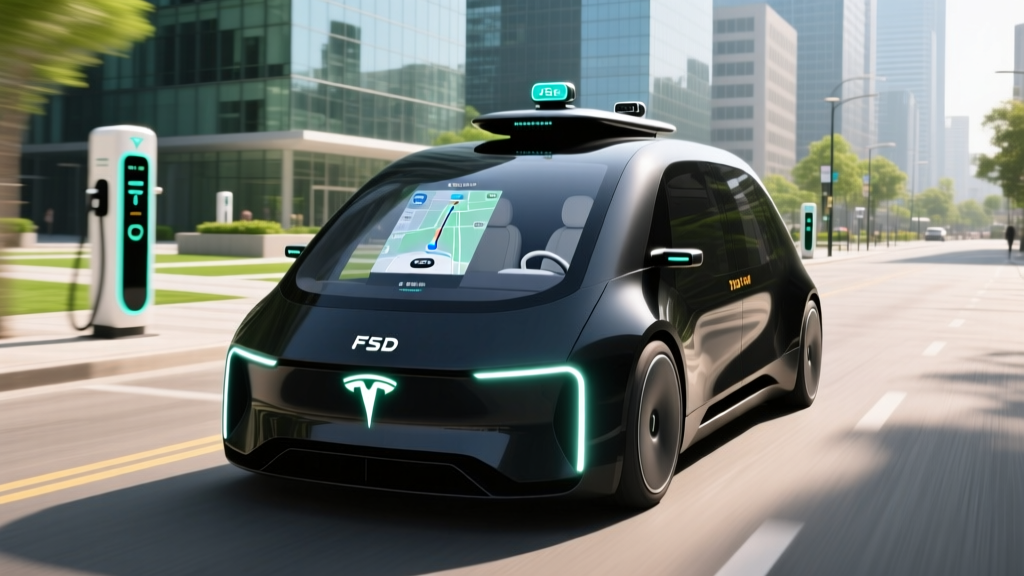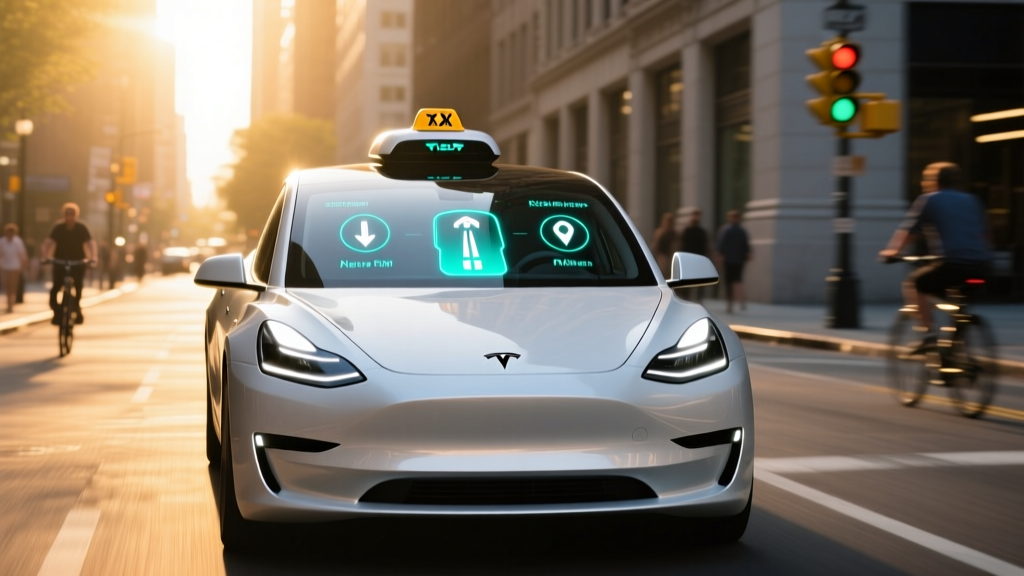
If you've noticed your Tesla's instrument cluster looking different after a recent over-the-air software update, you're not alone. The Tesla Autopilot icon update rolled out across the fleet as part of Tesla's ongoing visualization overhaul, replacing familiar graphics with new symbols that better distinguish between basic Autopilot, Enhanced Autopilot, and Full Self-Driving (Supervised) modes. For owners and prospective buyers alike, understanding these new icons isn't just cosmetic — it directly affects how you interpret what the car is "seeing" and what level of automation is actually active at any given moment.
This guide breaks down the updated iconography, explains the underlying sensor hardware driving these visualizations, clarifies what Tesla's system can and cannot do, and compares it to competing Level 2 driver-assist platforms from Ford, GM, and Hyundai in 2026.
Tesla Autopilot and Full Self-Driving (Supervised) are classified as SAE Level 2 driver-assistance systems per the National Highway Traffic Safety Administration (NHTSA). This means the system can manage steering, acceleration, and braking simultaneously — but the driver must remain fully engaged, monitor the road at all times, and be prepared to take over instantly. This is not autonomous driving. Only Level 4 services like Waymo operate without a human driver in the loop.
What the Tesla Autopilot Icon Update Actually Changed
Beginning with software version 2025.44 and continuing into the 2026.x branches, Tesla progressively updated the instrument cluster and touchscreen visualizations for its driver-assist suite. The changes affect all Tesla models running current firmware — Model 3, Model Y, Model S, Model X, and the Cybertruck. Here's what's different:
- Autopilot engaged icon: The previous simple steering-wheel symbol has been replaced with a more detailed cluster graphic that shows a vehicle centered between lane lines with a subtle blue glow, more closely matching the real-time driving visualization (RDV) already displayed on the touchscreen.
- FSD (Supervised) active icon: When FSD is engaged, the new icon includes a navigation-route overlay element, distinguishing it visually from basic Autopilot. This reflects FSD's ability to follow a navigation route, handle intersections, and manage lane changes without manual turn-signal input.
- Hands-on reminder icon: The steering-wheel torque-detection warning has been redesigned to more clearly indicate when the system is about to disengage due to lack of driver input, with a progressive yellow-to-red color shift.
- Speed limit and road-sign recognition: The updated cluster now renders detected speed limit signs, stop signs, and traffic lights with higher-fidelity icons that mirror what the camera system is identifying in real time.
- Object detection rendering: Pedestrians, cyclists, and adjacent vehicles now appear as more refined 3D models on the instrument cluster, narrowing the gap between what the touchscreen shows and what the smaller driver display renders.
The practical impact: Tesla owners now get a more consistent and informative picture of what the car's neural network is processing, which can improve situational awareness — but also risks reinforcing overconfidence in the system's capabilities.
How Tesla Autopilot and FSD Work: Hardware and Sensors
Understanding the icons requires understanding what generates the data behind them. As of 2026, Tesla relies exclusively on its Hardware 4 (HW4) sensor suite, which includes:
| Component | Specification | Role |
|---|---|---|
| Cameras | 8 cameras (front, front narrow, front wide, left/right repeaters, left/right pillars, rear) | 360° visual perception, lane detection, object classification |
| Camera resolution | Up to 5 megapixels per camera (HW4) | Improved long-range object detection and low-light performance |
| Radar | None (removed in HW4 vehicles) | Tesla relies on vision-only "Tesla Vision" since 2022 |
| Ultrasonic sensors | Removed (phased out 2022–2023) | Replaced by vision-based parking assistance |
| Neural network processor | HW4 FSD computer (~300 TOPS) | Real-time inference for path planning, object detection |
The vision-only approach means every icon you see on the cluster — detected vehicles, lane markings, pedestrians — is generated by neural networks processing camera imagery. There is no radar or lidar cross-referencing. This architecture choice has significant implications for real-world limitations, which we'll cover below.
Feature Breakdown: Basic Autopilot vs. Enhanced Autopilot vs. FSD (Supervised)
Tesla segments its driver-assist features into three tiers. The icon update applies across all three, but the visualizations become richer as you move up the stack.
| Feature Tier | Capabilities | Availability | 2026 Cost |
|---|---|---|---|
| Basic Autopilot | Traffic-Aware Cruise Control (TACC), Autosteer (lane centering on marked highways) | Standard on all new Teslas | Included in vehicle price |
| Enhanced Autopilot (EAP) | Everything in Basic + Auto Lane Change, Autopark, Summon, Navigate on Autopilot | Optional add-on | $6,000 one-time purchase |
| Full Self-Driving (Supervised) | Everything in EAP + traffic light/stop sign control, city street autosteer, route-based navigation driving | Optional add-on or subscription | $8,000 one-time or $99/month subscription |
With the icon update, the instrument cluster now more clearly differentiates which tier is active. Basic Autopilot shows a simplified lane-centering graphic; FSD (Supervised) overlays the navigation route and renders intersections with detected traffic controls.
Real-World Capabilities and Limitations
The new icons may look more sophisticated, but the underlying system still operates within well-defined physical and environmental constraints. Here's what the updated visualizations can and cannot tell you:
- Drive autonomously. Despite the "Full Self-Driving" name, the system requires continuous driver supervision. You are legally and practically responsible for the vehicle at all times.
- Handle all weather conditions. Heavy rain, fog, snow, and direct sun glare can blind the camera-only system. When visibility drops, the system will issue a degradation warning and may disengage — sometimes abruptly.
- Read faded or missing lane markings. Construction zones, rural roads with worn paint, and temporary lane shifts can confuse the vision system. The updated icons may show "phantom" lane lines the network infers but that don't physically exist.
- Reliably detect stationary emergency vehicles. NHTSA has investigated multiple incidents involving Teslas colliding with parked first-responder vehicles. The vision system has known limitations with stationary objects at highway speeds.
- Navigate unmapped or GPS-denied areas. FSD's route-following depends on GPS accuracy and map data. Tunnels, parking structures, and rural areas with poor satellite coverage can cause unexpected behavior.
- Replace defensive driving. The system does not predict aggressive behavior from other drivers, cannot anticipate debris in the roadway, and may not react to complex multi-lane merges as quickly as an attentive human.
In real-world use across 2025 and early 2026, FSD (Supervised) has shown measurable improvement in urban intersection handling and unprotected left turns compared to earlier versions. However, highway driving — particularly in dense, fast-moving traffic with frequent lane changes — still requires active monitoring. The updated icon rendering helps you verify what the system sees, but you should treat it as a secondary reference, not a primary driving aid.
Which Tesla Models and Trims Include These Features?
As of 2026, Basic Autopilot is standard equipment on every new Tesla sold in the United States. Enhanced Autopilot and FSD (Supervised) are available as add-ons at the time of purchase or can be added later through the Tesla app. Here's the model-by-model breakdown:
- Model 3 (2024+ refresh, all trims): HW4 standard. Basic Autopilot included. EAP and FSD available. Base MSRP: $38,990 (RWD) to $52,990 (Performance).
- Model Y (all 2026 trims): HW4 standard. Basic Autopilot included. EAP and FSD available. Base MSRP: $44,990 (Long Range RWD) to $53,990 (Performance).
- Model S (all trims): HW4 standard. Basic Autopilot included. EAP and FSD available. Base MSRP: $79,990 (Long Range) to $94,990 (Plaid).
- Model X (all trims): HW4 standard. Basic Autopilot included. EAP and FSD available. Base MSRP: $84,990 (Long Range) to $99,990 (Plaid).
- Cybertruck (all trims): HW4 standard. Basic Autopilot included. FSD available (EAP not offered separately on Cybertruck as of early 2026). Base MSRP: $79,990 (AWD) to $99,990 (Cyberbeast).
Important note for used-Tesla buyers: Vehicles built before mid-2022 may have HW3 hardware. While Tesla has offered HW3-to-HW4 upgrades in some cases, availability and cost vary. The Autopilot icon update applies to both HW3 and HW4 vehicles, but the fidelity of object detection rendering is noticeably better on HW4 due to higher-resolution camera inputs.
Cost Breakdown: Purchase vs. Subscription
| Option | Upfront Cost | Monthly Cost | Transferable? | Best For |
|---|---|---|---|---|
| Basic Autopilot | $0 (included) | $0 | N/A (tied to vehicle) | Every Tesla owner |
| Enhanced Autopilot | $6,000 | N/A | No (tied to vehicle) | Highway-heavy commuters who want auto lane changes |
| FSD (Supervised) — Purchase | $8,000 | $0 | No (tied to vehicle, Tesla occasionally offers transfers) | Long-term owners planning to keep the vehicle 5+ years |
| FSD (Supervised) — Subscription | $0 | $99/month | No (tied to your Tesla account) | Buyers who want to try FSD before committing, or short-term owners |
At $99/month, the FSD subscription breaks even against the $8,000 purchase at roughly 81 months (6.75 years). If you plan to own your Tesla for less than that, or if you're uncertain whether FSD's capabilities justify the premium, the subscription is the lower-risk option. Tesla has occasionally offered promotional subscription rates, so it's worth checking the Tesla app for current pricing.
How Tesla Autopilot Compares to Competing Level 2 Systems
Tesla's Autopilot and FSD aren't the only Level 2 driver-assist systems on the market. Here's how they stack up against key competitors available in 2026:
| System | Brand | Hands-Free? | Sensor Suite | Cost | Key Limitation |
|---|---|---|---|---|---|
| Tesla FSD (Supervised) | Tesla | No (hands-on torque detection) | Cameras only (no radar/lidar) | $8,000 or $99/mo | Vision-only struggles in poor weather and low-visibility conditions |
| BlueCruise 1.4 | Ford | Yes (on pre-mapped divided highways, eyes monitored via IR camera) | Cameras + radar | $2,100 one-time or $75/mo (included for 90 days on select trims) | Limited to ~130,000 miles of pre-mapped highways; no city street capability |
| Super Cruise | GM (Cadillac, Chevrolet) | Yes (on pre-mapped roads, driver monitoring via camera) | Cameras + radar + lidar-mapped HD maps | $2,500 one-time (often included for 3 years on premium trims) | Requires pre-mapped roads; no stoplight or city intersection handling |
| Highway Driving Assist 2 (HDA2) | Hyundai/Genesis | No (hands-on) | Cameras + radar | Included on mid/high trims | Highway-focused; no city street automation, less aggressive lane-change logic |
| Toyota Teammate (Advanced Drive) | Toyota/Lexus | Conditional (hands-free in highway traffic jams below ~25 mph) | Cameras + radar + lidar (on select models) | Included on select trims | Limited to low-speed traffic jam assist on highways; not a full-route system |
The critical distinction: Ford's BlueCruise and GM's Super Cruise offer hands-free driving on pre-mapped highways, which Tesla does not currently permit. Tesla's advantage is broader geographic coverage — FSD can theoretically operate on any road, not just pre-mapped highways — but it requires hands-on-wheel supervision at all times. The Insurance Institute for Highway Safety (IIHS) has consistently noted that driver monitoring systems (like the IR cameras in BlueCruise and Super Cruise) are more effective at ensuring driver engagement than steering-wheel torque detection, which is Tesla's primary method.
Safety Context: What the Data Shows
Tesla publishes quarterly safety reports claiming that vehicles driven with Autopilot engaged record fewer crashes per million miles than the U.S. average. However, these reports have been criticized for methodological limitations — notably, Autopilot is primarily used on controlled-access highways, which are inherently safer than urban surface streets. The comparison does not isolate the effect of the driver-assist system from the effect of the driving environment.
NHTSA's Standing General Order requires manufacturers to report crashes involving Level 2 and higher automated systems. Tesla's reported crash data under this order shows thousands of incidents, though raw numbers without miles-driven context are not independently meaningful. For the most reliable safety assessment, consult the NHTSA AV crash database and IIHS research on driver-assist systems.
Frequently Asked Questions
Does the Tesla Autopilot icon update change how the system drives?
No. The icon update is a visualization change only — it alters how the instrument cluster and touchscreen display detected objects, lane lines, and system status. The underlying driving behavior is governed by the FSD neural network version installed on your vehicle, which updates separately through Tesla's OTA software releases.
Is Tesla Full Self-Driving actually self-driving?
No. Despite the name, FSD (Supervised) is an SAE Level 2 system that requires continuous driver supervision. You must keep your hands on the steering wheel (or apply sufficient torque for the system to detect your presence), monitor the road, and be prepared to intervene at any moment. Tesla explicitly states this in its owner documentation and in-vehicle warnings.
Can I get the Autopilot icon update on an older Tesla with HW3?
Yes, the visualization update is delivered via OTA software and applies to both HW3 and HW4 vehicles. However, HW4 vehicles will display higher-fidelity object detection rendering due to the upgraded camera resolution. If you own an older HW3 vehicle and want the best visualization quality, ask Tesla Service about HW4 retrofit availability for your specific model and build date.
How much does FSD cost in 2026?
FSD (Supervised) costs $8,000 as a one-time purchase or $99 per month as a subscription. Basic Autopilot is included standard on all new Teslas. Enhanced Autopilot is available for $6,000 as a one-time purchase.
Does FSD work in bad weather?
Tesla's vision-only system is more susceptible to weather-related degradation than systems that incorporate radar. Heavy rain, dense fog, snow accumulation on cameras, and direct sun glare can reduce system capability or trigger a disengagement. Tesla recommends cleaning all camera lenses before driving in adverse conditions and being prepared to take full manual control.
Will the FSD subscription transfer if I sell my Tesla?
No. The FSD subscription is tied to your Tesla account, not the vehicle. If you cancel the subscription, the next owner would need to purchase their own subscription or one-time license. Tesla has occasionally offered limited-time FSD transfer promotions for new vehicle purchases, but these are exceptions, not policy.