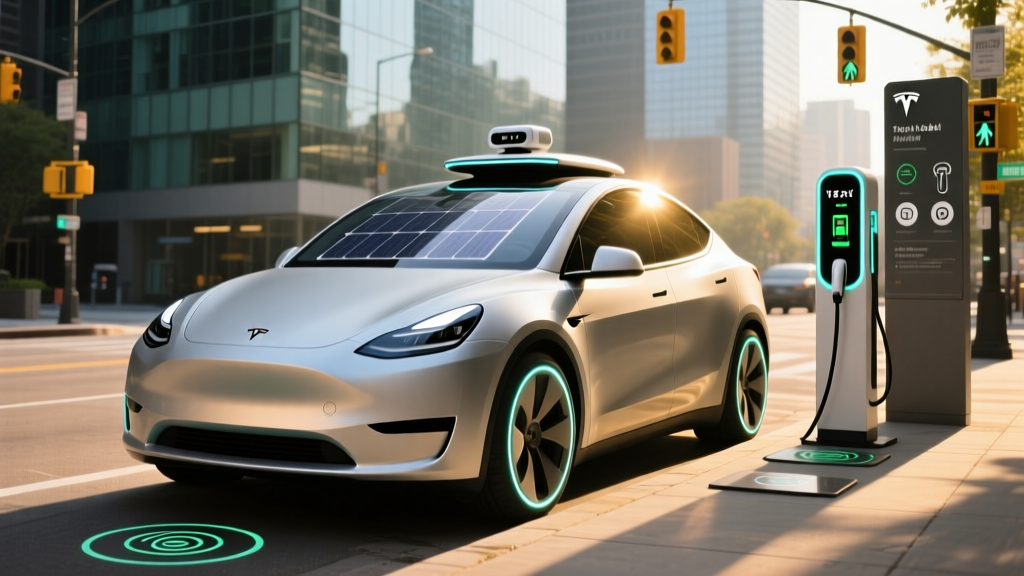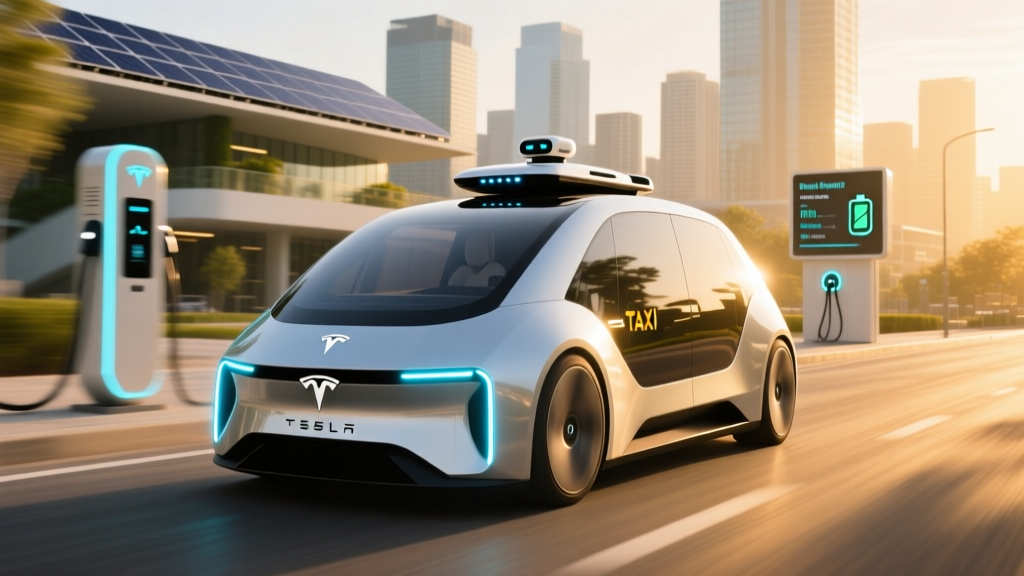
If you're shopping for a Tesla or already own one, you've likely asked: how much is Tesla Autopilot? The answer depends on which tier of Tesla's driver-assistance stack you're evaluating. Basic Autopilot comes standard on every new Tesla at no additional cost. Full Self-Driving (FSD) Capability — the upgraded suite — runs $8,000 as a one-time purchase or $99 per month as a subscription in 2026. But price is only half the equation. Understanding what each tier actually delivers, where it falls short, and how it compares to rival systems is essential before you spend a dime.
What Tesla Autopilot Actually Does
Tesla Autopilot is the brand name for the company's standard driver-assistance package, included on every new Model S, Model 3, Model X, Model Y, and Cybertruck at no extra charge. It bundles two core features:
- Traffic-Aware Cruise Control (TACC): Maintains a set speed and adjusts to match the vehicle ahead, using camera-based perception to track traffic flow.
- Autosteer: Provides active lane-centering assistance on clearly marked roads, keeping the vehicle centered within its lane using steering inputs.
Beyond these basics, every Tesla also includes a suite of active-safety features standard: Automatic Emergency Braking (AEB), Forward Collision Warning, Side Collision Warning, Blind Spot Monitoring, Lane Departure Avoidance, and Emergency Lane Departure Avoidance. These operate independently of Autopilot and are always active.
Understanding the SAE Automation Level
Both standard Autopilot and Full Self-Driving (FSD) Capability operate at SAE Level 2 automation per the SAE J3016 standard. This means the system can simultaneously control steering and acceleration/braking, but the driver must remain fully engaged — eyes on the road, hands available to take over at any moment. Tesla's cabin camera monitors driver attention and will issue escalating warnings, eventually disengaging Autopilot if the driver is inattentive. Level 2 is the highest tier of consumer driver-assist currently sold by any automaker in the United States. True "self-driving" — where the system handles all scenarios without driver oversight — corresponds to SAE Level 4, and is currently limited to geofenced robotaxi services like Waymo.
Tesla Autopilot vs. Full Self-Driving (FSD): The Feature Breakdown
The gap between standard Autopilot and FSD Capability is substantial. Here's what each tier includes as of 2026:
| Feature | Standard Autopilot (Included) | FSD Capability ($8,000 / $99/mo) |
|---|---|---|
| Traffic-Aware Cruise Control | ✓ | ✓ |
| Autosteer (lane centering) | ✓ | ✓ |
| Navigate on Autopilot (highway interchanges) | — | ✓ |
| Auto Lane Change | — | ✓ |
| Autopark (parallel & perpendicular) | — | ✓ |
| Summon / Smart Summon | — | ✓ |
| Traffic Light & Stop Sign Control | — | ✓ |
| FSD (Supervised) — city street driving | — | ✓ |
FSD (Supervised) is the marquee feature of the FSD package. It extends Autosteer beyond highways to city streets, handling intersections, turns, roundabouts, and traffic lights — all with the driver continuously supervising. Tesla rebranded its city-driving capability as "FSD (Supervised)" to clarify that the driver retains full responsibility, a naming shift that followed NHTSA scrutiny over consumer confusion about automation levels.
How Much Does Tesla Autopilot Cost? 2026 Pricing
Here is the exact cost structure for Tesla's driver-assistance features as of 2026:
| Package | One-Time Purchase | Monthly Subscription | Included Standard? |
|---|---|---|---|
| Basic Autopilot (TACC + Autosteer) | N/A | N/A | Yes — all models |
| Enhanced Autopilot (EAP) | $6,000 | — | No |
| Full Self-Driving (FSD) Capability | $8,000 | $99/month | No |
Key cost considerations:
- The FSD subscription at $99/month breaks even against the $8,000 purchase at roughly 81 months (6.75 years). If you plan to keep your Tesla longer than that, purchasing is the better financial move. If you're leasing, planning to sell within a few years, or want to try FSD before committing, the subscription is the smarter play.
- FSD purchases do not transfer to a new Tesla if you sell your current vehicle — the purchase is tied to the car, not the owner. This is a critical factor for resale value calculations.
- Tesla occasionally runs FSD promotional pricing or limited-time transfer offers (allowing FSD to move to a new Tesla purchase). Check Tesla's current promotions before buying.
- Enhanced Autopilot (EAP) remains available as a mid-tier option at $6,000, adding Navigate on Autopilot, Auto Lane Change, Autopark, and Summon — but not city-street FSD (Supervised) or Traffic Light and Stop Sign Control.
Which Tesla Models Include Autopilot?
Basic Autopilot (TACC + Autosteer) is standard equipment on every new Tesla sold in 2026:
- Model 3 (all trims: RWD, Long Range, Performance)
- Model Y (all trims: Long Range, Performance)
- Model S (Long Range, Plaid)
- Model X (Long Range, Plaid)
- Cybertruck (AWD, Cyberbeast)
FSD Capability can be added to any of these models at the time of purchase or activated later via the Tesla app. The hardware required — Tesla's AI4 (Hardware 4) computer and the surrounding camera suite — is installed on all current-production vehicles regardless of whether the owner has purchased the FSD software.
How Tesla's Vision-Only System Works
Since 2022, Tesla has operated on a Tesla Vision architecture — a purely camera-based perception system with no radar or ultrasonic sensors. Current Tesla vehicles use a suite of eight external cameras providing 360-degree visibility, processed by the onboard AI4 neural-network computer.
The system relies on deep-learning models trained on billions of miles of real-world driving data to identify lanes, vehicles, pedestrians, traffic signals, road signs, and obstacles. Unlike lidar-based systems used by Waymo or some competing ADAS platforms, Tesla Vision estimates depth and velocity from camera imagery alone — an approach Tesla argues is more scalable but that critics note can struggle in specific conditions.
Real-World Limitations: What Tesla Autopilot Cannot Do
- Not self-driving. The driver is legally and operationally responsible for the vehicle at all times. You must keep your hands on the steering wheel (or be ready to grab it) and your eyes on the road.
- Weather vulnerability. Heavy rain, fog, snow, and direct sun glare can degrade camera performance. The system will issue a "Vision Reduced" alert and may disengage Autosteer.
- Lane marking dependency. Autosteer performs best on highways with clear, well-maintained lane markings. Faded lines, construction zones, and unmapped road changes can confuse the system.
- Phantom braking. Tesla's vision system has been documented to occasionally apply brakes unexpectedly when it misidentifies shadows, overhead signs, or oncoming vehicles as obstacles. NHTSA has investigated this behavior.
- City street unpredictability. FSD (Supervised) on surface streets may make hesitant or unusual decisions at complex intersections, unprotected left turns, or roundabouts. Constant vigilance is required.
- Construction zones. Temporary lane shifts, cones, and barriers are among the most challenging scenarios for the system. Manual takeover is strongly recommended.
Tesla Autopilot vs. Competing ADAS Systems
Tesla's driver-assistance suite competes with several advanced Level 2 systems from other automakers. Here's how they compare on core dimensions:
| System | SAE Level | Hands-Free? | Cost | Geofenced? |
|---|---|---|---|---|
| Tesla Autopilot (standard) | Level 2 | No | Included | No |
| Tesla FSD (Supervised) | Level 2 | No | $8,000 / $99/mo | No |
| GM Super Cruise | Level 2 | Yes (mapped highways) | $2,200 + $25/mo after trial | Yes (~750K mi mapped) |
| Ford BlueCruise | Level 2 | Yes (mapped highways) | $2,100 / $75-$100/mo | Yes (~130K+ mi mapped) |
| BMW Highway Assistant | Level 2 | Yes (up to 85 mph, select highways) | $1,700 (Driving Assistant Pro) | Yes (limited-access) |
| Mercedes Drive Pilot | Level 3 (conditional) | Yes (up to 40 mph, approved roads) | $2,500/yr subscription | Yes (NV & CA approved) |
The key differentiator: GM's Super Cruise and Ford's BlueCruise offer true hands-free driving on pre-mapped divided highways — something Tesla Autopilot does not permit (Tesla requires steering-wheel contact or torque). However, Tesla's FSD (Supervised) covers a far broader operational domain: it functions on virtually any road, not just pre-mapped highways, though it demands constant driver engagement. Mercedes-Benz's Drive Pilot is the only NHTSA-acknowledged Level 3 system available in the U.S., but it's restricted to speeds under 40 mph on specific approved highways in Nevada and California.
Is Tesla FSD Worth the Cost?
Whether FSD justifies its $8,000 purchase price or $99/month subscription depends on your driving patterns and expectations:
- You commute long distances on varied road types (highway + city) and want reduced cognitive load.
- You plan to keep your Tesla for 7+ years, making the one-time purchase more cost-effective than subscribing.
- You value receiving continuous over-the-air improvements as Tesla iterates on its neural network models.
Stick with standard Autopilot if:
- Your primary use case is highway driving — standard Autosteer + TACC handles this well at no extra cost.
- You expect to sell or trade your Tesla within 3–4 years. FSD does not transfer and adds minimal resale value.
- You're uncomfortable with the current limitations of vision-only city-street driving and prefer to stay in full manual control on surface streets.
Frequently Asked Questions
Is Tesla Autopilot free?
Yes. Basic Autopilot — which includes Traffic-Aware Cruise Control and Autosteer — is included at no additional cost on every new Tesla. You do not need to pay anything extra to get these features.
Is Tesla Autopilot really self-driving?
No. Both standard Autopilot and FSD (Supervised) are SAE Level 2 driver-assistance systems. The driver must remain attentive, keep eyes on the road, and be prepared to take over at any time. Tesla's cabin camera actively monitors driver engagement and will issue warnings or disengage the system if inattention is detected.
Can I subscribe to FSD monthly instead of buying it?
Yes. Tesla offers FSD Capability as a $99/month subscription, which can be activated or cancelled at any time through your Tesla account. This is a good option if you want to evaluate FSD before committing to the full $8,000 purchase.
Does FSD transfer if I buy a new Tesla?
Generally, no. FSD is tied to the vehicle it was purchased on, not the owner. When you sell the car, FSD stays with it. Tesla has occasionally offered limited-time promotions allowing FSD transfers to a new Tesla purchase, but this is not standard policy.
What hardware does my Tesla need for Autopilot?
All Tesla vehicles produced from approximately mid-2023 forward are equipped with AI4 (Hardware 4), which includes higher-resolution cameras and a more powerful neural-network processor. Older vehicles with Hardware 3 (AI3) still support current Autopilot and FSD features, though Tesla has indicated future capabilities may require AI4.
How does Tesla Autopilot compare to GM Super Cruise?
Super Cruise offers true hands-free driving on over 750,000 miles of pre-mapped divided highways in North America — a capability Tesla Autopilot does not offer. However, Tesla FSD (Supervised) works on virtually any road, not just mapped highways, providing broader geographic coverage at the cost of requiring constant driver supervision. For highway-only commuters, Super Cruise is arguably more relaxing. For mixed city/highway driving, Tesla's coverage area is wider.