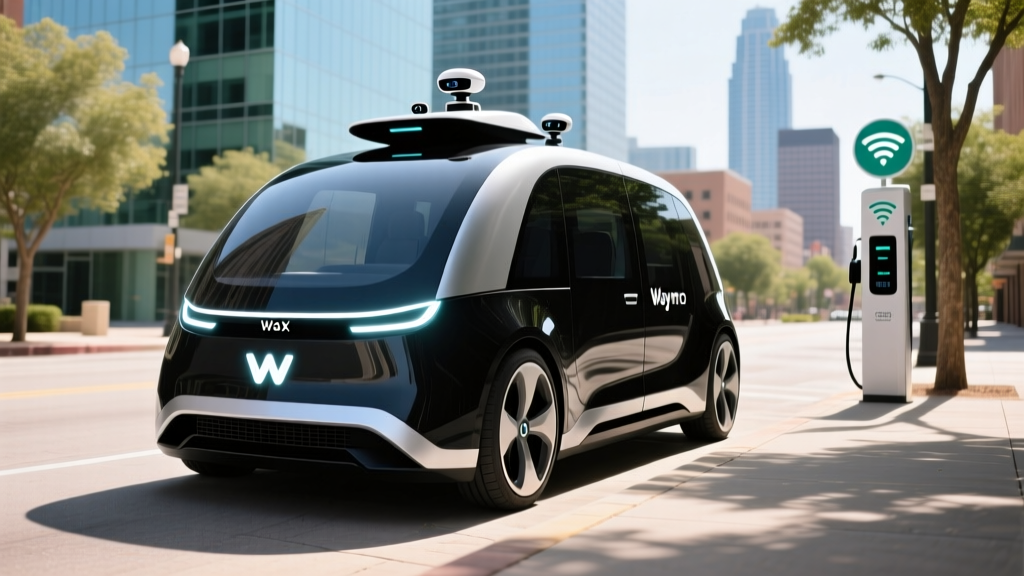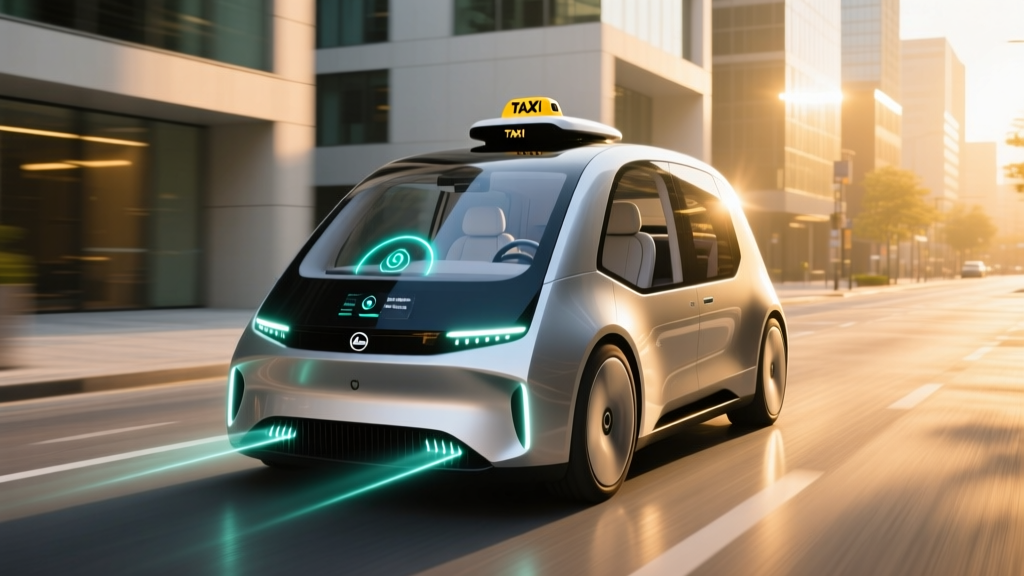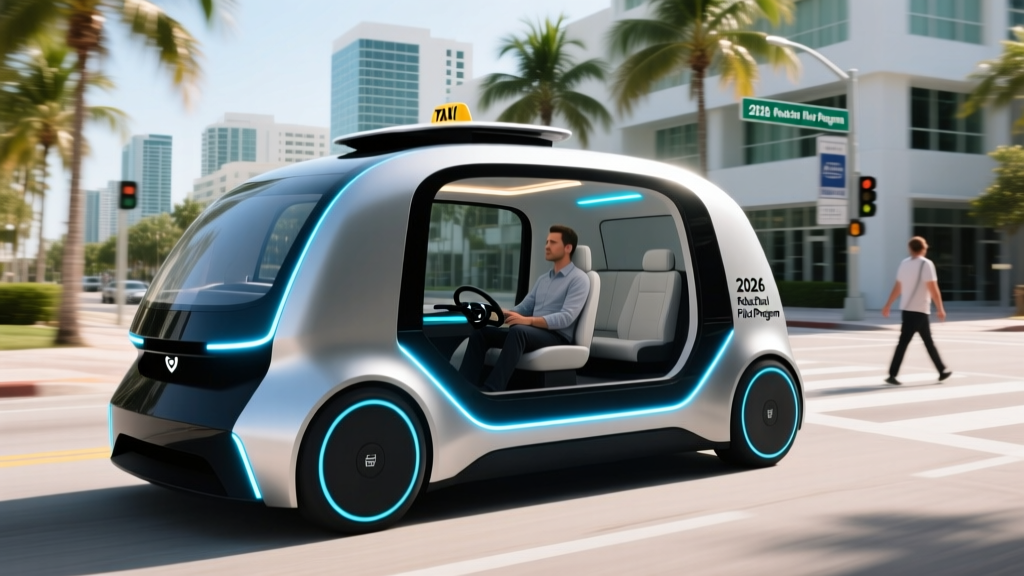
If you've searched for a "self-driving Uber in West Palm Beach" and come up empty, you're not alone. As of early 2026, no Level 4 driverless robotaxi service — not Waymo, not Cruise, not Zoox — operates commercially in West Palm Beach or anywhere in Palm Beach County. But that doesn't mean the robotaxi landscape is standing still. Uber has deepened its autonomous vehicle partnerships, Waymo continues to expand its operational footprint across Florida and the Southwest, and the regulatory framework is evolving fast.
This guide tells you exactly where robotaxis run today, what it would take for service to reach South Florida, how pricing compares to standard Uber/Lyft rides, and what the safety data actually shows. No hype, no speculative timelines — just the facts as they stand right now.
Where Can You Actually Ride a Robotaxi Right Now?
Commercial, fully driverless (no human behind the wheel) robotaxi services remain geographically limited. Here's the current operational map as of 2026:
| Operator | Live Cities | Service Model | Hours |
|---|---|---|---|
| Waymo (Alphabet) | Phoenix, AZ; San Francisco, CA; Los Angeles, CA; Austin, TX (limited) | Fully driverless, open to public via Waymo One app | 24/7 in Phoenix & SF |
| Cruise (GM) | Phoenix, AZ; Dallas, TX (limited relaunch) | Driverless with safety operator in some zones | Limited hours, expanding |
| Zoox (Amazon) | Las Vegas, NV (test corridor); Foster City, CA (limited) | Purpose-built vehicle, invite-only / employee | Not open to general public at scale |
| Motional (Hyundai/Aptiv) | Las Vegas, NV (via Lyft integration) | Driverless on fixed routes, Lyft app | Limited hours |
Florida status: Waymo has tested on Florida highways and has signaled interest in Miami and other South Florida markets, but no commercial robotaxi service is live in West Palm Beach, Boca Raton, Fort Lauderdale, or Miami as of this writing. Uber's AV partnerships (primarily with Waymo in Phoenix and with Motional via Lyft in Las Vegas) do not extend to the Palm Beaches.
Uber's Autonomous Vehicle Strategy: Partnerships, Not Ownership
Uber sold its self-driving unit (ATG) to Aurora Innovation in late 2020 and pivoted to a platform-and-partnership model. Here's what that means for riders in 2026:
- Waymo on Uber: In Phoenix and Austin, Uber users can be matched with a Waymo robotaxi when requesting a ride in eligible zones. The Waymo vehicle arrives, and the trip runs through the Uber app with standard Uber pricing.
- Motional via Lyft: Hyundai/Aptiv's Motional robotaxis are available through Lyft in Las Vegas on select routes.
- Uber's AV roadmap: Uber has announced plans to integrate additional AV partners, but South Florida is not among the announced launch markets for 2026.
The bottom line for West Palm Beach: when you open the Uber app in WPB today, every vehicle has a human driver. If and when Uber integrates a Level 4 partner in South Florida, the app will surface a "Self-Driving" badge on eligible rides — but that day has not arrived.
How Much Does a Robotaxi Ride Cost vs. Uber or Lyft?
Where robotaxis do operate, pricing is generally competitive with — and sometimes slightly below — standard rideshare, because the operator eliminates driver compensation (typically 60-75% of a rideshare fare). Here's a real-world comparison based on published rates and rider reports from Phoenix and San Francisco:
| Cost Factor | Waymo (Robotaxi) | UberX (Human Driver) | Lyft Standard |
|---|---|---|---|
| Base fare | $5.00–$6.50 | $3.50–$5.00 | $3.00–$4.50 |
| Per-mile rate | $1.10–$1.45 | $1.25–$1.75 | $1.15–$1.60 |
| Per-minute rate | $0.25–$0.35 | $0.20–$0.35 | $0.18–$0.30 |
| Estimated total (5 mi, 15 min) | $14–$20 | $14–$22 | $12–$19 |
| Surge pricing | Rare / capped | Common during peak | Common during peak |
| Tips | Not applicable | Expected ($2–$5) | Expected ($2–$5) |
Robotaxi fares benefit from the absence of surge multipliers and tipping, which can make them cheaper during high-demand windows. However, during off-peak hours, the price difference narrows considerably. Promotional pricing (Waymo has offered deeply discounted introductory rides in new markets) can temporarily skew this comparison.
Robotaxi Safety: What the Data Actually Shows
Safety is the most contested question in autonomous vehicles. Here's what we know from reported data, NHTSA standing general orders, and operator transparency reports:
- Waymo: Over 30 million fully driverless miles completed. Waymo's published data (peer-reviewed and submitted to NHTSA) claims a 76% reduction in injury-causing crash involvement compared to human benchmarks in its operational areas. Contactless (no vehicle-to-vehicle contact) incidents are the norm; when collisions occur, the robotaxi is typically the struck party, not the at-fault party.
- Cruise: Accumulated millions of driverless miles before its October 2023 incident in San Francisco (a pedestrian dragged under a Cruise AV after being hit by a human-driven vehicle). The incident led to a statewide suspension in California, a full operational pause, and a slow, city-by-city relaunch beginning in Phoenix in 2024–2025. Cruise has published revised safety protocols and reduced initial operational speeds.
- Disengagement rates: California DMV disengagement reports (where operators must file data) show Waymo averaging one human safety-driver intervention per 15,000–25,000+ autonomous miles in recent reporting periods — an improvement trajectory, though disengagement metrics are imperfect and not standardized across operators.
For context, the IIHS reports roughly 1.35 fatalities per 100 million vehicle miles traveled across all U.S. driving. Robotaxi operators have not reported a fatality directly caused by their autonomous system in driverless mode, though sample sizes (tens of millions of miles) remain far smaller than the billions of miles driven by humans annually.
Under the Hood: Robotaxi Technology Stack
Understanding why robotaxis are confined to geofenced areas requires understanding the sensor suite and computing they rely on:
| Component | Function | Example (Waymo 6th-Gen) |
|---|---|---|
| LiDAR (multiple units) | 360° 3D point-cloud mapping; works in darkness; range 200–500m | Custom roof-mounted + corner units |
| Cameras (8–12+) | Traffic-light state, signage, lane markings, object classification | High-dynamic-range, various focal lengths |
| Radar (4–6 units) | Velocity detection of moving objects; rain/fog penetration | Short- and long-range radar |
| HD Maps + Localization | Centimeter-accurate pre-mapped routes; GPS + IMU positioning | Proprietary HD map, updated continuously |
| Onboard Compute | Real-time sensor fusion, path planning, prediction | Custom AI accelerators, 500+ TOPS |
| V2X / Connectivity | Remote assistance, fleet management, OTA updates | 5G + redundant cellular |
The critical distinction: Waymo and Cruise use LiDAR + cameras + radar (sensor redundancy). Tesla's consumer FSD (Supervised) uses a camera-only approach — but FSD is a Level 2 driver-assist system, not a driverless robotaxi. Tesla's announced robotaxi ambitions remain unproven at Level 4 scale as of 2026.
The Regulatory Landscape: Who Approves Robotaxi Operations?
Robotaxi deployment in the U.S. involves a patchwork of federal, state, and local oversight:
- Federal (NHTSA / DOT): Sets vehicle safety standards (FMVSS). NHTSA issues Standing General Orders requiring crash reporting for ADS-equipped vehicles. No federal framework yet specifically licenses robotaxi operations.
- State level: States control the deployment permit. California (CPUC + DMV) has the most mature framework — requiring a deployment permit after extensive testing. Arizona takes a permissive approach (executive-order-based, minimal state oversight), which is why Phoenix was Waymo's first commercial market. Texas, Nevada, and others have passed AV-enabling legislation.
- Florida: Florida Statute §316.86 and §319.145 allow fully autonomous vehicles on public roads without a human driver, provided the vehicle meets federal safety standards and is insured. This means the legal framework for a West Palm Beach robotaxi exists — but no operator has applied for or received local authorization to run a commercial service there yet.
- Local/municipal: Cities often negotiate operating agreements covering pickup/dropoff zones, fleet caps, and data-sharing requirements.
For robotaxis to arrive in West Palm Beach, an operator would need to: (1) map the geofenced service area in HD, (2) conduct extensive testing with safety drivers, (3) coordinate with Palm Beach County and city officials, and (4) obtain any required state deployment authorization. This process typically takes 18–36 months from first testing to commercial launch.
Current Limitations: Why Robotaxis Aren't Everywhere
- Geofencing: Every commercial robotaxi operates within a pre-mapped boundary. Stray outside it, and the vehicle will pull over safely and end the trip.
- Weather: Heavy rain, fog, and flooding degrade LiDAR and camera performance. Waymo in Phoenix benefits from 300+ clear days per year. South Florida's summer thunderstorms and tropical weather present a harder operating environment.
- Construction zones: Unmapped lane shifts, temporary barriers, and flaggers remain edge cases that can cause the vehicle to stop and request remote assistance.
- Complex intersections: Unprotected left turns across heavy traffic, multi-lane roundabouts, and informal traffic patterns (common in dense urban cores) slow robotaxi decision-making.
- No highway driving (most operators): Waymo now operates on some highways in Phoenix and SF at speeds up to 65–70 mph, but most robotaxi services remain surface-street-focused. A West Palm Beach to Miami airport trip on I-95 is beyond current commercial robotaxi scope for most operators.
- Accessibility: Not all robotaxi fleets include wheelchair-accessible vehicles, though Waymo has begun integrating WAV options in select markets.
- No trunk access for passengers: In most current Waymo and Cruise vehicles, the trunk is reserved for sensor/compute equipment — you ride with carry-on items only.
When (and Whether) Robotaxis Could Reach West Palm Beach
South Florida is a logical expansion target for several reasons: high rideshare demand, flat terrain, a large tourism and retirement population, and a state legal framework that already permits driverless vehicles. Miami has been flagged by Waymo as a potential future market, and the density of the Miami-Fort Lauderdale-West Palm Beach corridor makes it attractive from a fleet-utilization standpoint.
However, several factors slow the timeline:
- Weather complexity: Tropical downpours and hurricane-season flooding are harder to engineer around than Phoenix's dry heat.
- Suburban sprawl: Palm Beach County is spread out, with long trip distances that reduce per-vehicle utilization compared to dense urban cores.
- Operator prioritization: Waymo, Cruise, and Zoox are still scaling in their current cities. Each has a limited fleet and is prioritizing profitability in existing markets before launching new ones.
- Local coordination: Municipal agreements, curb-management policies, and public acceptance all need to be established.
A realistic estimate: if an operator begins testing in the Miami/Fort Lauderdale area in 2026–2027, commercial robotaxi service in West Palm Beach could plausibly arrive by 2028–2029 — but this is speculation, not a commitment from any operator.
What West Palm Beach Riders Can Do Today
While you wait for a self-driving Uber to reach WPB, here are practical steps:
- Use Uber/Lyft as normal: Human-driven rideshare remains reliable, widely available, and increasingly affordable with pooled options.
- Try a robotaxi on your next trip: If you visit Phoenix, San Francisco, Los Angeles, or Austin, download the Waymo One app and request a driverless ride. It's the fastest way to understand the experience firsthand.
- Watch for Uber AV matching: Uber has signaled it will integrate more AV partners into its app. When you travel to a robotaxi-enabled city, you may be matched with a Waymo automatically — look for the autonomous vehicle badge in the app.
- Follow NHTSA and Florida DOT announcements: Regulatory developments will signal when commercial AV operations are approaching South Florida.
Frequently Asked Questions
Is there a self-driving Uber in West Palm Beach right now?
No. As of 2026, no Level 4 driverless robotaxi service operates in West Palm Beach or anywhere in Palm Beach County. All Uber and Lyft rides in the area use human drivers.
Where in Florida can I ride a robotaxi?
Nowhere commercially at scale yet. Waymo has tested on Florida highways but has not launched a public driverless service in any Florida city. Miami has been identified as a potential future market.
Is Tesla FSD the same as a robotaxi?
No. Tesla Full Self-Driving (Supervised) is an SAE Level 2 driver-assist system. The driver must remain fully attentive and is legally responsible for the vehicle at all times. A robotaxi like Waymo is SAE Level 4 — no driver is present, and the system handles all driving within its geofenced area.
How much would a robotaxi ride cost compared to Uber?
Based on pricing in Phoenix and San Francisco, robotaxi fares are roughly comparable to UberX — typically $14–$20 for a 5-mile trip. Robotaxis rarely surge-price and don't require tips, which can make them cheaper during peak demand.
Are robotaxis safe?
Waymo reports over 30 million driverless miles with a 76% reduction in injury-causing crash involvement versus human benchmarks in its operating areas. Cruise experienced a significant safety incident in October 2023 that led to a full operational pause and subsequent relaunch with revised protocols. Sample sizes remain small relative to total U.S. driving, but available data suggests robotaxis are at least comparably safe to human drivers in their limited operational domains.
Why aren't robotaxis available everywhere yet?
Geofencing, weather limitations (heavy rain, fog), construction zones, regulatory approval timelines, fleet scaling costs, and the need for HD mapping in every new city all constrain expansion. Each new market requires 18–36 months of preparation.
Will robotaxis replace Uber drivers?
Not imminently. Robotaxi deployment will remain limited to select cities for years. Uber's model is shifting toward a hybrid platform where human-driven and autonomous rides coexist, with AVs handling a growing share of trips in geofenced urban cores over time.