New Jersey sits at the crossroads of the autonomous vehicle revolution in 2026. With Waymo expanding its robotaxi footprint across the Northeast and neighboring states like Pennsylvania and New York advancing AV legislation, Garden State residents and commuters are increasingly sharing the road with Level 4 driverless vehicles. But when a crash involves a robotaxi, traditional auto liability frameworks don't neatly apply — and that's precisely why the search for a self-driving law firm in New Jersey has become one of the fastest-growing legal queries in the state.
This guide breaks down the current state of autonomous vehicle technology, where robotaxis actually operate today, real safety data, pricing structures, and the legal liability questions that arise when there's no human driver behind the wheel. Whether you're a commuter, a rideshare driver concerned about displacement, or someone researching AV law after an incident, this is your technical and legal primer.
Understanding Autonomy Levels: Why SAE Classification Matters for Liability
Before evaluating legal responsibility in any autonomous vehicle incident, you must understand the SAE International automation framework. The distinction between Level 2 driver-assist and Level 4 driverless operation fundamentally determines who — or what — is liable in a crash.
SAE Automation Levels — Quick Reference
| Level | Name | Who Drives? | Example Systems | Liability |
|---|---|---|---|---|
| Level 0 | No Automation | Human | Basic cruise control | Driver |
| Level 1 | Driver Assistance | Human | Adaptive cruise OR lane-keep | Driver |
| Level 2 | Partial Automation | Human (must supervise) | Tesla Autopilot/FSD Supervised, GM Super Cruise, Ford BlueCruise | Driver |
| Level 3 | Conditional Automation | System (human on standby) | Mercedes DRIVE PILOT (limited markets) | Shared/OEM |
| Level 4 | High Automation | System (no human needed in geofence) | Waymo One, Zoox, Cruise (paused) | Operator/OEM |
| Level 5 | Full Automation | System (everywhere) | Does not exist commercially | N/A |
This distinction is legally critical. If you're involved in a crash with a Tesla running FSD (Supervised), the driver remains responsible — it's a Level 2 system requiring continuous human attention. But if a Waymo One robotaxi (Level 4, no driver present) collides with your vehicle in an operational zone, liability shifts toward Waymo and its insurers. A self-driving law firm in New Jersey must navigate these distinctions daily, especially as cross-border commuters encounter different AV systems on I-95 and the Turnpike corridor.
Where Can You Actually Use a Robotaxi Right Now?
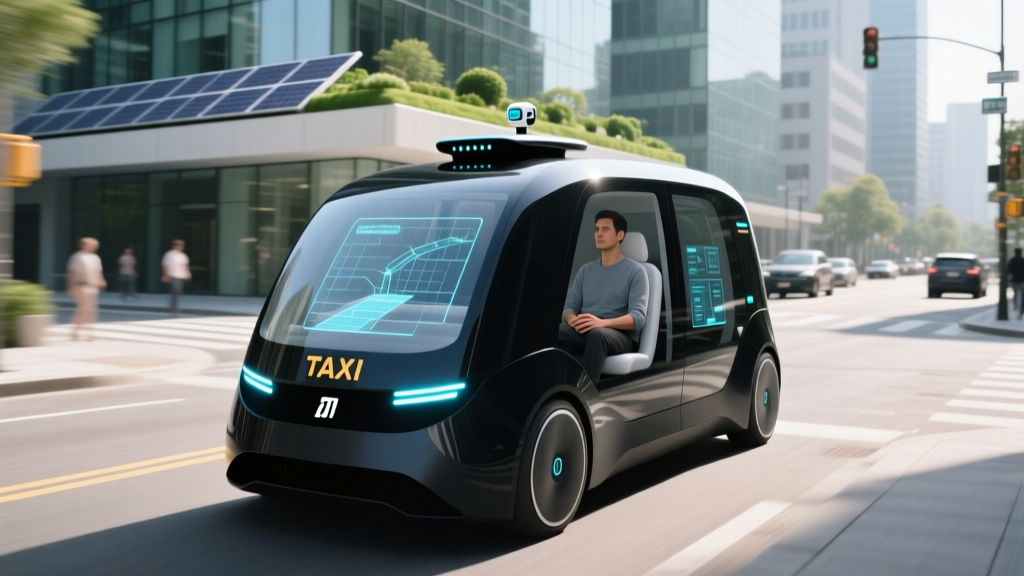
As of early 2026, fully driverless Level 4 robotaxi services operate in a limited number of US metro areas. Here's where you can hail a ride with no human at the wheel:
| Service | Operator | Live Cities (2026) | Hours | SAE Level |
|---|---|---|---|---|
| Waymo One | Waymo (Alphabet) | Phoenix (metro), San Francisco, Los Angeles, Austin | 24/7 in most zones | Level 4 |
| Zoox | Zoox (Amazon) | Las Vegas (limited), Foster City, CA (testing) | Limited hours | Level 4 |
| Cruise | Cruise (GM) | Operations paused since late 2023; limited restarts TBD | N/A | Level 4 (suspended) |
| Motional | Hyundai/Aptiv JV | Las Vegas (Lyft integration, limited) | Select hours | Level 4 |
Is New Jersey on the list? Not yet for commercial driverless service. However, New Jersey has been actively pursuing AV testing legislation, and the state's proximity to Philadelphia (where Waymo has signaled future interest) and its dense highway corridor make it a likely candidate for expansion. Several AV companies have conducted mapping and testing on New Jersey roads under special permits, but no fare-paying driverless service operates in the state as of 2026.
For New Jersey residents, the practical reality is this: you may encounter autonomous test vehicles on roads like Route 1, I-287, or the Atlantic City Expressway, and you may interact with robotaxis when visiting Phoenix, San Francisco, LA, or Austin. Legal questions arise when a NJ-registered vehicle is involved in an AV incident either in-state (with a test vehicle) or out-of-state (while using a robotaxi service elsewhere).
How Much Does a Robotaxi Cost vs. Uber or Lyft?
One of the most common questions for prospective robotaxi users — and a factor in legal damages calculations — is pricing. Here's how Waymo One stacks up against traditional rideshare in a major market (Phoenix, 2026 approximate pricing):
| Metric | Waymo One | UberX | Lyft Standard |
|---|---|---|---|
| Base fare | $5.00 | $2.50–$3.50 | $2.00–$3.00 |
| Per mile | $1.50–$1.80 | $1.00–$1.40 | $0.90–$1.30 |
| Per minute | $0.35–$0.45 | $0.20–$0.35 | $0.18–$0.30 |
| 5-mile trip estimate | $14–$18 | $11–$16 | $10–$15 |
| Surge pricing | Rare (algorithm-managed) | Frequent (demand-based) | Frequent (demand-based) |
| Tipping | Not applicable (no driver) | Expected ($2–$5) | Expected ($2–$5) |
| Wait time | 3–8 min (geofence-dependent) | 2–10 min | 2–10 min |
Robotaxi pricing is generally comparable to or slightly higher than rideshare, but without tipping and with more predictable surge behavior. For a New Jersey attorney evaluating economic damages in an AV crash case, the cost-of-transportation baseline matters when calculating loss-of-use claims or alternative transportation expenses.
Robotaxi Safety: What the Real Data Shows
Safety is the central question for regulators, riders, and the attorneys who represent crash victims. Let's look at concrete data rather than marketing claims.
Waymo Safety Data (as reported, through 2025)
- Total autonomous miles driven: Over 30 million fully driverless miles across Phoenix, SF, and LA (Waymo Safety Report)
- Injury-causing crash rate: Waymo reported approximately 85% fewer injury-causing crashes per million miles compared to human benchmarks in Phoenix, based on internal analysis published in 2024
- Police-contactable crashes: Waymo's data shows a rate roughly 57% lower than human drivers in comparable urban environments
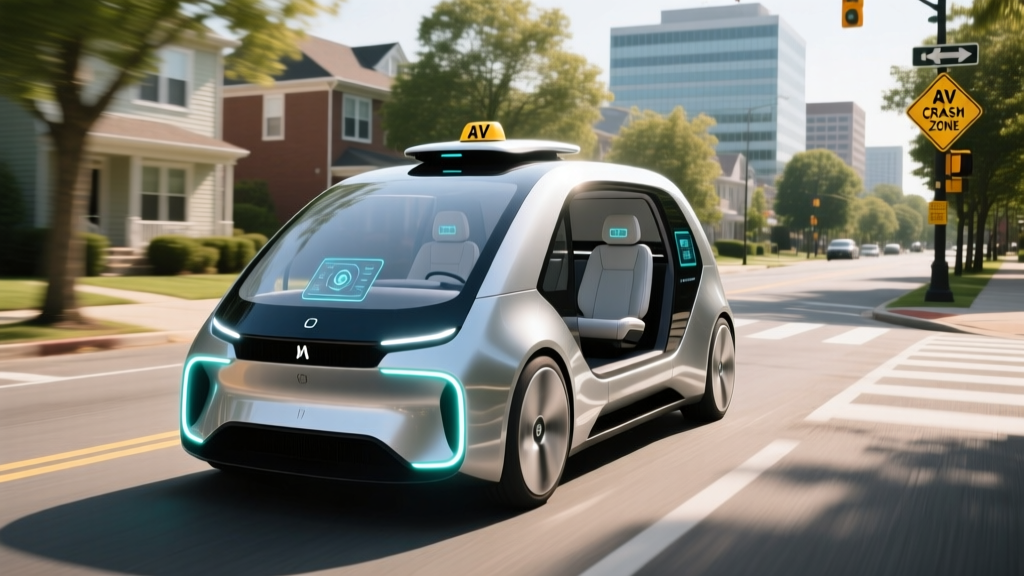
- Common incident types: Low-speed contact events (under 10 mph), often involving other human-driven vehicles rear-ending or side-swiping the robotaxi
- Cruise suspension context: Cruise (GM) had its California permit suspended in October 2023 after a pedestrian-dragging incident in San Francisco, illustrating that Level 4 safety is not uniform across operators
Sources: NHTSA AV Safety Resources, Waymo published safety reports, California DMV disengagement reports.
For a self-driving law firm in New Jersey evaluating a case, the key data points are:
- Was the vehicle operating within its geofence? Level 4 systems are only approved for specific mapped zones.
- Was the system functioning normally? Sensor health, software version, and communication logs are discoverable.
- What was the crash scenario? Edge cases (construction zones, erratic pedestrians, adverse weather) remain challenging even for Level 4 systems.
- Was a remote human teleoperator involved? Some operators use remote assistance for complex scenarios, adding another layer of potential liability.
The Technology Stack: Lidar, Cameras, and Why It Matters Legally
Understanding the sensor suite in a robotaxi isn't just an engineering exercise — it's central to establishing whether the system had adequate perception capability in a crash scenario. Different operators take different approaches:
Common Robotaxi Sensor Configurations
| Sensor Type | What It Does | Strengths | Weaknesses |
|---|---|---|---|
| Lidar (Light Detection and Ranging) | Creates 3D point cloud of surroundings using laser pulses | Precise depth perception, works in darkness | Reduced range in heavy rain/fog, high cost |
| Cameras (multi-spectral) | 2D visual data for object classification, lane detection, traffic signals | Rich semantic data, reads signs/signals | Struggles in low light, glare, occlusion |
| Radar | Radio waves for velocity and distance of objects | Works in most weather, measures speed directly | Lower resolution, can produce false positives |
| Ultrasonic | Short-range proximity detection | Excellent for parking/low-speed | Very limited range (<5 meters) |
| HD Maps + GPS/IMU | Pre-mapped road geometry with real-time localization | Provides context and prediction | Must be updated for road changes, GPS drift in urban canyons |
Waymo's approach: Multi-sensor fusion using proprietary lidar (5th generation), cameras, and radar, combined with high-definition maps of every operational zone. This redundancy means if one sensor modality is compromised (e.g., camera blinded by sun glare), lidar and radar maintain spatial awareness.
Tesla's approach (for FSD Supervised, Level 2): Camera-only ("Tesla Vision") with no lidar or radar. This is relevant because many New Jersey drivers use Teslas with Autopilot or FSD engaged, and crashes involving these systems fall under Level 2 driver liability — not robotaxi operator liability.
For legal purposes, the sensor configuration matters when reconstructing a crash. If a robotaxi's lidar should have detected a pedestrian at 50 meters but the system failed to initiate braking until 10 meters, that's a potential system failure. If a human-driven Tesla on FSD Supervised failed to detect the same pedestrian, the driver — who was required to supervise — bears responsibility.
New Jersey's Regulatory Landscape for Autonomous Vehicles
New Jersey has taken a measured approach to AV regulation compared to states like Arizona (permissive) or California (structured but strict). Here's the current regulatory picture:
- AV Testing: New Jersey allows autonomous vehicle testing on public roads under specific permits issued by the NJ Department of Transportation (NJDOT) and the Motor Vehicle Commission. Test operators must carry minimum insurance and submit safety plans.
- Commercial Deployment: As of 2026, New Jersey has not yet enacted comprehensive legislation permitting fully driverless commercial robotaxi services (fare-paying, no safety driver). Several bills have been introduced in the state legislature addressing AV deployment frameworks, insurance requirements, and liability standards.
- Insurance Requirements: AV test operators in NJ must carry substantial liability coverage — typically $5 million or more per incident — reflecting the higher risk profile and manufacturer/operator liability model.
- Federal Layer: NHTSA retains authority over vehicle safety standards (FMVSS), while states regulate operation, licensing, and insurance. This split creates complexity for attorneys handling multi-jurisdictional AV cases.
New Jersey's dense population, complex road network, and harsh winter weather make it a challenging environment for AV deployment. A self-driving law firm operating in the state must track both state legislative developments and federal NHTSA rulemaking, including the agency's ongoing rulemaking on AV safety reporting requirements (NHTSA AV Safety).
Current Limitations: What Robotaxis Cannot Do
Despite impressive progress, Level 4 robotaxis have well-documented limitations that are directly relevant to both riders and legal professionals:
Known Operational Limitations of Current Robotaxis
- Weather restrictions: Most Level 4 services reduce operations or pull vehicles during heavy rain, snow, ice, or dense fog. Lidar range degrades significantly in precipitation, and road markings become obscured. This is why Phoenix (dry climate) was the first Waymo market.
- Geofence boundaries: Robotaxis cannot leave their approved operational design domain (ODD). A Waymo in Phoenix cannot drive to Sedona — the vehicle will refuse the trip or safely pull over if it approaches the geofence boundary.
- Construction zones: Temporary lane shifts, missing lane markings, and flagger directions remain challenging. Most systems will slow significantly or request remote human assistance.
- Unprotected left turns: Crossing oncoming traffic at uncontrolled intersections is one of the most complex maneuvers and a known area where robotaxis exhibit conservative or hesitant behavior, sometimes causing rear-end collisions from frustrated human drivers.
- Emergency vehicle interaction: While systems are designed to detect and yield to emergency vehicles, there have been documented instances of robotaxis failing to properly clear intersections for fire trucks and ambulances.
- Pedestrian edge cases: Jaywalking pedestrians, crowds, cyclists weaving between lanes, and people in costumes or carrying unusual objects can confuse perception systems.
- No highway operation (most services): Waymo One primarily operates on surface streets. Highway-speed autonomous driving in mixed traffic adds significant complexity.
- Accessibility gaps: Current robotaxi fleets may not accommodate all wheelchair types, service animals, or passengers requiring physical assistance.
For a self-driving law firm in New Jersey, these limitations define the boundary of "reasonable system performance." If a crash occurred in a scenario that falls within known limitations (e.g., heavy snow, unmapped construction), the question becomes whether the operator should have suspended service or whether the system's response was adequate given the conditions.
When to Contact a Self-Driving Law Firm in New Jersey
Based on the current AV landscape, here are the scenarios where specialized legal representation becomes necessary:
- You were struck by an AV test vehicle operating under a NJ permit on a public road. These cases involve the test operator's insurer, the vehicle manufacturer, and potentially the software provider.
- You were injured while riding in a robotaxi in another state (Phoenix, SF, LA, Austin) and need representation in your home jurisdiction of New Jersey for insurance or damages purposes.
- A Level 2 system (Autopilot, FSD, BlueCruise) was engaged during a crash involving your vehicle. These cases require technical analysis of system logs, driver monitoring data, and the distinction between system malfunction and driver inattention.
- You're a commercial fleet operator evaluating liability exposure as autonomous trucks and delivery vehicles enter NJ corridors.
- You're an insurer or municipality seeking counsel on AV-related policy, infrastructure liability, or regulatory compliance.
The legal complexity of AV cases stems from the multi-party liability chain: the vehicle OEM, the software developer, the fleet operator, the sensor manufacturer, the mapping provider, the telecommunications carrier (for V2X), and potentially a remote teleoperator. Traditional auto accident attorneys may not have the technical fluency to navigate sensor data, software version histories, and ODD compliance logs.
Frequently Asked Questions
Is Tesla Autopilot or FSD considered self-driving under New Jersey law?
No. Tesla Autopilot and FSD (Supervised) are SAE Level 2 driver-assist systems. The driver must remain fully attentive and is legally responsible for the vehicle's operation at all times. New Jersey's existing distracted driving and vehicle operation laws apply to drivers using these systems. If a crash occurs while FSD is engaged, the driver — not Tesla — is typically the primary liable party, though product liability claims against the manufacturer may apply in cases of system defect.
Can I sue Waymo if their robotaxi hits my car in another state?
Yes, but jurisdiction and venue questions are complex. Waymo operates under commercial insurance policies and has established claims processes. If you're a New Jersey resident injured by a Waymo vehicle in Phoenix, you may file in Arizona courts or potentially in federal court depending on the circumstances. A self-driving law firm in New Jersey with multi-state litigation capability can advise on the optimal venue.
How does insurance work when a driverless robotaxi causes a crash?
Level 4 robotaxi operators carry commercial liability insurance — typically $5 million or more per incident. When a Waymo vehicle causes a crash, Waymo's insurer handles the claim. This is fundamentally different from a human-driven crash, where the at-fault driver's personal auto policy responds. New Jersey's no-fault (PIP) system adds complexity for NJ residents injured in out-of-state AV crashes.
Are there any self-driving cars I can buy and use without paying attention in New Jersey?
No. No vehicle sold to consumers in the United States in 2026 permits unsupervised autonomous driving. The Mercedes-Benz DRIVE PILOT system (Level 3, conditional automation) is available in limited markets (California and Nevada) under very specific conditions — speeds under 40 mph, divided highways, good weather — and even then, the driver must be prepared to resume control within seconds. In New Jersey, all consumer vehicles require an attentive human driver.
What data is available from a robotaxi after a crash?
Level 4 robotaxis log extensive telemetry: sensor data (lidar point clouds, camera feeds, radar returns), vehicle speed, steering angle, braking force, object detection classifications, decision logs, and geofence compliance status. This data is typically preserved by the operator and can be obtained through legal discovery. The depth of this data is far greater than what's available from a conventional vehicle's event data recorder (EDR/"black box"), making expert analysis essential.
Will robotaxi services come to New Jersey soon?
While no commercial driverless service operates in NJ as of 2026, the state is considered a likely future market due to its population density, proximity to existing AV markets, and ongoing legislative activity. Realistic timelines for fare-paying robotaxi service in NJ are in the 2027–2029 range, contingent on legislative approval, insurance framework establishment, and operator readiness for Northeast weather conditions. Any announced timelines should be treated as preliminary until permits are formally issued.
This article is for informational purposes only and does not constitute legal advice. AV regulations and operator availability change frequently. Consult a qualified attorney for guidance on specific legal matters. For current NHTSA safety data, visit nhtsa.gov/automated-vehicles-safety. For NJ-specific AV permitting information, contact the NJ Department of Transportation.