Public perception of autonomous vehicles often hinges on a single question: how common are accidents with self-driving cars? As robotaxi services expand across major U.S. metros in 2026, the data has matured enough to provide a meaningful answer — one that separates Level 4 driverless fleet operations from the Level 2 driver-assist systems in consumer vehicles. This analysis examines the latest crash statistics, regulatory filings, and operational limitations shaping the autonomous vehicle landscape.
Understanding SAE Automation Levels: What "Self-Driving" Actually Means
Before evaluating safety data, it is critical to distinguish between the levels of vehicle automation. Media coverage frequently conflates Tesla's Full Self-Driving (Supervised) — a Level 2 system requiring constant driver engagement — with Level 4 robotaxi services like Waymo and Zoox that operate without a human driver. The Society of Automotive Engineers (SAE) defines six levels of automation:
| SAE Level | Name | Driver Role | Examples (2026) |
|---|---|---|---|
| Level 0 | No Automation | Full control | Legacy vehicles without ADAS |
| Level 1 | Driver Assistance | Hands on wheel, system assists steering OR speed | Adaptive cruise control, lane-keeping assist |
| Level 2 | Partial Automation | Hands on/near wheel, eyes on road, full supervision | Tesla Autopilot/FSD (Supervised), GM Super Cruise, Ford BlueCruise |
| Level 3 | Conditional Automation | Eyes off in specific conditions, must take over on request | Mercedes Drive Pilot (limited deployment) |
| Level 4 | High Automation | No driver needed in defined operational domain (geofenced) | Waymo One, Zoox, Cruise (post-relaunch) |
| Level 5 | Full Automation | No driver needed anywhere, any condition | Does not exist in production (2026) |
When we discuss "self-driving car accidents" in this article, we are referring primarily to Level 4 robotaxi operations — vehicles without a human behind the wheel. Consumer vehicles with Level 2 systems are not self-driving; the human driver is legally and operationally responsible at all times.
Accidents With Self-Driving Cars: What the NHTSA Data Shows
The National Highway Traffic Safety Administration (NHTSA) requires manufacturers and operators of Level 2 through Level 4 automated systems to report crashes under a Standing General Order. This is the most comprehensive public dataset available for evaluating autonomous vehicle safety.
- Over 4,800 crash reports involving ADS (Automated Driving Systems, Levels 3-5) and ADAS (Levels 1-2) filed under the Standing General Order.
- The majority of Level 4 robotaxi crashes occurred at low speeds (under 25 mph), often in stop-and-go urban traffic.
- Most Level 4 incidents involved the autonomous vehicle being rear-ended or sideswiped by a human-driven vehicle — not the AV initiating the collision.
- Fatalities involving Level 4 robotaxis remain extremely rare relative to total miles driven. Waymo reported over 30 million driverless miles completed by early 2026.
Source: NHTSA Automated Vehicle Safety
To put this in perspective, the U.S. fatality rate for human-driven vehicles hovers around 1.25 deaths per 100 million vehicle miles traveled (NHTSA, 2024 data). Robotaxi operators argue their safety records are meaningfully better per mile, though direct comparison is complicated by the fact that robotaxis operate in dense urban environments at lower speeds, where fatal crashes are less likely but minor collisions are more frequent.
Waymo Safety Record
Waymo, the most deployed Level 4 robotaxi service in the U.S., published a safety report in 2025 analyzing over 25 million autonomous miles. Their data showed:
- 73% reduction in injury-causing crashes compared to human benchmarks in the same operating areas.
- 86% reduction in any police-reported crash compared to human drivers.
- Most collisions were low-speed contacts (<10 mph delta-V) where the Waymo vehicle was struck by another road user.
Cruise and the San Francisco Incident
In late 2023, a Cruise robotaxi in San Francisco dragged a pedestrian who had been thrown into its path by a human-driven vehicle. The incident led to Cruise suspending all operations nationwide and undergoing a lengthy safety review. By 2025, Cruise relaunched with modified operational protocols in limited markets. This event underscored a key limitation: while Level 4 systems handle most scenarios well, edge cases involving unpredictable human behavior remain the primary risk factor.
Where Can You Use Robotaxi Services in 2026?
Level 4 robotaxi services are geofenced — they operate only within approved zones under specific conditions. Here is where major services are live as of early 2026:
| Service | Live Cities (2026) | Operating Hours | Vehicle |
|---|---|---|---|
| Waymo One | Phoenix (metro), San Francisco, Los Angeles, Austin | 24/7 in most markets | Jaguar I-PACE (custom-equipped) |
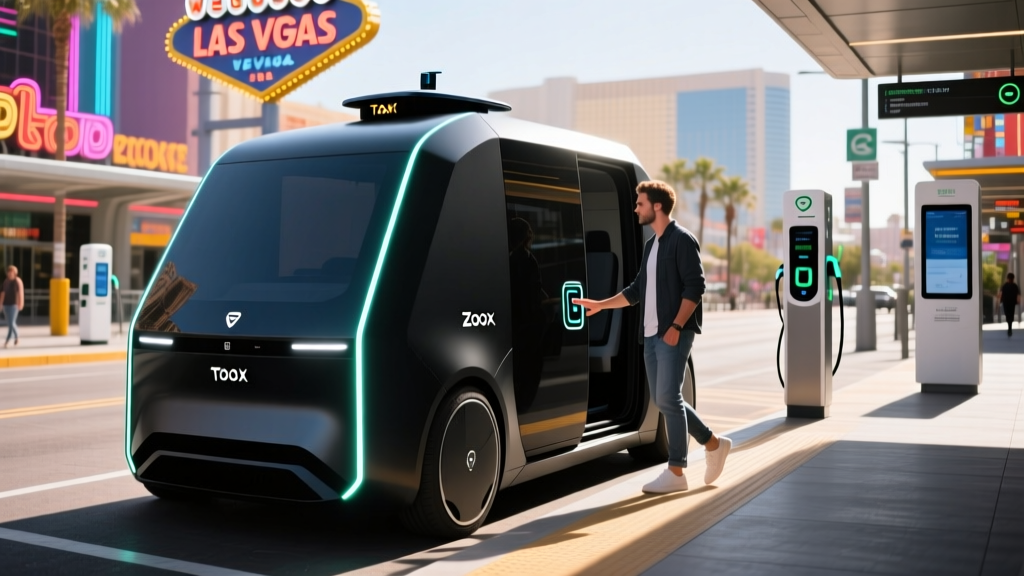
| Zoox | Las Vegas (Strip area), Foster City, CA (limited) | Limited hours; expanding | Zoox purpose-built vehicle |
| Cruise (relaunched) | Phoenix, Dallas (phased re-entry) | Daytime + early evening | Chevrolet Bolt EV / Origin (announced) |
Notable absences: no robotaxi service operates in New York City, Chicago, or most of the U.S. Expansion requires local and state regulatory approval, and many jurisdictions remain cautious following the Cruise incident and high-profile pedestrian safety concerns.
How Much Does a Robotaxi Ride Cost vs. Uber or Lyft?
Pricing varies by market, time of day, and distance, but here is a representative comparison for a typical 5-mile urban trip in a market where both services operate (Phoenix, AZ, 2026):
| Service | Base Fare | Per-Mile Rate | 5-Mile Trip Estimate | Surge Pricing? |
|---|---|---|---|---|
| Waymo One | ~$2.50 | ~$1.25/mi | $8.75–$12.00 | Yes (demand-based) |
| UberX | ~$2.00 | ~$1.10/mi | $7.50–$11.00 | Yes (surge) |
| Lyft Standard | ~$2.00 | ~$1.05/mi | $7.25–$10.50 | Yes (prime time) |
Robotaxi pricing is broadly competitive with rideshare. The key difference: no driver tip is expected (though the app may prompt one), and availability can be more consistent in geofenced areas since there is no driver supply constraint. However, wait times in low-demand areas or during peak hours can still be 10–15 minutes.
How Robotaxis Work: The Technology Stack
Level 4 robotaxis rely on a layered sensor and computing architecture that differs significantly from consumer Level 2 systems:
Sensor Suite (Typical Level 4 Robotaxi)
- LiDAR: Multiple roof- and bumper-mounted units (e.g., Waymo's 5th-gen system uses 360° LiDAR with ~300m range) providing real-time 3D point clouds of the environment.
- Cameras: 8–12 high-resolution cameras covering 360° for lane detection, traffic light recognition, and object classification.
- Radar: Short- and long-range radar for velocity detection and performance in rain/fog where LiDAR and cameras degrade.
- HD Maps: Centimeter-precision pre-mapped routes, updated frequently. The vehicle cross-references its sensor data against the map for localization.
- Redundant Computing: Dual independent compute platforms; if one fails, the other executes a safe stop.
Camera-Only vs. LiDAR Debate
Tesla's consumer FSD system uses a camera-only ("Tesla Vision") approach, arguing that neural networks can replicate LiDAR functionality. No Level 4 robotaxi operator currently uses camera-only perception. Every commercial robotaxi service relies on LiDAR as a primary sensor, providing depth data that cameras must infer. This hardware redundancy is a key reason Level 4 services operate without a driver — the system must not miss obstacles that a camera might misinterpret.
Regulatory Landscape: Who Approves Robotaxi Operations?
Unlike conventional vehicles, which are certified at the federal level by NHTSA for safety standards, robotaxi operations require a patchwork of state and local approvals:
- California (CPUC & DMV): The California Public Utilities Commission issues permits for commercial passenger service; the DMV handles testing permits. Operators must submit disengagement reports and safety data.
- Arizona: The most permissive major market. No special state permit is required beyond standard business licensing, which is why Phoenix became the first major robotaxi market.
- Texas: Austin allows testing and limited commercial operations under state legislation passed in 2017.
- Nevada: Issues AV testing and deployment permits through the DMV; Las Vegas hosts Zoox.
- Federal (NHTSA): Oversees crash reporting via the Standing General Order but does not currently issue operational permits for robotaxis. The NTSB investigates serious incidents.
This fragmented regulatory environment means a service can operate in Phoenix but be illegal in neighboring states. There is no federal framework for interstate robotaxi operations as of 2026.
Current Limitations: Where Robotaxis Cannot Operate
Level 4 robotaxis are impressive within their operational design domain (ODD), but significant limitations remain:
- Geofencing: Vehicles cannot leave their approved service area. If your destination is outside the zone, the ride cannot be completed.
- Weather: Heavy rain, snow, fog, and ice degrade LiDAR and camera performance. Most services suspend operations during severe weather. Waymo has improved rain handling but avoids monsoon-level conditions in Phoenix.
- Construction Zones: Temporary lane shifts, missing lane markings, and flaggers confuse HD map-dependent systems. Operators frequently pause service in active construction corridors.
- Emergency Vehicles: While improving, robotaxis have had documented instances of failing to yield properly to approaching emergency vehicles, prompting NHTSA scrutiny.
- Unprotected Left Turns: Some operators restrict unprotected left turns at complex intersections, routing around them instead.
- Pedestrian-Dense Events: Parades, protests, and large crowds outside normal patterns can trigger a remote-assist stop or route change.
- No Highway Merging (most services): Most current robotaxi deployments avoid high-speed highway driving, limiting them to surface streets.
Is This Truly Self-Driving or Just Driver-Assist?
This distinction matters enormously when evaluating accident data. Here is the clearest way to think about it:
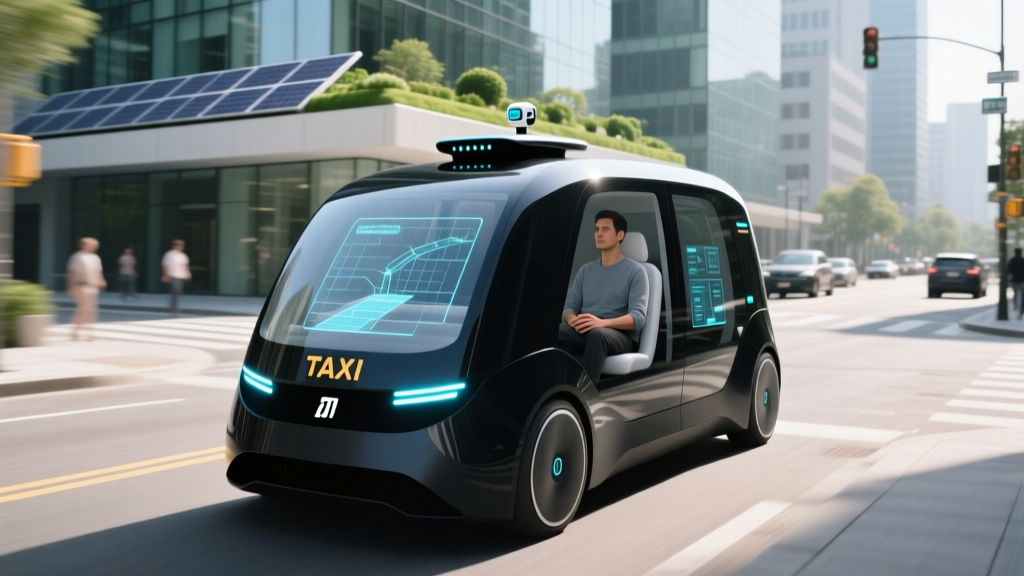
- Waymo, Zoox, relaunched Cruise: Level 4. No human driver is in the vehicle. The system is responsible for all driving tasks within its geofenced area. If something goes wrong, there is no human to blame — the company bears liability.
- Tesla FSD (Supervised), GM Super Cruise, Ford BlueCruise: Level 2. A licensed driver must remain attentive and ready to take over at any moment. If a crash occurs, the human driver is legally responsible, not the automaker.
Accidents involving Level 2 systems like Tesla's Autopilot or FSD are fundamentally different from robotaxi incidents because the human driver was supposed to be supervising. NHTSA has investigated multiple crashes where drivers over-relied on Level 2 systems and failed to intervene. These are not "self-driving car accidents" in the technical sense — they are driver-assist misuse incidents.
Frequently Asked Questions
How safe are robotaxis compared to human drivers?
Based on Waymo's published data (25+ million driverless miles), robotaxis show a 73–86% reduction in injury and police-reported crashes compared to human benchmarks in the same urban areas. However, robotaxis operate at lower speeds in geofenced zones, which naturally reduces fatality risk. Direct comparison to all human driving (including highways) is not perfectly apples-to-apples.
What happens if a robotaxi gets into an accident?
The vehicle is designed to execute a safe stop, contact the operator's remote assistance team, and notify emergency services if needed. The operator (Waymo, Cruise, Zoox) carries commercial liability insurance. Passengers are not held financially liable for collisions caused by the autonomous system.
Can I ride in a robotaxi in any city?
No. As of 2026, commercial robotaxi services are live only in Phoenix, San Francisco, Los Angeles, Austin, Las Vegas, and a few other limited markets. Most U.S. cities do not have approved robotaxi operations.
Are robotaxis available 24/7?
Waymo operates 24/7 in most of its markets. Zoox and Cruise have more limited operating hours. All services may suspend operations during severe weather or system-wide software updates.
Why don't robotaxis operate in snow?
Snow obscures lane markings, reflects LiDAR beams unpredictably, and coats cameras and radar sensors. Current Level 4 systems are not validated for winter weather conditions, which is why no robotaxi service operates in cities like Chicago, Boston, or Minneapolis.
Do robotaxis have a human watching remotely?
Yes, but not in the way most people imagine. Remote assistance operators do not "drive" the vehicle in real time. Instead, they respond to specific queries from the vehicle (e.g., "Is this construction zone passable?") and provide high-level guidance. The vehicle's onboard system still executes all driving maneuvers.