Understanding Robotaxi Safety: Beyond the Headlines
When you search for self driving car crash statistics, you'll find a landscape dominated by sensational headlines and incomplete data. The reality is more nuanced: Level 4 robotaxis operating in controlled environments have accumulated hundreds of millions of autonomous miles with safety records that, in many metrics, outperform human drivers. But the comparison is complex, and the limitations are real.
SAE Automation Levels: Critical Distinction
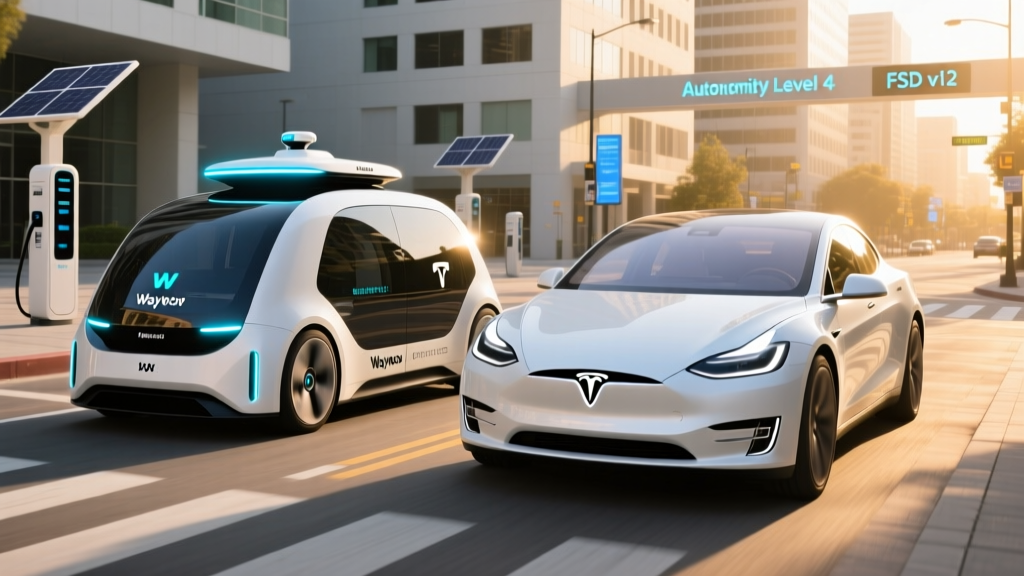
Level 2 (Driver Assist): Tesla Autopilot, FSD Supervised, GM Super Cruise, Ford BlueCruise. The driver must remain engaged and is legally responsible. This is NOT self-driving.
Level 4 (High Automation): Waymo, Zoox, Cruise (where operational). The vehicle handles all driving within its operational design domain (ODD) without human intervention. No driver attention required. This is what people mean by "robotaxi."
Current Robotaxi Service Availability (2026)
True Level 4 robotaxi services remain geographically limited. Here's where you can actually hail a driverless ride right now:
| Company | Operational Cities | Service Hours | Geofence Coverage | Wait Times (Typical) |
|---|---|---|---|---|
| Waymo | Phoenix, San Francisco, Los Angeles, Austin | 24/7 in most markets | ~80-120 sq mi per city | 5-15 minutes |
| Zoox | Las Vegas (Strip corridor), Foster City (limited) | Limited hours, expanding | Highly restricted zones | 15-30 minutes |
| Cruise | Operations suspended in most markets post-2023 incident; limited Phoenix testing | N/A | N/A | N/A |
| Baidu Apollo | Wuhan, Beijing, Shanghai (China only) | Varies by city | Large urban zones | 5-10 minutes |
Key limitation: These services operate within strictly defined geofences. You cannot hail a Waymo from San Francisco to Lake Tahoe. If your destination falls outside the operational zone, the app will not allow the ride.
Self-Driving Car Crash Statistics: The Actual Data
Let's examine the concrete safety data from the largest Level 4 operators. Note that reporting requirements vary by state, and not all incidents are publicly disclosed with full context.
Waymo Safety Data (Through Late 2025)
- Total autonomous miles driven: Over 50 million miles (cumulative, all markets)
- Police-reported crashes: Approximately 1 per 1.5-2 million miles (varies by city and reporting period)
- At-fault crashes: Significantly lower rate; most incidents involve human drivers rear-ending or sideswiping the robotaxi
- Fatalities: Zero passenger or pedestrian fatalities in autonomous mode (as of publication)
- Common incident types: Low-speed contact with turning vehicles, being struck while stopped, occasional curb/infrastructure contact
Source: Waymo Safety Reports, California DMV disengagement data, NHTSA Standing General Order crash reporting
Human Driver Comparison Baseline
To contextualize robotaxi crash statistics, consider the human baseline:
- National average crash rate: Approximately 1 police-reported crash per 500,000 miles driven (NHTSA data)
- Fatality rate: 1.35 deaths per 100 million vehicle miles (2022 data)
- Urban crash rates: Higher than national average due to congestion, intersections, pedestrian density
The comparison is not straightforward. Robotaxis operate in dense urban environments (higher baseline risk) but avoid human risk factors like impairment, distraction, and fatigue. They also drive more conservatively, which reduces some crash types but may increase others (e.g., being rear-ended due to cautious stops).
Notable Incidents and Context
Cruise (October 2023, San Francisco): A Cruise vehicle struck a pedestrian who had been thrown into its path by a human-driven car. The robotaxi then dragged the pedestrian while attempting to pull over. This incident led to Cruise suspending operations nationwide and losing its California permit. The pedestrian survived with serious injuries. This case illustrates edge-case limitations: the system did not anticipate the pedestrian's trajectory and made a poor post-impact decision.
Waymo low-speed incidents: Public data shows multiple low-speed collisions, often involving human drivers making illegal maneuvers (running red lights, improper turns). In several cases, Waymo vehicles were stationary or moving slowly when struck. These incidents rarely cause serious injury but highlight that robotaxis cannot eliminate all crash risk, especially when other road users behave unpredictably.
How Robotaxis Work: Technology Stack
Understanding the technology helps explain both the capabilities and limitations reflected in crash statistics.
Sensor Suite (Typical Level 4 Robotaxi)
- LiDAR: Multiple roof- and body-mounted units providing 360-degree 3D point clouds. Effective range: 150-250 meters. Works in darkness, degraded by heavy rain/fog.
- Cameras: 8-12 high-resolution cameras for object classification, traffic light/signal detection, lane marking recognition.
- Radar: Forward and corner radars for velocity measurement and redundancy in poor visibility.
- HD Mapping: Pre-built centimeter-accurate maps of the operational zone, updated regularly.
- Compute: Onboard processing (often 500+ TOPS) running perception, prediction, and planning algorithms in real-time.
Geofencing and Operational Design Domain (ODD)
Robotaxis only operate within mapped, approved zones. The ODD specifies conditions: weather limits (no heavy snow, limited rain tolerance), road types (no unpaved roads, limited highway speeds), time of day, and construction zone handling. When conditions exceed the ODD, the vehicle will pull over or refuse the ride.
Regulatory Landscape: Who Approves Robotaxi Operations?
Robotaxi deployment is regulated at both federal and state levels, with significant variation:
- Federal (NHTSA): Sets vehicle safety standards (FMVSS) but has not issued comprehensive autonomous vehicle regulations. Requires crash reporting under Standing General Order.
- State level: California (CPUC and DMV), Arizona (minimal regulation), Texas (local permits), Nevada (testing permits). Each state has different requirements for testing, commercial deployment, and incident reporting.
- Local permits: Cities often require separate agreements covering curb access, parking, emergency response protocols.
California's regulatory framework is the most transparent: companies must report "disengagements" (instances where a safety driver took control or the system requested intervention) and all crashes. This data is publicly available at California DMV Autonomous Vehicle Reports.
Pricing: Robotaxi vs. Rideshare
| Service | Base Fare | Per Mile | Per Minute | Typical 5-Mile Ride | Surge Pricing |
|---|---|---|---|---|---|
| Waymo (SF/LA) | $3-5 | $1.20-1.50 | $0.30-0.50 | $15-22 | No surge (fixed pricing) |
| Uber (SF/LA) | $2-4 | $1.00-1.80 | $0.20-0.60 | $12-25 | Yes, 1.5x-3x common |
| Lyft (SF/LA) | $2-4 | $1.00-1.70 | $0.25-0.55 | $12-24 | Yes, variable |
Key insight: Waymo pricing is competitive with Uber/Lyft in non-surge conditions and often cheaper during peak demand (no surge multiplier). However, robotaxi availability is limited—you may wait longer or be unable to get a ride outside the geofence.
Current Limitations: Where Robotaxis Fall Short
Operational Constraints
- Geographic: Cannot operate outside mapped zones. No intercity travel.
- Weather: Most systems suspend operations in heavy rain, snow, fog, or ice. Waymo operates in light rain but with reduced speed and increased following distance.
- Construction zones: Poorly marked or rapidly changing construction areas can confuse the system. Vehicles may refuse to proceed or require remote assistance.
- Complex intersections: Unprotected left turns across multiple lanes, unusual signal configurations, or temporary traffic control (flaggers) remain challenging.
- Pedestrian-dense areas: High foot traffic (events, festivals) can cause excessive caution, leading to long delays or ride refusals.
Edge Cases Reflected in Crash Data
- Unpredictable human behavior: Drivers running red lights, making illegal U-turns, or aggressively cutting off the robotaxi.
- Emergency vehicles: While systems detect sirens and lights, complex multi-vehicle emergency scenes can be difficult to navigate.
- Infrastructure failures: Malfunctioning traffic lights, faded lane markings, or missing signs.
- Rare object types: Unusual cargo, animal-drawn vehicles, or non-standard road users may not be correctly classified.
Frequently Asked Questions
Where can I use a robotaxi service right now?
As of 2026, Waymo operates commercially in Phoenix, San Francisco, Los Angeles, and Austin. Zoox has limited service in Las Vegas. You must be within the company's geofenced operational zone for both pickup and dropoff.
How much does a robotaxi cost vs. Uber or Lyft?
Waymo pricing is comparable to Uber/Lyft base rates ($15-22 for a typical 5-mile urban ride) but does not surge during peak demand. This makes it cheaper during high-demand periods but potentially more expensive during low-demand times when rideshare discounts apply.
How safe are robotaxis based on real data?
Waymo reports approximately 1 police-reported crash per 1.5-2 million autonomous miles, with zero fatalities. This compares favorably to the human average of 1 crash per 500,000 miles, though direct comparison is difficult due to different operating environments. Most robotaxi crashes are low-speed and involve human drivers striking the autonomous vehicle.
What are the current limitations of self-driving cars?
Key limitations include geographic restrictions (geofenced zones only), weather sensitivity (no heavy rain/snow), difficulty with complex construction zones, and challenges with unpredictable human behavior. Robotaxis also cannot handle intercity travel or areas outside their mapped operational domain.
Is Tesla Autopilot or FSD considered self-driving?
No. Tesla Autopilot and Full Self-Driving (Supervised) are SAE Level 2 driver-assist systems. The driver must remain attentive and is legally responsible for the vehicle. Only Level 4 systems like Waymo and Zoox (in their operational zones) qualify as self-driving. Conflating Level 2 with Level 4 is a common source of confusion in crash statistics.
Do robotaxis have safety drivers?
Commercial robotaxi services like Waymo operate without in-vehicle safety drivers. However, remote operators monitor fleets and can intervene via teleoperation if the vehicle encounters an unfamiliar situation. Cruise previously used remote assistance, and this model is standard for Level 4 deployments.
What happens if a robotaxi crashes?
The vehicle is programmed to pull over safely, contact emergency services if needed, and notify the remote operations center. The operating company is typically liable for damages (unlike Level 2 systems where the driver is responsible). All crashes are reported to state regulators and NHTSA under current reporting requirements.
The Bottom Line on Robotaxi Safety Data
The available self driving car crash statistics suggest that Level 4 robotaxis operating within their design constraints are at least as safe as human drivers, and likely safer in many urban scenarios. However, the data is still limited (hundreds of millions of miles vs. trillions for human drivers), and the operating conditions are highly controlled.
For consumers, the practical takeaway is this: if you're in a city with robotaxi service and your trip falls within the operational zone and weather limits, a Waymo ride is a reasonable, data-backed choice. But the technology is not a universal replacement for human driving—it's a specialized solution for specific environments.
As more miles are accumulated and services expand, the statistical picture will become clearer. For now, the data supports cautious optimism, not hype.