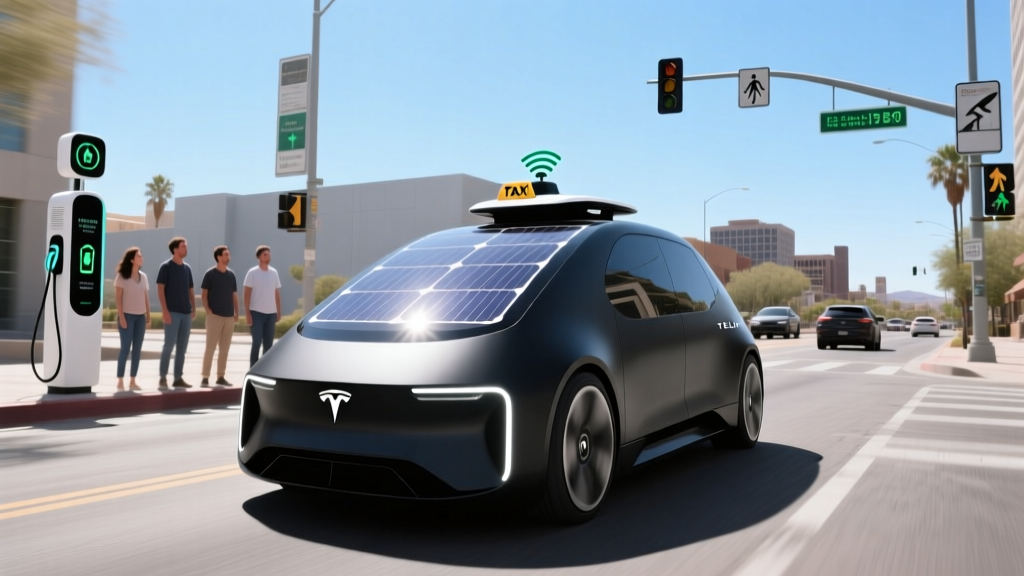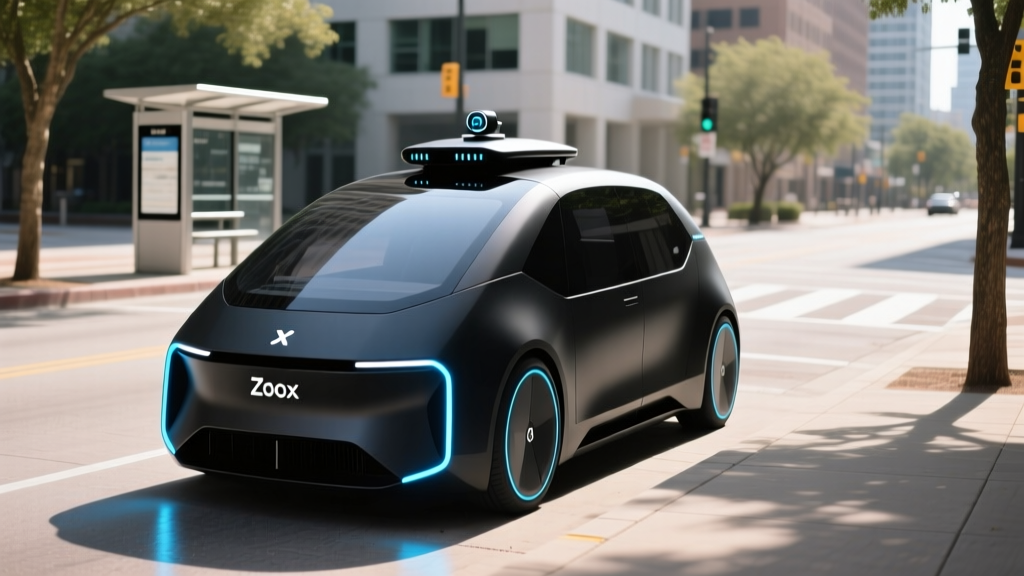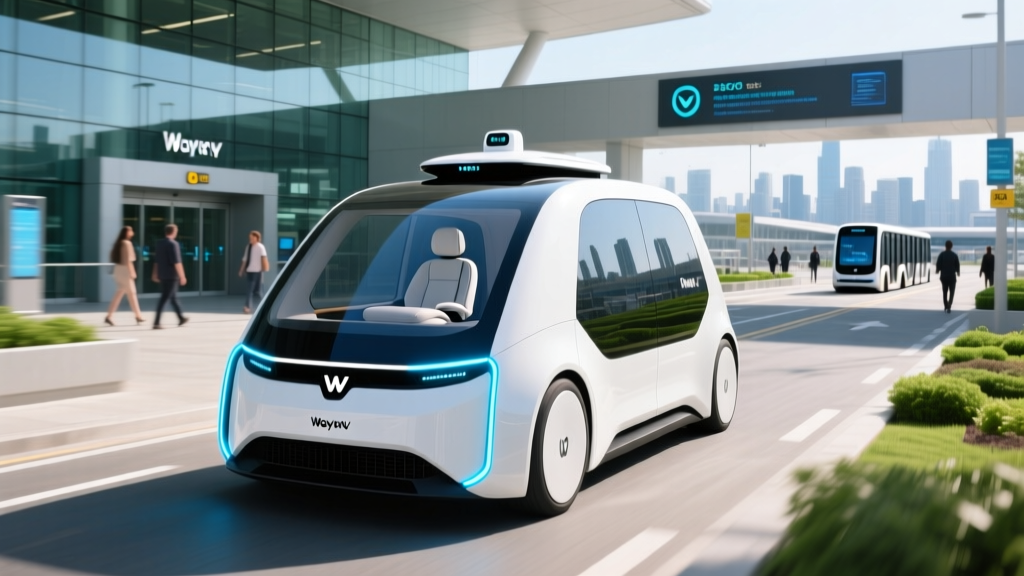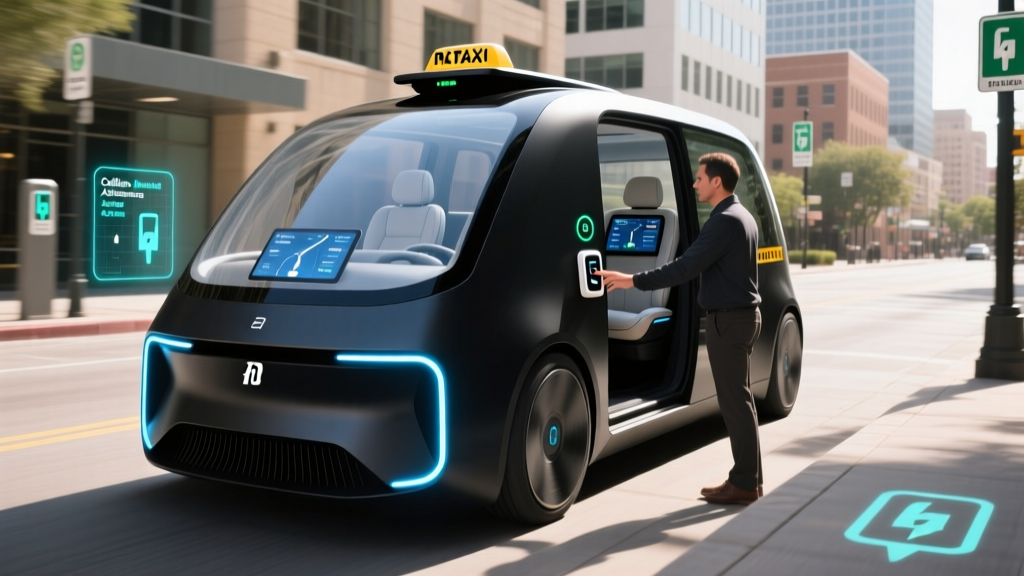
If you've searched for a "san antonio self driving uber" recently, you're not alone. Thousands of Texans are curious about whether autonomous ride-hailing has reached the Alamo City — and if so, what it costs, how safe it is, and how the technology actually works. As of early 2026, the honest answer is layered: fully driverless robotaxi service exists in the United States, but San Antonio is not yet among the cities with live, fare-paying Level 4 robotaxi operations.
This guide breaks down exactly where robotaxis operate today, why San Antonio isn't on the list yet, the real safety data behind the headlines, and what you need to know about the gap between consumer driver-assist systems and true autonomous ride-hailing.
Where Can I Use a Self-Driving Uber or Robotaxi Right Now?
Uber and Waymo have partnered to integrate Waymo's autonomous vehicles into the Uber app in select markets. However, availability is strictly limited to cities where regulators have approved commercial robotaxi operations and where companies have built out geofenced operational zones.
| City | Operator(s) | Status | Access Method |
|---|---|---|---|
| San Francisco, CA | Waymo, Zoox | Live — 24/7 commercial service | Waymo app, Uber app (Waymo integration) |
| Phoenix, AZ (metro) | Waymo | Live — expanded coverage area | Waymo app, Uber app |
| Los Angeles, CA | Waymo | Live — phased rollout | Waymo app, Uber app |
| Austin, TX | Waymo (pilot) | Limited pilot / early access | Invite-only / waitlist |
| San Antonio, TX | None currently | Not available | N/A |
| Las Vegas, NV | Motional (paused), Zoox (testing) | Testing / limited | Not publicly bookable |
For San Antonio residents, the nearest option is Austin, TX — approximately 80 miles northeast — where Waymo has begun limited pilot operations. However, Austin's service area is restricted, often waitlisted, and not yet the open-access commercial model seen in Phoenix or San Francisco.
Uber's autonomous ride option appears within the standard Uber app only in markets where Waymo vehicles are commercially active. You cannot currently summon a driverless car in San Antonio through Uber, Lyft, or any other platform.
Understanding SAE Autonomy Levels: Robotaxi vs. Driver-Assist
A critical distinction that gets lost in headlines is the difference between a Level 2 driver-assist system (like Tesla's Autopilot or FSD Supervised) and the Level 4 systems powering commercial robotaxis. These are fundamentally different technologies with different legal and safety frameworks.
| SAE Level | Name | Driver Required? | Examples |
|---|---|---|---|
| Level 0 | No Automation | Yes — full control | Traditional vehicles |
| Level 1 | Driver Assistance | Yes — hands on wheel | Adaptive cruise, lane-keep |
| Level 2 | Partial Automation | Yes — must supervise at all times | Tesla Autopilot/FSD Supervised, GM Super Cruise, Ford BlueCruise |
| Level 3 | Conditional Automation | No in specific conditions (eyes off, hands off), must take over when requested | Mercedes Drive Pilot (limited markets, low-speed highway) |
| Level 4 | High Automation | No — fully driverless within geofence | Waymo One, Zoox, Cruise (prior to suspension) |
| Level 5 | Full Automation | No — anywhere, any condition | Does not exist commercially |
Key takeaway: When people search for a "self-driving Uber" in San Antonio, they're looking for Level 4 robotaxi service — no human driver, no steering wheel intervention needed within the operational zone. Consumer features like Tesla FSD Supervised remain Level 2, meaning the driver is legally and practically responsible for the vehicle at all times. Level 5 — a car that can drive itself anywhere in any condition — does not exist in production anywhere in the world.
How Robotaxi Technology Actually Works
Waymo's 6th-generation "Driver" system, deployed in the Jaguar I-PACE and now the Zeekr RT, represents the current state of commercial robotaxi technology. Here's what's on the roof and behind the panels:
Sensor Suite (Waymo 6th-Gen)
- LiDAR: Multiple roof-mounted and body-integrated units providing 360° 3D point-cloud mapping out to 500+ meters. LiDAR works independently of ambient light — critical for night driving.
- Cameras: 29+ high-resolution cameras covering all directions, used for lane detection, traffic signal recognition, pedestrian classification, and construction-zone interpretation.
- Radar: 6 radar units for velocity detection of moving objects, functioning in rain and fog where cameras and LiDAR degrade.
- Audio detection: External microphones to detect emergency vehicle sirens and adjust behavior accordingly.
Camera-Only vs. Multi-Sensor: Why It Matters
Tesla's FSD system uses a camera-only approach (no LiDAR or radar), betting that neural networks can extract sufficient 3D spatial data from 2D images. Waymo, Zoox, and most other robotaxi operators use a sensor fusion approach — combining LiDAR, radar, and cameras — arguing that redundancy is essential when there's no human to fall back on. In Level 4 service, there is no driver to notice when a camera is blinded by sun glare; the system must handle it autonomously.
Geofencing and HD Mapping
Robotaxis don't drive just anywhere. They operate within a geofenced operational design domain (ODD) — a precisely mapped area where the company has built centimeter-accurate HD maps including every lane marking, curb height, signal timing pattern, and construction-zone protocol. When a geofenced area expands, it requires extensive mapping, simulation testing, and regulatory approval before a single paying rider enters the zone.
Robotaxi Safety Record: What the Data Actually Shows
Safety is the most scrutinized aspect of robotaxi operations — and the data is more nuanced than either the hype or the fear suggests.
Waymo Safety Data (as reported through late 2025)
- Total autonomous miles driven: Over 30 million fully driverless miles across Phoenix, San Francisco, and Los Angeles (Waymo Safety Report).
- Injury-causing crash rate: Waymo reports an 85% reduction in injury-causing crash rates compared to human benchmarks in the same cities, based on police-reported data.
- Contactless incident rate: Waymo's data shows significantly fewer at-fault collisions per million miles compared to human drivers in urban environments.
- Disengagement data: As Level 4 systems, Waymo vehicles do not require human "disengagement" in the traditional sense — remote assistance may be requested for edge cases (unusual construction, extreme weather), but the vehicle is designed to pull over safely if it cannot resolve a situation.
However, context matters. Robotaxis operate in geofenced, well-mapped urban areas at moderate speeds — not on rural highways, in heavy snow, or in unmapped construction zones. The comparison to human drivers is most valid in similar urban conditions. Additionally, Cruise's December 2023 incident in San Francisco — where a pedestrian was dragged after being struck by another vehicle — led to California's DMV suspending Cruise's permit and the company pausing all nationwide operations. Cruise has since restructured its autonomous program under GM's supervision with modified operational parameters.
The National Highway Traffic Safety Administration (NHTSA) requires all automated driving systems involved in crashes to report incidents through its Standing General Order. This data is publicly accessible and provides the most comprehensive federal crash record for autonomous vehicles.
Pricing: Robotaxi vs. Uber vs. Lyft
When Waymo rides are available through the Uber app, pricing follows a familiar rideshare model — base fare, per-mile rate, and per-minute rate — but with some key differences.
| Service | Base Fare | Per Mile | Per Minute | 5-Mile Urban Ride (est.) |
|---|---|---|---|---|
| UberX (human driver) | $2.50 | $1.15 | $0.30 | $12–$16 |
| Waymo via Uber | $2.50 | $1.15 | $0.30 | $12–$16 |
| Waymo One (direct app) | $2.00 | $1.10 | $0.28 | $11–$15 |
| Lyft (human driver) | $2.50 | $1.10 | $0.28 | $11–$15 |
Note: Surge pricing, wait times, and promotional discounts apply. Waymo rides booked through Uber are typically priced at or near parity with UberX to encourage adoption. Exact pricing varies by market and time of day.
The economic model for robotaxis hinges on eliminating the driver's share of the fare (typically 55–70% of what you pay goes to the human driver). In theory, once fleet scale is achieved, robotaxi rides should undercut human-driven rideshare. Currently, Waymo prices at near-parity to build ridership habits, with the expectation that costs decline as fleet utilization increases and hardware costs per vehicle drop with each generation.
Why San Antonio Doesn't Have Robotaxis Yet
Several factors explain why San Antonio is not yet a robotaxi market:
Current Robotaxi Limitations Nationwide
- Geofencing: Every new city requires months of HD mapping, simulation testing, and phased deployment. Waymo typically spends 12–18 months mapping and testing before opening commercial service.
- Weather constraints: Current Level 4 systems struggle with heavy rain, fog, and flooding. San Antonio's flash-flood events and occasional ice storms present edge cases that require extensive validation.
- Regulatory approval: Texas has no state-level robotaxi ban, but the Texas Department of Transportation (TxDOT) and local municipalities must coordinate on permitting, insurance requirements, and emergency-response protocols. Unlike California's DMV/CPUC framework, Texas's regulatory pathway for commercial robotaxis is less established.
- Infrastructure mapping: San Antonio's sprawling road network — including extensive highway interchanges (I-35/I-10/I-37), rural-urban transition zones, and frequent construction on major corridors — demands mapping resources that operators prioritize for denser, higher-ride-volume cities first.
- Fleet economics: Robotaxi companies deploy where ride density justifies the capital cost of $150,000+ per vehicle (sensor suite included). San Antonio's lower ride density compared to SF, LA, or Phoenix makes it a lower-priority expansion target.
Austin's pilot program is the closest indicator that Texas is on the robotaxi roadmap. If Austin scales successfully, San Antonio — with its similar climate and road infrastructure — could follow within 2–3 years. But no operator has announced a San Antonio launch date as of early 2026.
The Regulatory Landscape for Autonomous Ride-Hailing
Robotaxi operations sit at the intersection of federal, state, and local regulation:
- Federal (NHTSA): Sets vehicle safety standards (FMVSS). Currently, vehicles without steering wheels or pedals (like Zoox) require exemptions. NHTSA also mandates crash reporting via Standing General Order for all ADS-equipped vehicles.
- State level: States control licensing, insurance, and commercial operation permits. California's DMV issues testing permits and the CPUC approves commercial fares. Arizona has taken a permissive approach with minimal state-level barriers. Texas has passed legislation (HB 3026, 2023) enabling autonomous vehicles on public roads but lacks the detailed commercial-permitting framework that California has built.
- Local/municipal: Cities often negotiate directly with operators on geofence boundaries, pick-up/drop-off zones, emergency-response protocols, and data-sharing requirements.
For San Antonio, the path to robotaxi service likely requires both TxDOT coordination and City Council engagement — processes that take time but are not insurmountable barriers.
Frequently Asked Questions
Can I hail a self-driving Uber in San Antonio today?
No. As of early 2026, no commercial robotaxi service — Waymo, Cruise, Zoox, or otherwise — operates in San Antonio. The nearest option is Austin, TX, where Waymo has a limited pilot program that may be waitlisted.
Is Tesla's FSD Supervised the same as a robotaxi?
No. Tesla's Full Self-Driving (Supervised) is an SAE Level 2 driver-assist system. The driver must remain fully attentive, keep hands ready, and is legally responsible for all driving decisions. A Waymo robotaxi is Level 4 — there is no driver, and the system handles all driving tasks within its geofenced area without human intervention.
How much does a Waymo robotaxi ride cost?
Waymo rides are priced at or near parity with UberX and Lyft in the same market. A typical 5-mile urban ride costs $11–$16 depending on time of day and demand. The long-term expectation is that robotaxi rides will become cheaper than human-driven rideshare as fleet utilization increases.
Are robotaxis safer than human drivers?
Waymo's published data indicates an 85% reduction in injury-causing crash rates compared to human benchmarks in comparable urban environments, based on over 30 million driverless miles. However, robotaxis operate in limited, well-mapped areas at moderate speeds — the comparison is most valid for similar urban driving conditions, not highway or rural driving. Full federal crash data is available through NHTSA's Standing General Order.
What happens if a robotaxi encounters an emergency or unusual situation?
Level 4 robotaxis are designed to handle most situations autonomously. For edge cases (unusual construction patterns, extreme weather, road closures), the vehicle may request remote assistance from a human operator. If the system cannot resolve the situation safely, it is programmed to pull over and stop — not to proceed unsafely. Emergency services can interact with the vehicle through external markings and remote-communication protocols.
When will San Antonio get robotaxi service?
No operator has announced a San Antonio launch date. Based on expansion patterns from Austin's pilot and the typical 12–18 month ramp-up for new cities, a realistic estimate would be 2028 or later — contingent on regulatory framework development, fleet economics, and successful scaling in current markets.
Can robotaxis drive in heavy rain or on highways?
Current Level 4 systems have weather limitations. Heavy rain, fog, and ice can degrade sensor performance (particularly LiDAR and cameras). Operators typically reduce service areas or pause operations during severe weather. Highway driving is technically feasible but most commercial deployments focus on urban surface streets where ride demand is concentrated. Waymo does operate on some highway segments in Phoenix and San Francisco within its geofence.