The Achilles Heel of Autonomous Fleets: Weather
As robotaxi services like Waymo, Zoox, and Tesla expand their operational footprints across major metropolitan areas, the industry faces a formidable and unpredictable adversary: Mother Nature. While autonomous vehicles (AVs) have proven highly capable of navigating the predictable, sun-drenched grids of Phoenix or the well-mapped avenues of San Francisco, adverse weather conditions remain the ultimate stress test for sensor suites and AI decision-making models. Understanding robotaxi weather limitations and service reliability is crucial for both industry stakeholders mapping out future fleet deployments and everyday riders relying on these services for daily commutes.
According to the National Highway Traffic Safety Administration (NHTSA), the Operational Design Domain (ODD) of an automated driving system defines the specific environmental conditions under which it can safely function. Weather is frequently the primary limiting factor within these ODDs. When a robotaxi encounters conditions outside its ODD, it must either execute a minimal risk condition (pulling over safely) or request human intervention—neither of which is ideal for a commercial, driverless fleet.
The Physics of Sensor Degradation in Adverse Conditions
To understand service reliability, we must first look at the physics governing the hardware perched atop these vehicles. Modern robotaxis rely on a triad of sensors: LiDAR, cameras, and radar. Each interacts with atmospheric moisture and particulates differently.
Heavy Rain and Hydroplaning Risks
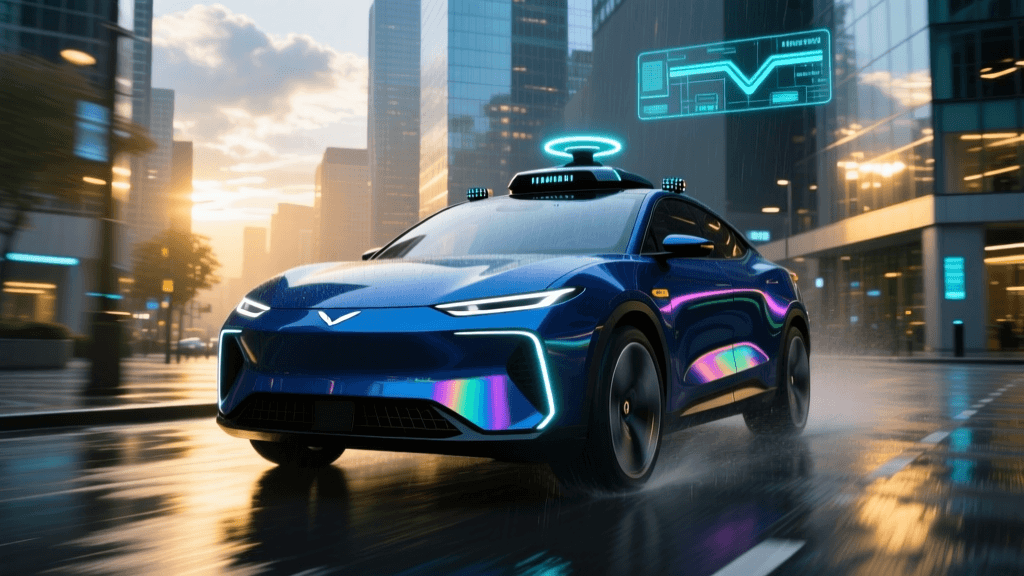
Heavy rain introduces two major problems. First, water droplets cause 'Mie scattering' in LiDAR systems, where the laser pulses bounce off raindrops rather than reaching solid objects, creating 'ghost' obstacles in the point cloud. Second, cameras suffer from lens obscuration and reduced contrast. Beyond sensor degradation, the AI must also calculate reduced tire friction and increased stopping distances, often leading the vehicle to drive overly conservatively or pull over entirely.
Snow, Ice, and Lane Marker Obscuration
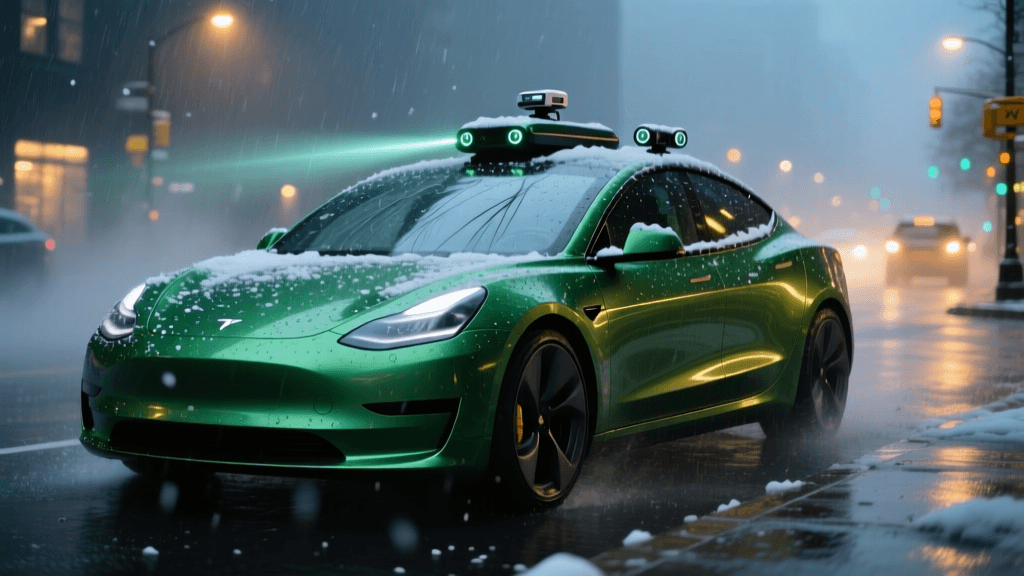
Snow is arguably the most disruptive element for autonomous navigation. Accumulating snow physically blocks LiDAR domes and camera lenses. More critically, snow covers lane markings and alters the physical geometry of the road (e.g., hiding curbs and narrowing drivable space). High-definition maps, which many robotaxis rely on for localization, become instantly outdated when snowbanks shift the drivable path.
Fog, Glare, and Low-Visibility Scenarios
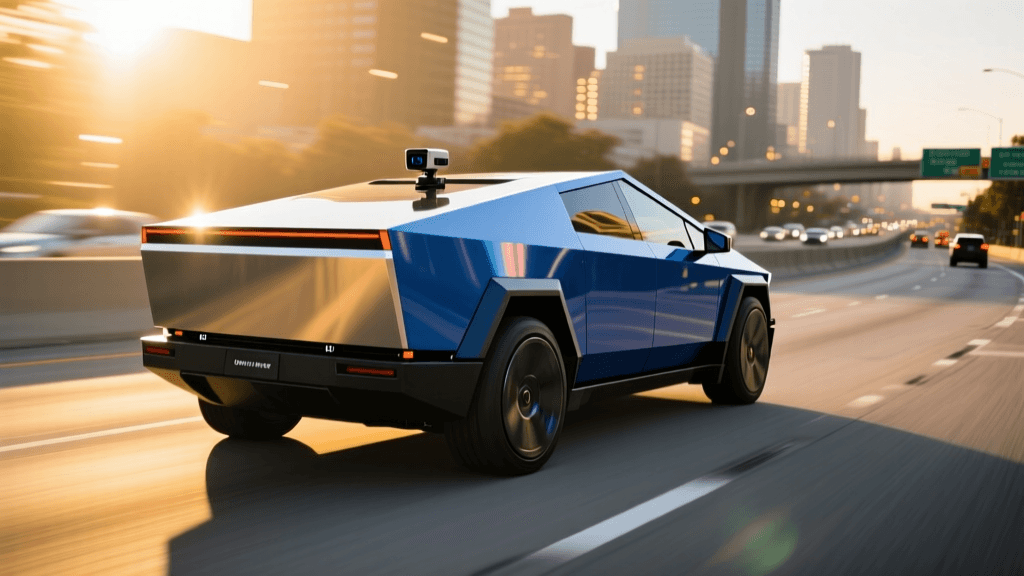
Dense fog scatters both LiDAR and visible light, severely reducing the effective range of these sensors. Similarly, low-angle sun glare during dawn and dusk can blind camera systems, washing out the image and making it impossible for computer vision algorithms to detect traffic lights or pedestrians.
Sensor Performance Matrix: Weather Impact Analysis
The following table illustrates how the core sensor modalities perform across various adverse weather scenarios. This data highlights why sensor fusion—combining multiple sensor inputs—is non-negotiable for commercial robotaxi fleets.
| Sensor Type | Clear Conditions | Heavy Rain | Snow / Ice | Dense Fog |
|---|---|---|---|---|
| LiDAR | Excellent (High Res 3D) | Moderate (Scattering noise) | Poor (Physical blockage) | Poor (Signal attenuation) |
| Cameras | Excellent (Color/Text) | Poor (Obscured/Blind) | Poor (Obscured/Blind) | Poor (Low contrast) |
| Radar | Good (Velocity/Range) | Excellent (Penetrates) | Good (Penetrates) | Excellent (Penetrates) |
| Ultrasonic | Good (Near-field) | Moderate (Acoustic dampening) | Poor (Snow absorption) | Good (Unaffected) |
Fleet Reliability: How the Giants Handle the Storm
Different operators have adopted varying strategies to mitigate weather-related downtime, directly impacting their service reliability and rider satisfaction.
Waymo: The Geofencing and ODD Approach
Waymo, operating its fifth-generation and newer sixth-generation driver systems, relies heavily on strict ODD enforcement. In Phoenix, during severe monsoon season, Waymo vehicles are programmed to safely pull over and wait out the storm, or the service is temporarily suspended in specific geofenced zones. While this ensures a high safety record, it negatively impacts service reliability, leaving riders stranded or facing massive surge pricing and wait times during sudden downpours.
Zoox: Purpose-Built Redundancy
Amazon's Zoox takes a different hardware approach with its purpose-built, symmetrical carriage. By distributing a massive array of sensors across all four corners of the vehicle, Zoox achieves overlapping fields of view. If one camera or LiDAR unit is temporarily blinded by a splash of dirty water from a passing truck, adjacent sensors can maintain environmental tracking. However, Zoox is still bound by the physical limitations of optics in heavy snow or dense fog.
Tesla: The Pure Vision Gamble
Tesla's approach to its future Robotaxi network relies entirely on cameras and neural networks, having abandoned LiDAR and radar. While cameras are highly susceptible to glare, rain, and fog, Tesla argues that human eyes are also cameras, and if a human can drive in it, a neural network should be able to as well. The Insurance Institute for Highway Safety (IIHS) has frequently noted that camera-only ADAS systems can struggle significantly with visibility issues, suggesting Tesla's robotaxi aspirations may face severe reliability hurdles in cities with harsh winters or heavy precipitation.
The Economic Impact of Weather-Induced Fleet Grounding
From an industry outlook perspective, weather limitations are not just a safety issue; they are an economic bottleneck. The unit economics of a robotaxi rely on high utilization rates—ideally keeping the vehicle moving with a paying passenger for 15 to 20 hours a day. When a fleet must be grounded due to a two-inch snowfall or heavy fog, the fixed costs of the hardware and software continue to accrue without generating revenue. Furthermore, dispatching remote human teleoperators to assist 'confused' vehicles in bad weather scales poorly, destroying the profit margins that make driverless fleets viable in the first place.
Future Trends: Engineering Beyond the Elements
The industry is actively developing next-generation technologies to push the boundaries of the ODD and improve all-weather reliability.
- 4D Imaging Radar: Unlike traditional radar, 4D imaging radar provides elevation data and high-resolution point clouds that rival LiDAR, but with the ability to see straight through heavy rain, snow, and fog. Companies like Arbe Robotics are pioneering this tech for future AV integration.
- Advanced Sensor Cleaning Systems: Hardware manufacturers are integrating high-pressure air nozzles, hydrophobic coatings, and heated lenses to instantly clear mud, snow, and water from optical sensors without requiring the vehicle to return to a depot.
- V2X Infrastructure Integration: To combat obscured lane markings and blind intersections, the U.S. Department of Transportation (USDOT) is heavily investing in Vehicle-to-Everything (V2X) communication. By receiving real-time data from smart traffic lights and roadside sensors, a robotaxi can 'see' around corners and navigate snow-covered intersections using infrastructure-based telemetry rather than relying solely on onboard optics.
Actionable Advice for Robotaxi Riders
For consumers utilizing services like Waymo One or anticipating future autonomous ride-hailing apps, understanding these limitations can save you time and frustration.
- Monitor ODD Alerts: Most robotaxi apps now feature weather-related service alerts. If a severe storm is approaching, book your ride early before the fleet begins its precautionary grounding protocols.
- Expect Route Deviations: In moderate rain, robotaxis will avoid unprotected left turns and complex, unmarked intersections. Expect your route to take slightly longer as the AI opts for wider, better-lit, and clearly marked arterial roads.
- Have a Fallback Plan: During winter months in cities like Austin or San Francisco, sudden weather shifts can trigger immediate service suspensions. Always have a secondary transit app (like Uber, Lyft, or local public transit) ready on your phone.
- Designated Pick-Up Zones: In bad weather, LiDAR struggles to map the exact edge of a chaotic curb. Always use the app's 'pin' feature to place your pick-up spot in a well-lit, clearly marked loading zone or driveway, away from the spray of passing traffic.
Conclusion
Robotaxi weather limitations remain the most significant hurdle to achieving ubiquitous, 24/7/365 autonomous mobility. While current fleets prioritize safety by grounding vehicles during severe weather, the future of service reliability hinges on the mass adoption of 4D imaging radar, advanced sensor-cleaning hardware, and V2X smart-city infrastructure. Until these technologies mature and scale, riders must view robotaxis as highly reliable fair-weather companions, while respecting the AI's conservative approach to the unpredictable forces of nature.