Is Waymo Operating in Nashville Right Now?
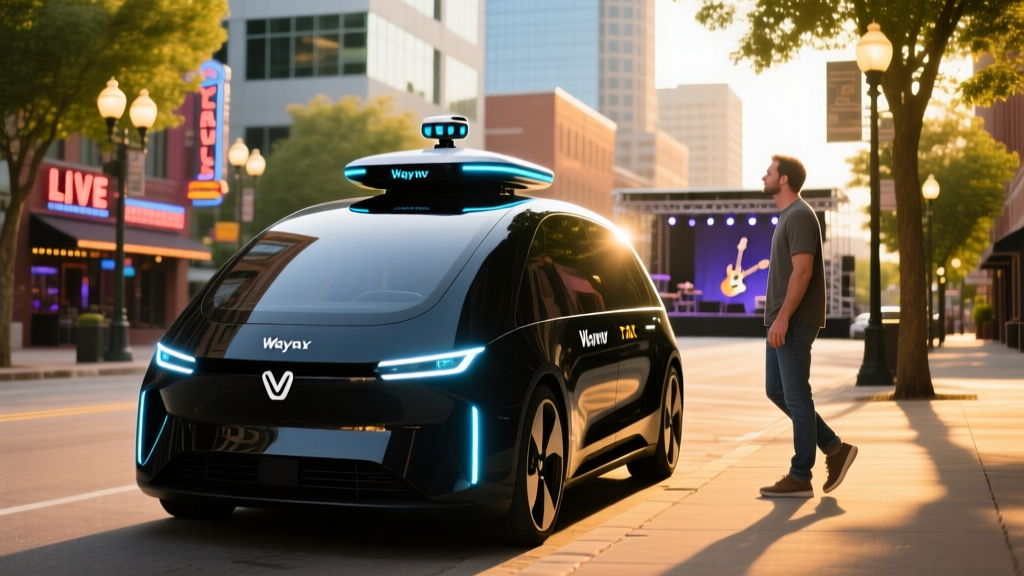
As of early 2026, Waymo is not operating a commercial robotaxi service in Nashville, Tennessee. The Alphabet-owned autonomous vehicle company currently runs its Waymo One ride-hailing service in a limited set of Sun Belt and West Coast metros, and Nashville is not among them. No official launch date for Nashville has been announced.
That said, Nashville has appeared in broader discussions about Waymo's expansion roadmap. The city's relatively flat topography, grid-like downtown streets, and mild winters make it a plausible candidate for future deployment. But plausible is not imminent. Understanding why requires a look at where Waymo actually operates today, the regulatory hurdles Tennessee would need to clear, and what the service looks like in cities where it's already live.
This guide covers everything a Nashville-based EV enthusiast or rideshare user needs to know about the prospect of a Nashville Waymo launch — including real operational data from existing markets, safety records, pricing, and the technology stack that makes Level 4 autonomy possible.
Where Waymo One Actually Operates in 2026
Waymo One, the company's commercial rider service, is available to the general public in a defined set of cities. Each city has a specific geofenced operating zone — you can't summon a Waymo just anywhere within city limits.
| City | Status | Operating Zone | Hours |
|---|---|---|---|
| Phoenix, AZ (Metro) | Fully open | ~225 sq mi (Chandler, Tempe, Scottsdale, N Phoenix) | 24/7 |
| San Francisco, CA | Fully open | Most of SF proper, limited highway routes | 24/7 |
| Los Angeles, CA | Fully open | Downtown LA, Hollywood, Santa Monica, LAX corridor | 24/7 |
| Austin, TX | Launched (expanding zones) | Central Austin, airport route | Limited hours initially |
| Nashville, TN | Not available | N/A | N/A |
Waymo has historically expanded methodically: Phoenix was the proving ground (testing since 2016, commercial since 2020), San Francisco followed after extensive mapping and regulatory approval, and Los Angeles came online after LA-specific geofencing and first-responder coordination. Austin launched in a phased rollout.
Nashville would need to follow a similar path: mapping, local government agreements, first-responder protocols, and a phased testing period before any public launch.
Understanding SAE Automation Levels: Why Waymo Is Different from Autopilot
A common source of confusion is the difference between a Tesla running FSD (Supervised) and a Waymo robotaxi. They are fundamentally different categories of automation, and the distinction matters enormously for safety, liability, and what you, the rider, actually experience.
| SAE Level | Definition | Who Drives? | Example |
|---|---|---|---|
| Level 0 | No automation | Human | Traditional car |
| Level 1 | Driver assistance (single function) | Human | Adaptive cruise control |
| Level 2 | Combined steering + speed assist | Human (must supervise) | Tesla Autopilot, GM Super Cruise, Ford BlueCruise |
| Level 3 | Conditional automation (eyes off in specific scenarios) | System (human must take over on request) | Mercedes Drive Pilot (limited markets) |
| Level 4 | High automation in defined area | System (no human driver needed) | Waymo One, Zoox |
| Level 5 | Full automation everywhere | System | Does not exist commercially |
This distinction is critical: when you ride in a Waymo, there is nobody in the driver's seat. The vehicle handles all driving tasks within its operational design domain (ODD). When you use Autopilot or FSD, you are the driver, and you are liable.
Waymo's Technology Stack: Sensors, Mapping, and the Case for Lidar
Waymo's 6th-generation driver system, deployed across its current Jaguar I-PACE fleet and the upcoming Zeekr RT robotaxi platform, uses a multi-sensor approach that differs sharply from Tesla's camera-only philosophy.
Core Sensor Suite (6th-Gen Waymo Driver)
- Lidar: Multiple units providing 360° high-resolution 3D point clouds, effective at 500+ meters. Lidar works independently of ambient light — critical for night driving and direct-sun glare scenarios.
- Cameras: High-resolution visual cameras for lane marking detection, traffic light state classification, signage reading, and object classification (pedestrian vs. cyclist vs. vehicle).
- Radar: Imaging radar for velocity detection of moving objects, especially in rain or fog where camera and lidar performance degrades.
- Audio detection: External microphones that detect emergency vehicle sirens and trigger pull-over protocols.
HD Mapping and Geofencing
Waymo does not drive in unmapped territory. Every mile of its service area is pre-mapped at centimeter-level resolution using a combination of lidar scans and photogrammetry. This HD map includes lane geometry, curb positions, traffic signal locations, speed limits, and known construction patterns. The vehicle localizes itself within this map in real time.
This is both a strength and a constraint. The strength: the car "knows" the road intimately before it ever drives it. The constraint: expanding to a new city like Nashville means months of mapping drives, and any significant road construction requires map updates before the vehicle can operate in that corridor.
Why Not Camera-Only?
Tesla's vision-only approach argues that cameras replicate human eyes and that neural networks can handle the rest. Waymo's position — backed by its safety data — is that sensor redundancy is essential for a vehicle with no human fallback. Lidar provides depth information that cameras must infer, and radar provides velocity data that neither cameras nor lidar measure as directly. For a Level 4 system where there is no driver to catch an edge case, this redundancy is non-negotiable.
Safety Record: What the Data Actually Shows
Any discussion of a potential Nashville Waymo service must be grounded in real safety data, not marketing claims or isolated viral videos. Here is what we know from published reports and regulatory filings.
- 30+ million fully autonomous (no-driver) miles driven on public roads across all markets.
- ~85% reduction in injury-causing crash rate compared to human benchmarks in comparable urban environments, per NHTSA-referenced studies published by Waymo and independent researchers.
- Zero passenger fatalities in Waymo One commercial service since 2020 launch.
- Property-damage-only incidents do occur — primarily low-speed contact events (e.g., sideswipes by human-driven vehicles, minor curb contact). Waymo reports these through state DMV disengagement and collision reports as required.
Context: What the Data Does and Doesn't Tell Us
Waymo's safety record is strong relative to urban human-driver baselines, but important caveats apply:
- Geofenced conditions: Waymo operates in mapped, relatively predictable urban environments. It avoids the most chaotic scenarios (unmapped rural roads, extreme weather) by design.
- Low-speed bias: Most Waymo driving is urban, under 45 mph. Highway-only comparisons to human drivers would require different data.
- Conservative driving style: Waymo vehicles drive defensively — sometimes to the frustration of human drivers behind them. This caution contributes to the safety record but also generates complaints about traffic flow.
For comparison, IIHS data consistently shows that human drivers cause roughly 6 million police-reported crashes annually in the US, with ~94% attributed to human error (distraction, impairment, speeding). A Level 4 system that eliminates impairment and distraction has a structural advantage — but must handle edge cases that humans navigate intuitively (construction zones with hand signals, for instance).
Pricing: Waymo One vs. Uber and Lyft
In markets where Waymo One operates, pricing is designed to be competitive with UberX and Lyft standard rides — not premium. Here's what riders typically see:
| Service | Typical Fare | Surge Pricing? | Tips Expected? |
|---|---|---|---|
| Waymo One | $12–$18 | No (fixed algorithmic pricing) | No (in-app option, rarely used) |
| UberX | $11–$20 | Yes (can 2–3x during peak) | Yes (15–20% customary) |
| Lyft Standard | $10–$19 | Yes | Yes |
| Uber Comfort | $16–$25 | Yes | Yes |
The key differentiator is pricing predictability. Waymo does not surge. A 5-mile trip at 2 AM on a Saturday costs the same as that trip at 2 PM on a Tuesday. For riders in Phoenix and San Francisco, this consistency is frequently cited as a top reason for choosing Waymo over traditional rideshare.
Waymo also offers Waymo One membership in some markets (a monthly fee for reduced per-ride pricing), and integrates with Google Maps for trip planning alongside conventional transit and rideshare options.
If a Nashville Waymo service launches, expect similar pricing dynamics — competitive with UberX on base fare, but with a structural advantage during high-demand events (Titans games, Broadway weekend crowds, CMA Fest) when surge pricing makes traditional rideshare significantly more expensive.
Tennessee's Regulatory Landscape: What Needs to Happen
Autonomous vehicle regulation in the United States is a patchwork of state-level laws. There is no single federal permit that allows a robotaxi to operate nationwide. Each state sets its own rules for testing and commercial deployment.
Current Tennessee AV Law
Tennessee passed autonomous vehicle legislation (SB 151, signed in 2023) that permits the testing and operation of fully autonomous vehicles on public roads, provided the vehicle meets specific requirements:
- The vehicle must be capable of reaching a safe stop without human intervention.
- The operator must maintain insurance meeting state minimums.
- The vehicle must comply with all applicable Federal Motor Vehicle Safety Standards (FMVSS) or hold an NHTSA exemption.
- Local municipalities may set additional operational requirements.
On paper, this framework is AV-friendly. In practice, Nashville Metro Government would need to establish its own protocols for first-responder interaction (how does a police officer communicate with a driverless car during a traffic stop?), geofence approval, and construction-zone coordination.
What Other States Have Done
Arizona (Phoenix) and California (SF, LA) have the most mature regulatory frameworks, with dedicated AV permit programs through their state DMVs and public utility commissions. Texas (Austin) followed with its own framework. Tennessee's law provides the foundation, but Nashville-specific implementation agreements would be a prerequisite for any Waymo launch.
Current Limitations of Waymo's Level 4 Service
Even in cities where Waymo operates, the service has real limitations that would carry over to any Nashville deployment. These are not theoretical — they affect daily usability.
- Weather: Heavy rain, fog, and any snow/ice will cause service suspension in affected zones. Waymo's sensors degrade in precipitation, and the system defaults to caution.
- Geofence boundaries: You cannot ride outside the mapped zone. If your destination is 200 feet outside the boundary, the app won't let you book the trip.
- Construction zones: Major roadwork with shifted lanes or temporary barriers may cause the vehicle to stop and wait for remote assistance or reroute entirely.
- Emergency scenarios: Waymo vehicles pull over for emergency vehicles (as required), but this can mean extended stops if the emergency vehicle is stationary nearby.
- No highway driving in most markets: Waymo has begun limited highway routes (e.g., Phoenix freeway segments to the airport), but most rides are surface-street only.
- Wait times: In high-demand periods, Waymo vehicle availability is limited by fleet size. Wait times of 10–20 minutes are common during peak hours — longer than Uber/Lyft in many cases.
- Accessibility: Current Jaguar I-PACE vehicles require passengers to enter a standard SUV. Wheelchair-accessible vehicle options remain limited.
For Nashville specifically, consider the implications: Broadway's dense pedestrian crowds, the I-40/I-65 interchange complexity, and occasional ice storms would all present operational challenges. Waymo's geofence in Nashville, if it comes, would likely start with a conservative zone — perhaps downtown, the Gulch, Midtown, and airport corridor — before expanding to suburbs.
What a Nashville Waymo Launch Would Look Like: A Realistic Timeline
Based on Waymo's expansion pattern and Tennessee's regulatory posture, here is a realistic (not optimistic) framework:
- Mapping phase (6–12 months): Waymo vehicles with human safety drivers map Nashville streets. You might see them around town before any service launches.
- Testing phase (6–12 months): Driverless testing begins in a limited zone, initially with invited riders only (similar to early Phoenix "Early Rider" programs).
- Limited commercial launch: Waymo One opens to the public in a small geofence — likely downtown and the airport corridor — with restricted hours.
- Expansion: Gradual zone growth, 24/7 service, and fleet scaling over 12–24 months post-launch.
This timeline assumes no major regulatory delays, no significant safety incidents that pause expansion, and continued Alphabet investment in Waymo's growth. Any of those assumptions could shift.
Frequently Asked Questions
Can I use Waymo in Nashville today?
No. Waymo One is not available in Nashville as of 2026. The nearest operational Waymo service is in Austin, Texas, or Phoenix, Arizona.
Is Waymo truly self-driving, or is there a remote human controlling it?
Waymo vehicles drive autonomously — there is no remote human "driving" the car in real time. However, Waymo employs remote fleet assistance: if a vehicle encounters an ambiguous scenario (e.g., an unusual construction setup), a remote operator can confirm a path or authorize a maneuver. The operator does not steer or brake the vehicle; they provide high-level guidance. This is a key distinction from teleoperation.
How much would a Waymo ride cost in Nashville?
Based on pricing in current markets, expect fares comparable to UberX ($12–$18 for a typical 5-mile urban trip) without surge pricing. Airport runs (BNA to downtown, ~8 miles) would likely fall in the $18–$28 range.
Is Waymo safer than a human driver?
Waymo's published data shows an injury-causing crash rate approximately 85% lower than human benchmarks in comparable urban driving environments. However, this data reflects geofenced, mostly low-speed urban driving in fair weather. Direct comparison to all human driving (including highway, rural, and adverse conditions) is not a clean apples-to-apples match. The data is encouraging but should be interpreted with context, per NHTSA's AV safety guidance.
What vehicle does Waymo use?
Waymo's current commercial fleet is the all-electric Jaguar I-PACE, equipped with the 6th-generation Waymo Driver sensor suite. The company has also announced the Zeekr RT, a purpose-built robotaxi with a lower floor and wider doors, for future deployment. Both vehicles are battery-electric, charged at dedicated Waymo depot chargers between shifts.
Will Waymo replace Uber and Lyft drivers in Nashville?
Not in the near term. Even in Phoenix — Waymo's most mature market after 5+ years of commercial operation — Waymo handles a fraction of total rideshare volume. Fleet size, geofence limitations, and wait times mean traditional rideshare will coexist with robotaxis for the foreseeable future. Think of Waymo as a competitor in specific corridors and conditions, not a wholesale replacement.