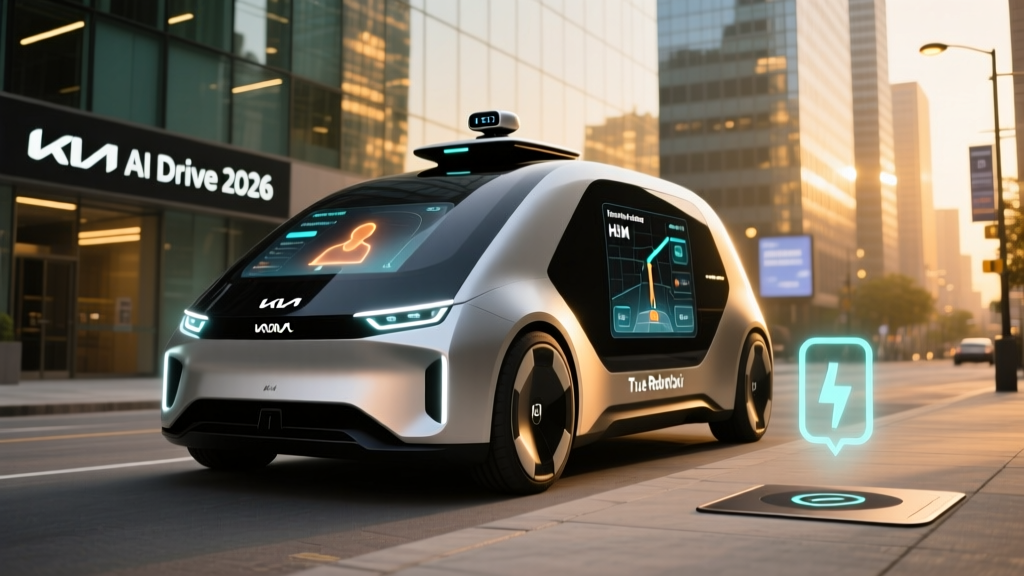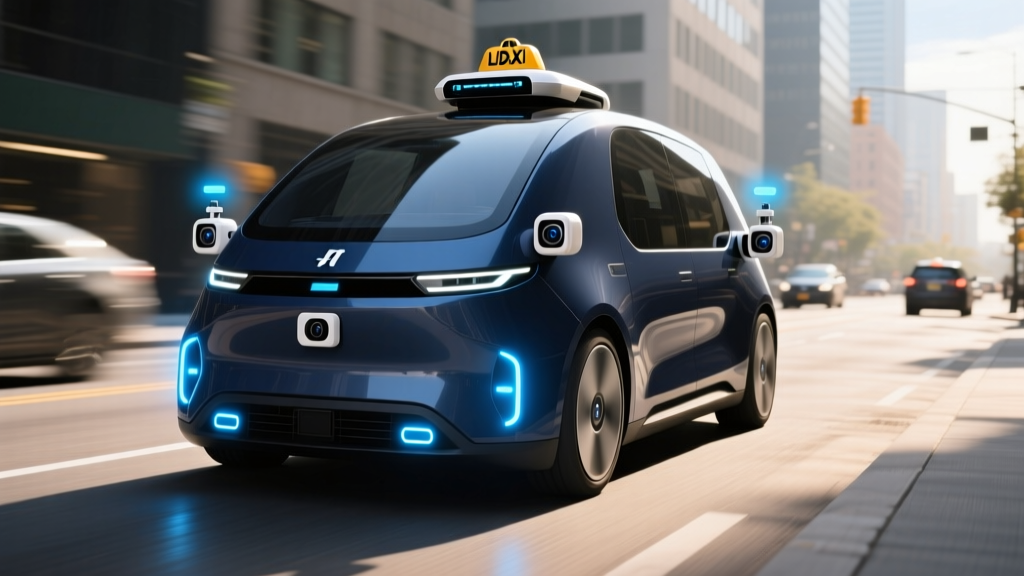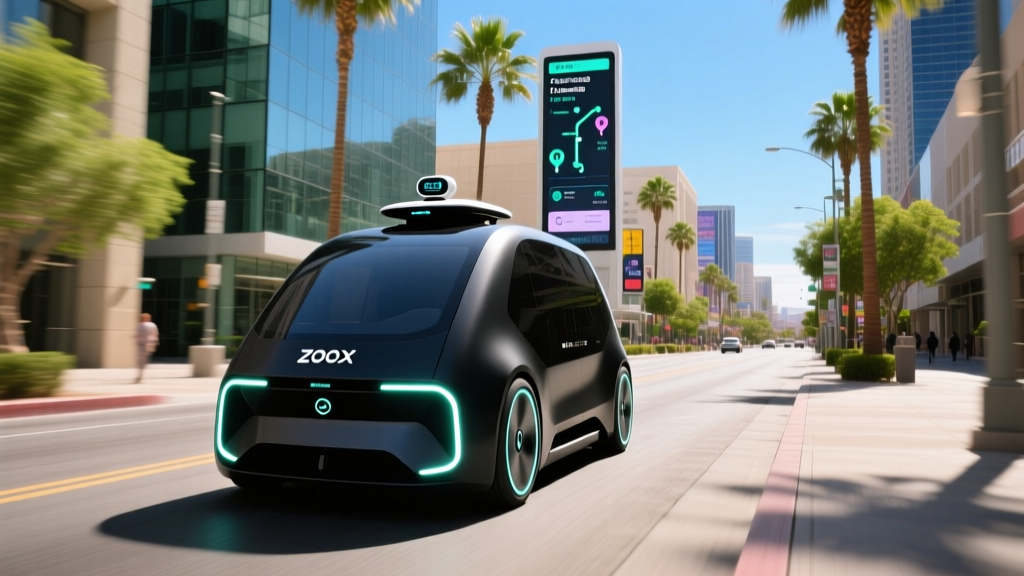
Las Vegas is one of the few U.S. cities where you can hail a vehicle with no steering wheel, no pedals, and no human behind the glass. Amazon-backed Zoox has been operating its purpose-built robotaxi on public roads in Nevada since late 2023, gradually expanding its geofenced service area across the Strip-adjacent corridor. If you are searching for Zoox Las Vegas routes before your next trip, this guide covers exactly where the vehicle operates, what the ride costs, how the SAE Level 4 system works, and what the safety record actually shows.
Where Can You Ride a Zoox Robotaxi in Las Vegas Right Now?
Zoox's Las Vegas operation centers on a tightly mapped geofence that covers the high-traffic tourism and residential corridor between the Strip and downtown. The service area has grown incrementally since the initial 2023 launch zone, but it remains bounded — this is not a citywide deployment.
| Parameter | Detail |
|---|---|
| Primary zone | Las Vegas Blvd corridor (Strip-adjacent) to Downtown / Fremont St area |
| Cross streets (approx.) | Roughly Sahara Ave south to Russell Rd; I-15 east to Maryland Pkwy |
| Airport service | Not yet available (Harry Reid Intl. outside geofence) |
| Suburban coverage | Limited — Summerlin, Henderson, and North Las Vegas excluded |
| Operating hours | Typically 10:00 AM – 10:00 PM, 7 days a week |
| Service status | Free rider program / invite-based; paid commercial service expected |
The geofence is enforced at the software level. If a destination falls outside the mapped zone, the Zoox app will not allow you to book the ride. This means popular destinations like Red Rock Canyon, Lake Mead, or the Speedway are unreachable. The Nevada Department of Motor Vehicles and the National Highway Traffic Safety Administration (NHTSA) both track autonomous vehicle operations, and Zoox's Nevada deployment permit specifies its operational design domain (ODD).
How to Book a Zoox Ride and What It Costs vs Uber or Lyft
Riding in a Zoox vehicle requires downloading the Zoox app (iOS/Android), creating an account, and requesting a pickup within the geofenced zone. As of early 2026, Zoox has been running a largely free rider experience program in Las Vegas — passengers are not charged per ride while the company collects operational data and refines its service model.
| Service | Estimated Fare | Surge Pricing? | Notes |
|---|---|---|---|
| Zoox (current) | $0.00 (free program) | No | Invite/waitlist; paid launch TBD |
| UberX | $10 – $18 | Yes (Strip events, weekends) | Varies by demand; airport surcharges apply |
| Lyft Standard | $10 – $17 | Yes | Similar variability |
| Waymo One (Phoenix/SF) | $8 – $20 | Rare | Comparable reference; not in Las Vegas |
When Zoox transitions to paid commercial service, industry analysts expect pricing in line with UberX or slightly below, potentially $7–$15 for short Strip-area trips. The absence of a human driver reduces per-mile operating cost over time, though Zoox must recoup heavy R&D and vehicle manufacturing expenses. Waymo's pricing in Phoenix and San Francisco provides the closest benchmark: comparable to rideshare base fares, with less surge volatility.
Is Zoox Truly Self-Driving? Understanding SAE Level 4
Yes — Zoox operates at SAE Level 4 (High Automation) within its defined operational design domain. This is a critical distinction that most consumers misunderstand.
| Level | Name | Driver Required? | Examples |
|---|---|---|---|
| Level 2 | Partial Automation | Yes — full attention | Tesla Autopilot, GM Super Cruise, Ford BlueCruise |
| Level 3 | Conditional Automation | Yes — can disengage briefly | Mercedes Drive Pilot (limited markets/conditions) |
| Level 4 | High Automation | No — within geofence/ODD | Zoox, Waymo One, Cruise (suspended) |
| Level 5 | Full Automation | No — anywhere, any condition | Does not exist commercially |
At Level 4, the Zoox vehicle handles all driving tasks — steering, acceleration, braking, lane changes, intersection navigation — without any human in the vehicle. There is no steering wheel, no brake pedal, and no driver's seat. A remote operations team monitors the fleet and can provide high-level guidance (e.g., rerouting around a construction zone), but they do not directly steer or brake the vehicle in real time. This is fundamentally different from Tesla's FSD (Supervised), which remains Level 2 and requires the driver to remain fully engaged at all times.
The Zoox Vehicle: Purpose-Built Tech Stack
Unlike Waymo, which retrofits Jaguar I-PACE SUVs with sensor arrays, Zoox designed its vehicle from the ground up as a robotaxi. The result is a symmetrical, carriage-style pod with bidirectional driving capability — it can move forward or backward with equal ease because both "ends" are identical.
Sensor Suite
- LiDAR: Multiple solid-state and spinning LiDAR units provide 360-degree 3D point-cloud mapping out to ~150+ meters. LiDAR is the primary depth-sensing modality, unaffected by lighting conditions.
- Cameras: A surround camera array (estimated 12+ cameras) handles object classification, traffic-light state detection, signage reading, and lane-marking recognition.
- Radar: Millimeter-wave radar supplements LiDAR for velocity detection of moving objects, particularly in rain or fog where LiDAR return quality degrades.
- Ultrasonic sensors: Short-range proximity detection for low-speed maneuvering and curb alignment.
Compute and Software
Onboard AI inference hardware processes sensor fusion in real time. Zoox develops its own prediction and planning stack, trained on millions of miles of real-world and simulated driving data. The vehicle's bidirectional design means the perception stack must operate identically in both travel directions — a unique engineering challenge no retrofitted vehicle faces.
Vehicle Specs
- Seating: 4 passengers (facing each other, no forward-facing "driver" seat)
- Top speed: ~75 mph (geofenced to lower urban speeds in practice)
- Powertrain: Fully electric battery pack (exact kWh not publicly disclosed; estimated ~75–90 kWh usable)
- Dimensions: Compact footprint — shorter than a Toyota Prius — designed for dense urban maneuvering
The multi-sensor approach (LiDAR + camera + radar) contrasts with Tesla's camera-only ("Tesla Vision") philosophy. Zoox, like Waymo, treats LiDAR as essential redundancy for depth perception in edge cases — pedestrians partially occluded, construction barrels at night, or sudden roadway debris.
Safety Record: What the Data Actually Shows
Autonomous vehicle safety is the most scrutinized — and most politicized — topic in the industry. Here is what the available data tells us about Zoox specifically and Level 4 robotaxis broadly.
Zoox and Robotaxi Safety Data Points
- Zoox autonomous miles driven: Zoox has logged hundreds of thousands of autonomous miles across Las Vegas and the San Francisco Bay Area (Foster City HQ testing zone). Exact cumulative figures are reported to NHTSA under Standing General Order requirements but are not always broken out publicly in real time.
- Disengagement rate: Zoox's California DMV disengagement reports (required for testing permits) have shown improving trends year-over-year. Early testing phases saw disengagements every few hundred miles; more recent operations report significantly lower intervention rates as the ODD and software mature.
- Reported collisions: As of early 2026, Zoox has reported a small number of minor incidents to NHTSA — primarily low-speed contacts during the testing phase, none involving serious injury. The NHTSA Standing General Order requires all ADS-equipped vehicles to report crashes within 24 hours.
- Industry context: Waymo, the largest Level 4 operator, has published data (via the IIHS and internal studies) showing its robotaxis are involved in fewer police-reported crashes per million miles than human drivers in comparable urban environments. Zoox has not yet published a comparable peer-reviewed study, given its smaller operational scale.
The honest assessment: Zoox has operated at a smaller scale than Waymo, so the statistical sample is thinner. No robotaxi fleet has yet accumulated the billions of miles needed for actuarial-grade safety comparisons. What the data does suggest is that Level 4 systems in geofenced, well-mapped urban zones perform at least comparably to attentive human drivers on the specific routes they are approved for — with the caveat that they struggle more in edge cases (see limitations below).
Current Limitations: Where Zoox Cannot (Yet) Operate
Level 4 autonomy is powerful but bounded. The "4" means full automation within the operational design domain — step outside that domain, and the system either refuses to operate or pulls over safely.
Known Operational Constraints
- Geofence boundaries: The vehicle will not travel outside its pre-mapped Las Vegas zone. Requesting a destination in Summerlin, Henderson, or the airport will be declined by the app.
- Weather restrictions: Heavy rain, flash-flood conditions (a real Las Vegas risk during monsoon season), or dense dust storms (haboobs) can trigger service suspension. LiDAR and camera performance degrade in heavy particulate conditions.
- Construction zones: Major roadwork that alters lane geometry or removes lane markings can require remote operations guidance or route avoidance. The vehicle cannot improvise through unmapped detours the way a human driver can.
- Highway driving: Zoox's Las Vegas geofence focuses on surface streets. Interstate/highway operation (I-15, US-95) is generally not part of the current ODD in Las Vegas, though the vehicle is technically capable of higher speeds.
- Night operations: While LiDAR works in darkness, Zoox has historically limited late-night operations as it validates sensor performance in low-light, high-glare environments (neon signage, headlights on wet pavement).
- Unusual cargo and accessibility: The four-seat, facing-inward cabin does not accommodate wheelchairs, large luggage, or child car seats. This is a significant practical limitation compared to standard rideshare vehicles.
- No multi-stop trips: Current service is point-A-to-point-B only. You cannot ask the vehicle to wait while you run an errand.
Regulatory Landscape: Who Approves Zoox Operations?
Autonomous vehicle regulation in the United States is a patchwork of federal and state authority. For Zoox in Las Vegas, multiple agencies are involved:
- Nevada DMV: Issues the autonomous vehicle testing and deployment permits. Nevada was one of the first states to pass AV legislation (2011) and maintains a permissive regulatory environment.
- NHTSA (federal): Oversees vehicle safety standards. Zoox received a notable exemption from NHTSA in 2024 for its purpose-built vehicle, which lacks traditional controls (steering wheel, mirrors, pedals) that Federal Motor Vehicle Safety Standards (FMVSS) normally require. This exemption was critical — without it, the vehicle could not legally operate on public roads.
- Nevada Office of the Governor / Go Nevada: Coordinates the state's autonomous vehicle initiative and infrastructure partnerships.
- Local jurisdictions: Clark County and the City of Las Vegas manage road infrastructure, construction permitting, and traffic-signal integration that affects AV operations.
The IRS and federal tax credit rules (§30D) do not apply to robotaxi passengers — these are relevant only if you are purchasing an EV for personal use. Zoox riders are consumers of a transportation service, not vehicle buyers.
Zoox vs Waymo vs Cruise: How the Major Robotaxis Compare
| Attribute | Zoox | Waymo One | Cruise (GM) |
|---|---|---|---|
| Vehicle | Purpose-built (no steering wheel) | Jaguar I-PACE (retrofitted) | Chevrolet Bolt / Origin (paused) |
| Primary cities | Las Vegas, SF Bay Area (limited) | Phoenix, San Francisco, Los Angeles, Austin | Suspended (late 2023 incident); limited relaunch |
| SAE Level | Level 4 | Level 4 | Level 4 (when operational) |
| LiDAR | Yes (multi-unit) | Yes (Waymo 5th-gen) | Yes |
| Paid service? | Free program (2026) | Yes — paid fares | Paused / limited |
| Airport access | No (Las Vegas) | Yes (PHX Sky Harbor) | N/A |
Waymo remains the clear scale leader in U.S. robotaxi service, with paid commercial operations across multiple metros and airport access in Phoenix. Zoox differentiates through its purpose-built vehicle design — the carriage-style cabin offers a uniquely spacious, social riding experience — but operates at a fraction of Waymo's geographic coverage.
Practical Tips for Riding Zoox in Las Vegas
- Download the app early: Zoox uses a waitlist/invite system. Request access before your trip — approval is not always instant.
- Check the geofence: Open the app and look at the service boundary map before planning your itinerary. Most major Strip casinos fall within range, but verify your specific hotel.
- Allow extra time: Robotaxis follow speed limits precisely and may take slightly longer routes to avoid complex intersections. Budget 5–10 extra minutes versus a human-driven rideshare.
- No tipping required: There is no driver. The app experience handles everything.
- Bring a phone charger: The cabin has USB ports, but availability varies. The ride experience includes ambient lighting and a screen showing the vehicle's perception of its surroundings — one of the most compelling aspects of the ride.
Frequently Asked Questions
Where can I use the Zoox robotaxi service right now?
Zoox operates a geofenced service area in Las Vegas covering the Las Vegas Blvd corridor (roughly Sahara Ave to Russell Rd, between I-15 and Maryland Pkwy) and a limited zone in the San Francisco Bay Area (Foster City). It is not available at Harry Reid International Airport or in suburban areas like Summerlin or Henderson.
How much does a Zoox ride cost compared to Uber or Lyft?
As of early 2026, Zoox rides in Las Vegas are free through its rider experience program. When paid service launches, expect fares comparable to UberX — roughly $7–$15 for typical 2–4 mile trips in the Strip corridor. UberX and Lyft currently charge $10–$18 for similar trips, with surge pricing during peak events.
How safe are robotaxis like Zoox — is there real data?
Zoox reports incidents to NHTSA under the Standing General Order and has logged hundreds of thousands of autonomous miles with no reported serious-injury collisions. Waymo, the larger-scale operator, has published data showing lower police-reported crash rates per million miles than human benchmarks in comparable urban zones. The statistical sample for Zoox specifically is still growing due to its smaller fleet size.
What are the current limitations of Zoox in Las Vegas?
Key limitations include a restricted geofence (no airport, no suburbs), suspension during heavy rain or dust storms, inability to navigate unmapped construction detours without remote guidance, no wheelchair accessibility, no multi-stop trips, and limited late-night availability. The vehicle also does not operate on interstate highways within its current Las Vegas ODD.
Is Zoox truly self-driving, or is it like Tesla Autopilot?
Zoox is SAE Level 4 — fully autonomous within its geofenced zone, with no human driver in the vehicle and no steering wheel or pedals. This is fundamentally different from Tesla Autopilot or FSD (Supervised), which are SAE Level 2 driver-assist systems that require a licensed, attentive human driver at all times. Zoox handles all driving tasks independently; Level 2 systems only assist the human driver.
Can I hail a Zoox on the street like a taxi?
No. Zoox is app-based only. You must request a ride through the Zoox app, and the vehicle will navigate to your specified pickup point within the geofence. Street hailing is not supported.
Will Zoox expand to more Las Vegas areas or other cities?
Zoox has indicated plans to expand its geofence and launch in additional cities, but specific timelines and locations for 2026–2027 have not been formally announced. Any expansion requires regulatory approval in each jurisdiction. Watch for updates via the NHTSA AV resources page and Zoox's official channels.