Quick Verdict: Where Motional Stands in the Robotaxi Race
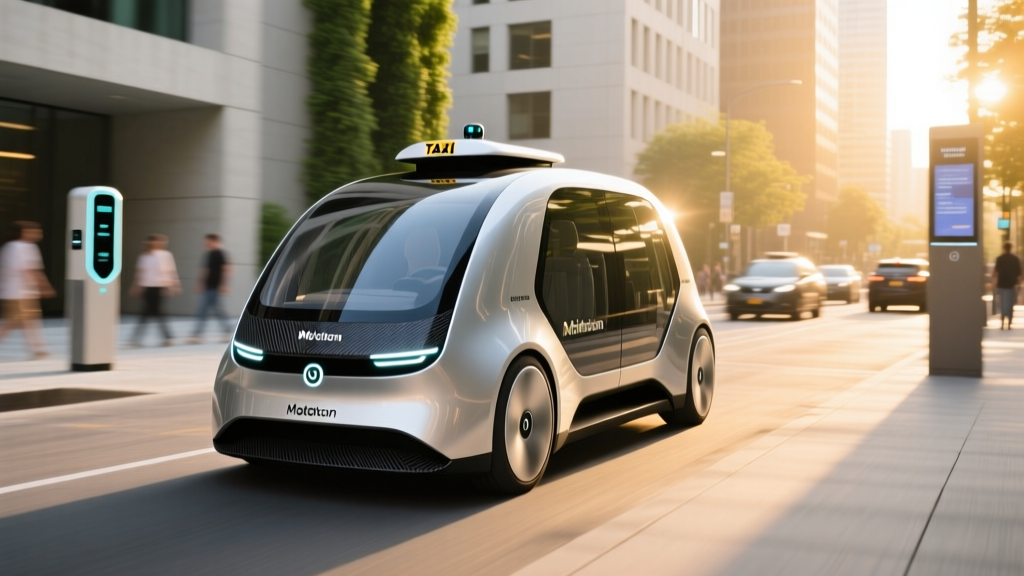
Motional — the joint venture between Hyundai Motor Group and Aptiv — occupies a distinct position in the autonomous vehicle landscape. Unlike Waymo's purpose-built driverless fleet or Tesla's camera-only FSD Supervised (which remains SAE Level 2), Motional deploys SAE Level 4 robotaxis based on production Hyundai vehicles, primarily the Ioniq 5, equipped with a dense multi-sensor suite. As of early 2026, Motional operates commercial ride-hail partnerships in Las Vegas via Lyft and has been expanding its footprint after a strategic restructuring in 2024 that saw Aptiv reduce its equity stake while remaining a technology partner.
This evaluation covers Motional's technology stack, real-world service availability, safety performance, pricing, regulatory status, and the practical limitations you need to understand before summoning one.
Motional's robotaxi service operates at SAE Level 4 — meaning the vehicle handles all driving tasks within its defined Operational Design Domain (ODD) without requiring a human driver to take over. This is fundamentally different from Level 2 systems like Tesla Autopilot, GM Super Cruise, or Ford BlueCruise, which require continuous driver supervision. In a Motional robotaxi, there is no expectation that you will steer, brake, or monitor the road. However, Level 4 is geofenced: the vehicle will not operate outside its mapped service area or in conditions that exceed its ODD (e.g., heavy snow, unmapped construction zones).
Motional's Technology Stack: Sensors, Compute, and the Ioniq 5 Platform
Motional's approach diverges sharply from Tesla's vision-only philosophy. The company uses a sensor-fusion stack combining lidar, radar, and cameras — a redundancy-first design philosophy shared with Waymo and Cruise.
Ioniq 5 Robotaxi Sensor Configuration
| Sensor Type | Count | Function |
|---|---|---|
| Lidar (roof-mounted + corners) | ~5 units | 360° 3D point cloud, object detection to ~200m |
| Cameras | ~10+ units | Lane detection, traffic light/signal recognition, semantic segmentation |
| Radar | ~5 units | Velocity measurement, adverse-weather object tracking |
| Ultrasonic | Multiple | Near-field proximity for low-speed maneuvers |
Compute platform: Motional uses a custom high-performance compute stack capable of processing sensor data in real time. The exact chip configuration has not been publicly disclosed in detail, but the system handles multi-sensor fusion, HD map localization, prediction, and planning simultaneously.
HD Mapping: Unlike Tesla's map-light approach, Motional relies on centimeter-precision HD maps of its service areas. This is a key constraint — the vehicle must operate within pre-mapped zones.
The choice of the Hyundai Ioniq 5 as the robotaxi platform is strategically significant. The Ioniq 5's E-GMP architecture provides an 800V electrical system, a ~77.4 kWh usable battery (NMC chemistry), and up to ~303 miles of EPA range in its standard AWD configuration — enough for a full day of robotaxi shifts with strategic charging breaks. The production-based approach keeps per-unit hardware costs lower than a custom-built robotaxi like Waymo's Jaguar I-PACE or the purpose-built Zeekr RT.
Where Can I Use Motional's Robotaxi Service Right Now?
| City | Status (2026) | Partner Platform | Geofence Area |
|---|---|---|---|
| Las Vegas, NV | Commercial (driverless) | Lyft | Las Vegas Strip corridor, downtown, Convention Center area |
| Boston, MA | Testing / limited operations | Internal R&D, prior Lyft pilot | Seaport District and surrounding mapped areas |
| Pittsburgh, PA | Testing | Internal R&D | Select mapped corridors |
| Santa Monica / Los Angeles, CA | Testing | Internal R&D | Select urban corridors |
Las Vegas is Motional's primary commercial beachhead. The Lyft integration means you can request a Motional Ioniq 5 robotaxi directly within the Lyft app — if your origin and destination fall within the geofenced zone. Boston, where Motional is headquartered, serves as an R&D hub, and the city's challenging weather and dense urban layout make it a valuable testing environment. Expansion to additional cities has been announced in principle but remains subject to regulatory approval and HD map completion.
Key point: You cannot summon a Motional robotaxi from outside the geofence, and the vehicle will not complete a trip that exits the mapped zone. If your destination falls outside the service area, Lyft will route you to a conventional human-driven vehicle instead.
How to Ride and What It Costs vs. Uber/Lyft
Using Motional in Las Vegas is straightforward:
- Open the Lyft app and enter your destination within the Motional service zone.
- If a Motional Ioniq 5 robotaxi is available, Lyft will offer it as a ride option (typically labeled as an autonomous ride).
- Confirm the ride. The vehicle arrives without a driver behind the wheel.
- Authenticate via the Lyft app, buckle up, and confirm departure on the rear-seat screen.
- The vehicle handles the entire trip. A remote-assistance operator is available via an in-vehicle button if needed.
| Cost Factor | Motional (via Lyft) | Standard Lyft / Uber |
|---|---|---|
| Base fare (estimated) | Comparable to Lyft standard | Varies by demand |
| Per-mile rate | ~$1.00–$1.50/mi | ~$1.00–$2.00/mi |
| Per-minute rate | ~$0.20–$0.35/min | ~$0.20–$0.40/min |
| Surge pricing | Currently limited / promotional | Common during peak hours |
| Tips | Not expected (no driver) | Customary (15–20%) |
| Typical Strip-to-airport trip (~4 mi) | ~$8–$15 | ~$12–$22 |
As of 2026, robotaxi pricing remains partially subsidized. Companies like Motional, Waymo, and Zoox are pricing rides competitively — often below what a fully burdened human-driven rideshare would cost — to build ridership and gather real-world data. The elimination of driver compensation (which typically represents 60–80% of a rideshare fare) is the long-term economic thesis, but current fleet sizes, remote-assistance staffing, and sensor maintenance costs mean the per-ride economics are not yet profitable at scale.
Safety Record: What the Data Actually Shows
Unlike Waymo, which has published detailed safety framework papers and shared disengagement data with the California DMV, Motional's granular safety metrics (miles per intervention, collision rates per million miles) are not as publicly available. What is known from regulatory filings and public reports:
- Motional has accumulated millions of autonomous miles across testing and commercial operations.
- The Las Vegas Lyft service has operated without a reported at-fault collision resulting in serious injury as of early 2026.
- Minor incidents (e.g., low-speed contact with stationary objects, hard-braking events) have been reported in regulatory filings but are infrequent relative to miles operated.
- Motional's Ioniq 5 robotaxi includes redundant braking and steering systems, meaning a single-point failure does not result in loss of vehicle control.
For comparison, the NHTSA Standing General Order requires all ADS-equipped vehicles to report crashes. You can review reported incidents at nhtsa.gov.
It is important to contextualize robotaxi safety data. The geofenced, mapped, and speed-limited environments where Motional operates are inherently lower-risk than unrestricted driving. The vehicles obey speed limits, never drive impaired, and have 360° sensor coverage without blind spots. However, edge cases — construction zones with shifted lanes, emergency vehicles with unconventional approach paths, pedestrians behaving unpredictably — remain areas where remote assistance may be triggered.
Regulatory Landscape: Who Approves Motional's Operations?
Autonomous vehicle regulation in the United States is a patchwork of state and federal authority:
- Federal (NHTSA): Sets vehicle safety standards (FMVSS). NHTSA has granted limited exemptions to robotaxi companies for vehicles without steering wheels or pedals (relevant to Zoox, not yet to Motional's Ioniq 5 which retains manual controls). NHTSA also investigates crashes involving ADS-equipped vehicles.
- Nevada: The Nevada DMV regulates autonomous vehicle testing and deployment. Motional holds a permit for driverless testing and commercial operations in Las Vegas. Nevada was an early adopter of AV-friendly legislation.
- Massachusetts: The state requires a combination of state and municipal approval for AV testing. Boston has permitted Motional's testing operations under specific conditions, including safety driver requirements during certain phases.
- California: The California DMV issues testing permits and publishes annual disengagement reports. The CPUC regulates commercial passenger service. Motional has held California testing permits, though its primary commercial focus has shifted to Nevada.
The regulatory environment continues to evolve. As of 2026, no federal legislation creates a unified national framework for robotaxi deployment — each state sets its own rules for testing, commercial operation, insurance requirements, and incident reporting. This patchwork is one reason Motional (and competitors) have concentrated operations in AV-friendly jurisdictions.
Current Limitations: What Motional Robotaxis Cannot Do
- Geofence boundaries: The vehicle will not operate outside its pre-mapped service area. Trips that cross the geofence boundary are not possible — the Lyft app will default to a human-driven ride.
- Weather restrictions: Heavy rain, snow, fog, or sandstorms can degrade lidar and camera performance. Motional's ODD excludes severe weather, meaning the service may be suspended during monsoon conditions (relevant in Las Vegas during summer) or nor'easters (Boston).
- Construction zones: While the system can handle some temporary lane shifts, major unmapped construction may trigger a remote-assistance intervention or route avoidance.
- No highway driving (current): Motional's Las Vegas operations focus on surface streets and the Strip corridor. High-speed freeway driving adds complexity that is not yet part of the commercial ODD.
- Limited fleet size: Availability is not guaranteed. During peak demand (convention weeks, New Year's Eve), you may face extended wait times or be routed to a standard Lyft.
- No car seats or accessibility accommodations: The Ioniq 5 robotaxi is a standard passenger vehicle. Wheelchair-accessible configurations are not currently available.
- Pickup/dropoff precision: The vehicle uses designated or safe pull-over points, which may not be exactly at your pin — expect a short walk in dense areas.
How Motional Compares to Waymo, Zoox, and Tesla FSD
| Attribute | Motional | Waymo | Zoox | Tesla FSD Supervised |
|---|---|---|---|---|
| SAE Level | Level 4 | Level 4 | Level 4 | Level 2 |
| Driver required? | No (in ODD) | No (in ODD) | No (in ODD) | Yes — always |
| Primary sensor | Lidar + camera + radar | Lidar + camera + radar | Lidar + camera + radar | Camera only |
| Vehicle platform | Hyundai Ioniq 5 | Jaguar I-PACE / Zeekr RT | Custom Zoox vehicle | Any Tesla (Model 3/Y/S/X) |
| Commercial availability | Las Vegas (Lyft) | SF, LA, Phoenix, Austin | Las Vegas, SF (limited) | Any road (owner-operated) |
| HD map dependency | Yes | Yes | Yes | No |
The critical distinction: Tesla FSD Supervised is not a robotaxi. It is a Level 2 driver-assistance system that requires the human driver to remain engaged and responsible for the vehicle at all times. Motional, Waymo, and Zoox are Level 4 services where no human driver is present or expected to intervene. This is not a semantic difference — it is a fundamental engineering and liability distinction recognized by SAE International and NHTSA.
Frequently Asked Questions
Is Motional's robotaxi truly self-driving or is there a safety driver?
In Las Vegas commercial operations, Motional's Ioniq 5 robotaxis operate without a human safety driver behind the wheel. The vehicle handles all driving tasks within its geofenced service area. A remote-assistance operator monitors the fleet and can intervene via teleoperations if the vehicle encounters an ambiguous situation. This is SAE Level 4 — fundamentally different from Level 2 systems like Tesla FSD Supervised or GM Super Cruise, which require an attentive human driver.
How much does a Motional robotaxi ride cost compared to Uber or Lyft?
Pricing is generally comparable to or slightly below standard Lyft rates for the same route. A typical 4-mile trip on the Las Vegas Strip costs approximately $8–$15, versus $12–$22 for a conventional rideshare. You also do not tip, since there is no driver. However, promotional pricing may change as Motional scales operations.
How safe are Motional robotaxis in real-world operation?
Motional has accumulated millions of autonomous miles in testing and commercial service. As of early 2026, no at-fault serious-injury collisions have been publicly reported in its Las Vegas commercial operations. The vehicle uses redundant sensors (lidar, camera, radar) and redundant actuation (braking, steering). For context, NHTSA requires all ADS operators to report crashes under the Standing General Order. Detailed per-million-mile intervention rates are not as publicly available as Waymo's published data.
What happens if the Motional robotaxi encounters a situation it can't handle?
The vehicle will first attempt to resolve the situation autonomously (e.g., rerouting, waiting for a pedestrian to clear). If it cannot, it contacts a remote-assistance operator who can provide guidance or authorize a maneuver. If necessary, the vehicle will execute a minimal-risk maneuver — typically pulling over safely and stopping. Passengers can contact support via the in-vehicle screen or Lyft app at any time.
Can I use Motional's robotaxi in any city?
No. As of 2026, commercial driverless service is available only in Las Vegas through Lyft. Testing operations exist in Boston, Pittsburgh, and the Los Angeles area, but these are not open to the general public for ride-hailing. Expansion to additional cities depends on regulatory approval, HD map completion, and fleet scaling.
What vehicle does Motional use?
Motional uses a specially equipped Hyundai Ioniq 5. The production Ioniq 5 features an 800V E-GMP platform, approximately 77.4 kWh usable battery capacity (NMC chemistry), up to 303 miles of EPA range (AWD Long Range), and 250 kW peak DC fast charging capability (10–80% in approximately 18 minutes under optimal conditions). Motional adds its sensor suite (lidar, cameras, radar) and autonomous compute hardware on top of the base vehicle.
Will Motional robotaxis eventually operate on highways?
Highway-capable autonomous driving is a stated goal for the industry, but Motional's current commercial ODD focuses on urban surface streets. Highway driving introduces higher speeds, faster decision-making requirements, and more complex merge/weave scenarios. No specific timeline for highway-capable commercial service has been announced.
How does Motional's approach differ from Tesla's?
Fundamentally. Motional uses a lidar-camera-radar sensor fusion stack with HD map dependency and operates at SAE Level 4 within a geofence — no human driver is present or required. Tesla's FSD Supervised uses cameras only, does not rely on HD maps, and operates at SAE Level 2 — the human driver must remain fully engaged and is legally responsible for the vehicle. These are different product categories: Motional is a ride-hail service; Tesla FSD is a driver-assistance feature on a consumer-owned vehicle.