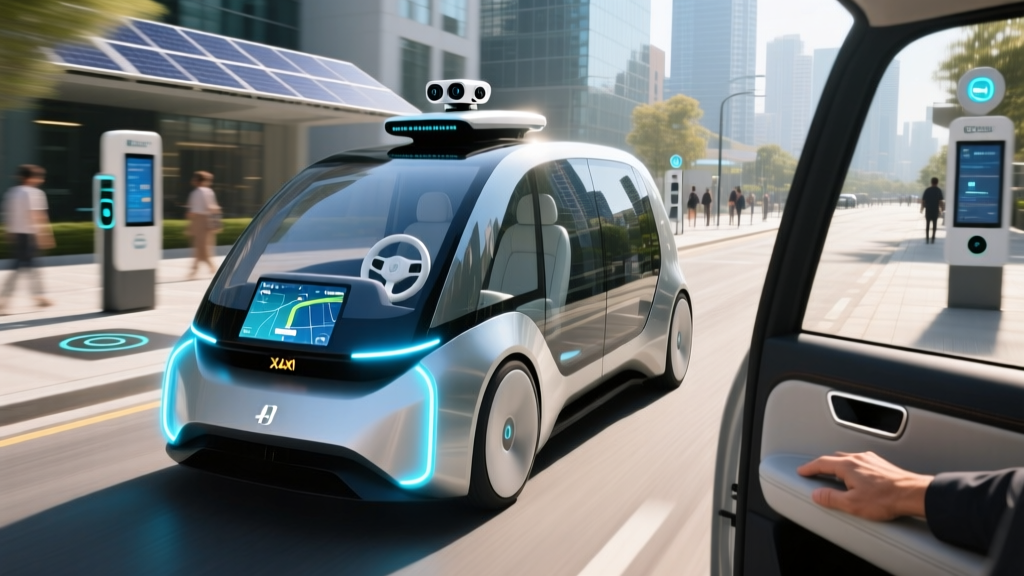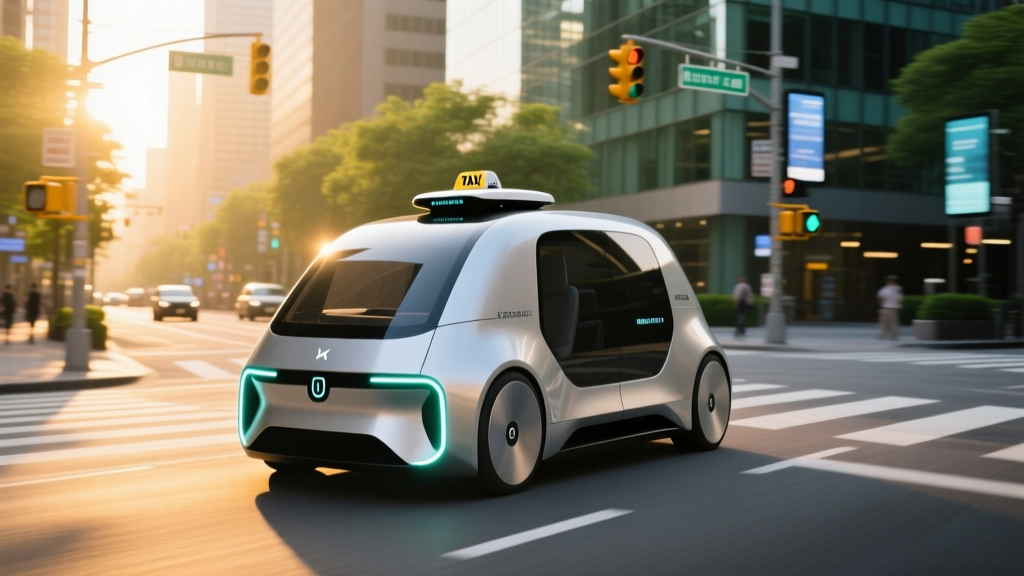
If you have seen a steering wheel turn itself through downtown Phoenix or San Francisco with nobody in the driver's seat, you have witnessed a Level 4 self-driving car in commercial service. These vehicles are not concept demos or closed-track prototypes — they are fare-charging robotaxis completing tens of thousands of paid trips every week across a growing but still tightly bounded map of U.S. cities.
Yet confusion persists. Consumers regularly conflate Tesla's Full Self-Driving (Supervised) — a Level 2 driver-assist system requiring constant human attention — with the driverless Level 4 services operated by Waymo and others. The distinction matters enormously for safety expectations, regulatory oversight, and what you can actually book a ride in today.
This guide breaks down exactly where Level 4 self-driving cars are available in 2026, the technology enabling them, verified safety performance, real pricing compared to rideshare, and the hard limitations that still constrain where and when these vehicles can operate.
What Level 4 Actually Means (and What It Doesn't)
The Society of Automotive Engineers (SAE) defines six levels of driving automation, from Level 0 (no automation) through Level 5 (full automation everywhere, in all conditions). Understanding these levels is essential before evaluating any robotaxi claim.
| Level | Name | Who Drives | Example |
|---|---|---|---|
| 0 | No Automation | Human does everything | Traditional gas car |
| 1 | Driver Assistance | Human, with single-axis help | Adaptive cruise OR lane-keep |
| 2 | Partial Automation | Human (hands-on, eyes-on) | Tesla Autopilot, GM Super Cruise, Ford BlueCruise |
| 3 | Conditional Automation | System in narrow conditions; human must take over on request | Mercedes Drive Pilot (limited markets, ≤40 mph) |
| 4 | High Automation | System fully — within a defined operational design domain (ODD) | Waymo One, Zoox (geofenced city areas) |
| 5 | Full Automation | System everywhere, all conditions | Does not exist commercially |
Level 4 self-driving cars handle all driving tasks — steering, braking, navigating intersections, responding to pedestrians — without any human driver present, but only within a specific operational design domain (ODD). That ODD is defined by geography (geofenced zones), speed limits, weather conditions, road types, and time of day. Outside that domain, the vehicle will not attempt to drive itself.
This is fundamentally different from Level 2 systems like Tesla FSD (Supervised) or GM Super Cruise, which can feel autonomous on highways but legally and technically require the human driver to remain engaged and responsible at all times. A Level 2 system with a distracted driver is a liability; a Level 4 robotaxi with an empty driver's seat is the product.
Where Can You Actually Ride a Level 4 Robotaxi Right Now?
As of early 2026, commercial Level 4 robotaxi services in the United States are operated primarily by Waymo (an Alphabet subsidiary) with limited competitors in specific markets. Availability is geofenced — you can only request rides within approved zones, which cover significant portions of metro areas but not entire cities or suburbs.
| Operator | City / Metro | Service Status | Operating Hours |
|---|---|---|---|
| Waymo One | Phoenix, AZ (metro-wide including Tempe, Scottsdale, Chandler, Mesa) | Fully commercial, open to public | 24/7 |
| Waymo One | San Francisco, CA (most of SF proper) | Fully commercial, open to public | 24/7 |
| Waymo One | Los Angeles, CA (downtown, Santa Monica, Hollywood, surrounding areas) | Fully commercial, open to public | 24/7 |
| Waymo One | Austin, TX (central and expanding zones) | Commercial service launched | Extended hours |
| Zoox | Las Vegas, NV (Las Vegas Strip corridor, limited zone) | Limited commercial pilot | Limited hours |
| Zoox | Foster City / Bay Area, CA | Testing with limited riders | Limited hours |
Waymo dominates the U.S. robotaxi market, completing over 10 million paid rider-only trips by late 2025 and continuing to scale weekly trip volumes well into six figures across its four primary markets. Phoenix remains the most mature deployment, with service covering over 200 square miles. San Francisco and Los Angeles have expanded rapidly, though both cities have seen regulatory friction with local authorities over traffic incidents and emergency response access.
Cruise, GM's robotaxi division, suspended nationwide operations in late 2023 following a serious pedestrian incident in San Francisco and has been slowly pursuing a phased return to testing under heightened regulatory scrutiny. As of early 2026, Cruise has not resumed full commercial driverless service at its previous scale.
How to Use a Robotaxi and What It Costs vs. Uber or Lyft
Booking a Waymo One ride is functionally identical to using Uber or Lyft: download the Waymo One app, enter your pickup and drop-off locations, confirm the fare, and wait for the vehicle. The vehicle arrives, you verify the ride in the app to unlock the doors, buckle up, and the trip begins with no one in the front seat.
Inside, riders get a screen showing the vehicle's perception of its surroundings — detected cars, pedestrians, cyclists, and traffic signals — along with route information and climate/entertainment controls. A support button connects you to a remote agent if something goes wrong.
| Service | Base Fare Range | Surge Pricing | Tipping |
|---|---|---|---|
| Waymo One | $10 – $18 | No traditional surge; wait times increase during peak demand | Not applicable (no driver) |
| UberX | $12 – $22 | Yes, 1.2x–3x+ during peak | Expected ($2–$5 typical) |
| Lyft Standard | $11 – $20 | Yes, "Prime Time" pricing | Expected ($2–$5 typical) |
In practice, Waymo pricing is generally competitive with UberX and Lyft on comparable routes, and the absence of surge multipliers and tipping can make robotaxi rides cheaper during high-demand periods like weekend evenings or post-event rushes. However, Waymo's geofenced service area means you cannot use it for airport runs or suburban trips that fall outside the approved zone — a meaningful limitation compared to rideshare's door-to-door ubiquity.
How Safe Are Robotaxis? The Actual Data
Safety is the single most scrutinized aspect of Level 4 self-driving cars, and the data tells a more nuanced story than either the hype or the fear suggests.
Waymo Safety Performance (through 2025 data):
- Total autonomous miles driven: Over 50 million driverless miles across all markets
- Paid trips completed: Over 10 million rider-only trips
- Fatalities: Zero confirmed fatalities in driverless (no human in the driver's seat) operation as of early 2026
- Injury-causing crashes: Significantly lower rate per million miles compared to human driver benchmarks in the same geographies, according to Waymo's published insurance-claim data and third-party analyses
- Contact rate: Waymo's reported contact rate (any physical contact with another object) is approximately 85% lower than human drivers in comparable urban environments, per their safety methodology published with NHTSA data cross-references
These numbers are encouraging but come with important context. Robotaxis operate in geofenced, mapped, predominantly urban environments at moderate speeds — conditions where the technology excels. They do not yet have meaningful data on rural highways, unmapped roads, or severe weather operation, so comparing their safety record to all human driving (including long-distance highway travel) is not apples-to-apples.
Notable incidents have occurred. In San Francisco, Waymo vehicles have been documented making contact with towed trailers, parked cars, and in at least one case, a pedestrian who stepped into the vehicle's path from behind a large truck. The National Highway Traffic Safety Administration (NHTSA) requires all automated driving system operators to report crashes, and Waymo's standing orders and incident reports are publicly filed. No pattern of systemic negligence has emerged, but each incident is investigated, and regulators have the authority to restrict or suspend operations.
California's DMV requires operators to file disengagement reports — documenting every time a human safety operator (in test vehicles) or remote assistance had to intervene. Waymo's disengagement rate has steadily declined as their system has matured, with mean miles between disengagements now measured in tens of thousands of miles rather than hundreds.
Under the Hood: The Technology Stack Powering Level 4
Level 4 robotaxis rely on a fundamentally different technology approach than the camera-centric Level 2 systems found in consumer vehicles like Teslas.
Sensor Suite
Waymo's 6th-generation "Driver" system, deployed on the Jaguar I-PACE and expanding to other vehicle platforms, uses a redundant multi-sensor approach:
- LiDAR: Multiple high-resolution lidar units creating a real-time 3D point cloud of the environment, detecting objects at 200+ meters regardless of lighting conditions
- Cameras: High-dynamic-range cameras for traffic signal recognition, lane marking detection, and reading text (speed limit signs, construction warnings)
- Radar: Millimeter-wave radar for velocity detection of moving objects and operation in rain or fog where lidar and cameras degrade
- External audio sensors: Microphones to detect emergency vehicle sirens from any direction
HD Mapping and Geofencing
Before a Waymo vehicle operates in any area, that area is mapped at centimeter-level precision using specialized mapping vehicles. The HD map includes lane geometry, curb positions, traffic signal locations, speed limits, and known construction zones. The vehicle continuously localizes itself against this map in real time.
Compute and Redundancy
Onboard compute processes sensor fusion, prediction models (anticipating what pedestrians and other vehicles will do next), and path planning — all with redundant systems so that if one compute module fails, a backup can safely bring the vehicle to a stop. The vehicles also maintain constant cellular connectivity to a remote operations center that can provide guidance in unusual scenarios (though remote operators do not "joystick" the car — they confirm high-level decisions like whether to proceed past an unusual obstacle).
This multi-sensor, HD-map-dependent approach is why Level 4 services cannot simply expand to any city overnight. Each new market requires extensive mapping, local regulation negotiation, and system validation in that specific road environment.
The Regulatory Landscape: Who Approves Robotaxi Operations?
Robotaxi deployment in the United States involves overlapping layers of regulation, and operators must secure approvals at each level before carrying paying passengers.
Federal (NHTSA): The National Highway Traffic Safety Administration sets vehicle safety standards (FMVSS) and investigates crashes. NHTSA does not currently "approve" autonomous driving systems the way the FAA approves aircraft, but it has standing general orders requiring crash reporting from all ADS operators and can issue recalls or investigate safety defects. NHTSA has investigated multiple Waymo and Cruise incidents.
State Level: This is where most operational approval happens. States like Arizona, California, Texas, and Nevada have created regulatory frameworks for testing and commercial deployment of driverless vehicles. California's approach is the most structured: the DMV issues testing permits, while the California Public Utilities Commission (CPUC) issues permits for commercial passenger service. Arizona has taken a more permissive approach, with fewer pre-approval requirements, which is why Phoenix became Waymo's first commercial market.
Local/Municipal: City governments, police departments, and fire authorities negotiate directly with operators on issues like emergency vehicle interaction, construction zone protocols, and curb-space management. San Francisco's Board of Supervisors and the SF Municipal Transportation Agency have been particularly active in pushing for operational restrictions following public complaints about robotaxis blocking emergency scenes and idling in travel lanes.
Current Limitations: What Level 4 Robotaxis Still Cannot Do
For all their sophistication, today's Level 4 self-driving cars face hard boundaries that riders should understand before booking.
- Geofencing: The vehicle will not operate outside its approved zone. If your trip crosses the geofence boundary, the app will not let you book it. Suburban, rural, and most highway routes are excluded.
- Severe weather: Heavy rain, dense fog, and any snow or ice accumulation significantly degrade lidar and camera performance. Waymo vehicles will pull over or refuse to dispatch in conditions that exceed their ODD weather parameters. Phoenix's dry climate is a major reason it was the first commercial market.
- Complex construction zones: While the system handles routine lane closures, major road reconfigurations with temporary barriers, flaggers, or missing lane markings can cause the vehicle to stop and request remote assistance, adding significant delay.
- Emergency scenes: Robotaxis have drawn criticism for driving past or near active emergency scenes (fires, police stops, medical emergencies) without the situational awareness a human driver would apply. Operators have updated protocols, but this remains a friction point with first responders.
- Unusual road users: Encounters with horse-drawn carriages, oversized loads, funeral processions, or protest marches can confuse the prediction models. The vehicle will typically stop and wait rather than attempt an uncertain maneuver, which is safe but can frustrate riders and block traffic behind them.
- No inter-city travel: You cannot take a robotaxi from San Francisco to Los Angeles. These are urban point-to-point services, not highway-capable autonomous vehicles.
- Accessibility limitations: Current Waymo vehicles (Jaguar I-PACE) require riders to enter and exit independently, buckle their own seatbelts, and cannot accommodate wheelchair users without a companion who can assist. Purpose-built vehicles like the Zeekr RT (Waymo's next-generation platform) and Zoox's bidirectional carriage are designed to address this, but they are not yet in widespread commercial service.
- Pet policy: Service animals are accommodated; pets generally are not.
Robotaxi vs. Your Own Car's "Self-Driving" Features
This is the comparison that trips up the most consumers, and it bears repeating with specificity:
When you ride in a Waymo in downtown Los Angeles, the vehicle has no steering wheel controls accessible to you, no expectation that you will intervene, and a remote operations team monitoring the fleet. It is Level 4. If something goes wrong, the vehicle's system is responsible for reaching a safe state.
When you engage Tesla FSD (Supervised) on a highway, you are legally the driver. Your hands should be on or near the wheel, your eyes on the road, and you are fully liable for any crash. It is Level 2. The same applies to GM Super Cruise, Ford BlueCruise, BMW Highway Assistant, and every other consumer system on the market in 2026. None of these are Level 4, regardless of marketing language.
Mercedes-Benz's Drive Pilot system, available on the S-Class and EQS in limited markets, is the closest consumer system to higher automation — it is certified Level 3, meaning Mercedes assumes liability when the system is engaged. But it operates only at speeds up to 40 mph, only on pre-approved divided highways, only in clear weather, and only in specific regions (initially Nevada and California in the U.S.). It is a meaningful step beyond Level 2, but it is not Level 4 robotaxi capability.
Frequently Asked Questions
Can I buy a Level 4 self-driving car for personal use?
No. Level 4 systems in 2026 are operated as fleet services, not sold to consumers. The HD mapping, remote operations infrastructure, and regulatory approvals required for Level 4 operation are not available for individual vehicle ownership. You can ride in one via Waymo One in supported cities, but you cannot purchase the technology for your personal car.
How much does a Waymo ride cost compared to Uber?
On comparable urban routes, Waymo One fares are typically within $1–$3 of UberX pricing, and often cheaper during peak-demand periods because Waymo does not apply surge multipliers and does not require tipping. A 5-mile trip in Phoenix or San Francisco typically costs $10–$18 depending on time of day and demand.
Has a Waymo robotaxi ever been in a serious crash?
Waymo vehicles have been involved in low-speed contact incidents — including collisions with parked vehicles, towed trailers, and at least one pedestrian incident in San Francisco. As of early 2026, there have been zero confirmed fatalities in Waymo's fully driverless (no human in the driver's seat) commercial operations across over 50 million autonomous miles. All incidents are reported to NHTSA under standing orders.
Do robotaxis work in rain or snow?
Light rain is generally within the operational design domain. Heavy rain, fog, and any snow or ice will cause the service to restrict or suspend operations in the affected area. This is why Phoenix — with over 300 dry days per year — was the first commercial market, and why robotaxi expansion to cities like Chicago, Boston, or Minneapolis remains limited.
Is Tesla FSD a Level 4 system?
No. Tesla Full Self-Driving (Supervised) is a Level 2 driver-assist system. Despite the name, it requires the driver to remain fully engaged, monitor the road, and be prepared to take over at any moment. Tesla itself states this in its owner documentation and in the system's on-screen warnings. Conflating Level 2 FSD with Level 4 robotaxi services is one of the most common misunderstandings in the EV space.
When will Level 4 robotaxis be available in my city?
Expansion depends on three factors: regulatory approval at the state and local level, HD mapping of the road network, and validation testing in local conditions. Waymo has announced plans for further expansion beyond its current four U.S. markets, but specific city timelines are not publicly committed. Cities with favorable weather, grid-style road networks, and supportive regulatory environments will likely be prioritized. For current availability, check the Waymo One service page.
Are robotaxis accessible for wheelchair users?
Current Waymo vehicles (Jaguar I-PACE) are not wheelchair-accessible for independent use. Waymo's next-generation vehicle, built on the Zeekr RT platform, is designed with a low floor and wide opening to accommodate wheelchair users, but it has not yet entered widespread commercial service. Zoox's purpose-built vehicle is also designed for accessibility but is currently operating only in limited pilot programs.
Level 4 self-driving cars are no longer theoretical — they are completing real trips, charging real fares, and accumulating a measurable safety record across major American cities. But they are also geofenced, weather-constrained, and fundamentally different from the driver-assist features in your personal vehicle. Understanding what Level 4 actually delivers today, rather than what marketing promises for tomorrow, is essential for anyone considering a robotaxi ride or evaluating the trajectory of autonomous transportation.