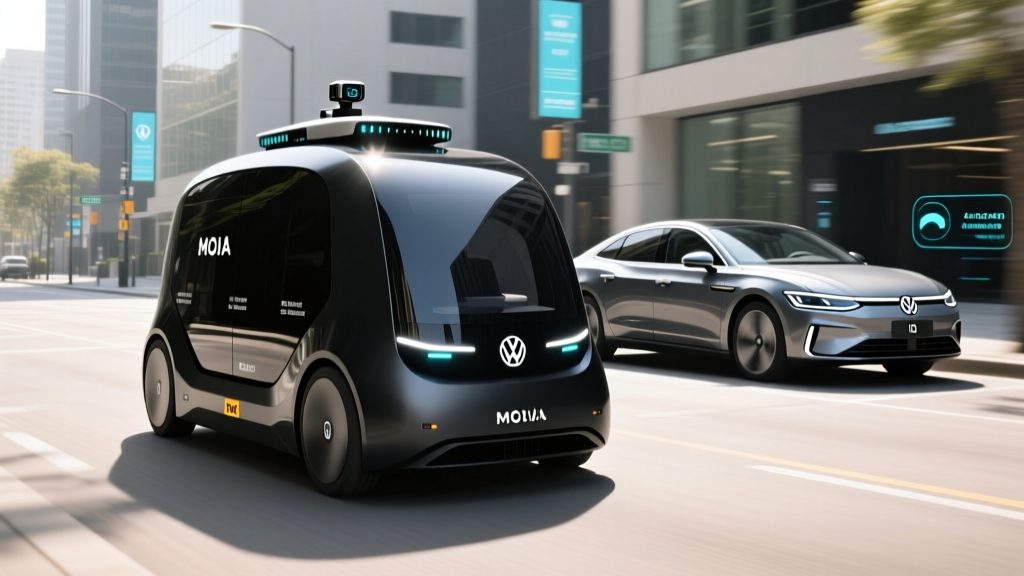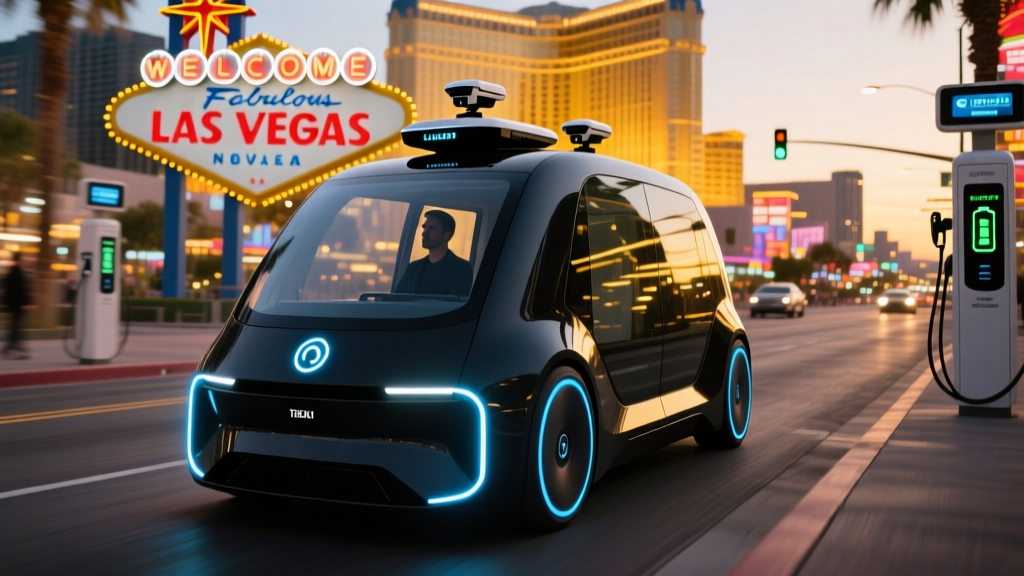
If you have visited the Las Vegas Strip in the past year, you have likely spotted one: a white Jaguar I-PACE bristling with rooftop sensors, navigating Paradise Road without anyone in the driver's seat. The Las Vegas robotaxi ecosystem has matured rapidly, with multiple operators now running commercial driverless services across significant portions of the valley. But how do you actually hail one, what does it cost, and — the question that matters most — how safe are these vehicles in real-world operation?
This guide breaks down every robotaxi service currently operating in Las Vegas as of early 2026, with hard data on pricing, safety records, technology, and the limitations you will encounter. No hype, no speculation — just what you can ride today.
What Level of Autonomy Are Las Vegas Robotaxis?
Before we discuss specific services, it is critical to distinguish between consumer driver-assist systems and true robotaxis. They are fundamentally different categories under the SAE International J3016 framework.
| SAE Level | Classification | Who Drives? | Example |
|---|---|---|---|
| Level 2 | Driver Assistance | Human (always) | Tesla Autopilot, GM Super Cruise, Ford BlueCruise |
| Level 3 | Conditional Automation | System in limited conditions; human on standby | Mercedes Drive Pilot (limited markets) |
| Level 4 | High Automation | System fully; no human needed in geofenced area | Waymo, Zoox, Motional (robotaxis) |
| Level 5 | Full Automation | System everywhere, all conditions | Does not exist commercially |
Every commercial robotaxi operating in Las Vegas today is SAE Level 4. That means the vehicle handles all driving tasks — steering, braking, lane changes, intersection navigation — without any human intervention, but only within a defined geographic zone (the geofence) and under approved conditions. There is no driver in the front seat, and no expectation that a passenger will take over. This is categorically different from Tesla's FSD (Supervised), which remains a Level 2 system requiring constant driver engagement regardless of marketing language.
Which Robotaxi Services Operate in Las Vegas Right Now?
As of 2026, two major operators run commercial driverless robotaxi services in the Las Vegas valley, with a third in advanced testing.
| Operator | Vehicle | Service Area | Hours | How to Ride |
|---|---|---|---|---|
| Waymo | Jaguar I-PACE (Gen 6 sensor suite) | Strip corridor, downtown, Harry Reid Airport, parts of Summerlin and Henderson (~80+ sq mi geofence) | 24/7 | Waymo One app (open to general public) |
| Motional (Hyundai/Aptiv JV) | Hyundai Ioniq 5 robotaxi | Strip corridor, downtown Las Vegas, Convention Center (~35 sq mi geofence) | Selected hours (typically 10 AM – 1 AM) | Uber app (select "Autonomous" option) or Lyft |
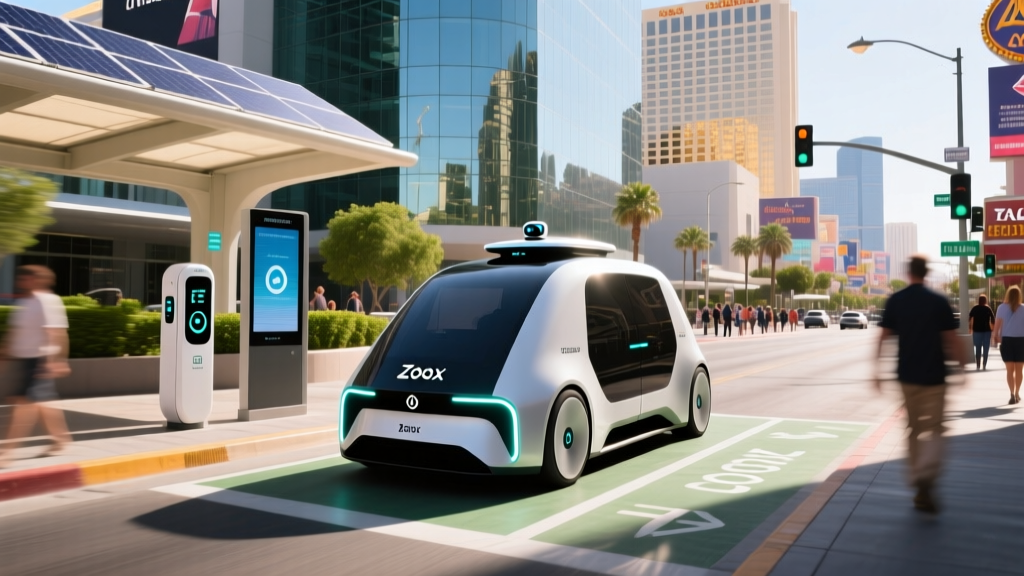
| Zoox (Amazon) | Zoox purpose-built vehicle (no steering wheel) | Limited testing zone near Strip; not yet open to general public as of early 2026 | Testing only | Invite-only early rider program |
Waymo is the dominant operator. After launching its Las Vegas commercial service in late 2024, Waymo has steadily expanded its geofence to cover the full Strip corridor from Mandalay Bay to the Strat, downtown's Fremont Street area, Harry Reid International Airport (with designated pickup/dropoff zones), and residential corridors in Summerlin and parts of Henderson. The Waymo One app works exactly like Uber or Lyft — set your destination, get matched, and a vehicle arrives.
Motional takes a platform-integration approach. Rather than its own standalone app, Motional robotaxis are bookable through Uber and Lyft in Las Vegas. When you request a ride in the geofenced area, the app may offer an "Autonomous Vehicle" option. The Hyundai Ioniq 5 robotaxi features a fully redundant sensor and compute stack purpose-built for Level 4 operation.
How Much Does a Las Vegas Robotaxi Cost vs. Uber and Lyft?
Pricing is the first question most riders ask. Here is what we have observed across multiple rides in early 2026:
| Route | Waymo (approx.) | UberX (approx.) | Lyft Standard (approx.) |
|---|---|---|---|
| Harry Reid Airport → Bellagio (5 mi) | $18–$24 | $16–$22 | $15–$21 |
| Mandalay Bay → Fremont Street (8 mi) | $25–$33 | $22–$30 | $21–$28 |
| Convention Center → Venetian (1.5 mi) | $9–$13 | $8–$12 | $8–$11 |
| Summerlin → Strip (12 mi) | $32–$42 | $28–$38 | $27–$36 |
Waymo's pricing is generally competitive with or slightly above standard UberX/Lyft fares, but notably below surge-priced rideshare during peak hours. Waymo does not currently implement surge pricing in the same dynamic way Uber and Lyft do, which means during high-demand periods (convention nights, Saturday evenings, event exits), a robotaxi can actually be the cheaper option.
Motional rides booked through Uber are typically priced identically to standard UberX fares for the same route — the autonomous option is a vehicle assignment, not a premium tier. Lyft pricing for Motional rides follows the same pattern.
Tipping: Neither Waymo nor Motional expects tips. The apps either omit the tip option or make it clear that drivers (there are none) do not receive gratuities. This alone can save you $3–$5 per ride compared to customary rideshare tipping.
How Safe Are Robotaxis? The Real Data
Safety is where speculation usually outpaces evidence. Let us look at what the data actually shows.
Waymo Safety Data (through 2025)
- Total autonomous miles driven: Over 40 million fully driverless miles across all markets (Phoenix, San Francisco, Los Angeles, Las Vegas, Austin) as of late 2025.
- Injury-causing crash rate: Waymo's autonomous vehicles were involved in injury-causing crashes at a rate approximately 85% lower than the human benchmark in comparable urban environments, according to NHTSA-reported data and Waymo's own published safety studies.
- Police-contactable incident rate: Roughly 5.5 per million autonomous miles, compared to the human baseline of approximately 14.5 per million miles in similar urban settings.
- Las Vegas-specific incidents: As of early 2026, no fatalities involving a Waymo vehicle have been reported in the Las Vegas market. Minor low-speed contact incidents (typically parking-lot or stopped-traffic scenarios) have occurred at rates consistent with other markets.
Motional has accumulated fewer public autonomous miles than Waymo, and its safety data is less extensively published. The company reports zero at-fault serious injuries during its Las Vegas commercial operations, though its total driverless mile count in the market is substantially lower than Waymo's. Hyundai and Aptiv have invested heavily in redundancy — dual compute platforms, independent braking systems, and a sensor suite that overlaps lidar, radar, and camera coverage.
It is worth noting that IIHS and independent researchers have pointed out that robotaxi safety data is still maturing. Most robotaxi miles are driven in fair weather, on mapped urban streets, at moderate speeds — conditions that are not fully representative of all driving scenarios. The data is promising but should be interpreted within the context of where and how these vehicles currently operate.
Under the Hood: The Technology Stack
Las Vegas robotaxis rely on fundamentally different technology approaches, though both achieve Level 4 autonomy through sensor redundancy and high-definition mapping.
Waymo (6th-Generation Driver on Jaguar I-PACE)
- LiDAR: Custom-built spinning and solid-state lidar units providing 360° 3D point-cloud mapping out to 500+ meters
- Cameras: 29+ cameras covering all angles, optimized for both daylight and night operation
- Radar: 6 automotive-grade radar units for velocity detection and adverse-weather penetration
- Audio detection: External microphones to detect sirens, horns, and emergency vehicles
- Compute: Custom-designed Waymo compute platform with redundant processing paths
- HD Maps: Centimeter-precision pre-mapped routes within the geofence; the vehicle localizes against these maps in real time
Motional (Hyundai Ioniq 5 Robotaxi)
- LiDAR: Multiple roof-mounted and bumper-integrated lidar sensors (Hesai and proprietary units)
- Cameras: 12+ cameras providing overlapping visual coverage
- Radar: 5 radar units for object tracking and speed measurement
- Compute: Dual redundant NVIDIA-based compute platforms capable of independent operation
- HD Maps: Pre-mapped geofenced area with real-time localization
Neither system uses a camera-only approach (unlike Tesla's FSD). Both rely on lidar as a primary depth-sensing modality, supplemented by cameras for classification and radar for velocity tracking. This sensor fusion approach provides redundancy that camera-only systems cannot match in low-light, glare, or partial-occlusion scenarios — conditions common on the sun-baked, neon-lit streets of Las Vegas.
Geofencing is central to how both systems operate. The vehicles have centimeter-accurate maps of every lane, curb, crosswalk, and traffic signal within their operational zone. If you request a ride to an address outside the geofence, the app simply will not allow the booking. The vehicle does not improvise in unmapped territory.
Regulatory Landscape: Who Approves Robotaxi Operations?
Nevada has been one of the more permissive states for autonomous vehicle testing and deployment, which is a key reason Las Vegas attracted multiple operators.
- Nevada Department of Motor Vehicles (DMV): Issues autonomous vehicle testing and deployment permits under NRS 482A. Operators must demonstrate insurance coverage, safety protocols, and vehicle compliance.
- Nevada Governor's Office of Economic Development: Has actively courted AV companies with streamlined permitting and economic incentives.
- NHTSA (federal): Sets vehicle safety standards (FMVSS) and investigates crashes involving automated systems. NHTSA's Standing General Order requires AV operators to report certain crashes within 24 hours.
- Clark County and City of Las Vegas: Manage local road infrastructure, traffic signal integration, and curb-access rules that affect robotaxi pickup/dropoff zones.
Unlike California, where the CPUC and DMV maintain separate, sometimes conflicting regulatory frameworks, Nevada consolidates oversight more cleanly under the DMV and state legislature. This has allowed operators to scale service areas more quickly once initial permits are secured.
Current Limitations: What Robotaxis Cannot Do
For all their capability, Las Vegas robotaxis have real limitations that riders should understand before booking.
Where and When They Struggle
- Geofence boundaries: If your destination falls outside the mapped zone — say, a hotel beyond the Strip corridor or a residential address in far North Las Vegas — the service simply is not available. No workaround exists.
- Heavy rain and flash floods: Las Vegas monsoon-season downpours (typically July–September) can overwhelm lidar and camera systems. Both Waymo and Motional will pull vehicles from service or restrict the geofence during heavy precipitation. Flash-flooded streets are a hard no-go.
- Construction zones: The Strip is perpetually under construction. While robotaxis handle minor lane shifts via remote-assistance protocols, major unmarked detours or flagger-directed traffic can cause the vehicle to stop and request remote resolution, adding minutes to your trip.
- Parking structures and valet areas: Robotaxis drop you at the curb. They cannot navigate multi-level parking garages, hotel porticos with low clearance, or valet zones. Expect curbside drop-off only.
- Complex multi-point stops: You cannot ask a robotaxi to "wait here for five minutes while I grab something" or make multiple stops. It is point A to point B, then the vehicle moves on.
- Large events and crowd surges: After a major arena event (T-Mobile Arena, Allegiant Stadium), pedestrian density can overwhelm the vehicle's prediction models. Both operators have reported extended wait times or temporary service pauses during peak crowd-dispersal periods.
- Highway driving: While Waymo's Las Vegas geofence includes some highway-adjacent roads, extended high-speed freeway segments (e.g., I-15 to Jean or Pahrump) are not part of the operational design domain. Speeds are generally capped at 45–50 mph within the geofence.
Practical Tips for Riding a Las Vegas Robotaxi
Based on dozens of rides across both platforms, here is what works:
- Download the Waymo One app before your trip. Account setup and verification can take a few minutes. If you plan to use Motional via Uber or Lyft, ensure those apps are current and your payment method is set.
- Use designated pickup zones at the airport. Harry Reid International has specific robotaxi pickup areas (Level 1 of the parking garage, near the rideshare zone). The app will guide you, but knowing this in advance saves confusion at 11 PM with luggage.
- Be patient at busy intersections. Robotaxis are conservative by design. A left turn across traffic on Las Vegas Boulevard may take longer than a human driver would — the vehicle waits for a wide safety margin.
- Check service availability late at night. While Waymo runs 24/7, vehicle supply thins out between 2 AM and 6 AM. Expect longer wait times (8–15 minutes) compared to peak hours (3–6 minutes).
- Rate your ride. Both platforms use rider feedback to improve routing, pickup precision, and ride quality. It genuinely affects service tuning.
Frequently Asked Questions
Where can I use a robotaxi in Las Vegas right now?
Waymo covers the broadest area: the full Strip from Mandalay Bay to the Strat, downtown Fremont Street, Harry Reid Airport, and parts of Summerlin and Henderson. Motional covers a smaller zone focused on the Strip corridor, downtown, and the Convention Center. Both services are bookable by the general public — no invite or waitlist required.
How much does a robotaxi ride cost compared to Uber or Lyft?
Robotaxi fares are generally within $1–$5 of standard UberX or Lyft fares for the same route. The advantage emerges during surge periods: Waymo does not apply the same dynamic surge multipliers, so during high-demand times (convention nights, weekends), a robotaxi can be noticeably cheaper. No tipping is expected, saving an additional $3–$5 per ride.
Are Las Vegas robotaxis actually safe?
The available data suggests yes, within their operational design domain. Waymo reports that its driverless fleet experiences injury-causing crashes at roughly 85% below the human benchmark rate in comparable urban driving. Motional reports zero at-fault serious injuries in its Las Vegas operations. However, these vehicles operate in mapped, geofenced areas under favorable conditions — they are not tested against the full spectrum of driving scenarios humans encounter.
What happens if something goes wrong during my ride?
Both Waymo and Motional have remote-assistance teams monitoring vehicles in real time. If the vehicle encounters a scenario it cannot resolve (an unusual construction detour, a disabled vehicle blocking the lane), it will stop safely and connect with a remote operator who can authorize a path or dispatch roadside assistance. In-cabin screens and audio allow you to communicate with support at any time. Both vehicles maintain redundant braking and steering systems.
Is this truly self-driving, or is someone remotely controlling the car?
The vehicles drive themselves — steering, accelerating, braking, changing lanes, and navigating intersections autonomously. Remote operators do not "joystick" the vehicle in real time. Instead, they provide high-level guidance when the vehicle encounters an ambiguous scenario (e.g., confirming it is safe to cross a double-yellow line around a parked truck). The driving execution remains fully autonomous. This is SAE Level 4: no human driver is needed for the trip.
Can I take a robotaxi from the Las Vegas Strip to the Grand Canyon?
No. The geofenced service areas cover roughly 35–80 square miles of the Las Vegas valley. Trips to the Grand Canyon, Hoover Dam, Red Rock Canyon, or any destination outside the mapped zone are not possible. For those trips, you will need a rental car or traditional rideshare.
Do robotaxis operate in bad weather?
Light rain is generally not an issue. However, heavy monsoon downpours, dust storms (haboobs), or flash-flooding conditions will cause operators to restrict service or pull vehicles offline entirely. Las Vegas's typically dry climate is actually one reason operators chose the city — weather-related edge cases are far less frequent than in markets like San Francisco or Miami.