If you've searched for a "Kia self-driving car" recently, you've likely seen headlines about Kia's advanced driver-assistance systems and the company's robotaxi ambitions through its Motional joint venture. The reality in 2026 is a two-part story: the Kia you can buy today offers sophisticated Level 2 driver-assist technology, while the driverless Kia robotaxi you might hail remains a limited, geofenced service operated by Motional — not something you can purchase or use in most cities.
This guide breaks down exactly what Kia's autonomous driving stack delivers today, where Motional's robotaxi service operates, what the safety data shows, and how to separate marketing from engineering reality.
What "Self-Driving" Actually Means: SAE Levels Explained
Before evaluating any Kia autonomous system, you need the SAE International automation framework. This is the only standardized way to compare systems across brands.
| Level | Name | Who Drives | Kia Examples (2026) |
|---|---|---|---|
| Level 0 | No Automation | Human does everything | Base trims, older models |
| Level 1 | Driver Assistance | Human drives; system assists steering OR speed | Adaptive cruise control, lane centering (individual features) |
| Level 2 | Partial Automation | Human drives; system assists steering AND speed simultaneously | Highway Driving Assist (HDA2), Highway Driving Mode on EV9/EV6 |
| Level 3 | Conditional Automation | System drives in specific conditions; human must take over on request | Not currently offered by Kia in the US market |
| Level 4 | High Automation | System drives without human in geofenced areas | Motional robotaxi (Ioniq 5-based, operated in select cities) |
| Level 5 | Full Automation | System drives everywhere, all conditions | Does not exist commercially anywhere |
Kia's Consumer Self-Driving Tech: Highway Driving Mode (HDM)
For the Kia you actually drive, the most advanced autonomous feature available in 2026 is Highway Driving Mode (also branded as Highway Driving Assist 2, or HDA2), available on models including the EV9, EV6, Telluride, and K5.
HDM combines adaptive cruise control with lane-centering assist and uses GPS and map data to automatically adjust speed for curves, toll gates, and speed-limit changes on mapped highways. It's a strong Level 2 system — comparable to Hyundai's Highway Driving Assist (the corporate sibling), and competitive with Ford's BlueCruise or GM's Super Cruise in capability, though it lacks the hands-free eye-off-wheel permission those systems offer on pre-mapped divided highways.
HDM Specifications and Requirements
- Operational domain: Divided highways with lane markings, mapped in Kia's navigation database
- Speed range: 0–120 mph (stop-and-go traffic capable)
- Sensors used: Forward-facing radar, windshield-mounted camera, ultrasonic sensors, GPS + HD map data
- Driver monitoring: Torque-sensing steering wheel (hands must apply light torque); no eye-tracking camera on most 2026 trims
- Hands-free status: Not hands-free. Kia requires continuous steering-wheel contact, unlike BlueCruise or Super Cruise which allow hands-off on approved roads
This is important for buyer expectations: HDM reduces highway fatigue significantly, but it is not "self-driving." You are the driver at all times.
Motional Robotaxi: Where Kia's Level 4 Ambitions Live
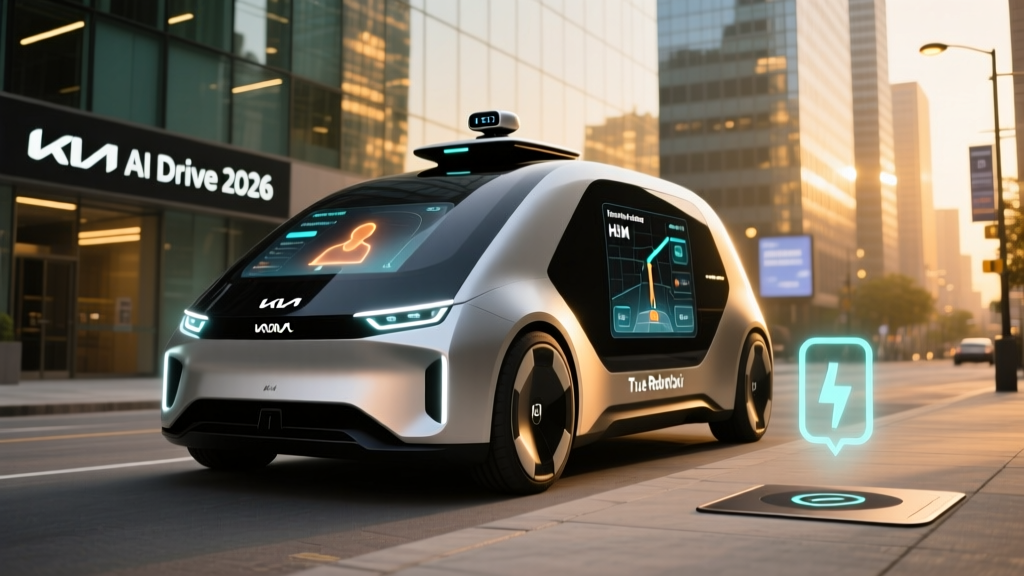
The genuine driverless Kia is built by Motional, a joint venture between Hyundai Motor Group (Kia's parent company) and Aptiv. Motional uses a heavily modified Ioniq 5 platform (badged as Hyundai, not Kia, for the robotaxi fleet) equipped with a full Level 4 sensor suite.
If you're searching for a Kia self-driving car you can hail like an Uber, Motional is the closest answer — but with significant geographic and availability caveats.
Motional Service Availability (2026)
| City | Status | Service Type | How to Access |
|---|---|---|---|
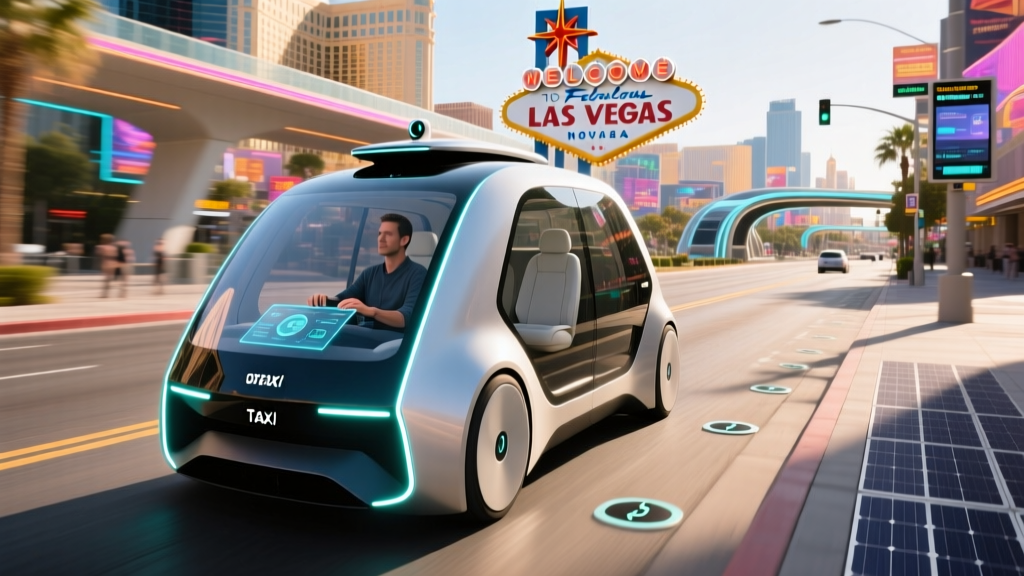
| Las Vegas, NV | Operational | Rideshare via Lyft (safety driver present in some vehicles) | Lyft app — matched randomly to Motional vehicle |
| Los Angeles, CA | Testing / limited commercial | Mapping and validation rides | Invite-only; not publicly bookable |
| Singapore | Testing | On-demand pilot program | Motional app (limited beta users) |
| Pittsburgh, PA | Testing | Mapping and validation | Not publicly available |
| Boston, MA | Formerly operational; paused | Previously Lyft integration | Service suspended as of late 2024 |
For most US readers: unless you're in Las Vegas and happen to get matched with a Motional vehicle through Lyft, you cannot currently hail a driverless Hyundai/Kia robotaxi. Compare this to Waymo, which operates fully driverless commercial service across Phoenix, San Francisco, Los Angeles, and expanding to Austin in 2026.
Motional's Technology Stack
Ioniq 5 Robotaxi Sensor Suite
- LiDAR: Multiple solid-state and spinning LiDAR units providing 360° 3D point clouds (range ~200m)
- Cameras: 12+ high-resolution cameras covering all directions, used for object classification, traffic-light recognition, and lane detection
- Radars: Forward and corner radars for velocity detection and redundancy in poor visibility
- Compute: Custom Aptiv-developed autonomous driving computer with redundant processing paths
- HD Maps: Centimeter-precision maps of all operational zones, updated regularly
- Geofencing: Vehicles operate only within pre-mapped boundaries — they will not enter unmapped construction zones or rural roads
This multi-sensor approach contrasts with Tesla's camera-only FSD strategy. LiDAR provides reliable depth measurement regardless of lighting, but adds significant hardware cost — a key reason Level 4 robotaxis remain fleet-operated services rather than consumer products.
Robotaxi Pricing: Motional vs. Uber vs. Waymo
When you can access a Motional ride (primarily Las Vegas via Lyft), pricing follows the standard Lyft rate structure for that market. There is currently no robotaxi surcharge — and often, Lyft applies promotional discounts to autonomous rides to encourage adoption.
| Service | Estimated Fare | Notes |
|---|---|---|
| Motional via Lyft | $12–$18 | Standard Lyft pricing; occasional promo discounts applied to AV rides |
| UberX | $13–$20 | Human driver; standard pricing |
| Waymo (where available) | $14–$22 | Fully driverless; priced comparably to Uber/Lyft; no tipping |
| Lyft (human driver) | $13–$20 | Standard pricing |
The pricing takeaway: robotaxis are not meaningfully cheaper than human-driven rideshare yet. The economic case for robotaxis depends on removing the driver's earnings (typically 60–75% of the fare), but the current cost of Level 4 hardware, remote-assistance operators, and fleet maintenance offsets much of that savings. Expect robotaxi pricing to undercut rideshare more significantly only after hardware costs decline and fleet utilization rises.
Safety Data: What the Numbers Actually Show
Autonomous vehicle safety is the most contentious topic in the industry, and data transparency varies enormously by operator.
For context, NHTSA's Standing General Order requires all AV operators to report crashes involving their automated systems. Waymo's published data (from their safety reports) shows collision rates roughly 50–85% lower than human benchmarks for comparable urban driving, measured per million miles. Motional has not published an equivalent peer-reviewed comparison.
What this means practically: the available data suggests robotaxis are at least as safe as attentive human drivers in their geofenced urban environments, and likely safer for the specific scenarios they handle (no impairment, no distraction, 360° perception). But the data set for Motional specifically is smaller and less transparent than Waymo's.
Current Limitations: What Kia's Self-Driving Tech Cannot Do
Both Kia's consumer HDM and Motional's robotaxi have hard engineering limits. Understanding these prevents dangerous over-trust.
Consumer HDM (Level 2) Limitations
- Not hands-free: Requires steering-wheel torque at all times — do not treat it as Autopilot-style hands-off
- Mapped highways only: Will not engage on surface streets, unmapped roads, or roads without clear lane markings
- Weather degradation: Heavy rain, snow, fog, or ice on sensors will cause the system to disengage with a warning
- Construction zones: May not correctly handle temporary lane shifts or missing lane markings
- No traffic-light response: HDM does not stop for red lights or stop signs (that requires separate features and driver confirmation)
Motional Robotaxi (Level 4) Limitations
- Geofenced only: Cannot operate outside pre-mapped zones — typically dense urban cores and airport corridors
- Weather restrictions: Heavy rain, snow, or dense fog may suspend service; LiDAR performance degrades in precipitation
- No highway operation in most markets: Primarily designed for urban surface streets (25–45 mph zones)
- Cannot handle all edge cases: Unusual road configurations, emergency-vehicle interactions, or unmapped detours may trigger a remote-assistance stop or safe pullover
- Not available for purchase: This is a fleet service, not a consumer vehicle you can buy
Regulatory Landscape: Who Approves Robotaxi Operations
Autonomous vehicle regulation in the US is a patchwork. At the federal level, NHTSA sets vehicle safety standards and requires crash reporting, but does not "approve" AV deployments. That authority falls to individual states.
- California (CPUC/DMV): Requires separate permits for testing and commercial deployment. Waymo holds a commercial permit; Motional has held testing permits but has not received full commercial driverless approval as of early 2026.
- Nevada: More permissive framework; Las Vegas has been Motional's primary commercial partner city through Lyft integration.
- Arizona: Largely self-certification model; this is why Waymo scaled Phoenix first.
- Federal legislation: As of 2026, no comprehensive federal AV framework has passed. The AV START Act and similar proposals have stalled repeatedly, leaving the state patchwork in place.
For buyers of Kia's consumer vehicles: HDM and HDA2 are legal in all 50 states as Level 2 driver-assistance systems. No special permit or approval is needed — they are standard advanced safety features.
Should You Buy a Kia for Its Self-Driving Tech?
If your goal is the best available consumer driver-assist for highway commuting, the Kia EV9 and EV6 with HDM offer strong Level 2 performance at competitive pricing (the EV9 starts at approximately $54,900 MSRP for the Light trim; HDM is standard on most upper trims). However, if hands-free highway driving is your priority, GM's Super Cruise and Ford's BlueCruise currently offer a more relaxed experience on approved roads — both allow genuine hands-off operation.
If you're looking for a Kia robotaxi you can hail today, your realistic option is Las Vegas via Lyft, with the understanding that you may or may not be matched with a Motional vehicle.
Choose Kia HDM if:
- You want strong Level 2 highway assist as part of a well-rounded EV (EV9's 304-mile EPA range, 236 kW peak DC charging, 3-row seating)
- You're comfortable keeping hands on the wheel
- You value Kia's 10-year/100,000-mile powertrain warranty
Look elsewhere if:
- You want hands-free, eyes-off highway driving — consider GM Super Cruise or Ford BlueCruise
- You want to hail a driverless taxi — use Waymo in Phoenix, SF, LA, or Austin
- You expect to buy a Level 4 vehicle for personal use — this does not exist at any price point in 2026
Frequently Asked Questions
Is Kia's Highway Driving Mode truly self-driving?
No. HDM is an SAE Level 2 driver-assistance system. It controls steering and speed simultaneously on mapped highways, but the driver must maintain steering-wheel contact and remain fully attentive at all times. It is comparable to Tesla Autopilot or Hyundai HDA — helpful, but not autonomous.
Where can I use a Kia/Hyundai robotaxi right now?
Motional's robotaxi service (using the Ioniq 5 platform) is commercially accessible primarily in Las Vegas through Lyft, where you may be randomly matched with an autonomous vehicle. Los Angeles, Singapore, and Pittsburgh have testing programs that are not open to the general public. Boston's service was suspended.
How much does a Motional robotaxi ride cost compared to Uber?
Rides through Lyft in Las Vegas are priced at standard Lyft rates — typically $12–$18 for a 5-mile trip. There is no robotaxi premium, and promotional discounts are sometimes applied. Pricing is comparable to UberX and Waymo in their respective markets.
How safe are Motional robotaxis?
Motional reports over 100,000 completed autonomous rides with no reported serious at-fault collisions involving vulnerable road users. Minor low-speed incidents have occurred. The data set is smaller and less publicly detailed than Waymo's published per-million-mile safety metrics. NHTSA requires all AV operators to report crashes under the Standing General Order.
Can I buy a Kia with Level 4 self-driving capability?
No. Level 4 robotaxi technology requires hundreds of thousands of dollars in sensors and compute hardware, plus HD map infrastructure and remote-assistance operations. This is viable only for fleet operators. No consumer vehicle from any manufacturer offers Level 4 capability for purchase in 2026.
What's the difference between Kia HDM and Tesla FSD?
Both are Level 2 systems requiring full driver attention. Tesla's FSD (Supervised) operates on surface streets and highways without geofencing to mapped roads, while Kia's HDM is limited to mapped divided highways. Tesla uses a camera-only approach; Kia uses radar plus camera. Neither system is "self-driving" — the driver is legally and operationally responsible at all times.
Will Kia offer hands-free driving like GM Super Cruise?
Hyundai Motor Group has announced plans for genuine hands-free Level 2+ systems in future models, potentially using the upcoming eM platform. As of 2026, no production Kia offers hands-off-highway capability comparable to Super Cruise or BlueCruise. Watch for announcements around the next-generation EV platform launch.