If you've searched for a rideshare recently in cities like Phoenix, San Francisco, or Los Angeles, you may have noticed something unusual in your app: a vehicle option with no driver behind the wheel. That's Waymo, Alphabet's autonomous-vehicle subsidiary, and its integration with Uber is one of the most searched questions in the robotaxi space. Here's a precise, data-backed breakdown of how the partnership works, where you can actually hail a driverless ride today, and what the real safety and pricing picture looks like.
Is Waymo on Uber? The Short Answer
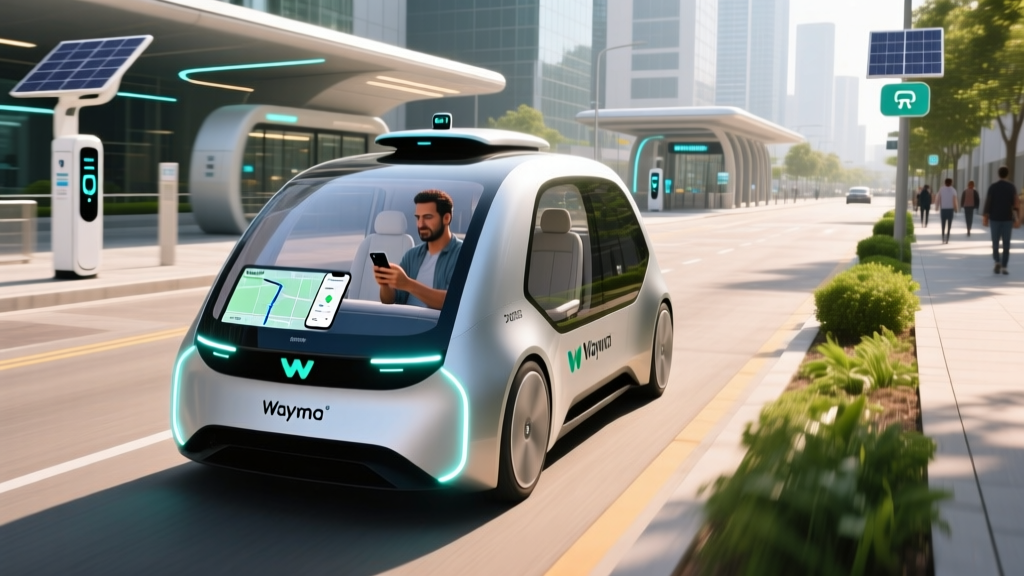
Yes — but with important caveats. Waymo's driverless robotaxi service, branded Waymo One, is accessible through the Uber app in select cities. When you request a ride in a supported metro area, Uber's algorithm may match you with a Waymo autonomous vehicle if one is available within the geofenced service zone. You'll see a distinct "Waymo" vehicle option before confirming.
However, Waymo also operates its own standalone Waymo One app, which often provides broader availability and earlier access to new service zones within a city. The Uber integration is a partnership, not a full merger of fleets — Waymo vehicles remain owned, operated, and maintained by Waymo (Alphabet), not Uber.
Waymo One operates as a SAE Level 4 autonomous service within its defined Operational Design Domain (ODD). This means the vehicle handles all driving tasks — steering, braking, navigation, lane changes — without any human driver present, but only within specific geofenced areas under approved conditions. This is fundamentally different from Level 2 driver-assist systems like Tesla Autopilot or GM Super Cruise, which require an attentive human driver at all times. No steering wheel is occupied in a Waymo robotaxi.
Where Can You Book a Waymo Robotaxi Right Now?
As of early 2026, Waymo One operates commercial driverless service in several U.S. metro areas. Availability is geofenced — you can only request pickup and drop-off within approved zones, which cover significant but not total portions of each city.
| City | Service Status | Coverage Area (Approx.) | Uber Integration |
|---|---|---|---|
| Phoenix, AZ (Metro) | Fully operational | ~315 sq mi — Chandler, Tempe, Gilbert, Mesa, Scottsdale, parts of Phoenix proper | Yes |
| San Francisco, CA | Fully operational | ~50 sq mi — most of SF proper including downtown, SoMa, Mission, Marina | Yes |
| Los Angeles, CA | Operational (expanding) | ~80 sq mi — Santa Monica, Hollywood, Beverly Hills, Westwood, downtown LA | Yes |
| Austin, TX | Operational (limited) | ~25 sq mi — downtown, South Congress, East Austin corridor | Limited |
Waymo has announced intentions to expand to additional cities, but announced plans are not live service. If you're outside the geofence, the Uber app will not show a Waymo option — you'll only see standard UberX, Comfort, or other human-driven tiers.
How Much Does Waymo Cost vs Uber and Lyft?
Robotaxi rides are priced competitively with standard rideshare — not at a premium. In most markets, a Waymo One ride costs roughly the same as an UberX or Lyft Standard fare for the same route, sometimes slightly less during promotional periods.
| Service Tier | Estimated Fare | Surge Pricing? | Wait Time (Avg) |
|---|---|---|---|
| Waymo One (via Uber or standalone) | $11 – $16 | No dynamic surge; may have limited availability during peaks | 3 – 7 min |
| UberX | $12 – $18 | Yes — can spike 1.5x–3x | 2 – 5 min |
| Lyft Standard | $11 – $17 | Yes — variable surge | 2 – 6 min |
| Waymo One (standalone app, promo) | $8 – $13 | No | 3 – 7 min |
Key pricing distinction: Waymo does not implement surge pricing the way Uber and Lyft do. During high-demand periods (bar close, rainstorms, major events), a Waymo ride may actually be cheaper than a surged UberX — if a vehicle is available. The tradeoff is that Waymo's fleet is smaller, so wait times can be longer or the option may simply be unavailable during peak hours.
How to Book a Waymo Through Uber (Step-by-Step)
The booking process is straightforward if you're in a supported city:
- Open the Uber app and enter your destination as normal.
- Check vehicle options — if a Waymo autonomous vehicle is available for your route, a "Waymo" option will appear alongside UberX, Comfort, etc.
- Select Waymo and confirm your pickup spot. The app will show an estimated arrival time and fare.
- Meet the vehicle — it will pull up without a driver. The app shows the exact vehicle (a Jaguar I-PACE EV with Waymo sensor array) and license plate.
- Unlock and ride — tap "Start Ride" in the app when you're seated. An in-screen interface lets you control music, climate, and view your route. You can also request an early stop.
- Arrive and exit — the vehicle will pull over at your destination. You have a brief window to collect belongings before it drives away to its next fare.
Alternatively, download the Waymo One app directly. It provides the same booking flow and sometimes surfaces vehicles the Uber integration doesn't show due to fleet-allocation differences.
Waymo's Safety Record: What the Data Shows
Safety is the most scrutinized aspect of robotaxi operations. Waymo publishes periodic safety reports and is subject to NHTSA and state-level oversight. Here's what the numbers show:
- Total autonomous miles driven: Over 30 million fully driverless miles as of late 2025 (NHTSA filings and Waymo safety reports).
- Injury-causing crash rate: Waymo's published data shows approximately 85% fewer injury-causing crashes per million miles compared to human-driver benchmarks in the same operating cities.
- Contact rate: Property-damage-only contact events occur at roughly 57% lower rates than human baselines, per Waymo's peer-reviewed safety studies.
- NHTSA Standing General Order: Waymo reports all incidents under NHTSA's crash-reporting mandate. Minor low-speed contacts (e.g., being rear-ended at a stop) make up the majority of reported events.
Source: NHTSA Automated Vehicle Safety
The context matters: Waymo vehicles operate primarily in dense urban environments at moderate speeds (under 45 mph), which shapes the severity profile. The vehicles are also occasionally rear-ended by human drivers — a scenario no amount of autonomy can fully prevent. However, the data consistently shows that Waymo's sensor suite and deterministic driving behavior reduce the most common urban crash types: side-impact collisions at intersections, failure-to-yield, and distracted-driving incidents.
The Technology Stack: Lidar, Cameras, and Radar
Waymo's 6th-generation "Driver" system — the hardware and software suite fitted to its fleet of Jaguar I-PACE electric SUVs — uses a multi-sensor approach that differs sharply from camera-only autonomy strategies (like Tesla's FSD):
| Sensor Type | Role | Range / Coverage |
|---|---|---|
| Lidar (custom-built) | 3D point-cloud mapping of surroundings, object detection, distance measurement | Up to 500+ meters; 360° coverage |
| Cameras (high-resolution) | Traffic-light state reading, sign recognition, lane markings, color/texture detail | Up to 500 meters; overlapping fields of view |
| Radar (imaging radar) | Velocity detection of moving objects, performance in rain/fog | Up to 300+ meters; complementary to lidar |
| External audio sensors | Detection of emergency vehicle sirens, honking | Omnidirectional |
| HD maps + localization | Centimeter-accurate positioning within pre-mapped geofence | Continuous; updated regularly |
The reliance on lidar is a defining technical choice. Lidar provides precise depth perception independent of lighting conditions — critical for night driving, direct sun glare, and shadowed intersections. The tradeoff is cost and complexity: each Waymo vehicle carries well over $100,000 in sensor and compute hardware, which is viable for a fleet-operated service but not yet for consumer vehicles.
The system also depends on HD pre-mapping. Before Waymo launches service in a new zone, its mapping vehicles drive every street multiple times to build a centimeter-accurate 3D model. The robotaxis then localize against this map in real-time. This is why Waymo cannot simply "turn on" in a new city overnight — mapping and validation take months.
Regulatory Landscape: Who Approves Robotaxi Operations?
Robotaxi operations in the U.S. exist within a patchwork of state and federal regulation. Waymo must secure approvals at multiple levels:
- State Public Utilities Commission (PUC) or DMV: In California, the California Public Utilities Commission (CPUC) issues permits for commercial autonomous ride-hailing. The California DMV separately issues testing and deployment permits. Waymo holds both.
- NHTSA (Federal): The National Highway Traffic Safety Administration sets vehicle safety standards and requires crash reporting via Standing General Order. NHTSA does not currently "approve" autonomous systems for deployment, but it can issue recalls or investigations — as it did with Cruise in 2023.
- City/Local Government: Municipalities control street access, curb management, and local operating agreements. Waymo negotiates with each city individually.
- Arizona: Takes a notably permissive approach — no specific state-level permit is required for commercial robotaxi operations, which is why Phoenix was Waymo's first commercial market.
This regulatory complexity is a major reason robotaxi expansion is city-by-city rather than national. Each new metro requires mapping, local government engagement, and often state-level permitting.
Current Limitations: What Waymo Cannot Do
- Geofence-bound: The vehicle will not drive outside its approved zone. If your destination falls outside the boundary, the ride option won't appear.
- Heavy weather restrictions: In heavy rain, fog, or flooding conditions, Waymo may suspend service in affected areas. The sensor suite handles light rain but performance degrades in severe conditions. Phoenix's dry climate is a strategic advantage here.
- No highway driving (in most markets): Waymo's current ODD primarily covers surface streets. Limited highway segments are included in some markets (e.g., Phoenix freeway on-ramps and short highway stretches), but long-distance highway routing is not supported.
- Construction zones: Rapidly changing road configurations with temporary barriers, flaggers, or lane shifts can cause the vehicle to pull over and request remote assistance from Waymo's operations center.
- Complex multi-point stops: You cannot ask the vehicle to "wait here for 5 minutes" or make a stop at a drive-through. Point A to point B only.
- No inter-city travel: A Waymo from San Francisco cannot drive you to Oakland (as of early 2026). Each metro is an isolated service island.
- Limited fleet size: Waymo operates thousands of vehicles across its markets, but this is a fraction of Uber/Lyft driver availability. Peak-hour unavailability is common.
These limitations are not temporary software bugs — they reflect the fundamental boundaries of current Level 4 autonomy within a constrained ODD. Expanding beyond these boundaries requires additional mapping, sensor validation, regulatory approval, and millions of test miles per new scenario.
Waymo vs Cruise vs Zoox: The Robotaxi Landscape
Waymo is the market leader, but not the only player. Understanding the landscape helps contextualize why the Uber integration matters:
- Waymo (Alphabet): Largest operational fleet, most driverless miles, multi-city presence. Partners with Uber for rider access. Uses Jaguar I-PACE (84 kWh NMC battery, ~230-mile EPA range — though robotaxis charge frequently and never deplete fully).
- Cruise (GM): Suspended commercial operations in late 2023 following a serious incident in San Francisco. As of 2026, Cruise has resumed limited testing with safety drivers in select cities but has not re-launched commercial driverless service at scale. GM has signaled a phased return.
- Zoox (Amazon): Operating a purpose-built, bidirectional vehicle with no steering wheel. Limited commercial service in Las Vegas and Foster City, CA. Not yet integrated with major rideshare apps at scale.
- Tesla (FSD Supervised): This is a Level 2 driver-assist system that requires an attentive human driver. Tesla has announced a "Robotaxi" concept, but as of 2026, no commercial driverless service exists. Conflating FSD with Waymo's Level 4 service is a common error.
FAQ: Waymo on Uber and Robotaxi Basics
Is Waymo on Uber in every city?
No. Waymo One through Uber is only available in cities where Waymo operates commercial driverless service: Phoenix, San Francisco, Los Angeles, and Austin (limited). If you open Uber in Chicago or New York, you will not see a Waymo option.
Do I need a separate app to ride in a Waymo?
No — you can book through the Uber app in supported cities. However, the standalone Waymo One app sometimes has better availability and promotional pricing. Having both apps installed is the practical strategy for frequent users in Waymo cities.
Is there a human driver in the Waymo vehicle?
No. Waymo One is SAE Level 4 — the vehicle operates without any human driver. The driver's seat is empty. A remote operations team monitors the fleet and can intervene if the vehicle encounters an unresolvable scenario, but no human is physically controlling the car.
What vehicle does Waymo use?
The current Waymo fleet consists of Jaguar I-PACE all-electric SUVs equipped with Waymo's 6th-generation Driver system. The I-PACE has a 90 kWh battery pack (NMC chemistry), 234-mile EPA range, and 394 horsepower. Waymo vehicles charge at depot locations between rides and typically operate with a state of charge between 20% and 80% to optimize battery longevity.
How safe is Waymo compared to a human Uber driver?
Based on Waymo's published safety data and NHTSA reporting, Waymo vehicles show significantly lower rates of injury-causing crashes per million miles compared to human-driver benchmarks in the same urban environments. The key caveat: Waymo operates in mapped, moderate-speed urban zones and avoids the most challenging conditions (heavy snow, unmapped construction). Within its ODD, the safety data is strong.
Can I use Waymo for airport rides?
In some markets, yes. Phoenix Sky Harbor International Airport (PHX) is within Waymo's geofence, and airport rides are a common use case. San Francisco International (SFO) and LAX availability depends on whether the airport falls within the current geofence and whether Waymo has an operating agreement with the airport authority. Check the app for your specific route.
What happens if the Waymo vehicle gets confused or stuck?
The vehicle will pull over safely and contact Waymo's remote assistance center. A trained operator can assess the situation via the vehicle's cameras and sensors and either provide guidance to the vehicle's planning system or dispatch a roadside-assistance team. You can also contact support through the in-vehicle screen or the app at any time.
Is Waymo on Uber the future of rideshare?
It's a significant step toward it, but "the future" is gradual and city-specific. Robotaxi economics improve as fleet utilization increases and hardware costs decline, but expansion is bottlenecked by mapping, regulation, and weather limitations. For now, Waymo on Uber is a viable, safe, and competitively priced option — in the specific cities where it operates.