Can You Actually Get a Waymo in Austin Right Now?
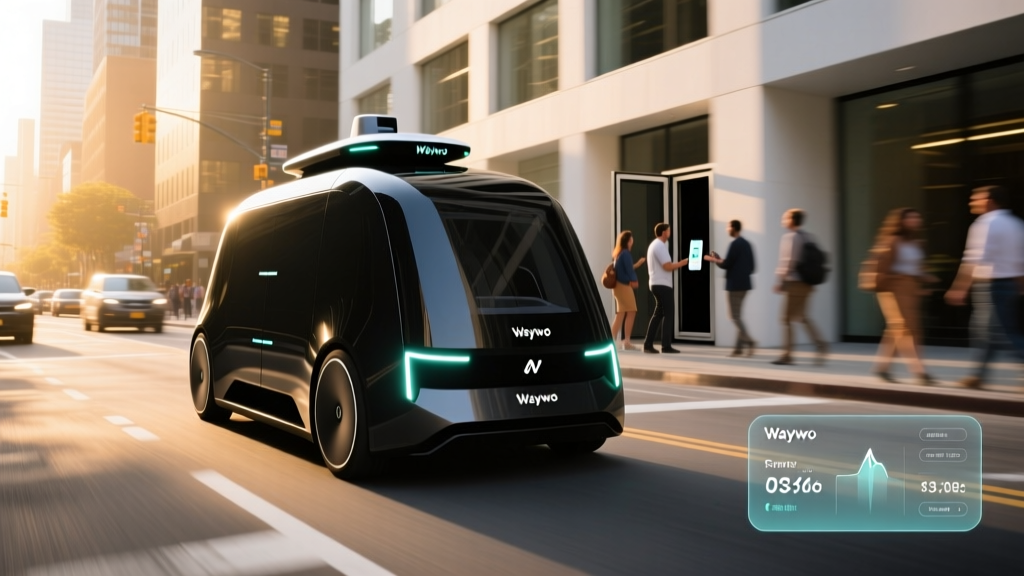
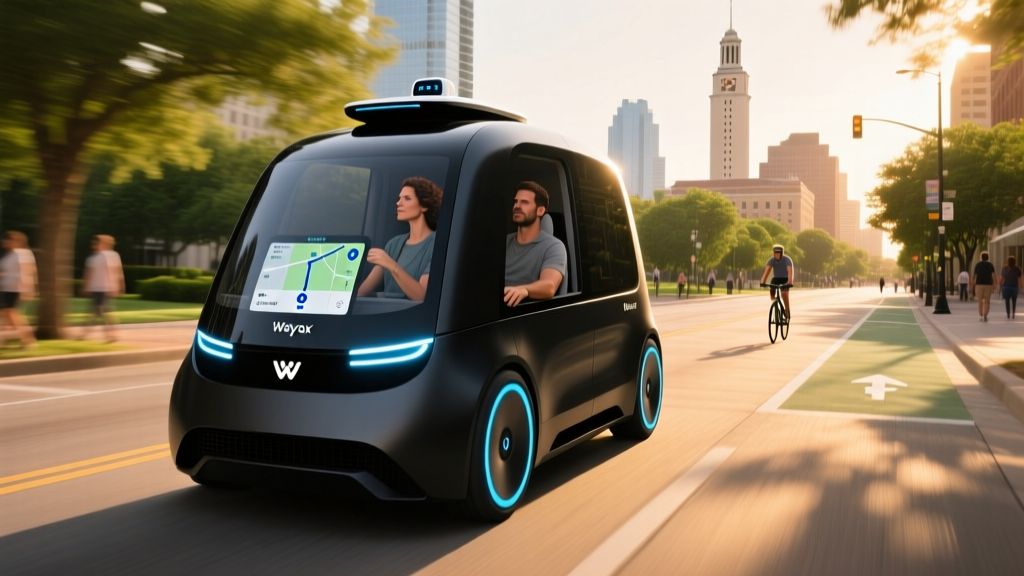
Austin is Waymo's fourth major commercial market, and the company has been ramping up its driverless ride-hail service across the Texas capital since expanding operations through 2025 and into 2026. If you've been searching for how to get a Waymo in Austin, the short answer is: download the Waymo One app, confirm you're inside the geofenced service area, and request a ride — no human driver will be behind the wheel.
But the details matter. Austin's service zone doesn't cover the entire metro, pricing fluctuates with demand, and the technology — while genuinely driverless — has real-world boundaries every rider should understand before their first trip. This guide breaks down exactly what's available, what it costs, and what the safety data actually shows.
What Level of Autonomy Is Waymo? (It's Not the Same as Tesla FSD)
Before booking a ride, it's critical to understand where Waymo sits on the SAE automation scale, because the difference between consumer driver-assist systems and a true robotaxi is enormous.
| SAE Level | Description | Examples | Driver Required? |
|---|---|---|---|
| Level 0 | No automation | Traditional vehicles | Yes, fully |
| Level 1 | Driver assistance (single axis) | Adaptive cruise OR lane-keep | Yes |
| Level 2 | Partial automation (steering + speed) | Tesla Autopilot/FSD Supervised, GM Super Cruise, Ford BlueCruise | Yes — hands on or eyes on at all times |
| Level 3 | Conditional automation (limited scenarios) | Mercedes DRIVE PILOT (highway, under 40 mph, specific conditions) | No in approved conditions; must be ready to resume |
| Level 4 | High automation within defined ODD | Waymo One, Zoox (geofenced urban areas) | No — no human driver present |
| Level 5 | Full automation, all conditions | Does not yet exist commercially | No |
Waymo operates at SAE Level 4. This means the vehicle handles all driving tasks — steering, braking, navigating intersections, responding to pedestrians — without any human intervention, but only within a defined Operational Design Domain (ODD). In Austin, that ODD is a mapped and geofenced portion of the city. Outside that zone, in heavy snow, or on unmapped roads, the service simply won't operate.
Where Can I Use Waymo in Austin?
Waymo's Austin service area has expanded in phases. As of early 2026, the operational geofence covers a significant footprint, but it doesn't span the entire metro. Here's how the availability breaks down:
| City | Status | Approximate Coverage | Access Method |
|---|---|---|---|
| Phoenix, AZ (Metro) | Fully operational | 225+ sq mi (East Valley: Chandler, Gilbert, Mesa, Tempe, Scottsdale, parts of Phoenix proper) | Waymo One app (open to public) |
| San Francisco, CA | Fully operational | ~50 sq mi (most of SF proper, limited highway segments) | Waymo One app (open to public) |
| Los Angeles, CA | Fully operational | ~80 sq mi (Downtown, Hollywood, West LA, Santa Monica, Venice) | Waymo One app (open to public) |
| Austin, TX | Operational — expanding | Core and near-core neighborhoods (Downtown, South Congress, East Austin, Domain area, parts of South Lamar) | Waymo One app (open to public) |
In Austin specifically, riders can typically request pickups and drop-offs in these zones:
- Downtown Austin — including the Capitol complex, Rainey Street, and the Convention Center area
- South Austin — South Congress (SoCo), South Lamar (SoLa), Bouldin Creek
- East Austin — East 6th Street, Holly, areas extending toward the airport corridor
- North/Central — The Domain, parts of the UT campus perimeter, Hyde Park
- Airport service — Austin-Bergstrom International Airport (AUS) has been a focus of Waymo's Austin expansion, though confirm availability in-app before planning an airport trip
The geofence boundary is enforced digitally: if your pickup or drop-off falls outside the zone, the app will not let you complete the request. Waymo periodically expands the Austin boundary, so an area that's unavailable today may be included in a future update.
How to Request a Waymo Ride in Austin (Step-by-Step)
The process is nearly identical to ordering an Uber or Lyft, with a few robotaxi-specific differences:
- Download the Waymo One app — available on iOS and Android. This is the only way to request a ride; there's no web booking or phone dispatch.
- Create an account — you'll need a valid payment method (credit/debit card) linked to the app.
- Set your pickup location — the app will confirm whether you're inside the Austin service area. If you're outside the geofence, it will tell you the service isn't available at that location.
- Set your destination — both pickup and drop-off must be within the operational zone.
- Confirm and wait — you'll see an estimated wait time (typically 3–8 minutes in well-covered areas) and an upfront price.
- Find your vehicle — the app shows the approaching Jaguar I-PACE's location, license plate, and a photo. The vehicle will pull to a designated or safe curbside stop.
- Unlock and ride — tap "Start Ride" in the app when you're next to the vehicle. The doors unlock automatically. Buckle up, confirm your destination on the rear-seat screen, and the ride begins.
There is no driver to greet you, no small talk, and no tipping. The rear-seat screen displays your route, ETA, and allows you to adjust climate controls and music during the trip.
Waymo Pricing vs. Uber and Lyft in Austin
One of the most common questions from new riders is whether a driverless ride costs more than a traditional rideshare. Based on rider reports and Waymo's published pricing structure in early 2026, here's how costs compare for typical Austin trips:
| Trip Example | Distance | Waymo One (est.) | UberX (est.) | Lyft Standard (est.) |
|---|---|---|---|---|
| Downtown → South Congress | ~2.5 mi | $9–$13 | $10–$15 | $9–$14 |
| The Domain → Downtown | ~11 mi | $22–$30 | $22–$35 | $20–$32 |
| East Austin → AUS Airport | ~8 mi | $18–$25 | $18–$28 | $16–$26 |
| Downtown → Zilker Park | ~3 mi | $10–$14 | $11–$16 | $10–$15 |
Key pricing observations:
- No surge pricing (currently): Waymo has largely avoided the aggressive surge multipliers that Uber and Lyft apply during peak demand. However, Waymo does implement modest demand-based adjustments, so prices during SXSW or ACL Festival may be higher.
- No tipping: There's no driver, so there's no tip prompt. This alone saves riders 15–20% on every trip compared to a tipped rideshare.
- Upfront pricing: Like Uber and Lyft, Waymo shows you the exact fare before you confirm — no metered surprises.
- Promotional pricing: Waymo frequently offers new-rider discounts (e.g., first ride free or 50% off first three rides) in newly launched or expanding markets like Austin.
Overall, Waymo pricing in Austin is competitive with — and often slightly cheaper than — UberX or Lyft Standard once you factor in the no-tip difference. It's substantially cheaper than Uber Comfort or Lyft Lux, which is the most direct comparison in terms of vehicle quality (Waymo uses Jaguar I-PACE EVs).
How Safe Are Waymo Robotaxis? The Real Data
Safety is the most scrutinized aspect of robotaxi operations, and Waymo has published more concrete data than any competitor. Here's what the numbers show:
- 30+ million fully autonomous (driverless) miles driven across all commercial markets
- 57% fewer injury-causing crashes per million miles compared to human drivers in the same operating areas (based on Waymo's analysis benchmarked against NHTSA crash data)
- 73% fewer property-damage-only police-reported crashes per million miles vs. human baseline
- Zero fatalities in Waymo's driverless commercial operations as of early 2026
For context, the U.S. fatal crash rate is approximately 1.35 deaths per 100 million vehicle miles traveled (NHTSA, most recent annual data). Waymo's 30+ million driverless miles with zero fatalities is a strong early signal, though statistically, the sample size is still too small to declare definitive superiority at the fatality level.
What the data does clearly show is a reduction in the most common crash types: rear-end collisions, intersection conflicts, and low-speed contact incidents. This aligns with what you'd expect — a sensor suite with 360-degree perception, no distraction, no fatigue, and no impairment should eliminate many of the errors that cause the majority of urban crashes.
That said, Waymo vehicles have been involved in minor incidents — primarily low-speed contacts in parking lots or construction zones, and occasional encounters with illegally parked or double-parked vehicles that require the car to navigate tight spaces. No robotaxi system is incident-free, and Waymo's transparency in reporting these events (including to NHTSA's Standing General Order for automated vehicle incidents) is a positive signal for the industry.
Under the Hood: Waymo's Technology Stack
Waymo's 6th-generation driver system, deployed across its Austin fleet of Jaguar I-PACE vehicles, uses a multi-sensor approach that differs significantly from the camera-only philosophy used by Tesla's FSD.
- LiDAR: Multiple roof-mounted and body-integrated LiDAR units providing 360° high-resolution 3D point-cloud mapping, effective at 500+ meters. LiDAR works independently of lighting conditions — critical for night driving, tunnels, and sun glare.
- Cameras: High-resolution camera array covering all directions, used for lane detection, traffic light state recognition, signage reading, and object classification.
- Radar: Imaging radar units for velocity detection of moving objects and performance in rain and fog where LiDAR and cameras degrade.
- Audio detection: External microphones to detect emergency vehicle sirens, enabling the car to pull over or yield appropriately.
- HD Mapping: Waymo pre-maps every street in its service area at centimeter-level precision. The vehicle localizes itself against this map in real time, providing a layer of redundancy beyond what sensors alone perceive.
The reliance on LiDAR and HD mapping is the core technical reason Waymo operates within geofenced areas. The system needs a validated, pre-mapped environment to cross-reference sensor data. This is a deliberate engineering trade-off: narrower operational scope in exchange for dramatically higher confidence in the driving decisions the software makes within that scope.
Compare this to Tesla's vision-only approach, which attempts to handle any road, anywhere, without pre-mapping — but requires a human driver to remain engaged (Level 2). Waymo's approach handles a smaller geographic area but removes the human entirely (Level 4).
The Regulatory Landscape: Who Approves Robotaxi Operations?
Robotaxi operations in the U.S. are governed by a patchwork of state and local regulations. In Austin, the key regulatory framework involves:
- Texas Department of Transportation (TxDOT): Texas passed legislation (SB 2205, effective 2023) establishing a framework for autonomous vehicle operation on public roads. Vehicles must comply with all traffic laws, carry insurance, and meet federal motor vehicle safety standards.
- NHTSA (federal): The National Highway Traffic Safety Administration sets vehicle safety standards and requires all ADS-equipped vehicles involved in crashes to report incidents under the Standing General Order. NHTSA does not currently "approve" robotaxi services — it oversees vehicle-level safety.
- City of Austin: The city manages curb use, pickup/drop-off zones, and local traffic coordination. Waymo works with Austin's transportation department to designate safe stopping locations and integrate with the city's traffic management systems.
- No special rider-facing permit required: Unlike the early days of Phoenix and San Francisco where riders needed to be on a waitlist or join an "early rider" program, Austin's Waymo One service is open to the general public — anyone with the app and a payment method can ride.
It's worth noting that California's CPUC and DMV have historically played a more active permitting role for Waymo's SF and LA operations, including requiring detailed quarterly safety reports. Texas's framework is comparatively lighter, which has allowed faster expansion but also means less public-facing safety transparency from the regulator itself.
Current Limitations: What Waymo in Austin Cannot Do
Understanding the boundaries of the service is as important as knowing where it works. Here are the real limitations riders encounter:
- Geofence boundaries: Suburban areas beyond the core (Round Rock, Cedar Park, Pflugerville, Leander, Bee Cave, Lakeway) are not currently in the service zone. You cannot get a Waymo from these areas.
- Severe weather: While Austin rarely sees snow, heavy flooding or extreme storms may cause the service to pause operations. Waymo's system is designed to pull over safely if conditions exceed its operational design domain.
- Construction zones: Major, unmapped road construction can cause rerouting or trip inability. Waymo receives construction-zone updates but sudden lane closures may not be reflected immediately.
- No highway driving (limited): Waymo's Austin operations primarily cover surface streets. Some limited highway segments may be included, but long highway trips (e.g., Austin to San Antonio) are not supported.
- Wait times in peripheral areas: Near the edges of the geofence, vehicle density may be lower, resulting in 10–15+ minute wait times versus 3–5 minutes in dense downtown zones.
- No child seats: Waymo vehicles do not provide child safety seats. Riders with children must bring their own or use a different service. Texas law requires child restraints for children under 8 (or under 4'9").
- Accessibility: Waymo's Jaguar I-PACE fleet is not wheelchair-accessible. The company has tested accessible vehicles in other markets, but Austin riders requiring wheelchair-accessible vehicles should plan alternative transportation.
- Stops and multi-destination trips: Unlike Uber/Lyft, you generally cannot add intermediate stops (e.g., "stop at the pharmacy on the way"). It's point A to point B.
Frequently Asked Questions
Do I need a Waymo account in advance, or can I sign up on the spot?
You can sign up in the Waymo One app in minutes, but it's smart to download the app and create your account before you need a ride. Payment verification is usually instant, but in rare cases it can take a few minutes.
Is there a human sitting in the driver's seat as a backup?
No. Waymo One rides in Austin are fully driverless — there is no human in the front seat, no steering wheel operator, and no remote driver controlling the vehicle in real time. The vehicle's AI system handles all driving tasks autonomously within the service area.
What happens if the Waymo vehicle encounters a situation it can't handle?
The vehicle is designed to execute a "minimal risk condition" — it will safely pull over to the side of the road, activate hazard lights, and contact Waymo's remote assistance team. A remote agent can assess the situation and, if needed, provide high-level guidance (e.g., "proceed past the obstacle on the left"). The remote agent does not joystick-drive the vehicle; the onboard system still executes all driving maneuvers.
Can I use Waymo from Austin-Bergstrom International Airport?
Waymo has been working toward airport service in Austin. Availability may be live or in final rollout phases as of 2026 — check the Waymo One app for real-time confirmation before relying on it for an airport trip. If available, the app will allow airport pickups and drop-offs as valid addresses within the geofence.
How does Waymo compare to Cruise or other robotaxi services in Austin?
As of 2026, Waymo is the primary commercial robotaxi service operating in Austin. GM's Cruise suspended all driverless operations nationally in late 2023 following a serious incident in San Francisco, and while Cruise has been gradually returning to testing with safety drivers in select cities, it has not relaunched commercial driverless service at the scale of Waymo. Zoox (Amazon's robotaxi subsidiary) has been testing in Austin but has not launched a public ride-hail service there as of early 2026.
Is Waymo really self-driving, or is it just advanced driver-assist?
Waymo is genuinely self-driving — SAE Level 4 — within its defined service area. There is no human driver in the vehicle, no steering input from a remote operator, and no expectation that a passenger will intervene. This is categorically different from Level 2 systems like Tesla Autopilot, Ford BlueCruise, or GM Super Cruise, all of which require an attentive human driver ready to take over at any moment.
What vehicle does Waymo use in Austin?
Waymo's Austin fleet consists of Jaguar I-PACE all-electric SUVs equipped with the company's 6th-generation driver system. The I-PACE provides a 234-mile EPA range, a 90 kWh battery pack, and a smooth, quiet ride that's well-suited to urban ride-hail duty. Waymo chose the I-PACE for its sensor integration flexibility and premium cabin experience.
For riders, the experience is essentially a clean, late-model electric SUV with a screen in the back — minus the driver. Climate control, music (via your own phone or preset options), and route information are all managed from the rear-seat display.