Tesla Full Self-Driving: What You're Actually Buying
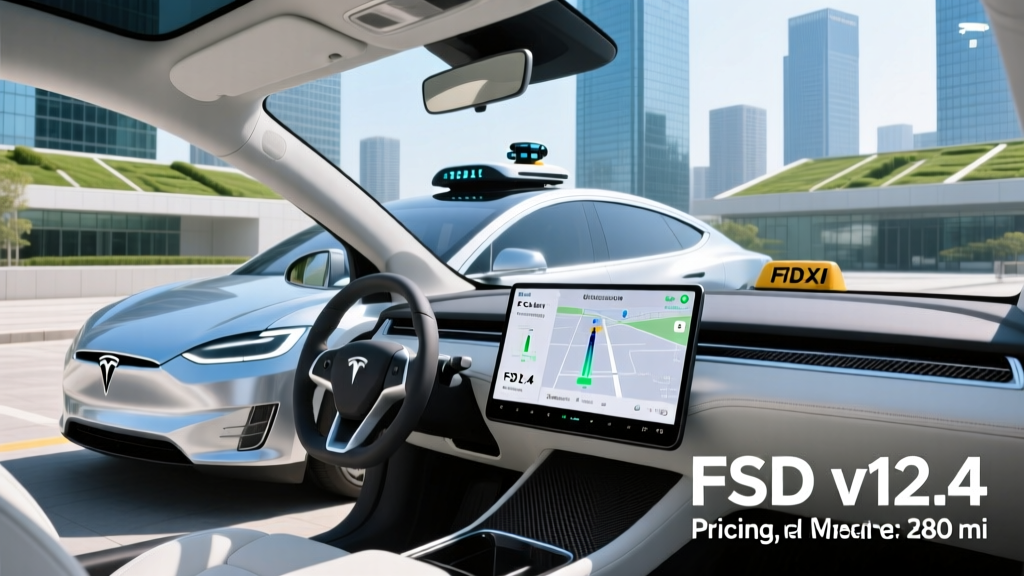
Tesla's Full Self-Driving (FSD) capability remains one of the most debated options in the EV market. Despite its name, FSD is not an autonomous driving system — it's an advanced Level 2 driver-assistance suite that requires constant supervision. But with monthly subscription availability and continuous software updates, the pricing calculus has shifted significantly for 2026-model-year buyers.
If you're researching how much Tesla FSD costs and whether the premium is justified, this guide breaks down every pricing tier, what the system actually does on the road, and how it compares to competing Level 2 systems from Ford, GM, and others.
How Much Is Tesla FSD? The 2026 Pricing Breakdown
Tesla offers FSD through two purchasing models. Here's exactly what each costs as of early 2026:
| Purchase Method | Cost | Transferability | Best For |
|---|---|---|---|
| One-Time Purchase | $8,000 | Tied to vehicle (non-transferable to a new owner if you sell; occasionally transferable to a new Tesla purchase during promotions) | Long-term owners planning to keep the car 5+ years |
| Monthly Subscription | $99/month | Tied to your Tesla account; cancel anytime | Short-term owners, fence-sitters, or those wanting to test before committing |
| Basic Autopilot | Included (standard) | Standard on all new Teslas | Everyday highway driving with lane-centering and adaptive cruise |
| Enhanced Autopilot | $6,000 one-time | Tied to vehicle | Drivers who want auto lane-change and Navigate on Autopilot without full FSD |
The break-even math: At $99/month, the subscription reaches the $8,000 purchase price at approximately 81 months (6.75 years). If you plan to own your Tesla longer than that, the one-time purchase saves money. If you trade in every 3–4 years, the subscription is significantly cheaper — and you can pause or cancel when you sell.
Important note on used Teslas: FSD purchased outright on a used Tesla may or may not transfer depending on how the vehicle was acquired. Tesla's official policy states FSD is tied to the original owner and vehicle. Always verify FSD status through the Tesla app before purchasing a used vehicle advertised with FSD.
What Tesla FSD Actually Does (And Doesn't Do)
Tesla FSD (Supervised) is classified as SAE Level 2 driver assistance. This means the system can control steering, acceleration, and braking simultaneously, but the driver must remain fully attentive, keep hands on or near the wheel, and be prepared to take over at any moment. This is fundamentally different from Level 4 robotaxi services like Waymo, which operate without a driver present.
Core FSD Capabilities
Tesla's FSD (Supervised) builds on standard Autopilot with several additional features:
- Traffic Light and Stop Sign Control: The vehicle identifies and responds to traffic signals and stop signs, slowing to a stop and proceeding when appropriate (with driver confirmation).
- Autosteer on City Streets: FSD extends lane-centering and navigation beyond highways to surface streets, handling turns, intersections, and roundabouts.
- Navigate on Autopilot: Active guidance from on-ramp to off-ramp on highways, including automatic lane changes to follow the navigation route and overtake slower vehicles.
- Auto Lane Change: The system initiates lane changes on highways when it determines a faster or route-appropriate lane is available.
- Autopark: Automated parallel and perpendicular parking in detected spaces.
- Smart Summon: The vehicle navigates a parking lot to the driver's location at low speeds (updated in 2025 with improved object recognition).
Hardware: Tesla Vision (Camera-Only)
Since 2022, Tesla has relied exclusively on its Tesla Vision camera suite — no radar or ultrasonic sensors in current production vehicles (Model 3 Highland, Model Y Juniper, refreshed Model S/X). The system uses eight surround cameras feeding into Tesla's custom HW4 (Hardware 4) computer, which processes visual data through neural networks trained on billions of miles of real-world driving footage.
This camera-only approach differentiates Tesla from competitors like Ford (which uses cameras plus radar for BlueCruise) and GM (cameras plus LiDAR-mapped HD routes for Super Cruise). Tesla's bet is that vision-based AI, scaled with enough training data, can handle any driving environment without relying on pre-mapped infrastructure.
Real-World Performance: Where FSD Excels and Where It Struggles
Based on extensive real-world testing across varied conditions, FSD's performance varies significantly by scenario:
| Driving Scenario | FSD Performance | Driver Intervention Frequency |
|---|---|---|
| Divided highway (clear weather) | Excellent — smooth lane-keeping, confident merging | Low (every 30–60+ miles) |
| Suburban surface streets (well-marked) | Good — handles most turns and intersections | Moderate (every 5–15 miles) |
| Urban grid (complex intersections) | Variable — unprotected left turns and construction zones require attention | High (every 1–5 miles) |
| Rain / fog / snow | Degraded — camera visibility limits performance; system may disengage | Very high; manual driving recommended |
| Construction zones | Poor — lane shifts and temporary barriers confuse the system | Constant supervision required |
| Rural roads (no lane markings) | Limited — Autosteer may not engage or will disengage frequently | High |
- Not self-driving: You must keep your eyes on the road and hands detectable on the steering wheel at all times. Tesla's cabin camera monitors attentiveness and will issue escalating warnings before disengaging.
- Weather vulnerability: Heavy rain, snow, fog, and direct sun glare can impair camera performance. The system will alert you and may limit or disable Autosteer.
- Phantom braking: FSD can unexpectedly brake for perceived obstacles that don't exist. This remains a documented concern in NHTSA complaint databases.
- No pre-mapped redundancy: Unlike GM Super Cruise, which operates only on LiDAR-mapped highways, FSD attempts to drive anywhere — which means it can encounter situations it hasn't been trained on.
- Driver liability: In any collision or traffic violation while FSD is active, the driver — not Tesla — is legally responsible.
Tesla FSD vs. Competing Level 2 Systems
Tesla isn't the only automaker offering advanced Level 2 assistance. Here's how FSD stacks up against the major competitors available in 2026:
| Feature | Tesla FSD (Supervised) | Ford BlueCruise 1.4 | GM Super Cruise | Hyundai/Kia HDA2 |
|---|---|---|---|---|
| SAE Level | Level 2 | Level 2 | Level 2 | Level 2 |
| Hands-Free Highway | No (hands-on-wheel detection required) | Yes (on approved divided highways, ~130,000 miles) | Yes (on LiDAR-mapped highways, ~750,000 miles) | No |
| City Street Driving | Yes (surface streets, intersections) | No | No (Urban Super Cruise announced but limited) | No |
| Auto Lane Change | Yes | Yes | Yes | Yes |
| Sensors | 8 cameras (vision only) | Cameras + radar | Cameras + LiDAR-mapped HD maps + radar | Cameras + radar |
| Cost | $8,000 or $99/mo | $2,100 one-time or included on select trims | $2,200 one-time + $25/mo after 3 years | Included on mid/high trims |
| Driver Monitoring | Cabin camera (steering wheel torque + visual) | Infrared cabin camera (eye tracking) | Infrared cabin camera (eye tracking) | Steering wheel touch detection |
The key trade-off: Tesla FSD offers the broadest geographic coverage — it will attempt to drive on virtually any road. Ford BlueCruise and GM Super Cruise are more geofenced but offer true hands-free operation on approved routes, which many drivers find more comfortable for long highway stretches. If your commute is primarily on major interstates, Super Cruise or BlueCruise may deliver a more relaxed experience. If you want assistance on suburban and city streets, FSD is the only consumer system that attempts it at scale.
Which Tesla Models Include FSD?
FSD is available as an add-on across Tesla's entire 2026 lineup. It is not standard on any trim — every vehicle ships with Basic Autopilot, and you choose to upgrade:
- Model 3 (Highland refresh): FSD available on all trims (RWD, Long Range, Performance). HW4 standard.
- Model Y (Juniper refresh): FSD available on all trims. HW4 standard.
- Model S: FSD available on Long Range and Plaid trims. HW4 standard on 2024+ production.
- Model X: FSD available on Long Range and Plaid trims. HW4 standard on 2024+ production.
- Cybertruck: FSD available on all trims. HW4 standard.
Vehicles produced before mid-2023 may still carry HW3 (Hardware 3). Tesla has stated HW3 vehicles will continue to receive FSD updates, though processing capability is lower. If purchasing a used Tesla, confirm the hardware revision in the vehicle's Software menu.
Is Tesla FSD Worth the Cost?
The value calculation depends on your driving patterns, ownership timeline, and tolerance for technology that's still evolving:
FSD may be worth it if:
- You drive 15,000+ miles per year in mixed conditions (highway + suburban) and value reduced mental fatigue
- You plan to keep your Tesla 5+ years (making the $8,000 purchase more economical than subscribing)
- You want access to features like city-street Autosteer that no other consumer system offers
- You're comfortable with the understanding that this is assistive technology, not autonomy
FSD may not be worth it if:
- Your driving is primarily on well-mapped interstates — BlueCruise or Super Cruise offer hands-free highway driving for less money
- You trade vehicles every 3–4 years — the $8,000 purchase doesn't add equivalent resale value
- You expect a self-driving experience — FSD requires active supervision and will not drive you home from a bar or let you nap
- You frequently drive in heavy rain, snow, or construction-heavy areas where the system struggles
For the cost-cautious, the $99/month subscription is a low-risk way to evaluate FSD on your specific routes before committing. Try it for two months on your daily commute and longest regular trip. If you find yourself disengaging it frequently, cancel and keep the $6,000+ you'd have otherwise spent.
Frequently Asked Questions
Can I transfer FSD to a new Tesla if I buy one?
Generally, no. FSD purchased outright is tied to the vehicle and the original owner. Tesla has occasionally run limited-time promotions allowing FSD transfers to a new Tesla purchase, but this is not standard policy. The monthly subscription is tied to your Tesla account and can be applied to any Tesla you own or lease.
Does FSD improve over time with software updates?
Yes. Tesla regularly pushes over-the-air updates that refine FSD behavior, improve object recognition, and add new capabilities. The system in early 2026 is substantially more capable than the version from 2022. However, "improvement" doesn't mean the system is close to full autonomy — it means fewer interventions in common scenarios.
Is Tesla FSD safer than a human driver?
Tesla publishes quarterly safety reports claiming lower crash rates per million miles with Autopilot/FSD engaged versus disengaged. However, these statistics are self-reported and not independently verified by NHTSA. The IIHS has noted that Level 2 systems can lead to driver complacency, which introduces new risks. The safest approach is to treat FSD as a fatigue-reducing aid, not a replacement for attentive driving.
Will FSD ever become truly autonomous (Level 4)?
Tesla has predicted full autonomy for years, but as of 2026, FSD remains Level 2 with no announced timeline for Level 4 capability. Regulatory approval, edge-case resolution, and liability frameworks are all unresolved barriers. If Level 4 consumer autonomy arrives, it will likely require hardware upgrades beyond what current vehicles carry.
Does FSD affect my insurance premium?
It depends on your insurer and state. Some insurers offer discounts for ADAS-equipped vehicles, while others charge more due to higher repair costs for camera/sensor-laden vehicles. Tesla offers its own insurance product in many states that uses real-time driving data (including FSD usage) to calculate premiums, which can result in lower rates for safe drivers.