Tesla's Full Self-Driving (Supervised) system is arguably the most discussed — and most misunderstood — driver-assistance feature on the road. The name implies autonomy; the reality is a sophisticated Level 2 system that still demands your full attention behind the wheel. So, how good is Tesla FSD when you strip away the marketing and look at what it actually does, what it costs, and where it falls short?
After extensive real-world use across multiple Tesla models and software versions, here's a precise, numbers-driven breakdown of FSD's capabilities, limitations, pricing, and how it compares to the best competing systems in 2026.
What Tesla FSD Actually Does — Technical Breakdown
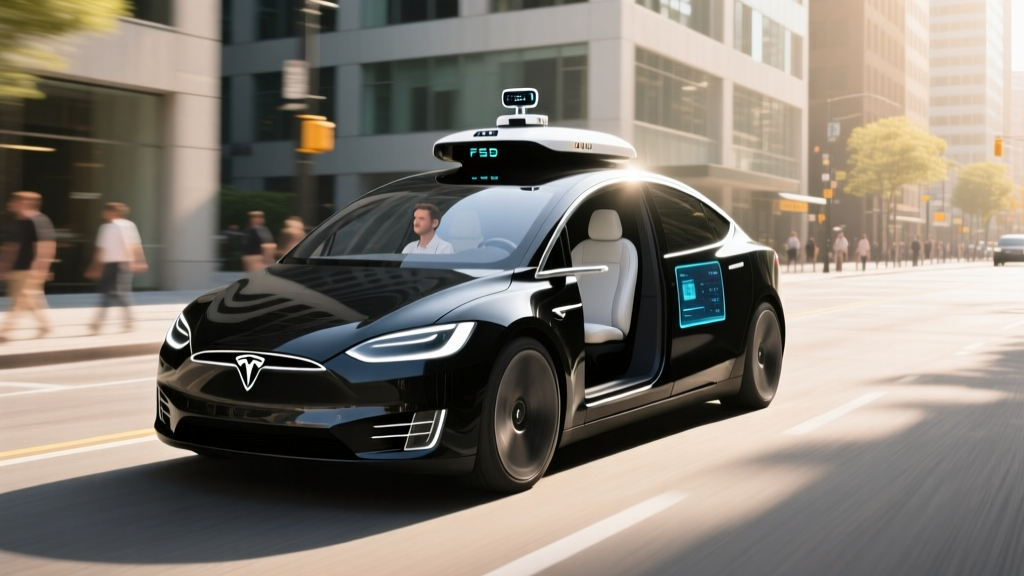
Tesla FSD (Supervised) is an advanced driver-assistance system that builds on Tesla's standard Autopilot. It uses Tesla's vision-only hardware suite — typically 8 or 9 cameras (depending on model year) providing 360-degree coverage — with no radar or lidar. All perception and decision-making runs through Tesla's custom FSD computer (Hardware 4.0 on current models, with Hardware 5.0 expected in upcoming production runs), processing neural networks trained on billions of miles of real-world driving data.
Here's what FSD adds beyond the standard Autopilot that comes with every new Tesla:
| Feature | Autopilot (Standard) | FSD (Supervised) |
|---|---|---|
| Traffic-Aware Cruise Control | Yes | Yes |
| Autosteer (lane centering, highways) | Yes | Yes |
| Navigate on Autopilot (on-ramp to off-ramp) | No | Yes |
| Auto Lane Change | No | Yes |
| Autopark (parallel & perpendicular) | No | Yes |
| Summon / Smart Summon | No | Yes |
| Traffic Light & Stop Sign Control | No | Yes |
| City Street Autosteer | No | Yes |
The headline capability is City Street Autosteer — the system's ability to navigate urban intersections, make unprotected left turns, handle roundabouts, and respond to pedestrians and cyclists on surface streets. This is where FSD differentiates itself from most competitors, which restrict advanced features to divided highways.
Tesla FSD (Supervised) is classified as an SAE Level 2 driver-assistance system. This means the vehicle can simultaneously control steering and acceleration/braking under certain conditions, but the driver must remain fully engaged, monitor the environment at all times, and be prepared to take over instantly. Tesla's own owner's manual states: "You must keep your hands on the steering wheel at all times." FSD is not a Level 4 or Level 5 autonomous system — that distinction currently applies only to geofenced robotaxi services like Waymo.
Is Tesla FSD Truly Self-Driving?
No. Despite the "Full Self-Driving" name, the system requires active driver supervision at all times. Tesla added "(Supervised)" to the product name to clarify this, but the marketing still causes widespread confusion.
In practice, this means:
- Your hands must remain on the steering wheel (Tesla uses torque-based detection, not capacitive touch).
- Your eyes must stay on the road — Tesla's cabin camera monitors driver attention and issues escalating warnings if you look away.
- You are legally responsible for every action the vehicle takes. If FSD makes an error, it's your liability.
- The system can and will disengage, sometimes without much warning, requiring immediate manual takeover.
The National Highway Traffic Safety Administration (NHTSA) has investigated multiple Tesla Autopilot/FSD-related crashes, and Tesla's own quarterly safety reports show the system is not infallible. The bottom line: FSD can reduce driver fatigue on long trips, but it does not replace you.
Real-World Capabilities: Where FSD Excels
Based on extensive highway and city driving, here's where FSD performs well in current 2026 software builds:
- Highway driving: Lane changes, on-ramp merging, and navigating interchanges via Navigate on Autopilot remain FSD's strongest use case. The system handles multi-lane freeways with confidence, including speed adjustments around slower traffic.
- Stop-and-go traffic: FSD handles congested commutes smoothly, maintaining following distance and responding to cut-in vehicles with generally predictable braking.
- Simple city intersections: Four-way stops, basic traffic light sequences, and right turns on well-marked roads are handled competently in most cases.
- Parking lot navigation: Smart Summon has improved substantially, allowing the car to navigate parking lots to your phone's location (within line-of-sight range).
Real-World Limitations: Where FSD Struggles
- Construction zones: Cone detection and lane re-routing remain inconsistent. FSD may attempt to follow old lane markings or fail to recognize temporary barriers.
- Unprotected left turns: While improved, FSD can hesitate excessively or misjudge gaps in oncoming traffic at busy intersections.
- Poor weather: Heavy rain, fog, snow, and direct sun glare can degrade camera-only perception. The system may issue a "cameras blocked" warning and disable Autosteer entirely.
- Faded or missing lane markings: Without clear visual references, FSD may wander or disengage unexpectedly.
- Complex multi-lane roundabouts: Yield decisions and lane selection in large roundabouts remain an edge case where intervention is common.
- Emergency vehicles: While Tesla has improved detection of stopped emergency vehicles with flashing lights, response can be delayed. NHTSA has specifically investigated this scenario.
- Phantom braking: The system occasionally brakes hard for no visible obstacle — a known issue with vision-only systems that Tesla has reduced but not eliminated.
Cold-weather performance deserves special mention. In temperatures below freezing, cameras can ice over, and road salt spray can obscure lenses within minutes. Unlike systems using radar (which penetrates precipitation better), Tesla's vision-only approach is more vulnerable to weather-related degradation.
How Much Does Tesla FSD Cost?
Tesla offers FSD through two pricing models. Note that prices and terms have shifted frequently — always confirm current pricing on Tesla's website before purchasing.
| Option | Cost | Notes |
|---|---|---|
| One-time purchase | $8,000 | Tied to the vehicle; transfers if you sell the car. Not refundable. |
| Monthly subscription | $99/month | Cancel anytime. Does not transfer between vehicles or owners. |
| Standard Autopilot | Included (free) | Comes with every new Tesla — includes Traffic-Aware Cruise Control and basic Autosteer. |
Cost analysis: At $99/month, you'd need to subscribe for roughly 81 months (~6.7 years) to equal the $8,000 upfront cost. If you plan to keep the vehicle 4+ years and use FSD regularly, the purchase option makes financial sense. If you only want FSD for road trips or want to try it before committing, the subscription is the lower-risk choice.
Neither FSD purchase nor subscription qualifies for any federal tax credit or incentive — it's a software feature, not a vehicle purchase component eligible under IRS §30D rules.
Which Tesla Models Include FSD?
FSD (Supervised) is available as an add-on purchase or subscription on every current Tesla model:
- Model 3 (all trims — Rear-Wheel Drive, Long Range, Performance)
- Model Y (all trims — Long Range, Performance, and the updated Juniper-generation models)
- Model S (Long Range and Plaid)
- Model X (Long Range and Plaid)
- Cybertruck (AWD and Cyberbeast)
Every new Tesla ships with the necessary Hardware 4.0 (or newer) computer and camera suite to run FSD — there's no special trim required. The feature is gated purely by software license. Standard Autopilot is included on all models at no additional cost.
Tesla FSD vs. Competing Systems
The two most capable competing Level 2 systems in 2026 are Ford/Lincoln's BlueCruise and GM's Super Cruise. Here's how they compare on key dimensions:
| Feature | Tesla FSD (Supervised) | GM Super Cruise | Ford BlueCruise |
|---|---|---|---|
| SAE Level | Level 2 | Level 2 | Level 2 |
| Hands-off highway driving | No (torque detection) | Yes (on pre-mapped roads) | Yes (on pre-mapped roads) |
| Eyes-off driving | No | No (driver monitoring) | No (driver monitoring) |
| City street capability | Yes (all roads) | Limited (expanding) | No (highway only) |
| Road coverage | Any road (no geofencing) | 400,000+ mi pre-mapped | 130,000+ mi pre-mapped |
| Auto lane change | Yes | Yes | Yes |
| Sensor approach | Cameras only | Cameras + LiDAR + radar + HD maps | Cameras + radar |
| Cost (subscription) | $99/month | $25/month (after trial) | $75/month or $2,000 one-time |
| Driver monitoring | Cabin camera | Infrared eye-tracking | Cabin camera |
Key trade-offs:
- Tesla FSD works on any road without geofencing — a significant flexibility advantage. But it requires hands-on-wheel and has a higher subscription cost.
- Super Cruise allows true hands-off driving on pre-mapped highways, which reduces fatigue on long trips. Its LiDAR + HD map approach is more robust in poor weather on supported roads, but it's limited to those roads.
- BlueCruise also offers hands-off on mapped highways at a lower price point, but lacks city street capability entirely.
None of these systems are "self-driving." All require active driver supervision, and the driver bears full legal responsibility. For a detailed breakdown of automation levels, see the SAE J3016 standard documentation.
Should You Buy or Subscribe to Tesla FSD?
- Choose the $99/month subscription if: You primarily want FSD for occasional road trips, want to test the system before committing $8,000, or plan to sell/upgrade your Tesla within 3-4 years.
- Choose the $8,000 purchase if: You drive 15,000+ miles/year with heavy highway and city commute use, plan to keep the vehicle 5+ years, and find the system meaningfully reduces driving fatigue.
- Stick with standard Autopilot if: Your driving is mostly local errands, you're uncomfortable with the system's current limitations, or you prefer to keep full manual control. Standard Autopilot's cruise control and lane centering already cover most highway use cases well.
From a resale-value perspective, FSD does not reliably add $8,000 to a used Tesla's value. Used-car markets typically discount the FSD premium significantly, so treat the purchase as a personal utility decision rather than an investment.
Frequently Asked Questions
Can I use Tesla FSD without holding the steering wheel?
No. Tesla FSD (Supervised) requires your hands on the wheel at all times. The system detects steering torque, and if no input is registered, it issues escalating visual and audible warnings before eventually disabling Autosteer for the remainder of the drive. Attempting to use steering-wheel weights or other defeat devices is dangerous and violates Tesla's terms of service.
Does FSD work in rain and snow?
FSD can operate in light rain, but heavy rain, snow, and fog degrade camera visibility and may trigger system disengagement. Unlike radar-equipped competitors, Tesla's vision-only system is more susceptible to weather-related limitations. In winter conditions, keep camera lenses clean and be prepared to take over frequently.
Will FSD eventually become fully autonomous?
Tesla has predicted full autonomy "next year" since approximately 2016. While the system has improved substantially, achieving SAE Level 4 or 5 autonomy requires solving edge cases that remain unsolved at scale. There is no confirmed timeline for unsupervised Tesla driving, and regulatory approval would be required before it could be legally deployed. Treat FSD as a driver-assist tool, not a future autonomous vehicle promise.
Does FSD transfer if I sell my Tesla?
Yes — if you purchased FSD outright ($8,000), it stays with the vehicle and transfers to the next owner. This can modestly improve resale value. Subscription-based FSD does not transfer and cancels upon sale.
How does FSD compare to Waymo robotaxis?
These are fundamentally different systems. Waymo operates SAE Level 4 robotaxis in geofenced areas (Phoenix, San Francisco, Los Angeles) with no driver present, using extensive LiDAR, radar, and camera arrays. Tesla FSD is Level 2 — it requires a licensed, attentive driver at all times and can be used anywhere. Waymo is autonomous within its service area; FSD is driver-assist everywhere.
Is Tesla FSD safe?
Tesla publishes quarterly safety reports showing miles driven per accident with Autopilot/FSD engaged versus disengaged. However, these reports have methodological limitations and don't account for driving environment differences. NHTSA has opened multiple investigations into Tesla's Autopilot/FSD system, particularly regarding crashes involving stationary emergency vehicles. FSD can be a useful tool, but it is not a substitute for an attentive driver.