The phrase "self-driving car" conjures images of steering-wheel-free pods gliding through city streets. But the history of self-driving cars stretches back decades before any rider ever summoned a robotaxi from a smartphone. Understanding that timeline matters for today's EV buyers and riders: it explains why Level 4 autonomy works brilliantly inside geofenced urban zones, why your Tesla's FSD Supervised still demands your full attention, and why the gap between the two remains one of the hardest engineering problems in transportation.
This guide walks through the key milestones, then grounds the discussion in what you can actually use right now — where robotaxis operate, what they cost, how safe the data shows them to be, and where the hard limits still are.
The Early Decades: Remote Control, Radio Waves, and DARPA
The earliest demonstrations of "driverless" vehicles weren't autonomous at all — they were remote-controlled. In 1925, electrical engineer Francis Houdina demonstrated a radio-controlled car through New York City traffic, though it crashed shortly after. Throughout the 1950s and 1960s, RCA Labs and General Motors experimented with embedded highway wires that guided specially equipped cars, envisioning an infrastructure-dependent form of automation that never scaled beyond test tracks.
The modern era of self-driving cars began in the 1980s with Ernst Dickmanns at the Bundeswehr University in Munich, whose team equipped a Mercedes van with cameras and early computer vision, achieving autonomous lane-keeping and obstacle detection at highway speeds. Carnegie Mellon's Navlab project pursued a parallel path in the US, culminating in "No Hands Across America" in 1995 — a 2,800-mile drive from Pittsburgh to San Diego with autonomous steering for roughly 98% of the trip (the driver still managed throttle and brakes).
Then came DARPA. The Defense Advanced Research Projects Agency's Grand Challenge in 2004 offered a $1 million prize for any vehicle that could complete a 142-mile desert course autonomously. No entrant finished. The longest run covered about 7 miles before getting stuck on a rock berm. A year later, DARPA ran the challenge again — and five vehicles completed the 132-mile course, with Stanford's "Stanley" (a modified VW Touareg) taking the $2 million prize. The 2007 DARPA Urban Challenge pushed further, requiring vehicles to navigate a simulated urban environment with traffic laws, intersections, and other vehicles. That event produced the core technical talent that would go on to found or lead Waymo, Cruise, Aurora, and Argo AI.
From Research Labs to Robotaxi Fleets
Google launched its self-driving car project in 2009, recruiting key engineers from the Stanford and Carnegie Mellon DARPA teams. By 2015, the project had logged over a million autonomous miles in Lexus RX450h hybrids and custom "Firefly" prototypes. In December 2016, Google spun the project out as Waymo, named for "a new way forward in mobility."
Uber entered the space aggressively, poaching 40 researchers from Carnegie Mellon's robotics center in 2015 and launching a pilot ride service in Pittsburgh in 2016 using Ford Fusion hybrids with roof-mounted lidar. A fatal crash in Tempe, Arizona in March 2018 — in which an Uber test vehicle struck and killed a pedestrian crossing outside a crosswalk — became a watershed moment for the industry, triggering a temporary industry-wide pause and forcing a reckoning with safety-case methodologies.
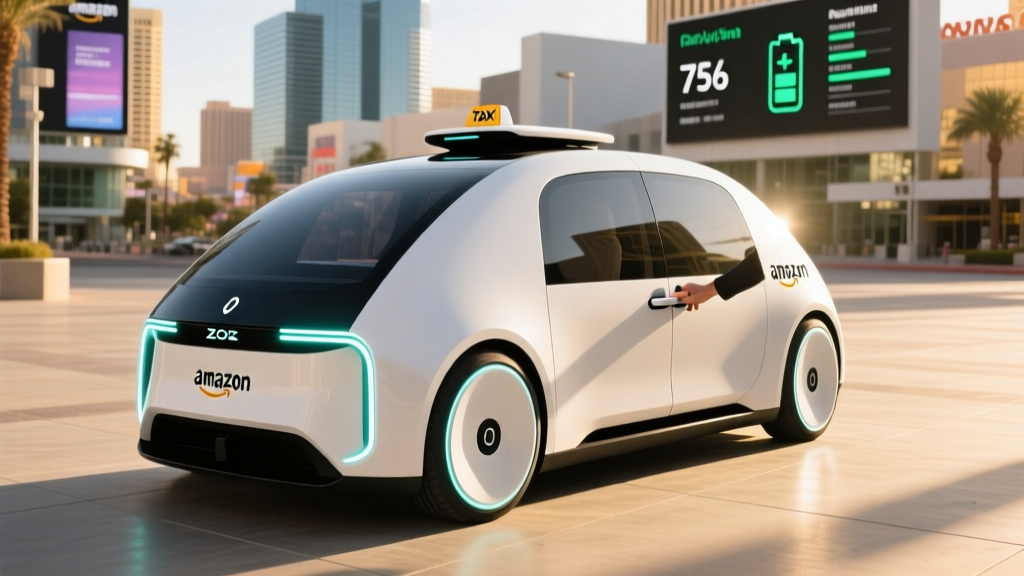
Meanwhile, GM's Cruise Automation division (acquired in 2016) began testing Chevrolet Bolt EVs in San Francisco, and by 2022 had received approval from the California Public Utilities Commission (CPUC) to operate a commercial driverless ride service. Amazon acquired Zoox in 2020 for roughly $1.3 billion, and the company has since developed a purpose-built, bidirectional robotaxi with no steering wheel.
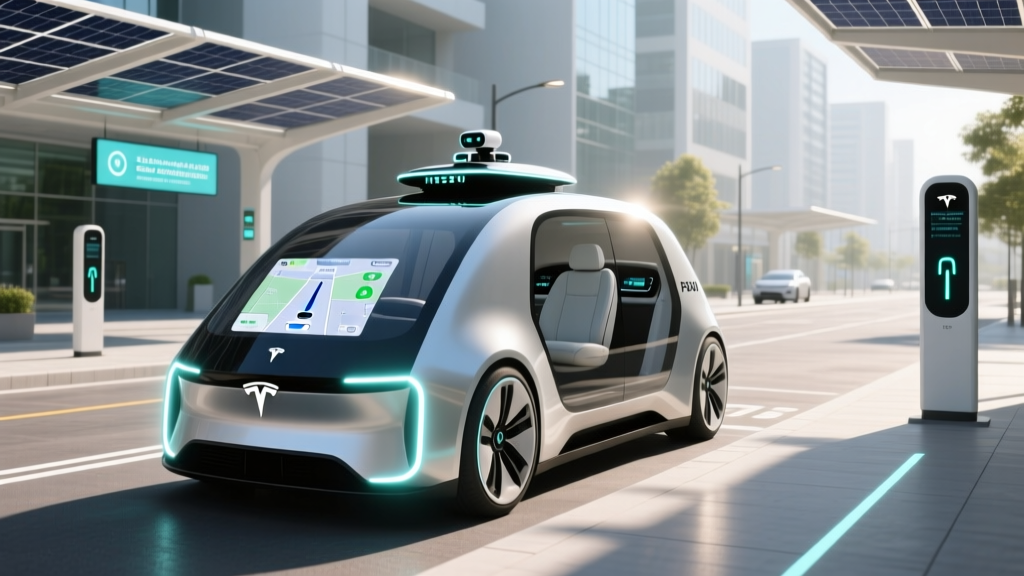
China's Baidu launched Apollo Go in 2020 and by 2024 was operating the world's largest robotaxi fleet by ride volume, primarily in Wuhan, Beijing, and Chongqing. Tesla, despite CEO Elon Musk's repeated timeline predictions dating to 2014, has kept its Full Self-Driving system firmly at SAE Level 2 — requiring constant driver supervision — though the company has begun limited testing of a driverless-capable platform.
Understanding SAE Automation Levels
The single most important framework for understanding self-driving history — and today's market — is the SAE J3016 standard, which defines six levels of driving automation. Confusing these levels is the root of most consumer misunderstanding about what cars can actually do.
| Level | Name | Who Drives | Example (2026) |
|---|---|---|---|
| 0 | No Automation | Human does everything | Basic car with no ADAS |
| 1 | Driver Assistance | Human drives; system assists steering OR speed | Adaptive cruise control, lane centering |
| 2 | Partial Automation | Human drives; system assists steering AND speed | Tesla Autopilot, GM Super Cruise, Ford BlueCruise |
| 3 | Conditional Automation | System drives in specific conditions; human must take over when requested | Mercedes Drive Pilot (limited markets/speeds) |
| 4 | High Automation | System drives fully within its operational design domain; no human needed | Waymo One, Cruise (pre-suspension), Zoox, Baidu Apollo Go |
| 5 | Full Automation | System drives everywhere, all conditions | Does not exist in production (2026) |
The critical takeaway: every consumer vehicle you can buy in 2026 — including a Tesla with FSD Supervised — is Level 2. You are the driver. You are liable. Level 4 robotaxis like Waymo operate in a fundamentally different category: the vehicle is the driver, the company bears liability, and no human intervention is expected or possible from the rider's seat.
Level 2 vs. Level 4 — why it matters: A Tesla Model Y on FSD Supervised and a Waymo Jaguar I-PACE may both appear to drive themselves through a city intersection. But the Tesla requires your hands available and eyes on the road — you are legally responsible. The Waymo has no steering wheel accessible to you, no expectation of intervention, and Waymo LLC is the responsible party. The technology stacks, validation processes, and regulatory approvals are entirely different.
Where Can You Actually Use a Robotaxi Today?
Robotaxi availability has expanded meaningfully through 2025 and into 2026, but it remains geographically constrained. Here is where you can hail a fully driverless (Level 4, no human behind the wheel) ride as of mid-2026:
| Service | City / Region | Operating Hours | Vehicle |
|---|---|---|---|
| Waymo One | Phoenix metro (East Valley, downtown, Sky Harbor airport) | 24/7 | Jaguar I-PACE (5th-gen), Hyundai Ioniq 5 (6th-gen rollout) |
| Waymo One | San Francisco (citywide) | 24/7 | Jaguar I-PACE, Ioniq 5 |
| Waymo One | Los Angeles (core areas, expanding) | Limited hours, expanding | Jaguar I-PACE |
| Waymo One | Austin (announced/launching 2025-2026) | Ramping | Ioniq 5 |
| Baidu Apollo Go | Wuhan, Beijing, Chongqing, Shenzhen, Shanghai (China) | Varies by city | Apollo RT6 (purpose-built) |
| Zoox | Las Vegas (limited corridor), Foster City, CA (testing) | Limited / invite | Zoox purpose-built vehicle |
| Motional (Hyundai/Aptiv) | Las Vegas (via Uber/Lyft integration) | Limited hours | Hyundai Ioniq 5 |
Cruise, which was once operating in San Francisco, Phoenix, and Austin, suspended all driverless operations in October 2023 after a serious incident in San Francisco in which a pedestrian was dragged by a Cruise vehicle. GM announced significant restructuring of Cruise in 2024-2025, pivoting toward personal-vehicle ADAS rather than robotaxi operations. As of mid-2026, Cruise is not running commercial driverless rides.
If you live outside these service areas, Level 4 robotaxis are not yet available to you — regardless of what you may read in press releases about "expansion plans."
How to Use a Robotaxi and What It Costs
Using Waymo One — the most broadly available service — works almost exactly like Uber or Lyft:
- Download the Waymo One app (available in service-area app stores).
- Create an account; some markets require you to join a waitlist before gaining full access.
- Enter your pickup and drop-off locations within the geofenced service area.
- The app dispatches a vehicle; you'll see its location, ETA, license plate, and a PIN to unlock the doors.
- Enter the PIN on a screen mounted in the rear seat. The vehicle will not move until all doors are closed and seatbelts are fastened.
- A screen shows your route. You can request music, adjust climate, add a stop, or pull over (in safe locations).
- Payment is automatic through the app upon arrival.
| Scenario | Waymo One | UberX | Lyft Standard |
|---|---|---|---|
| 5-mile trip (off-peak, Phoenix) | $11–$16 | $10–$15 | $10–$14 |
| 5-mile trip (peak, SF) | $18–$28 | $18–$30 | $16–$26 |
| 10-mile airport run (PHX Sky Harbor) | $22–$32 | $20–$35 | $20–$32 |
| Surge pricing | Moderate surge model | Can spike 2-4x | Can spike 2-3x |
| Tip expectation | Optional (no driver) | 15-20% expected | 15-20% expected |
Pricing is competitive with UberX and Lyft — often within a few dollars on the same route. The real cost advantage shows up when you factor in that there's no driver to tip (though Waymo does offer in-app tipping that goes to cleaning and support staff). For frequent riders in service areas, Waymo also offers subscription-style ride packages that can bring per-ride costs down further.
Safety Data: What the Numbers Actually Show
Robotaxi safety is the most consequential question in the history of self-driving cars, and it's where hype most often outpaces evidence. Here is what the published data indicates as of 2026:
Waymo's published safety metrics: In a 2023 study published with the Insurance Institute for Highway Safety (IIHS) and Swiss Re, Waymo reported that across over 7.1 million miles of fully autonomous driving in Phoenix, San Francisco, and Los Angeles, its vehicles were involved in police-reportable crashes at a rate roughly 85% lower than human-driven benchmark vehicles in the same geographies. Injury-causing crash involvement was reported at approximately 57% lower than the human benchmark. These figures use exposure-adjusted comparisons (per million miles) and control for the urban environments where Waymo operates.
Key context for interpreting these numbers:
- Operating domain matters. Waymo operates in geofenced, relatively well-mapped urban environments at moderate speeds. Comparing its crash rate to the national average (which includes rural highways, bad weather, and drunk driving) would be misleading. The Swiss Re/IIHS comparison uses same-geography benchmarks, which is more rigorous.
- Cruise's 2023 incident. In October 2023, a Cruise vehicle in San Francisco struck a pedestrian who had been thrown into its path by a human-driven car, then dragged the pedestrian approximately 20 feet while attempting to pull over. The California DMV suspended Cruise's deployment permit, and the company suspended operations nationwide. The incident raised questions about how autonomous systems handle multi-vehicle, high-complexity edge cases — and about transparency with regulators.
- NHTSA standing general order. Since 2021, NHTSA has required all manufacturers and operators of Level 2+ and Level 4 systems to report crashes within 24 hours under a Standing General Order. This has created the most comprehensive public crash database for automated vehicles, though data granularity and reporting consistency remain ongoing challenges.
- Severity vs. frequency. Robotaxis tend to be involved in low-speed, low-severity contacts (often rear-ended by human drivers in stop-and-go traffic) at higher rates per million miles than some benchmarks suggest, but at significantly lower rates for serious injuries and fatalities. The safety case for robotaxis rests primarily on eliminating impaired, distracted, and fatigued driving — the leading causes of traffic deaths.
Technology Stack: How Robotaxis Actually See the World
The history of self-driving cars is, in many ways, a history of sensor evolution. Today's Level 4 robotaxis use a multi-modal sensor suite — a fundamentally different approach from the camera-only system Tesla uses for its Level 2 FSD.
Typical Level 4 Robotaxi Sensor Stack (Waymo 6th-Gen, 2025-2026)
- LiDAR: Multiple solid-state and spinning units providing 360° point-cloud mapping out to 500+ meters. LiDAR gives precise distance measurements independent of lighting — critical for night driving, sun glare, and shadow-heavy urban canyons.
- Cameras: High-resolution, multi-spectrum camera arrays (visible light, some near-infrared) for object classification, traffic signal recognition, lane markings, and construction-zone reading.
- Radar: Imaging radar units for velocity detection of moving objects (especially in rain and fog where LiDAR performance degrades).
- HD Maps: Centimeter-precision pre-built maps of the operational domain, updated frequently. The vehicle localizes within this map in real time, providing a "prior" that pure real-time systems lack.
- Compute: Custom AI inference hardware (Waymo's in-house "TPU-like" chips, or NVIDIA DRIVE Orin/Thor in other platforms) running perception, prediction, and planning models simultaneously.
The camera-only approach (Tesla's vision system) argues that since humans drive with eyes alone, cameras plus neural networks should suffice. LiDAR proponents counter that redundancy and direct distance measurement are essential for safety-critical systems, especially given that camera performance drops in low light, heavy rain, and direct sun. Every commercially operating Level 4 robotaxi fleet in 2026 uses LiDAR as a core sensor.
Geofencing is the other critical technology that doesn't get enough attention. Level 4 robotaxis don't drive "anywhere." They operate within precisely defined operational design domains (ODDs) that specify approved roads, speed limits, weather conditions, and time-of-day constraints. If you request a ride that would take the vehicle outside its geofence, the app simply won't allow it. This is both the system's greatest strength (it only operates where it's been exhaustively validated) and its greatest limitation (scaling to new cities requires millions of miles of mapping and testing).
Regulatory Landscape: Who Approves Robotaxi Operations
In the United States, robotaxi regulation is a patchwork of federal and state authority:
- NHTSA (federal): Regulates vehicle safety standards (FMVSS). Has granted limited exemptions for vehicles without steering wheels or mirrors (e.g., Zoox, Nuro). Maintains the crash-reporting Standing General Order. Does not approve driving software or operations.
- State DMVs and PUCs: The real gatekeepers. California's DMV issues testing permits; the California Public Utilities Commission (CPUC) issues commercial deployment permits. Arizona takes a notably permissive approach — no state permit is required for testing or deployment, which is why Waymo launched commercially in Phoenix first. Texas, Nevada, and other states have their own frameworks.
- Local governments: Cities can impose additional requirements (pickup/drop-off zones, airport access agreements, data-sharing mandates). San Francisco's Board of Supervisors has at times pushed back against expansion, citing traffic disruption concerns.
This fragmented regulatory environment means that a robotaxi company may be fully approved in Phoenix, conditionally approved in San Francisco, and unable to operate at all in Miami — not because the technology differs, but because the regulatory pathway hasn't been established.
Current Limitations: What Robotaxis Still Can't Do
The history of self-driving cars is also a history of promises that arrived later than expected. Honest assessment of 2026 limitations:
- Heavy weather: Snow, heavy rain, and dense fog degrade LiDAR and camera performance. Waymo and others will slow down, increase following distance, or in extreme cases pause service rather than operate outside validated conditions. You cannot currently hail a robotaxi in a blizzard in Minneapolis.
- Geofence rigidity: Expansion to new neighborhoods within a city requires additional mapping and validation. A service area that covers downtown Phoenix may not yet cover a suburb 15 miles away.
- Construction zones: While improving, temporary lane shifts, missing lane markings, and flagger-directed traffic remain challenging. Systems handle well-marked construction zones adequately but may pull over and request remote assistance in complex, ambiguous ones.
- Unprotected left turns across heavy traffic: Historically one of the hardest maneuvers for autonomous systems. Modern systems handle these better than early generations but still occasionally exhibit excessive caution (long waits) or, less commonly, misjudge gaps.
- Emergency vehicle interactions: Systems must detect and respond to ambulances, fire trucks, and police vehicles with active lights and sirens. Performance has improved significantly but remains an area of active NHTSA scrutiny.
- Unusual road users: Horse-drawn carriages, oversized loads, funeral processions, and other atypical scenarios can trigger cautious behavior or remote-assistance requests.
- No intercity travel: Robotaxis operate within their geofenced urban domain. You cannot take a Waymo from San Francisco to Los Angeles.
- Accessibility gaps: While Waymo has made significant investments in accessibility features (audio cues, braille labels, wheelchair-accessible vehicle pilots), the current fleet is not universally accessible for all disability types.
What robotaxis do NOT do in 2026: Drive in heavy snow. Operate outside their mapped geofence. Handle every construction zone without remote assistance. Replace intercity or rural transportation. Function as "self-driving" in the Level 5, anywhere-anytime sense. Any source claiming otherwise is either outdated, speculative, or marketing.
The Road Ahead: What History Suggests About Timelines
If the history of self-driving cars teaches one lesson, it's that the last 10% of any autonomy problem is dramatically harder than the first 90%. The DARPA Grand Challenge went from zero finishers to five in one year — but going from "works most of the time in a desert" to "carries paying passengers safely in downtown San Francisco at night in the rain" took 17 years and billions of dollars.
For 2026 and beyond, the realistic trajectory looks like this: continued city-by-city expansion of Level 4 services, with each new city requiring 12-24 months of mapping, testing, and regulatory approval. Purpose-built vehicles (no steering wheel, optimized for rider comfort) will increasingly replace retrofitted production cars. Pricing will continue to converge with rideshare as fleet utilization improves. And Level 5 — the car that can drive you from a Manhattan garage to a rural Vermont cabin in a snowstorm — remains a research problem, not a product roadmap item.
For consumers, the practical question is not "when will self-driving be everywhere" but "is there a robotaxi in my city, and does the safety data support using it?" In Phoenix and San Francisco in 2026, the answer to both is increasingly yes.
Frequently Asked Questions
Is Tesla's FSD a robotaxi?
No. Tesla's Full Self-Driving (Supervised) is an SAE Level 2 driver-assistance system. The driver must remain engaged, hands available, and eyes on the road at all times. Tesla is legally and technically not operating a driverless service. The naming is a persistent source of consumer confusion.
Where can I use a robotaxi service right now?
As of mid-2026, the most broadly available Level 4 robotaxi in the US is Waymo One, operating in Phoenix (metro-wide including Sky Harbor airport), San Francisco (citywide, 24/7), Los Angeles (core areas), and Austin (launching/ramping). Baidu Apollo Go operates in multiple Chinese cities. Zoox and Motional have limited operations in Las Vegas. Cruise is not currently operating commercially.
How much does a robotaxi cost vs. Uber or Lyft?
Pricing is broadly comparable to UberX and Lyft Standard — typically within $1-$5 on the same route. A 5-mile off-peak trip in Phoenix might cost $11-$16 on Waymo vs. $10-$15 on UberX. The main cost advantage is the absence of a driver tip (15-20% savings on comparable rideshare trips).
How safe are robotaxis — what does real data show?
Waymo's published data (analyzed with IIHS and Swiss Re) shows police-reportable crash rates approximately 85% lower and injury-causing crash rates approximately 57% lower than human-driven benchmarks in the same geographies, across 7.1+ million autonomous miles. However, this data reflects geofenced urban operations, not all driving conditions. The Cruise suspension in 2023 demonstrated that serious incidents can and do occur, and regulatory oversight remains essential.
What are the current limitations of robotaxis?
Key limitations include: inability to operate in heavy snow or severe weather; confinement to geofenced service areas; challenges with complex construction zones; no intercity travel; cautious behavior in ambiguous traffic scenarios; and incomplete accessibility for some disability types. Level 5 autonomy (drive anywhere, any conditions) does not exist in production.
Who regulates self-driving cars in the US?
Regulation is split: NHTSA sets federal vehicle safety standards and requires crash reporting. State DMVs and public utility commissions (like California's CPUC) issue testing and commercial deployment permits — and these state-level approvals are the primary gatekeepers. Local governments can impose additional requirements. This patchwork means availability varies dramatically by city and state.
Will robotaxis replace Uber and Lyft drivers?
Not in the near term. Robotaxi services are limited to specific geofenced areas in a handful of cities, while rideshare operates virtually everywhere. The more likely near-term trajectory is coexistence: robotaxis in dense urban cores where they're approved, human-driven rideshare everywhere else, and potentially hybrid models (e.g., Uber dispatching a Waymo within Waymo's service area, as is already being piloted).