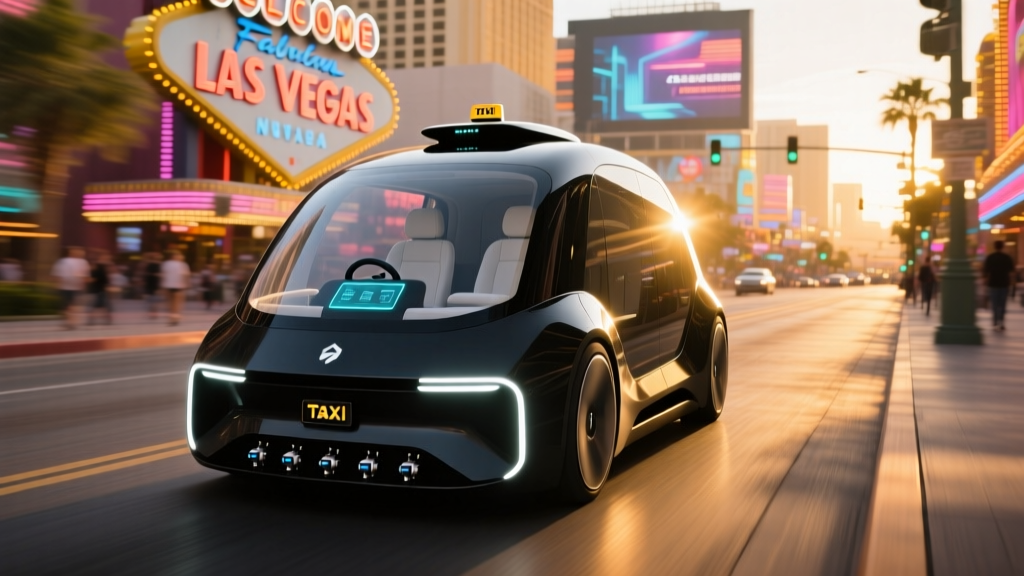
If you've searched for a free driverless taxi in Las Vegas, you've likely encountered a tangle of promotional headlines, outdated pilot-program references, and marketing hype. The reality in 2026 is more nuanced: Las Vegas does have driverless taxi options, but availability is limited, "free" rides are mostly a thing of the past, and understanding what you're actually getting into matters more than ever.
This guide cuts through the noise with concrete data on which robotaxi services actually operate in Las Vegas today, what they cost, how safe they are, and where the technology genuinely stands.
Where Can You Actually Ride a Driverless Taxi in Las Vegas?
Las Vegas has been a testing ground for autonomous vehicles for years, but active commercial robotaxi service in the city has narrowed significantly by 2026. Here is the current landscape:
| Service | Status in Las Vegas (2026) | Operational Area | Hours |
|---|---|---|---|
| Waymo One | Not currently operating commercially | N/A — Waymo's paid service is in Phoenix, San Francisco, Los Angeles, Austin | N/A |
| Motional (Hyundai/Aptiv) | Limited operations / Uber integration | Las Vegas Strip corridor and select downtown zones | Daytime and early evening hours |
| Zoox | Testing only — no public ride-hail | Limited geofenced areas | N/A |
| Cruise | Suspended — no Las Vegas service | N/A — Cruise paused all commercial operations after its 2023 San Francisco incident and restructuring | N/A |
The key takeaway: Motional — the joint venture between Hyundai and Aptiv — is the primary robotaxi option in Las Vegas as of 2026, primarily accessible through the Uber app when a driverless Ioniq 5 robotaxi is matched to your ride request. Waymo, despite being the most established U.S. robotaxi operator, has not launched a commercial Las Vegas service.
As for "free" — early promotional periods and beta-testing programs that offered complimentary rides have largely ended. You should expect to pay for robotaxi rides in Las Vegas, just as you would for any rideshare trip.
Understanding the Autonomy Level: This Is Not Autopilot
Before riding, it's essential to understand what level of automation you're experiencing. Robotaxis like Waymo and Motional operate at SAE Level 4 — meaning the vehicle handles all driving tasks within a defined operational design domain (ODD) with no human driver present. This is fundamentally different from the SAE Level 2 systems found in consumer vehicles.
| SAE Level | Definition | Example | Driver Required? |
|---|---|---|---|
| Level 0 | No automation | Basic cruise control | Yes — full control |
| Level 1 | Driver assistance (steering OR speed) | Adaptive cruise control | Yes — full control |
| Level 2 | Partial automation (steering AND speed) | Tesla Autopilot, GM Super Cruise, Ford BlueCruise | Yes — must supervise at all times |
| Level 3 | Conditional automation (system drives, human must take over on request) | Mercedes Drive Pilot (limited markets/conditions) | Yes — must be ready to intervene |
| Level 4 | High automation (no driver needed within ODD) | Waymo One, Motional robotaxis | No — within geofenced area |
| Level 5 | Full automation (anywhere, any condition) | Does not exist commercially | No |
When you step into a Motional Ioniq 5 robotaxi on the Las Vegas Strip, there is no one in the driver's seat. The vehicle is operating autonomously within its mapped and geofenced service area. This is a critical distinction from Tesla's FSD (Supervised), which is a Level 2 system requiring constant driver attention regardless of marketing language.
How to Use a Robotaxi in Las Vegas and What It Costs
If Motional's service is active and you're within the geofenced zone, here's how the process works:
- Open the Uber app and enter your destination within the Las Vegas service area.
- Select the autonomous option if available — Uber will indicate when a Motional robotaxi is matched to your request.
- Meet the vehicle at the designated pickup point. The app shows the vehicle's location and license plate.
- Unlock via the app — tap to unlock the doors when you arrive at the vehicle.
- Buckle up and confirm — the vehicle won't move until seatbelts are fastened and you confirm the ride.
- Ride — the vehicle navigates autonomously. A screen displays the route and detected objects in real time.
| Service | Typical Base Fare | Per-Mile Rate | 3-Mile Strip Ride Estimate |
|---|---|---|---|
| Motional (via Uber) | $2.50–$3.50 | $1.50–$2.20/mi | $8–$14 |
| UberX (human driver) | $2.50–$3.50 | $1.40–$2.00/mi | $8–$13 |
| Lyft Standard | $2.50–$3.50 | $1.30–$1.90/mi | $7–$12 |
| Waymo One (Phoenix/SF for reference) | $3.00–$5.00 | $1.50–$2.50/mi | $10–$16 |
Robotaxi pricing is generally competitive with standard rideshare, not cheaper. Early promotional discounts (including free or deeply subsidized rides) were used to attract riders during pilot phases, but these have largely expired. Expect to pay roughly the same as an UberX ride — sometimes slightly more during peak demand, sometimes less when promotional pricing briefly returns.
How Safe Are Robotaxis? The Actual Data
Safety is the most important — and most misunderstood — aspect of robotaxi service. Here's what the data shows:
Waymo Safety Data (as reported to NHTSA and in peer-reviewed research):
- Over 30 million fully driverless miles completed across Phoenix, San Francisco, and Los Angeles as of late 2025.
- A study published by the Swiss Re insurance group found Waymo's at-fault crash rate was ~85% lower than the human benchmark for property-damage-only claims and ~100% lower for bodily-injury claims over 25 million miles.
- Waymo vehicles are required to report all collisions to NHTSA under Standing General Order 2021-01. Most reported incidents involve the robotaxi being rear-ended or sideswiped by human drivers — not the robotaxi causing the collision.
Motional's Safety Record: Motional has accumulated millions of testing and commercial miles in Las Vegas, Pittsburgh, and Boston. The company has not published the same volume of peer-reviewed safety data as Waymo, but its Ioniq 5 robotaxi platform has operated without a reported at-fault injury collision in its Las Vegas commercial service as of early 2026.
Cruise's Cautionary Tale: In October 2023, a Cruise robotaxi in San Francisco dragged a pedestrian who had been thrown into its path by a human-driven vehicle. The incident led to Cruise's California permit being suspended by the DMV, a nationwide operational pause, the resignation of CEO Kyle Vogt, and ultimately GM's decision to wind down Cruise's robotaxi operations. This incident underscores that Level 4 autonomy, while impressive, still faces edge cases that the industry is working to resolve.
The honest assessment: robotaxis appear statistically safer than human drivers in their operating domains, but those domains are carefully selected (mapped, geofenced, relatively low-complexity environments). The technology is not infallible, and edge cases — construction zones, erratic pedestrians, severe weather — remain challenges.
The Technology Stack: How Robotaxis See the World
Robotaxis don't drive like humans. They use a fundamentally different perception and decision-making architecture:
Motional Ioniq 5 Robotaxi Sensor Suite
- LiDAR: Multiple solid-state and spinning LiDAR units providing 360-degree 3D point-cloud mapping up to ~200+ meters. LiDAR works in darkness, rain, and conditions where cameras struggle.
- Cameras: High-resolution cameras for traffic-light detection, sign reading, lane-marking identification, and object classification.
- Radar: Forward and corner radar units for velocity detection of other vehicles, particularly in poor visibility.
- HD Maps: Centimeter-precision pre-mapped routes that the vehicle cross-references in real time against live sensor data.
- Compute: Redundant onboard computing platforms capable of processing millions of data points per second, with failover systems.
Waymo 6th-Generation Driver (Jaguar I-PACE)
- LiDAR: Proprietary LiDAR with improved range and resolution, seeing 500+ meters in some conditions.
- Cameras: 29+ cameras covering 360 degrees with improved low-light performance.
- Radar: 6 radar units for all-weather velocity and proximity detection.
- External audio sensors: Microphones to detect sirens from emergency vehicles.
This multi-sensor redundancy is the defining difference between Level 4 robotaxis and consumer Level 2 systems. Tesla's FSD (Supervised) relies on a camera-only ("Tesla Vision") approach without LiDAR — a design choice that works for supervised driving but has not been validated for unsupervised Level 4 operation at scale.
Robotaxis also rely heavily on geofencing — they only operate within pre-mapped zones where every intersection, crosswalk, and lane configuration has been cataloged. If you request a ride outside the geofence, the service simply won't dispatch.
Current Limitations: What Robotaxis Cannot Do
Understanding the limitations is as important as understanding the capabilities. Here's what constrains robotaxi service in 2026:
- Geofencing: Service is restricted to mapped zones. In Las Vegas, this means primarily the Strip corridor and select downtown areas. You cannot take a robotaxi to the suburbs, the airport (unless within the geofence), or Henderson.
- Weather: Heavy rain, fog, dust storms, and snow degrade sensor performance. Most robotaxi services reduce operations or pull vehicles from service in severe weather. Las Vegas's occasional monsoon downpours can trigger service interruptions.
- Construction zones: Temporary lane shifts, cones, and flaggers create dynamic scenarios that can cause robotaxis to stop and wait for remote-assistance guidance, adding delays.
- Edge cases: Unusual scenarios — a person in a costume, an overturned truck, a parade — may cause the vehicle to stop and request remote human guidance. This is by design (cautious behavior), but it means rides can take longer than a human driver would.
- No highway driving (mostly): Most robotaxi services avoid high-speed freeway segments. Rides stay on surface streets within the geofence.
- Limited passenger capacity: Typically 2–3 passengers max. No car seats, limited luggage space.
- Accessibility: While Waymo has begun deploying wheelchair-accessible vehicles in some markets, accessibility options remain limited across the industry.
- Wait times: Fleet sizes are small compared to Uber/Lyft. Wait times of 10–20 minutes are common, especially during peak hours.
The Regulatory Landscape: Who Allows Robotaxis to Operate?
Robotaxi operations in the United States are governed by a patchwork of state and local regulations — there is no single federal framework for commercial Level 4 deployment.
In Nevada: The state has been autonomous-vehicle-friendly since passing AB 511 in 2011, one of the first state laws authorizing autonomous vehicle testing and operation. The Nevada Department of Motor Vehicles issues testing and deployment permits. Companies must demonstrate insurance coverage, safety plans, and reporting compliance.
Federal role: NHTSA sets vehicle safety standards and requires crash reporting via Standing General Order 2021-01, but does not currently issue permits for commercial robotaxi operations. That authority rests with states and, in some cases, cities.
Key regulatory bodies by state:
- California: CPUC (California Public Utilities Commission) issues commercial deployment permits; DMV issues testing permits.
- Arizona: Minimal regulation — companies self-certify with the state. This is why Waymo launched first in Phoenix.
- Nevada: DMV issues permits; relatively permissive environment.
- Texas: No specific state-level robotaxi permit framework; companies operate under general autonomous vehicle statutes.
Frequently Asked Questions
Is there truly a free driverless taxi in Las Vegas right now?
No. While early pilot programs and promotional periods offered free or heavily subsidized robotaxi rides, commercial services in 2026 charge fares comparable to Uber and Lyft. You may occasionally see promotional discounts for first-time riders, but a permanently free driverless taxi service does not exist in Las Vegas.
Can I hail a robotaxi anywhere on the Las Vegas Strip?
Within the geofenced service area — generally the central Strip corridor and parts of downtown — yes. However, pickup is restricted to designated spots, and service may be unavailable during severe weather, special events that disrupt mapping, or late-night hours depending on the operator's schedule.
How do robotaxis compare to Uber and Lyft on price?
Pricing is generally within $1–$3 of a comparable UberX or Lyft Standard ride for the same route. Robotaxis are not a budget option — they're priced as a premium or equivalent experience. The main value proposition is the novelty and technology experience, not cost savings.
Is it safe to ride in a driverless taxi?
Available data suggests robotaxis are at least as safe as, and likely safer than, human drivers within their operating domains. Waymo's peer-reviewed data shows significantly lower at-fault crash rates than human benchmarks. However, the technology is not perfect, edge cases exist, and the geofenced operating areas are deliberately chosen to be lower-complexity environments.
What happens if something goes wrong during my ride?
Robotaxis are equipped with remote-assistance systems. If the vehicle encounters a scenario it cannot handle, it will pull over safely and connect with a remote human operator who can guide the vehicle or dispatch assistance. In-vehicle support buttons and app-based help are also available. All vehicles carry commercial insurance.
Will Waymo come to Las Vegas?
Waymo has not announced a commercial Las Vegas launch date as of early 2026. The company has been expanding to new cities (Austin, expanded Phoenix and LA coverage), but Las Vegas is not currently on its announced roadmap. Given Waymo's cautious expansion approach, a Las Vegas launch remains possible but unconfirmed.
Is a robotaxi the same as Tesla's Full Self-Driving?
No. Tesla FSD (Supervised) is an SAE Level 2 driver-assistance system that requires a human driver to remain fully attentive and ready to take over at any moment. Robotaxis from Waymo and Motional are SAE Level 4 — they operate without any human driver present within their geofenced service areas. The two are fundamentally different categories of technology with different safety validation requirements.
The Bottom Line on Las Vegas Robotaxis in 2026
If you're visiting Las Vegas and hoping to ride in a driverless taxi, your best option is checking the Uber app for Motional's autonomous Ioniq 5 service within the Strip corridor. It's a genuine Level 4 robotaxi experience — no driver, full autonomy — and the technology is impressive. But manage your expectations: it's not free, it's not available everywhere, and wait times can be longer than a standard rideshare.
The robotaxi industry in 2026 is real but still maturing. Las Vegas remains an important testing and operating market, but the city is far from being saturated with driverless rides. The technology is safer than the headlines suggest, the limitations are real but well-managed, and the experience is worth trying at least once — just don't plan your entire Vegas transportation around it.