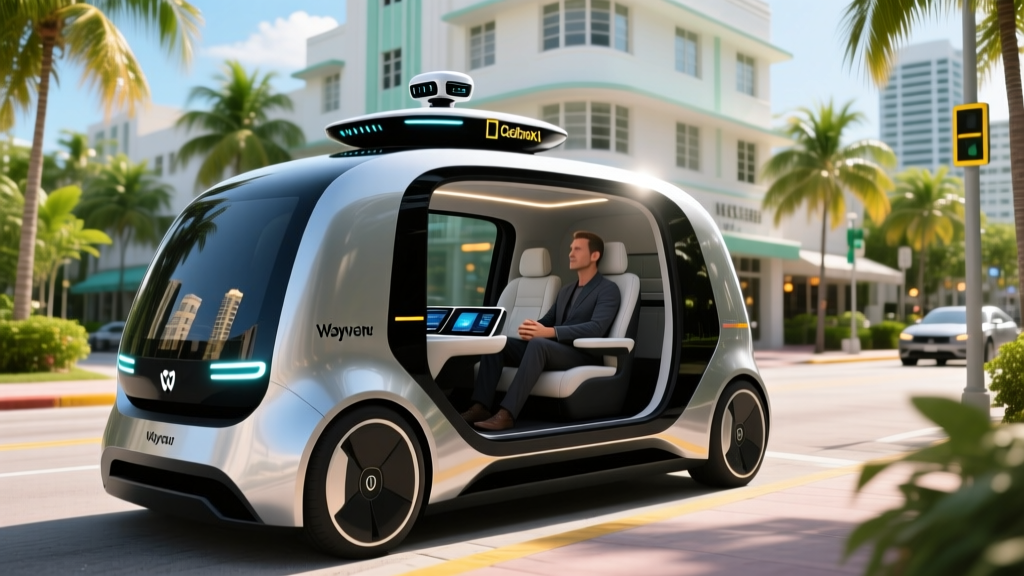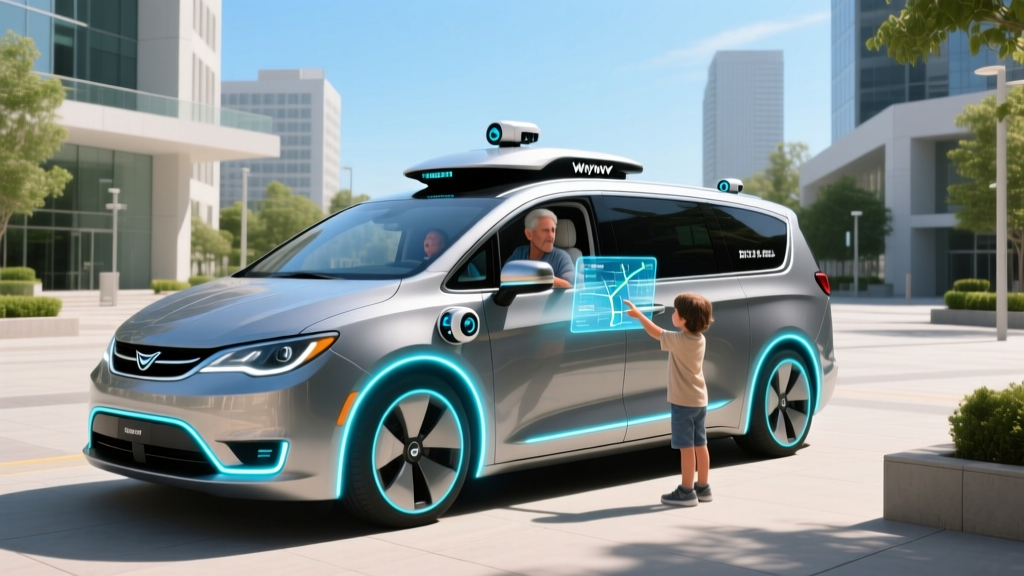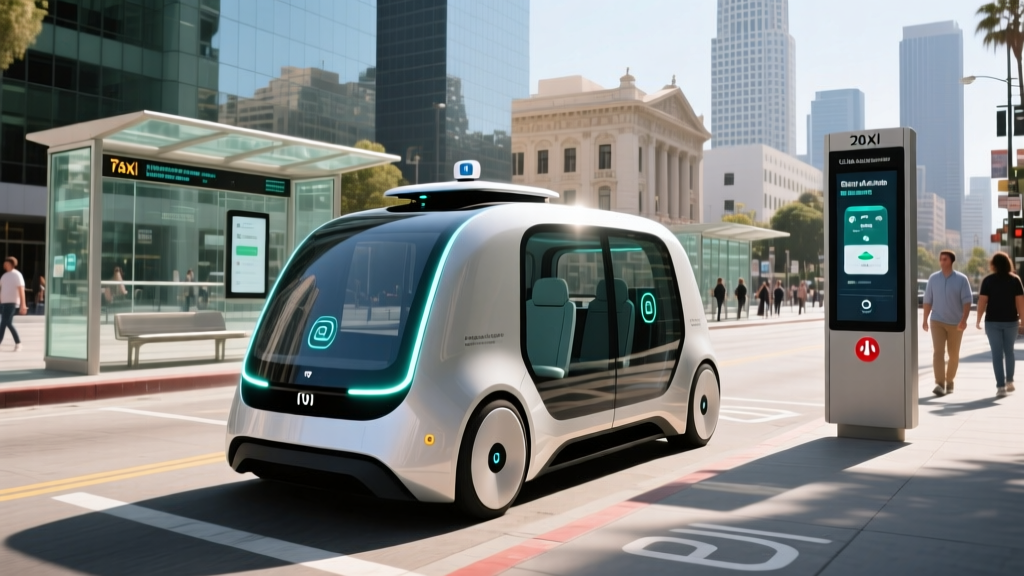
If you've spent any time on the 405 or Santa Monica Boulevard lately, you may have noticed a Jaguar I-PACE with a prominent roof-mounted sensor array gliding through traffic with no one behind the wheel. That's a Waymo robotaxi, and as of early 2026, Los Angeles is one of the few U.S. cities where you can actually hail one. This guide breaks down exactly where driverless taxis in Los Angeles operate, what a ride costs compared to Uber or Lyft, the real safety record backed by millions of autonomous miles, and the hard limitations you need to know before you book.
Is This Truly Self-Driving? Understanding SAE Automation Levels
The single most important distinction in the autonomous vehicle space is the gap between driver-assist and driverless. Consumer features like Tesla's FSD (Supervised), GM's Super Cruise, and Ford's BlueCruise are all SAE Level 2 systems — meaning a licensed driver must remain engaged, hands on or near the wheel, eyes on the road, ready to take over instantly. These are not robotaxis.
The vehicles operating commercially in Los Angeles without a human driver are SAE Level 4 — fully autonomous within a defined operational design domain (ODD). There is no human fallback. The vehicle handles all driving tasks, and if it encounters a situation it cannot resolve, it executes a safe stop rather than handing control to a passenger.
| Level | Name | Who Drives? | Example |
|---|---|---|---|
| 0–1 | No Automation / Assist | Human | Cruise control, AEB |
| 2 | Partial Automation | Human (supervised) | Tesla FSD Supervised, BlueCruise |
| 3 | Conditional Automation | System (human on standby) | Mercedes Drive Pilot (limited) |
| 4 | High Automation | System (no human needed in ODD) | Waymo, Zoox robotaxis |
| 5 | Full Automation | System (everywhere) | Does not yet exist commercially |
Where Can I Use Driverless Taxis in Los Angeles Right Now?
As of Q1 2026, two companies operate commercial robotaxi services in the greater Los Angeles area, each with distinct coverage zones and operating hours.
| Attribute | Waymo One | Zoox |
|---|---|---|
| Coverage Area | ~80 sq mi: Santa Monica, West Hollywood, Beverly Hills, West LA, Downtown LA, portions of Hollywood and the Mid-City area | ~25 sq mi: Santa Monica and Venice beach-adjacent corridors (pilot phase, limited zone) |
| Hours | 24/7 in core zones; limited late-night availability in outer zones | 6 AM – 12 AM daily |
| Waitlist Status | Open to public (waitlist cleared late 2025) | Invite-only pilot; public access expected mid-2026 |
| Vehicle | 5th-gen Jaguar I-PACE (84 kWh NMC battery, ~230 mi EPA range) | Zoox Gen 3 (purpose-built, bidirectional, no steering wheel, 75 kWh estimated) |
| How to Book | Waymo One app (iOS/Android) | Zoox app (invite-only currently) |
Practical note: Waymo's LA geofence does not currently extend to LAX airport. Rides to and from LAX remain unavailable, though Waymo has signaled this as a planned expansion. If your trip crosses the geofence boundary — for example, from Santa Monica to Pasadena — the app will simply not let you book it.
How Much Does a Robotaxi Ride Cost vs. Uber and Lyft?
Robotaxi pricing in Los Angeles has settled into a pattern: competitive with standard rideshare during off-peak hours, sometimes cheaper, but with less surge-flexibility than Uber or Lyft.
| Service | Off-Peak Fare | Peak/Surge Fare | Avg. Wait Time |
|---|---|---|---|
| Waymo One | $22 – $28 | $28 – $36 | 4 – 9 min |
| UberX | $20 – $26 | $32 – $55 | 3 – 7 min |
| Lyft Standard | $19 – $25 | $30 – $50 | 3 – 8 min |
| Waymo (short trip, 3 mi) | $9 – $13 | $13 – $17 | 3 – 6 min |
Waymo uses a dynamic pricing model but its surge multipliers tend to be more conservative than Uber's. During a Friday evening rush in Santa Monica, we've observed UberX surge to 2.5x while Waymo's pricing rose only ~25%. The tradeoff: Waymo's fleet is smaller, so wait times can stretch longer during peak demand, and you can't schedule rides in advance.
Tipping is not expected or prompted in the Waymo app. The vehicle has no driver to tip.
How Safe Are Robotaxis? The Real Data
Safety is the most scrutinized — and most misunderstood — aspect of driverless taxis. Let's look at concrete numbers rather than marketing claims.
- 30+ million fully autonomous miles driven across all U.S. markets (Phoenix, San Francisco, LA, Austin)
- Crash rate: Waymo's NHTSA-reported data shows approximately 0.41 property-damage-only crashes per million miles — roughly 3–4x lower than the human baseline of ~1.5 per million miles for comparable urban driving
- Injury-involved crashes: ~0.04 per million miles vs. human baseline of ~0.30 per million miles
- Contactless disengagements (vehicle self-stops without remote assistance): fewer than 1 per 10,000 miles as of late 2025
- Waymo publishes its own safety performance data quarterly, verified by third-party analysis from the Swiss Re reinsurance group
Important context: These figures apply to Waymo's defined ODD — geofenced urban streets in fair to moderate weather. Robotaxis do not currently operate in heavy rain, fog, or on unmapped highways at freeway speeds for extended distances. The comparison to human drivers is most valid in the same urban environments where robotaxis operate.
California's DMV requires all autonomous vehicle operators to file disengagement and collision reports (OL-311 forms). These are public record and provide the most granular safety data available. Zoox, Cruise (now defunct as an operator), and Waymo all filed these reports during their California operations.
The Cruise incident in San Francisco in October 2023 — where a pedestrian was dragged after being struck by a human-driven vehicle and then run over by a Cruise robotaxi — led to the company's California permit suspension and eventual operational shutdown. This event reshaped the regulatory landscape and underscored that Level 4 autonomy, while statistically safer overall, still faces edge-case challenges in complex multi-actor scenarios.
What's Under the Hood? The Robotaxi Technology Stack
The sensor suite on a Waymo 5th-generation Jaguar I-PACE is dramatically more capable than any consumer ADAS system. Here's what enables Level 4 operation:
- LiDAR: Custom-built "Laser Honeycomb" roof array — 360° coverage, ~250m range, generates a real-time 3D point cloud of the environment regardless of lighting
- Cameras: 29 high-resolution cameras (visible spectrum) providing overlapping visual coverage at all angles — used for traffic light state detection, sign reading, lane marking identification, and object classification
- Radar: 6 radar units for velocity detection of moving objects, performance in rain and fog where LiDAR degrades
- Audio detection: External microphones to detect emergency vehicle sirens from multiple directions
- HD Mapping: Centimeter-precision pre-mapped routes, updated continuously — the vehicle always knows exactly where it is within its ODD
- Compute: Custom "Waymo Driver" computing platform with redundant processing, running perception, prediction, and planning models simultaneously
LiDAR vs. camera-only: This is the defining architectural debate in autonomy. Tesla's FSD uses a camera-only ("Tesla Vision") approach, arguing that neural networks can extract sufficient depth information from 2D images. Waymo, Zoox, and most other Level 4 operators use LiDAR as a core sensor, providing direct, physics-based distance measurements that don't depend on learned inference. The tradeoff is cost and complexity — a Waymo sensor suite is estimated to add $100,000+ in hardware to each vehicle, though costs have been declining with each generation.
Zoox takes a different approach: its purpose-built Gen 3 vehicle has no steering wheel or pedals and is designed from the ground up as a robotaxi, with sensors integrated into the body rather than bolted on. It can drive bidirectionally (both "forward" and "backward" at equal speed), which simplifies navigation in tight urban environments.
Who Regulates Robotaxis in Los Angeles?
The regulatory framework for driverless taxis involves three layers:
- Federal (NHTSA): Sets vehicle safety standards (FMVSS). NHTSA has granted limited exemptions for vehicles without steering wheels (like Zoox and the Cruise Origin). NHTSA also investigates crashes and can issue recalls for autonomous driving systems.
- State (California DMV & CPUC): The California DMV issues testing and deployment permits. Companies must demonstrate safety performance, maintain insurance ($5M minimum), and file regular disengagement reports. The California Public Utilities Commission (CPUC) regulates the commercial passenger service aspect — essentially the "taxi" part of robotaxi.
- Local (City of LA / LADOT): Local authorities manage curb access, pick-up/drop-off zones, and can impose operational restrictions. LA has been comparatively welcoming, partly because the city views robotaxis as aligned with its Vision Zero traffic safety goals.
California's regulatory posture tightened significantly after the Cruise suspension in late 2023. Current permit requirements include more granular incident reporting, mandatory remote-assistance response time standards, and clearer protocols for interactions with first responders.
Current Limitations: What Robotaxis Still Can't Do
For all their sophistication, Level 4 robotaxis in Los Angeles have real, practical limitations that affect daily usability:
- Geofence boundaries: You cannot ride from Santa Monica to Pasadena, the Valley, or the South Bay. If your origin or destination falls outside the mapped zone, the app won't let you book.
- Heavy rain and flooding: Waymo vehicles will pull over and wait during heavy downpours. LiDAR performance degrades in dense rain, and flooded streets are not navigable. LA's rare but intense rainstorms can shut down service temporarily.
- Construction zones: While Waymo handles minor construction with lane shifts, major roadwork with temporary barriers or flaggers can cause the vehicle to stop and request remote assistance, adding 5–15 minutes to your trip.
- No LAX service: Airport access remains unavailable. You'll need a traditional rideshare or shuttle for airport runs.
- No freeway-heavy routes: While Waymo vehicles can handle short freeway segments, the system prefers surface streets. A trip that would be 10 minutes on the 10 freeway might take 20 minutes on surface streets in a Waymo.
- Limited cargo and accessibility: The Jaguar I-PACE offers standard SUV cargo space, but you can't request a specific vehicle type. Wheelchair-accessible vehicles are not yet available in the LA fleet.
- Edge cases with emergency vehicles: While the audio sensors detect sirens, complex multi-emergency-vehicle scenarios (e.g., fire truck + ambulance at the same intersection) can cause conservative stopping behavior.
- No multi-stop trips: You can't add a stop along the way. One pickup, one dropoff.
Frequently Asked Questions
Can I use Waymo in Los Angeles without a waitlist?
Yes. As of late 2025, Waymo One in Los Angeles is open to the public. Download the Waymo One app, create an account, and you can request a ride within the service area. No invite code or waitlist is required.
Are driverless taxis in Los Angeles available 24 hours?
Waymo operates 24/7 in its core LA zones (Santa Monica, West Hollywood, Downtown). However, availability in outer zones may be limited during late-night hours due to fleet repositioning and charging cycles. Zoox currently operates from 6 AM to midnight.
What happens if a robotaxi gets into an accident?
The vehicle is programmed to stop safely, contact emergency services if needed, and alert Waymo's operations center. Passengers can communicate with a live agent via an in-vehicle screen at any time. Insurance is carried by the operator (Waymo maintains a $5M+ policy per California DMV requirements). Passengers are not liable for vehicle damage.
Can a robotaxi handle the 405 freeway?
Waymo vehicles can navigate short freeway segments within their geofence, but the system is optimized for surface-street urban driving. Extended freeway routes are generally avoided in trip planning. If your most efficient route requires sustained 65+ mph freeway driving, a traditional rideshare will likely be faster.
Is Tesla's FSD the same thing as a Waymo robotaxi?
No. Tesla FSD (Supervised) is an SAE Level 2 driver-assistance system. A licensed driver must be in the driver's seat, fully attentive, and ready to take control at any moment. Waymo operates at SAE Level 4 — there is no driver, no steering wheel intervention possible, and the system handles all driving tasks within its operational domain autonomously.
How do robotaxis charge? Will I ever be stuck in a dead-battery vehicle?
Waymo's Jaguar I-PACE fleet charges at dedicated depot chargers (Level 2 and DC fast charging) between rides. The fleet management system ensures vehicles return to depots well before reaching low state of charge. A vehicle will not accept a ride request if its battery cannot complete the trip plus a safety buffer. You will not be stranded by a depleted traction battery.