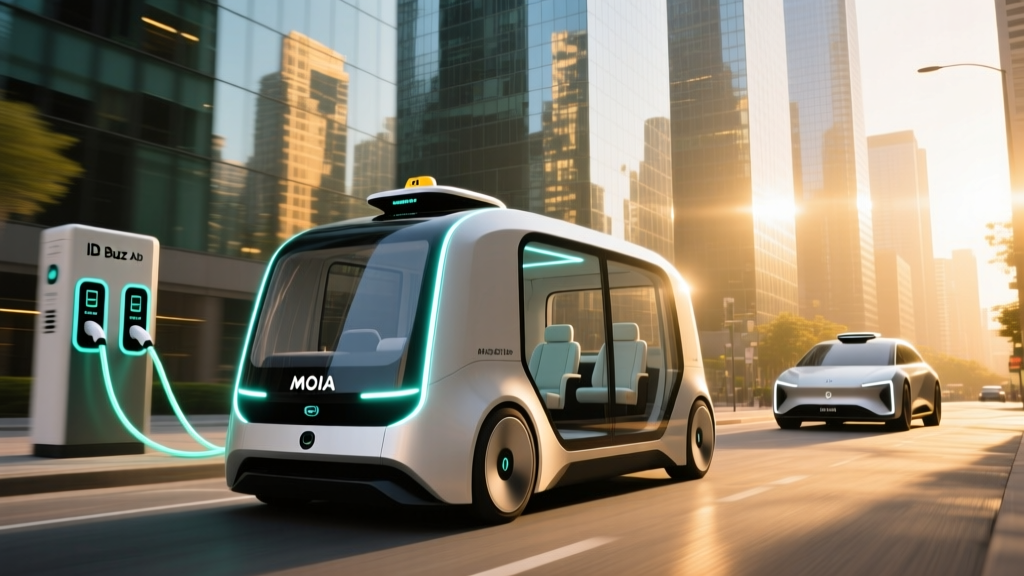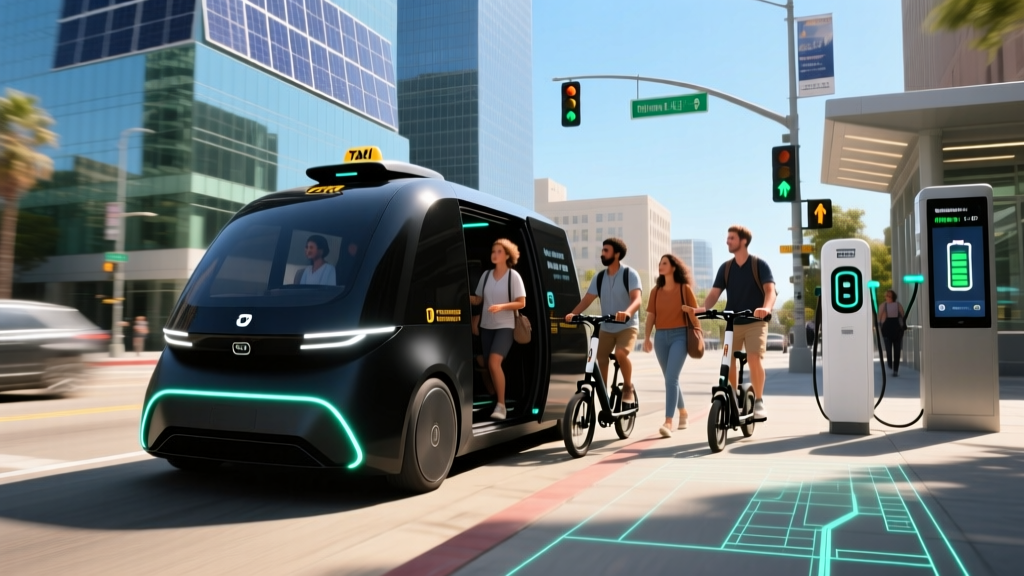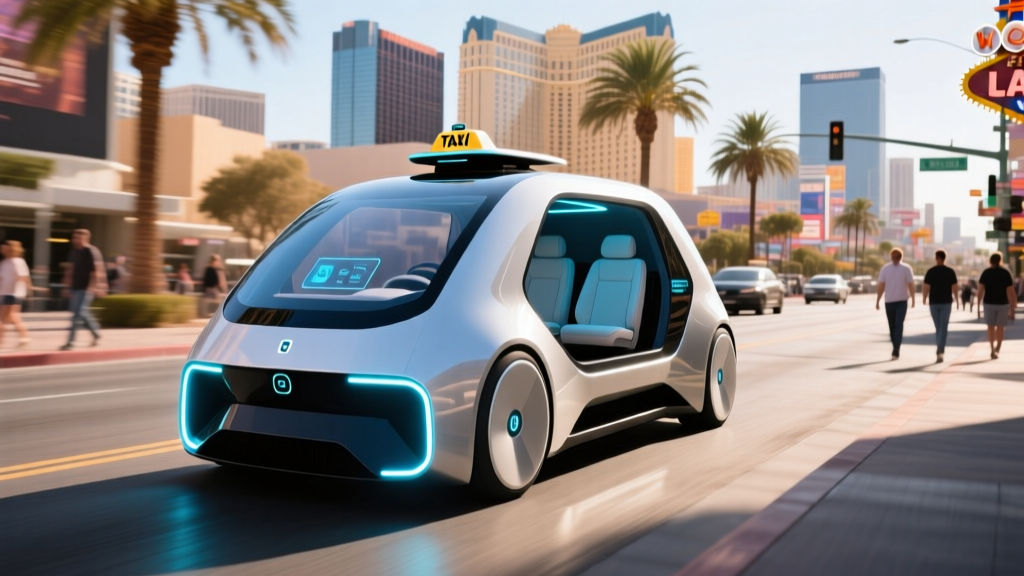
If you have searched for a driverless taxi in Las Vegas, you have likely found a tangle of outdated headlines, promotional videos, and confusing announcements. The reality on the ground in 2026 is more nuanced — and more interesting — than either the hype or the skepticism suggests. Las Vegas is one of the most active robotaxi testing and deployment cities in the United States, but not every service you read about is available to the public, and none of them will take you everywhere you want to go.
This guide cuts through the noise. We will cover which autonomous vehicle (AV) services you can actually hail in Las Vegas right now, how they compare to Uber and Lyft on price, what the safety data actually shows, and where the hard limitations remain. Whether you are a visitor planning a trip or a local weighing your transit options, here is what you need to know.
Where Can You Actually Use a Driverless Taxi in Las Vegas?
Las Vegas hosts a layered autonomous vehicle landscape. Some services are fully open to the public, others operate in limited pilot programs, and a few are testing behind the scenes without carrying paying riders. Here is the current operational picture:
| Service | Operator | Status (2026) | Service Area | How to Access |
|---|---|---|---|---|
| Motional Ioniq 5 Robotaxi | Motional (Hyundai/Aptiv) | Limited public rides via Uber | Las Vegas Strip corridor & downtown | Uber app (select Autonomous option) |
| Zoox Purpose-Built Vehicle | Amazon/Zoox | Employee/invite pilot | Defined downtown geofence | Invite-only; no public app |
| Waymo | Alphabet/Waymo | Testing/mapping (not public in LV) | N/A for riders | Not available — Waymo is live in Phoenix, SF, LA, Austin |
| Cruise | General Motors | Suspended/restructuring (no LV ops) | N/A | Not available |
| Shuttle loops (fixed-route) | Various (Beep, Navya legacy) | Limited campus/resort shuttles | Specific resort or campus routes | Walk-up at participating venues |
The most accessible option for the average visitor or resident is the Motional robotaxi, which you can request through the Uber app in designated areas. Motional, the joint venture between Hyundai and Aptiv, has operated modified Hyundai Ioniq 5 vehicles equipped with a comprehensive lidar-camera-radar sensor suite on Las Vegas roads since 2022 and expanded its public ride program incrementally. However, availability is not 24/7, and the geofenced service area covers a defined zone — primarily the Strip corridor and portions of downtown — not the broader metro area.
Zoox, Amazon's autonomous vehicle subsidiary, has tested its purpose-built bidirectional robotaxi in Las Vegas but as of early 2026 has not opened a general public ride-hail service in the city. Zoox's commercial operations have focused on San Francisco and select California locations.
Is a Robotaxi Truly Self-Driving? The SAE Level Distinction
This is the single most important concept to understand before you step into an autonomous vehicle. The car you are about to ride in is not using the same technology as Tesla Autopilot or Ford BlueCruise. Those consumer systems are SAE Level 2 — meaning a human driver must remain engaged and supervising at all times. Robotaxis operating without a human driver are a fundamentally different category.
| SAE Level | Name | Who Drives? | Examples |
|---|---|---|---|
| Level 0 | No Automation | Human does everything | Basic cruise control |
| Level 1 | Driver Assistance | Human drives; system assists steering OR speed | Adaptive cruise, lane-keeping |
| Level 2 | Partial Automation | Human drives and supervises; system handles steering AND speed | Tesla Autopilot, GM Super Cruise, Ford BlueCruise |
| Level 3 | Conditional Automation | System drives in specific conditions; human must take over when requested | Mercedes DRIVE PILOT (limited markets/conditions) |
| Level 4 | High Automation | System drives without human input within its operational design domain | Waymo One, Motional robotaxi, Zoox |
| Level 5 | Full Automation | System drives everywhere, all conditions, no human needed | Does not exist commercially |
How Much Does a Robotaxi Cost vs. Uber or Lyft?
Pricing for autonomous rides in Las Vegas varies depending on the platform through which you book and the promotional period in effect. When Motional rides are available through Uber, pricing has generally been competitive with — and sometimes significantly cheaper than — standard UberX fares, largely because the operator subsidizes rides to build usage data and public familiarity.
| Ride Type | Typical Cost (3-mile Strip ride) | Surge Pricing? | Tipping |
|---|---|---|---|
| UberX | $12–$22 | Yes — can 1.5x–3x during peak | Expected (15–20%) |
| Lyft Standard | $11–$20 | Yes — Prime Time surges | Expected (15–20%) |
| Motional via Uber (when available) | $8–$15 (promotional pricing) | Generally no surge | No driver to tip |
| Waymo One (Phoenix/SF — for reference) | $10–$18 comparable trips | Limited surge model | No driver to tip |
A few important caveats: promotional pricing is not permanent. As robotaxi services scale and move toward profitability, fares are expected to converge with or slightly undercut rideshare rates. The structural advantage of a driverless taxi is the elimination of the driver's cut (typically 20–25% of the fare), but that saving is currently offset by the enormous cost of the vehicle sensor suite, remote fleet operations, and mapping infrastructure. Industry analysts project that robotaxi rides could reach cost parity with personal car ownership on a per-mile basis once fleets scale to thousands of vehicles per city — but Las Vegas is not there yet.
Also worth noting: because there is no human driver, there is no tipping, no conversation, and no judgment about your destination. For many riders, that consistency is a feature, not a bug.
How Safe Are Robotaxis? The Real Data
Safety is the most contested question in the autonomous vehicle industry, and the answer depends heavily on which metrics you examine and how you contextualize them. Here is what the data actually shows.
- Waymo (the largest US robotaxi fleet) reported over 5 million fully autonomous miles driven in Phoenix and San Francisco by late 2024, with a contact rate (police-reportable collisions per million miles) approximately 85% lower than human benchmarks for the same urban environments, according to Waymo's published safety analysis and peer-reviewed research in the Journal of Transportation Safety & Security.
- Motional reported over 2 million autonomous miles across its Las Vegas, Boston, and Los Angeles operations through 2024, with no at-fault fatalities and a low rate of minor contact incidents (primarily low-speed sideswipes and stationary-object taps in construction zones).
- Cruise — now effectively defunct as an independent operator — experienced a widely publicized October 2023 incident in San Francisco where a pedestrian was dragged after being struck by a human-driven vehicle and then run over by a Cruise AV. That incident led to the suspension of Cruise's California permit and contributed to GM's decision to wind down Cruise operations. It remains a cautionary case study in edge-case handling.
- Human driver benchmark (NHTSA): approximately 1.35 fatalities per 100 million vehicle miles traveled nationally, with urban rates higher. Urban collision rates (all severities) average roughly 500–900 police-reportable incidents per 100 million miles depending on the city.
The data trend is encouraging: Level 4 robotaxis, operating within their geofenced domains in fair weather, appear to have lower collision rates than human drivers in comparable urban environments. However, critical context matters:
- Sample size: Even the largest robotaxi fleets have driven tens of millions of miles — a fraction of the trillions of miles humans drive annually. Rare edge cases (a child darting into traffic, an overturned truck spilling cargo) may not yet be represented in the data.
- Operational constraints: Robotaxis avoid the conditions where many human crashes occur — heavy rain, snow, ice, unmapped construction zones. This makes direct comparison imperfect.
- Severity vs. frequency: Robotaxi collisions tend to be low-speed and low-severity (the vehicles are programmed conservatively), but the Cruise incident demonstrated that low probability does not mean zero risk.
Under the Hood: How Robotaxi Technology Actually Works
The vehicles you will encounter as a driverless taxi in Las Vegas are not simply cars with a camera bolted to the roof. They are rolling sensor platforms with redundant computing systems. Here is the technology stack that makes Level 4 autonomy possible.
Sensor Suite
Lidar (Light Detection and Ranging): The defining sensor for most Level 4 systems. Lidar emits laser pulses and measures their return time to build a real-time 3D point cloud of the vehicle's surroundings, accurate to centimeters, regardless of ambient light. Motional's Ioniq 5 robotaxi uses multiple lidar units providing 360-degree coverage. A single automotive-grade lidar unit costs $500–$1,500 at current volumes.
Cameras: Multiple high-resolution cameras (typically 8–12 per vehicle) provide color, texture, and semantic information — reading traffic lights, recognizing signage, detecting brake lights on vehicles ahead. Camera-only approaches (famously pursued by Tesla for its consumer FSD system) have not been adopted by Level 4 robotaxi operators, who consider lidar essential for depth accuracy and redundancy.
Radar: Millimeter-wave radar provides velocity data for moving objects and performs reliably in rain and fog where lidar and cameras degrade. Most robotaxis carry 4–6 radar units.
Ultrasonic sensors: Short-range proximity detection for parking, curbs, and close-quarters maneuvering.
Computing and Mapping
Each robotaxi carries high-performance compute hardware (typically custom ASIC or GPU clusters processing 500+ tera-operations per second) running perception, prediction, and planning algorithms. The vehicle also relies on HD maps — centimeter-accurate pre-built maps of every lane, curb, signal, and crosswalk in the service area — updated frequently. This is why robotaxis are geofenced: they can only operate where they have been meticulously mapped.
Remote Assistance
When a robotaxi encounters a scenario it cannot resolve autonomously (an unusual construction detour, a police officer directing traffic with hand signals), it can pause and request guidance from a remote operations center. A human remote operator does not "drive" the car in real time — they provide high-level routing decisions that the vehicle then executes with its own driving system.
Current Limitations: What a Driverless Taxi in Las Vegas Cannot Do
Understanding the limitations is as important as understanding the capabilities. Here is where Level 4 robotaxis in Las Vegas fall short today:
- Geofencing: You cannot hail a robotaxi to the suburbs, to Red Rock Canyon, or to the airport (unless the airport is within the mapped service zone). The vehicle will only operate within its pre-mapped operational design domain. Request a ride outside the geofence and the app will simply tell you the service is unavailable.
- Weather restrictions: Las Vegas is chosen partly because of its dry climate, but even here, heavy monsoon rain can trigger service suspension. Lidar performance degrades in heavy precipitation, and camera systems struggle with water on lenses. Robotaxis do not operate in snow, ice, or dense fog.
- Construction zones: Unexpected lane closures, temporary barriers, and flaggers can confuse the system. While most robotaxis can navigate simple construction scenarios, complex or rapidly changing work zones may cause the vehicle to pull over and request remote assistance — adding minutes to your trip.
- Limited passenger capacity: Motional's Ioniq 5 robotaxi seats up to 3 passengers in the rear. Zoox's purpose-built vehicle seats 4. You cannot hail a robotaxi for a group of 6 or for large cargo.
- No special accommodations: Child car seats are not provided (and regulations around children in AVs vary by jurisdiction). Wheelchair-accessible vehicles are not yet part of robotaxi fleets in most markets, though this is an active area of regulatory pressure.
- Wait times: Fleet sizes in Las Vegas are small — typically dozens of vehicles, not hundreds. During peak demand, wait times can exceed those of Uber or Lyft, which have thousands of drivers on the road.
- No multi-stop trips: Most current robotaxi services are point-A-to-point-B only. You cannot add a stop at a convenience store or ask the car to wait for you.
The Regulatory Landscape: Who Approves Robotaxi Operations?
Robotaxi deployment in the United States is governed by a patchwork of state and federal regulations, with no single national framework. Understanding who holds authority helps explain why services are available in some cities and not others.
Federal level (NHTSA): The National Highway Traffic Safety Administration sets vehicle safety standards (FMVSS) and investigates safety defects. NHTSA issued a standing General Order in 2021 requiring all entities testing or deploying Level 2–5 automated systems to report crashes within 24 hours. However, NHTSA does not "approve" or "license" robotaxi services — that authority falls to individual states.
State level (Nevada): Nevada was one of the first states to pass autonomous vehicle legislation (AB 511, enacted in 2011 and updated since). The Nevada Department of Motor Vehicles issues testing and deployment permits. Requirements include proof of insurance (minimum $5 million in liability coverage per vehicle), a safety self-assessment document, crash reporting, and compliance with state traffic law. Nevada's regulatory posture has been relatively permissive compared to California, which has a more adversarial permitting process through the California DMV and the California Public Utilities Commission (CPUC).
Local level: The City of Las Vegas and Clark County coordinate on road access, particularly for the Strip corridor, which involves a complex jurisdictional overlay including the Nevada Resort Association, private property owners, and the Regional Transportation Commission of Southern Nevada (RTC).
How to Actually Hail a Robotaxi in Las Vegas: Step by Step
- Check availability: Open the Uber app and look for the Autonomous ride option. Availability depends on time of day, current fleet deployment, and whether you are within the geofenced zone. Motional rides are not guaranteed — they appear as an option when a robotaxi is nearby and available.
- Set your pickup and dropoff: Both must be within the service area. The app will confirm whether an autonomous vehicle can serve your route.
- Confirm the ride: You will see a notification that your ride will be in a self-driving vehicle. You may be asked to acknowledge terms of service specific to autonomous rides.
- Identify the vehicle: Motional's Ioniq 5 robotaxis are visibly equipped with roof-mounted lidar arrays and prominent sensor housings. The app provides the vehicle's license plate and a photo for identification.
- Authenticate: At pickup, you typically unlock the vehicle through the app (tap to unlock) to verify you are the correct passenger. There is no driver to confirm your identity.
- Ride: Screens inside the vehicle display the route, speed, and the system's perception of surrounding objects. You can monitor the trip or simply enjoy the ride. An in-app support button connects you to remote assistance if needed.
- Exit: The vehicle will stop at your destination, and you exit. No payment handling or tipping at the vehicle level — everything is processed through the app.
Frequently Asked Questions
Can I get a driverless taxi from Harry Reid International Airport?
As of early 2026, robotaxi service to and from Harry Reid International Airport (LAS) is not generally available. The airport falls outside most current geofenced service zones, and the complex pickup/dropoff infrastructure at the terminal presents mapping and operational challenges. You will need to use a conventional rideshare, taxi, or shuttle for airport transfers.
Is it legal to ride in a car with no driver in Nevada?
Yes. Nevada law has permitted driverless vehicle operation on public roads since 2011, provided the operator holds a valid AV deployment permit from the Nevada DMV and meets insurance and reporting requirements. Passengers in a Level 4 robotaxi are not required to hold a driver's license.
What happens if the robotaxi gets confused or breaks down?
The vehicle is programmed to execute a "minimal risk condition" — typically pulling to the curb or stopping in place safely. A remote operations center monitors the fleet and can intervene by providing routing guidance or dispatching a roadside assistance team. You will not be stranded without support, but you may experience a delay of 10–20 minutes while the situation is resolved.
Are robotaxis available 24 hours a day?
No. Most robotaxi services in Las Vegas operate during defined hours (typically late morning through late evening) and may suspend service during severe weather, special events that alter road configurations (such as the Formula 1 Grand Prix or major conventions that close streets), or system maintenance windows.
How does a robotaxi handle a police officer directing traffic?
This is a known edge case. Most Level 4 systems can detect the presence of a traffic officer but cannot reliably interpret hand signals. In these scenarios, the vehicle will typically stop, wait, and if the situation does not resolve, request remote assistance. Expect a delay if your route passes through an area with manual traffic control.
Will robotaxi pricing stay this cheap?
Probably not indefinitely. Current promotional pricing is subsidized to encourage adoption and accumulate operational data. As services mature and subsidies decrease, expect fares to settle at or slightly below conventional rideshare rates. The long-term economic thesis is that eliminating the driver's share of the fare (20–25%) creates room for lower prices at scale — but fleet operations, sensor maintenance, HD mapping updates, and remote staffing carry substantial ongoing costs.
Can I use a robotaxi if I have a disability or need wheelchair access?
Current robotaxi fleets are not equipped with wheelchair ramps or lifts. ADA compliance in autonomous vehicle design is an active area of advocacy and regulatory discussion. If you require accessible transportation, conventional rideshare options (Uber WAV, Lyft Access) remain the more reliable choice in Las Vegas.
The Bottom Line on Driverless Taxis in Las Vegas
A driverless taxi in Las Vegas is not science fiction — it is a real, bookable ride, but within tight boundaries. Motional's Ioniq 5 robotaxi, accessible through Uber, offers the most practical entry point for visitors and residents. The experience is genuinely remarkable the first time: a car with no one in the driver's seat navigating the chaos of the Strip corridor with measured, algorithmic precision.
But the limitations are real and consequential. You cannot go everywhere. You cannot ride in bad weather. Fleet sizes are small, wait times can be long, and the service area is a fraction of the metro region. The safety data is encouraging but still limited in scope compared to the trillions of miles of human driving it aims to replace.
If you are visiting Las Vegas and want to experience the current state of autonomous transportation, a Motional robotaxi ride is worth trying — treat it as an informative experience as much as a transit choice. Just have Uber or Lyft ready as your backup when the geofence, the weather, or the fleet size says no.