The Aftermarket ADAS Revolution
The automotive industry is in the midst of a massive shift toward autonomous driving, with automakers investing billions into proprietary Advanced Driver Assistance Systems (ADAS). However, you do not need to purchase a brand-new electric vehicle to experience top-tier, semi-autonomous highway driving. Enter comma.ai and their Comma 3X, the latest hardware designed to run OpenPilot, an open-source ADAS software that transforms compatible gas and hybrid cars into highly capable semi-autonomous machines. In this head-to-head product showdown, we are pitting the aftermarket brilliance of the Comma 3X running OpenPilot against the industry benchmark: Tesla’s factory-installed Autopilot. We will break down the hardware, the installation and setup process, real-world driving performance, and overall value to determine which system truly deserves a spot on your windshield.
Hardware Showdown: Comma 3X vs. Tesla Autopilot Hardware
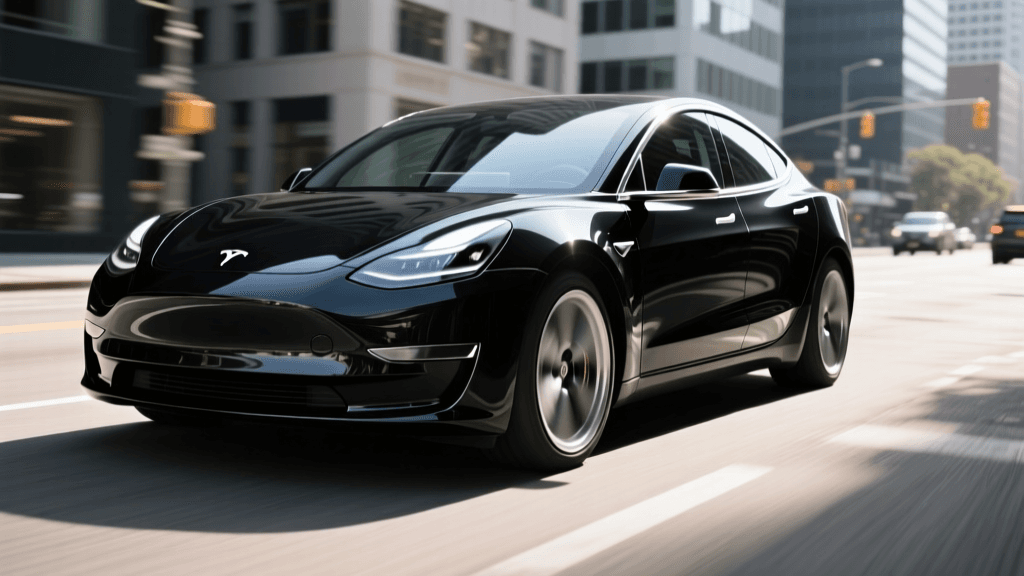
Tesla’s Autopilot relies on a deeply integrated, factory-installed sensor suite. Depending on the vehicle's production year, this includes Hardware 3.0 or the newer Hardware 4.0, featuring multiple high-resolution cameras positioned around the vehicle, a powerful proprietary FSD computer, and deeply embedded CAN bus access. The system is designed from the ground up for the specific kinematics of the car it inhabits.
The Comma 3X, on the other hand, is an aftermarket windshield-mounted device. It features a custom-designed compute board, a stunning 5.7-inch 1080p display, an 8-megapixel road-facing camera with a wide 120-degree field of view, and a 5-megapixel driver-facing camera for driver monitoring. While it lacks the 360-degree surround-view of a Tesla, the Comma 3X compensates with a highly advanced neural network that processes the single forward-facing camera feed with incredible efficiency. The device connects to the car’s CAN bus via an OBD-C port and a vehicle-specific harness, allowing it to read steering torque, wheel speed, and brake data while injecting its own steering and longitudinal commands.
Installation and Setup: OpenPilot vs. Factory Calibration
The most significant difference between these two systems is the setup process. Tesla Autopilot is ready out of the box, with factory calibrations already completed before the car leaves the Fremont, Austin, or Shanghai gigafactories. The Comma 3X requires a hands-on installation that takes roughly 30 to 45 minutes, followed by a user-driven calibration phase.
Comma 3X Mounting and Harness Setup
Installing the Comma 3X involves three primary steps:
- Vehicle Harness Installation: You must purchase a specific car harness (e.g., the Toyota TSS2 harness or Honda Bosch harness). This harness plugs into the car’s ADAS camera module or radar module behind the rearview mirror, intercepting the steering and CAN data.
- OBD-C Power Connection: The Comma 3X requires constant power and access to the vehicle's OBD-II port. The included OBD-C cable routes from the device, down the A-pillar, and into the driver’s footwell, providing both 12V power and secondary CAN data.
- Windshield Mounting: Using the included 3M adhesive mount, the device must be placed behind the rearview mirror on the passenger side. It is crucial to mount it as close to the glass as possible without obstructing the road camera’s view of the lane lines.
The Calibration Drive
Once installed, OpenPilot requires a calibration drive. The system must learn the pitch and yaw of the camera relative to the road. This requires driving approximately 25 miles on a straight, well-marked highway at speeds above 30 mph. While this is a minor inconvenience compared to Tesla’s zero-setup experience, it is a one-time requirement that ensures the neural network accurately interprets the road geometry.
Real-World Driving Performance
Highway Cruising and Lane Centering
On the highway, both systems excel, but they have distinct personalities. Tesla Autopilot is known for its assertive lane centering and confident handling of sweeping curves. However, it can sometimes feel overly rigid, making micro-adjustments that can feel robotic. OpenPilot on the Comma 3X utilizes a model-predictive control (MPC) system that feels remarkably human. It anticipates curves earlier and applies steering torque smoothly, often outperforming stock ADAS systems from legacy automakers like Honda Sensing or Toyota Safety Sense. In our testing, OpenPilot handled construction zone lane shifts and faded lane markings with impressive stability, relying on its vision-based neural network rather than strictly locking onto painted lines.
Longitudinal Control: Vision-Only vs. Radar Fusion
Historically, OpenPilot relied on the car’s stock Adaptive Cruise Control (ACC) radar for braking and acceleration, which often resulted in the dreaded 'phantom braking' and jerky stop-and-go behavior. However, recent OpenPilot updates have introduced vision-only longitudinal control. By using the Comma 3X’s road camera and neural networks to estimate the distance and speed of the lead car, OpenPilot bypasses the stock radar entirely. The result is a massive leap in smoothness. Braking for stopped traffic and accelerating from a standstill now closely mimics the buttery-smooth longitudinal profile of Tesla Autopilot, a feat that is incredibly impressive for an aftermarket add-on.
Feature Comparison Chart
| Feature | Comma 3X (OpenPilot) | Tesla Autopilot (HW3/HW4) |
|---|---|---|
| Hardware Cost | $1,249 (Device + Harness) | Included (Base Autopilot) |
| Subscription Fee | $24/mo (comma prime) or Free (Local) | None (Base) / $6,000 (FSD) |
| Lane Centering | Excellent (Model Predictive Control) | Excellent (Neural Net) |
| Longitudinal Control | Vision-Only (Ultra-smooth) | Vision-Only (Ultra-smooth) |
| Auto Lane Change | Supported (via turn signal) | Supported (via turn signal) |
| Driver Monitoring | IR Camera (Eyes/Face tracking) | Cabin Camera (Eyes tracking) |
| Supported Vehicles | 300+ (Toyota, Honda, Hyundai, etc.) | Tesla Models Only |
Safety and Driver Monitoring
According to the Insurance Institute for Highway Safety (IIHS), the effectiveness of partial automation systems relies heavily on robust driver monitoring to prevent automation complacency. Both Tesla and comma.ai take this seriously. Tesla uses its cabin camera to track eye gaze, issuing warnings and eventually disabling Autopilot if the driver looks away for too long. The Comma 3X features a dedicated 5MP driver-facing camera equipped with infrared LEDs. OpenPilot’s driver monitoring (DM) model tracks your head pose and eye direction in real-time. In our experience, OpenPilot’s DM system is slightly more forgiving of quick glances at the mirrors or radio, but it will aggressively chime and flash the screen red if you look down at a phone or close your eyes. Furthermore, the National Highway Traffic Safety Administration (NHTSA) continuously monitors ADAS safety data, and OpenPilot's open-source nature allows the community to rapidly patch edge-case behaviors, often faster than traditional OEM OTA update cycles.
Pricing and Value Proposition
Tesla Autopilot is a masterpiece of vertical integration, but it is locked to the Tesla ecosystem. If you drive a Toyota Prius, a Honda Civic, or a Hyundai Ioniq 5, you are stuck with the OEM’s often inferior lane-keeping and radar-based cruise control. The Comma 3X hardware costs $1,249, plus the vehicle-specific harness. Adding comma prime for cellular connectivity and remote logging costs $24 a month, though the system functions perfectly fine on local Wi-Fi without the subscription. When compared to the $6,000 to $8,000 premium automakers charge for advanced navigation-guided ADAS packages, the Comma 3X represents an extraordinary value for the enthusiast who wants cutting-edge, vision-based autonomous features on a non-Tesla vehicle.
Final Verdict: Which ADAS System Wins?
In this head-to-head showdown, the winner depends entirely on your vehicle. If you are buying a new Tesla, the factory-integrated Autopilot remains the king of convenience, offering seamless 360-degree awareness and zero installation hassle. However, for the millions of drivers on the road today who own compatible Toyota, Honda, or Hyundai vehicles, the Comma.ai Comma 3X running OpenPilot is the undisputed champion. Its vision-only longitudinal control, human-like steering inputs, and rigorous driver monitoring elevate legacy stock ADAS into a Tier-1 autonomous experience. The setup process requires a bit of elbow grease and a calibration drive, but the reward is a semi-autonomous driving system that rivals, and in some specific metrics of steering smoothness, even beats the industry standard.