If you've searched "how much do autonomous cars cost" expecting a sticker price, the honest answer is that true self-driving vehicles aren't for sale to consumers yet. What is available right now is robotaxi ride-hailing — summoning a driverless vehicle through an app, the same way you'd call an Uber. The cost per ride, the cities where it works, and the safety record behind it are what actually matter for anyone considering using the service.
This guide covers the real economics of riding in a Level 4 robotaxi in 2026: per-mile pricing versus traditional rideshare, which cities have live service, what the safety data actually shows, and the hard limitations that keep these vehicles from operating everywhere.
SAE Automation Levels: What "Self-Driving" Actually Means
Before discussing cost, it's critical to separate the vehicles you can buy from the vehicles you can ride in. Consumer EVs with driver-assist features — Tesla Autopilot, Ford BlueCruise, GM Super Cruise — are SAE Level 2 systems. The driver must remain engaged, hands on or near the wheel, eyes on the road. These are not autonomous.
| Level | Classification | Who Drives | Examples |
|---|---|---|---|
| Level 0 | No Automation | Human, always | Conventional vehicles |
| Level 1 | Driver Assistance | Human (one system assists) | Adaptive cruise OR lane-keep |
| Level 2 | Partial Automation | Human (must supervise) | Tesla Autopilot, FSD Supervised, BlueCruise, Super Cruise |
| Level 3 | Conditional Automation | System (human must take over on request) | Mercedes Drive Pilot (limited markets, ≤40 mph) |
| Level 4 | High Automation | System (no driver needed in geofenced area) | Waymo, Zoox, Cruise (in approved zones) |
| Level 5 | Full Automation | System (anywhere, any condition) | Does not exist in production |
Robotaxis operating today are Level 4: fully driverless within a defined geofenced service area, under specific conditions. No steering wheel is required, no human safety operator sits in the vehicle, and the system handles all driving tasks within its operational design domain (ODD). Level 5 — a car that drives anywhere, in any weather, on any road — remains theoretical and is not available from any manufacturer or service.
Where Can I Use a Robotaxi Right Now?
Robotaxi service is not national. It operates in specific geofenced zones within a handful of US cities, and availability shifts as companies expand, pause, or restructure. Here is the current landscape as of early 2026:
| Service | Parent Company | Live Cities | Service Hours | Access Model |
|---|---|---|---|---|
| Waymo One | Alphabet (Google) | Phoenix (metro), San Francisco, Los Angeles, Austin | 24/7 in most zones | Open app — no waitlist in most markets |
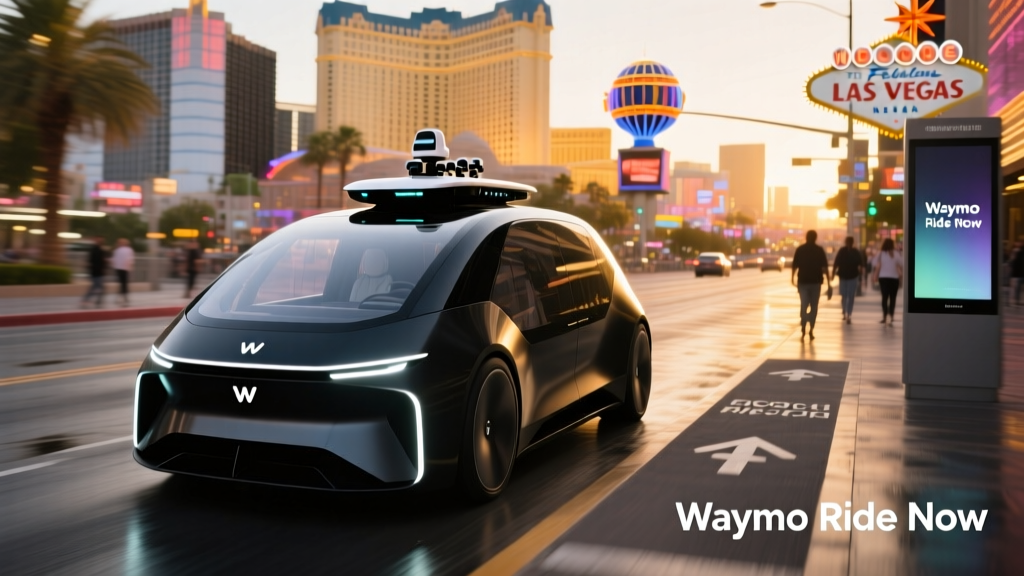
| Zoox | Amazon | Las Vegas (Strip corridor), Foster City, CA (limited) | Daytime/evening hours | Invite-based / limited public access |
| Cruise | General Motors | Service suspended since late 2023; phased re-entry in select cities with safety drivers first | N/A — not driverless | Not available for public rider-only trips |
| Motional (Hyundai/Aptiv) | Hyundai Motor Group | Las Vegas (limited partnership with Lyft) | Selected hours | Via Lyft app in designated zone |
Key reality check: If you don't live in or regularly visit Phoenix, San Francisco, Los Angeles, Austin, or Las Vegas, robotaxi service is not available to you today. Announced expansions (additional cities, suburban corridors) should not be counted as live service until vehicles are actually picking up fare-paying riders without safety operators.
How Much Does a Robotaxi Ride Cost vs. Uber and Lyft?
This is the core of the "how much do autonomous cars cost" question — and the answer depends on distance, time of day, city, and whether the robotaxi company is running promotional pricing to build ridership.
| Scenario | Waymo One (est.) | UberX (est.) | Lyft Standard (est.) |
|---|---|---|---|
| Short trip (3 miles, off-peak) | $8 – $12 | $10 – $15 | $9 – $14 |
| Medium trip (8 miles, off-peak) | $15 – $22 | $18 – $28 | $17 – $26 |
| Airport run (15 miles, off-peak) | $28 – $40 | $35 – $55 | $33 – $50 |
| Surge pricing (8 miles, peak demand) | $20 – $30 (limited surge) | $35 – $60+ | $30 – $55+ |
What this table reveals: Robotaxi pricing is generally competitive with or slightly cheaper than rideshare during off-peak hours. The more significant advantage appears during surge pricing events — robotaxis don't apply the same aggressive surge multipliers that Uber and Lyft do, because their fleet supply isn't constrained by human driver availability.
However, there are caveats worth understanding:
- Promotional pricing is temporary. Waymo and others have offered introductory rates, referral credits, and flat-rate promotions to build user bases. These subsidize the true cost of operation and will not persist indefinitely.
- No tipping expected. Unlike rideshare, there's no driver to tip. This saves riders $3–$8 per trip but raises questions about long-term service economics.
- Wait times vary. In Phoenix and San Francisco, Waymo wait times average 4–8 minutes in core zones. Outside dense areas, expect 10–15 minutes or longer. Rideshare may still be faster in suburban fringes.
- Route limitations apply. You can only travel within the geofenced service area. If your destination falls outside the zone, the ride cannot be completed — the app won't let you book it.
How Safe Are Robotaxis? The Real Data
Safety is the most consequential question in autonomous vehicles, and it deserves data — not marketing. Here's what we know from publicly reported figures and regulatory filings.
Waymo Safety Record (through late 2025)
- Miles driven fully autonomous: Over 30 million paid rider miles across all markets (Waymo Safety Report).
- Injury-causing crash rate: Waymo reports its vehicles were involved in injury-causing crashes at a rate approximately 85% lower than human-driven reference benchmarks in comparable urban environments, based on internal analysis published in 2024.
- Contact rate (any physical contact): Approximately 5.7 per million autonomous miles, compared to human benchmarks that are significantly higher in dense urban driving — though direct comparison methodology is debated by researchers.
- Notable incidents: A small number of minor collisions with stationary objects, construction zones, and other vehicles have been reported to NHTSA under mandatory crash-reporting rules. No rider fatalities have been reported in Waymo's driverless commercial service.
Cruise's 2023 suspension is instructive. In October 2023, a Cruise robotaxi in San Francisco dragged a pedestrian who had been thrown into its path by another vehicle. The California DMV suspended Cruise's deployment permit, and the company paused all driverless operations nationwide. GM subsequently restructured Cruise, bringing it back under tighter integration with a phased return that began with safety drivers. This incident demonstrates that even with extensive testing, edge cases remain — and that regulatory consequences are real.
For context on the broader safety landscape, the Insurance Institute for Highway Safety (IIHS) and NHTSA continue to monitor autonomous vehicle incidents. The data pool is growing but still small relative to the billions of miles driven by humans annually. Robotaxis have not been operating long enough or widely enough for decade-scale actuarial conclusions.
The Technology Stack: How Robotaxis Actually See the Road
Understanding what's on the roof and inside the trunk helps explain both the capabilities and the cost structure of these vehicles.
Sensor Suite (Typical Level 4 Robotaxi)
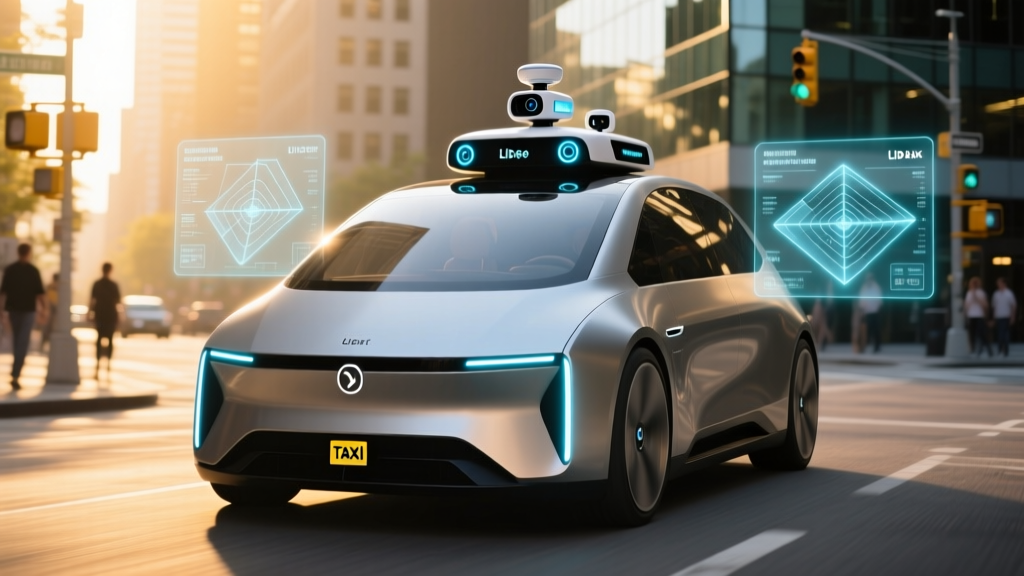
- LiDAR (Light Detection and Ranging): Roof-mounted and bumper-mounted units create a real-time 3D point cloud of the environment. Waymo's 6th-generation hardware uses custom-designed LiDAR with improved range and resolution. LiDAR works in darkness and most weather but degrades in heavy rain, fog, or snow.
- Cameras: Multiple high-resolution cameras (typically 8–12+) provide color vision for traffic light state, sign reading, lane markings, and object classification. Camera-only approaches (like Tesla's FSD) are not used by Level 4 robotaxi operators, who consider LiDAR redundancy essential.
- Radar: Forward and corner radars detect object velocity and work in weather conditions that impair LiDAR and cameras.
- HD Maps and Localization: Pre-mapped routes with centimeter-level precision. The vehicle knows every lane, curb, intersection, and speed limit before it drives. This is why robotaxis are geofenced — they cannot operate in unmapped areas.
- Compute: Custom AI processors in the trunk handle sensor fusion, prediction (what will that pedestrian do?), and planning (trajectory decisions) in real time — often exceeding 100+ TOPS (trillions of operations per second).
Why this matters for cost: A fully equipped Level 4 robotaxi vehicle costs well over $100,000 in hardware alone — the LiDAR units alone can cost $5,000–$20,000+ each, and a single vehicle may carry 5 or more. This is why robotaxis operate as fleet services rather than consumer purchases. The economics require high utilization (many rides per day per vehicle) to amortize the capital cost.
Regulatory Landscape: Who Approves Robotaxi Operations?
Autonomous vehicle deployment in the US is governed by a patchwork of state and local regulations — there is no single federal license to operate a robotaxi nationwide.
- California (CPUC and DMV): The California Public Utilities Commission issues permits for commercial robotaxi service. The DMV issues testing and deployment permits. Both agencies can suspend operations, as demonstrated by the Cruise suspension in 2023.
- Arizona: Among the most permissive regulatory environments. Waymo has operated commercially in Phoenix since 2020 with relatively few state-level restrictions.
- Texas: Austin has allowed robotaxi operations under a local framework. State-level regulation is less prescriptive than California's.
- Nevada: Las Vegas has enabled limited autonomous ride services through partnerships and local permitting.
- Federal (NHTSA): NHTSA sets vehicle safety standards and requires crash reporting for vehicles with automated driving systems, but does not currently issue operational permits for commercial robotaxi service. Federal rulemaking on AV standards remains ongoing.
The practical effect: expansion to a new city requires navigating local permitting, building HD maps, testing with safety drivers, and obtaining regulatory approval — a process that takes months to years per market.
Current Limitations: Where Robotaxis Cannot Go or Operate
Level 4 autonomy is impressive within its operational design domain. Outside that domain, it simply doesn't work. Here are the hard limitations as of 2026:
Conditions That Prevent Robotaxi Operation
- Heavy rain, snow, and fog: LiDAR and camera performance degrade significantly. Most services reduce operations or pull vehicles off the road during severe weather.
- Unmapped areas: If the road hasn't been HD-mapped, the vehicle cannot drive there. Suburban expansion is slow and deliberate.
- Construction zones: Temporary lane shifts, cones, and flaggers create scenarios that remain challenging. Some robotaxis will stop and wait for remote assistance rather than navigate complex construction.
- Highway driving: Most current robotaxi services operate on surface streets. Highway-speed autonomous operation in mixed traffic adds complexity that most operators have not yet deployed commercially.
- Pickup/dropoff precision: The vehicle stops at a safe, legal location — not necessarily directly at your front door. You may need to walk a short distance to a spot the vehicle can safely access.
- No human judgment calls: A robotaxi cannot negotiate with a parking attendant, interpret a police officer's hand signals at a disabled intersection, or make eye contact with a pedestrian to communicate intent. These edge cases cause the vehicle to stop and request remote guidance.
- Accessibility: Current robotaxi vehicles are not universally wheelchair-accessible. Zoox's purpose-built vehicle aims to improve this, but fleet-wide ADA compliance is not yet achieved.
Ownership Cost vs. Riding Cost: Can You Buy a Level 4 Car?
To directly answer the purchase-price version of "how much do autonomous cars cost": you cannot currently buy a Level 4 vehicle as a consumer. The vehicles used by Waymo (Jaguar I-PACE modified with proprietary hardware), Zoox (custom-built, bidirectional pod), and Cruise (modified Chevrolet Bolt EUV, being transitioned to next-gen platforms) are fleet-only. They are not sold through dealerships, not eligible for consumer registration, and not insurable for private ownership.
The closest consumer-available system is Mercedes-Benz's Drive Pilot, a Level 3 system approved in limited markets (Germany, and Nevada/California with restrictions) that allows hands-off, eyes-off driving at speeds up to 40 mph on suitable highways. Drive Pilot costs approximately $2,500 as an option on the S-Class and EQS — but it requires the driver to be ready to resume control when prompted, and it operates only under very specific conditions.
For comparison, consumer Level 2+ systems like Tesla's Full Self-Driving (Supervised) — which costs $8,000 as a one-time purchase or $99/month — still require full driver attention despite the branding. The "Full Self-Driving" name is aspirational, not descriptive. As of 2026, Tesla FSD remains SAE Level 2, and the driver is legally responsible for the vehicle at all times.
Frequently Asked Questions
How much does a Waymo ride cost compared to Uber?
For a typical 5–8 mile urban trip during off-peak hours, Waymo One generally costs $12–$22, comparable to or slightly less than UberX ($15–$28 for the same route). The gap widens during surge pricing, where Waymo's pricing remains more stable since it doesn't depend on human driver supply.
Are robotaxis truly self-driving with no human in the car?
Yes — Waymo One and Zoox operate Level 4 vehicles with no driver, no safety operator, and no remote teleoperator controlling the vehicle in real time. Remote assistance exists for edge cases (the vehicle stops and asks for guidance), but the driving is fully autonomous within the geofenced service area.
Can I buy a self-driving car for personal use?
No. Level 4 robotaxi vehicles are fleet-only and not available for consumer purchase. The most advanced consumer system available is Mercedes-Benz Drive Pilot (Level 3, ~$2,500 option, limited to ≤40 mph on approved highways). Tesla FSD, GM Super Cruise, and Ford BlueCruise are Level 2 and require driver supervision.
How safe are robotaxis compared to human drivers?
Waymo's published data indicates its vehicles are involved in injury-causing crashes at a rate roughly 85% lower than human benchmarks in comparable urban environments. However, the total mileage pool (tens of millions of miles) is small relative to the trillions of miles driven by humans annually, and direct comparison methodology is debated. No rider fatalities have been reported in Waymo's commercial driverless service.
Why don't robotaxis operate in snow or heavy rain?
LiDAR, cameras, and radar all experience degraded performance in precipitation. Snow accumulates on sensors, heavy rain scatters LiDAR beams, and fog reduces camera range. Until sensor and perception systems can reliably handle these conditions, operators will limit or suspend service during severe weather — a fundamental constraint of the Level 4 operational design domain.
Will robotaxi prices go up once promotional periods end?
Likely yes, though the trajectory depends on fleet utilization, hardware cost reduction (especially LiDAR), and competition. The long-term economic thesis is that removing the human driver — who accounts for the majority of rideshare fare cost — should make robotaxis structurally cheaper. But that thesis requires very high daily utilization per vehicle to offset the $100,000+ hardware cost.
Robotaxi service is real, it's rideable today in a small number of US cities, and the per-ride cost is competitive with traditional rideshare. But it remains geographically limited, weather-constrained, and far from the universal "self-driving car in every driveway" vision that headlines sometimes imply. The technology is advancing — but the gap between Level 4 in a geofenced zone and Level 5 everywhere is enormous, and no company has a credible timeline to close it.