The End of Apple's Self-Driving Car Ambition
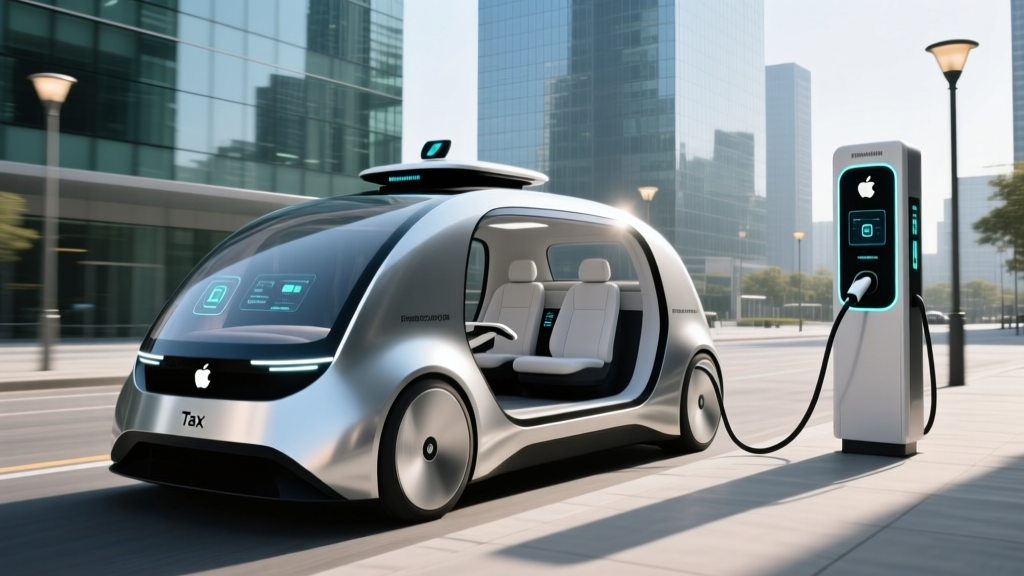
For over a decade, the phrase "Apple autonomous vehicle" conjured images of a sleek, steering-wheel-free pod that would reshape personal transportation. Project Titan, Apple's secretive effort to build a fully self-driving electric car, was one of the most ambitious — and ultimately unsuccessful — endeavors in the history of the autonomous vehicle industry. In February 2024, Apple officially canceled the project, reassigning or letting go of roughly 2,000 employees and ending what had been a $10 billion-plus bet on autonomous mobility.
This article examines what Project Titan actually achieved, where the technology went, and what Apple's exit tells us about the broader robotaxi and autonomous vehicle landscape in 2026.
Project Titan Timeline: From Secret Lab to Shutdown
Apple's autonomous vehicle effort began around 2014 under the codename Project Titan. Over the next decade, the project cycled through multiple leadership changes, strategic pivots, and internal debates about whether to build a full car or focus solely on autonomous driving software.
- 2014–2016: Initial exploration of building a complete Apple-branded electric vehicle with full Level 5 autonomy (no steering wheel, no pedals).
- 2017: Apple received a permit from the California DMV to test autonomous vehicles on public roads, using modified Lexus RX450h SUVs.
- 2018–2019: Leadership changes; the project pivoted from building a car to developing an autonomous driving system. Multiple layoffs occurred.
- 2020–2021: Renewed push toward a consumer vehicle, reportedly targeting a 2025 launch with Level 4 autonomy.
- 2022–2023: Repeated delays; target shifted to a Level 2+ driver-assist system (similar to GM's Super Cruise or Tesla's Autopilot) for a vehicle launch around 2026–2028.
- February 2024: Apple officially cancels Project Titan. Key staff reassigned to Apple's AI and generative AI divisions.
The pivot history reveals a fundamental challenge: Apple struggled to reconcile its product perfectionism with the messy, iterative reality of autonomous driving development. While competitors like Waymo and Cruise logged millions of real-world miles, Apple's test fleet remained small and its technology never reached commercial viability.
What SAE Autonomy Level Did Apple Target?
Understanding Apple's ambition requires clarity on what the SAE levels actually mean for driver responsibility:
| Level | Name | Who Drives | Real-World Examples (2026) |
|---|---|---|---|
| Level 0 | No Automation | Human | Conventional cars, no ADAS |
| Level 1 | Driver Assistance | Human (system assists one function) | Adaptive cruise control, lane-keeping assist |
| Level 2 | Partial Automation | Human (must supervise at all times) | Tesla Autopilot/FSD Supervised, GM Super Cruise, Ford BlueCruise |
| Level 3 | Conditional Automation | System drives in limited conditions; human must take over on request | Mercedes Drive Pilot (limited markets, ≤40 mph) |
| Level 4 | High Automation | System drives fully within geofenced area; no human needed | Waymo One (Phoenix, SF, LA), Zoox (Las Vegas, SF pilot) |
| Level 5 | Full Automation | System drives everywhere, all conditions | Does not exist commercially |
Apple's initial vision targeted Level 5 — a car that could drive anywhere, in any condition, with no human input. This is the holy grail that no company has achieved. By 2022, the target had been downgraded to Level 4 (geofenced self-driving) and eventually to Level 2+ (advanced driver-assist with hands-off capability on mapped highways). Even that reduced ambition proved unattainable within Apple's timeline and budget constraints.
The lesson: Level 5 remains a research aspiration, not a product category. Every commercially available consumer vehicle in 2026 — including Tesla's FSD Supervised — is Level 2 at best. Only purpose-built robotaxi services like Waymo operate at Level 4, and only within tightly defined geographic boundaries.
Apple's Autonomous Test Fleet: What Data Exists?
Apple's road testing was conducted primarily in California under a DMV-issued autonomous vehicle testing permit. The company was required to report disengagement data — instances where the human safety driver had to take control of the vehicle.
Apple's reported testing data was sparse compared to leaders like Waymo. In its most active reporting periods, Apple logged tens of thousands of autonomous miles — far below the millions logged by Waymo. The disengagement rate (miles per intervention) was consistently higher than top competitors, suggesting the system required more frequent human takeovers. After 2022, Apple's public reporting diminished as the project wound down.
For comparison, Waymo's fleet has logged over 30 million autonomous miles across multiple cities, with disengagement rates that have steadily improved year over year. Apple's fleet, using modified Lexus SUVs and later Hyundai vehicles, never approached that scale. The data gap illustrates a core truth of autonomous driving: algorithmic progress requires massive real-world mileage, and Apple's reluctance to deploy broadly created a feedback loop disadvantage.
Why Project Titan Failed: Technical and Strategic Factors
Apple's autonomous vehicle cancellation was not caused by a single failure but by a convergence of obstacles:
Technology Stack Challenges
Apple reportedly explored a sensor suite combining lidar, radar, and cameras — the same multi-modal approach used by Waymo and Zoox. However, building a reliable perception system that handles edge cases (construction zones, erratic pedestrians, adverse weather) at production scale proved more difficult than anticipated. Companies like Tesla have pursued camera-only architectures with their own well-documented limitations, while lidar-heavy stacks add significant cost (early Waymo vehicles used lidar arrays costing $75,000+, though prices have dropped to under $5,000 per unit by 2026).
The Geofencing Problem
Level 4 autonomy requires high-definition mapping and geofencing — the vehicle can only operate in areas it has thoroughly mapped and validated. Apple's vision of a car that drives "anywhere" (Level 5) was incompatible with the geofenced reality of Level 4. The company struggled to define a product that was both commercially viable and consistent with Apple's brand promise of universal usability.
Regulatory Complexity
Deploying autonomous vehicles requires navigating a patchwork of state and federal regulations. The National Highway Traffic Safety Administration (NHTSA) sets federal vehicle safety standards, while individual states (California, Arizona, Nevada, Texas) control operational permits for driverless testing and commercial service. Apple, accustomed to launching products globally on day one, found the state-by-state regulatory grind incompatible with its go-to-market model.
Profitability Uncertainty
Even successful robotaxi operators face daunting unit economics. Waymo, backed by Alphabet's deep pockets, has spent over $30 billion on autonomous driving R&D. Apple's leadership ultimately concluded that the path to profitability for an Apple-branded autonomous vehicle was too long and too uncertain, especially as the company redirected investment toward generative AI and on-device machine learning.
Where Apple's AV Technology Lives On
Project Titan's cancellation did not mean its technical work disappeared entirely. Several technology threads continue within Apple:
- CarPlay 2.0 (next-generation CarPlay): Apple's deeper vehicle integration platform, announced at WWDC 2022 and rolling out in select 2025–2026 model-year vehicles from Porsche, Aston Martin, and others, incorporates some sensor-integration and display technology developed under Titan.
- On-device AI and neural processing: Titan's machine learning work on real-time perception has been absorbed into Apple's broader AI efforts, including Apple Intelligence features on iPhone and Mac.
- Patent portfolio: Apple holds hundreds of patents related to autonomous driving, vehicle interiors, battery systems, and sensor fusion. These could be licensed or form the basis of future partnerships.
Apple has not announced plans to license its autonomous driving stack to third-party automakers, but industry analysts have speculated about potential partnerships. For now, Apple's automotive ambitions are limited to software (CarPlay) rather than hardware or autonomy.
What Apple's Exit Means for the Robotaxi Market in 2026
Apple's departure from the autonomous vehicle space removed what many expected to be a formidable competitor. In 2026, the robotaxi landscape looks like this:
| Operator | SAE Level | Operational Cities | Fleet Size (approx.) | Status |
|---|---|---|---|---|
| Waymo One | Level 4 | Phoenix, San Francisco, Los Angeles, Austin | 1,000+ | Commercial service, open to public |
| Zoox | Level 4 | Las Vegas, San Francisco (limited) | ~200 | Pilot service, invitation/early access |
| Cruise | Level 4 | Phoenix (reduced), Dallas (limited) | ~400 | Restarting post-2023 suspension; limited ops |
| Motional (Hyundai/Aptiv) | Level 4 | Las Vegas | ~100 | Pilot, limited commercial rides |
Key observations:
- Waymo dominates. With the broadest geographic coverage and longest operational track record, Waymo One is the only robotaxi service most Americans could realistically use today.
- Cruise is rebuilding trust. After a serious October 2023 incident in San Francisco (where a pedestrian was struck and then dragged by a Cruise vehicle), the company suspended operations nationwide and has been slowly restarting with enhanced safety protocols.
- Apple's absence left a gap in the premium consumer AV market. No major tech company outside Alphabet is currently pursuing a Level 4 robotaxi service at scale in the U.S.
Safety Record: What the Data Shows Across the Industry
According to data reported to NHTSA and state regulators, Level 4 robotaxis have completed tens of millions of driverless miles. Waymo reported that across 7.1 million autonomous miles in late 2023–2024, its vehicles were involved in fewer police-reported crashes per million miles than human-driven benchmarks in the same cities. However, sample sizes remain small relative to the billions of miles driven by human drivers annually, and edge-case incidents (like the Cruise pedestrian event) demonstrate that rare failures can have outsized consequences.
The Insurance Institute for Highway Safety (IIHS) has cautioned that while early robotaxi data is promising, the technology has not yet been tested at sufficient scale to draw definitive safety conclusions. Weather limitations (heavy rain, snow, fog), construction-zone handling, and interactions with unpredictable road users remain areas of active development.
Frequently Asked Questions About Apple's Autonomous Vehicle
Is Apple still working on a self-driving car?
No. Apple officially canceled Project Titan in February 2024. The company is not developing a consumer autonomous vehicle, and no Apple-branded car is planned for production. Apple's automotive efforts are focused on CarPlay software integration.
Could Apple re-enter the autonomous vehicle market?
It's unlikely in the near term. Apple has redirected the engineering talent from Project Titan toward generative AI and Apple Intelligence. Re-entering would require billions in new investment and years of development, during which competitors like Waymo will have further extended their lead in real-world operational data.
Was the Apple autonomous vehicle ever available to the public?
Never. Project Titan's test vehicles operated only with safety drivers and were never offered as a ride-hailing or consumer service. The public could not hail or ride in an Apple autonomous vehicle at any point during the project's existence.
How does Apple's AV effort compare to Tesla's Full Self-Driving?
They pursued fundamentally different approaches. Tesla's FSD (Supervised) is a Level 2 driver-assist system available to consumers — the driver must remain attentive and is legally responsible for the vehicle at all times. Apple was attempting to build a Level 4 or Level 5 system that would eliminate the need for a human driver entirely. FSD is a product you can buy today; Apple's AV was a research project that never reached production. They are not comparable in capability or intent.
What happened to the people who worked on Project Titan?
Of the approximately 2,000 employees on the project at cancellation, some were reassigned to Apple's AI and machine learning teams. Others were laid off. Several key engineers and leaders had already departed for autonomous driving startups or competitors like Waymo, Zoox, and Aurora in the years leading up to the cancellation.
Are there any Apple patents that could still impact autonomous vehicles?
Apple holds a substantial patent portfolio covering sensor fusion, vehicle interior design (reconfigurable seating for autonomous mode), battery thermal management, and vehicle-to-infrastructure communication. While Apple is not building a car, these patents could generate licensing revenue or become relevant if Apple partners with an automaker in the future.
The Bottom Line: Lessons from Apple's Autonomous Vehicle Bet
Project Titan's failure is not a reflection of Apple's engineering capability but of the extraordinary difficulty of autonomous driving itself. The problem is not building a car that can drive itself on a sunny day in a well-mapped suburb — it is building a system that handles the infinite complexity of real-world driving, in all conditions, with a safety record that exceeds human drivers, at a cost that makes commercial sense. After a decade and over $10 billion, Apple concluded it could not meet that bar.
For consumers watching the autonomous vehicle space in 2026, the practical takeaway is clear: Level 4 robotaxis (Waymo, Zoox) are real but geographically limited. Level 2 driver-assist systems (Tesla FSD Supervised, GM Super Cruise, Ford BlueCruise) are widely available but require constant driver attention. Level 5 — the vision Apple originally chased — does not exist and is not imminent. Any product or service claiming otherwise should be evaluated with extreme skepticism.