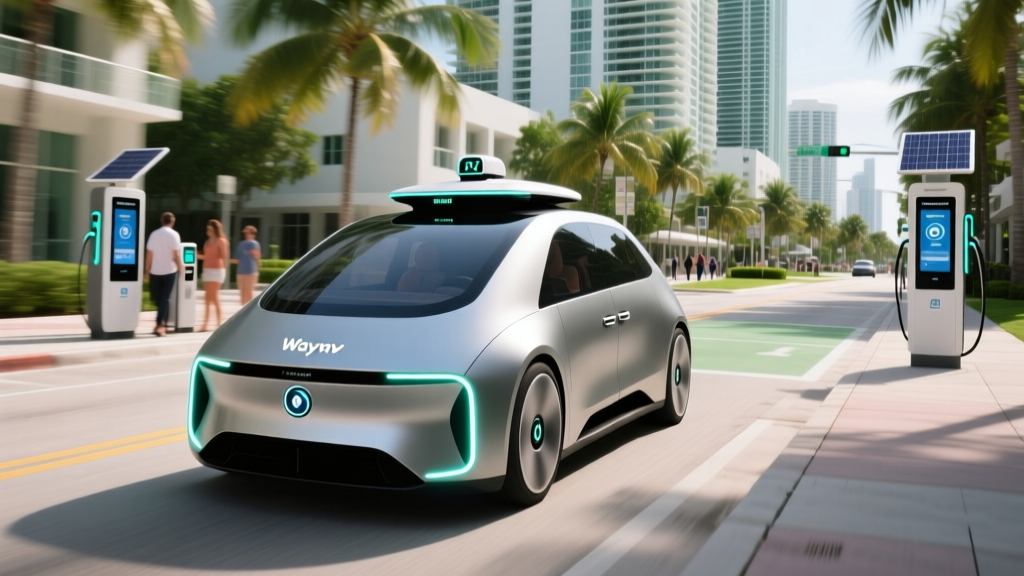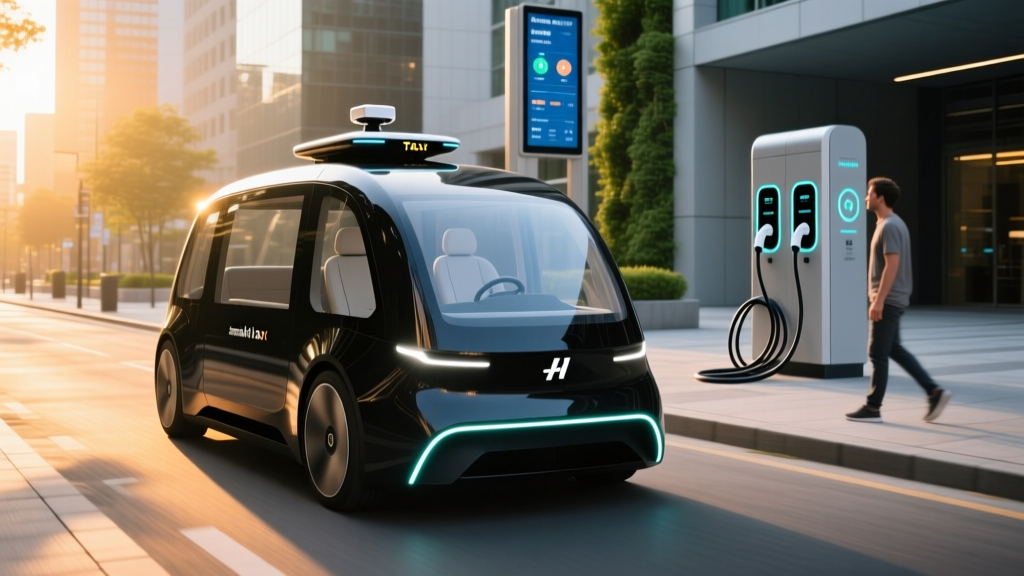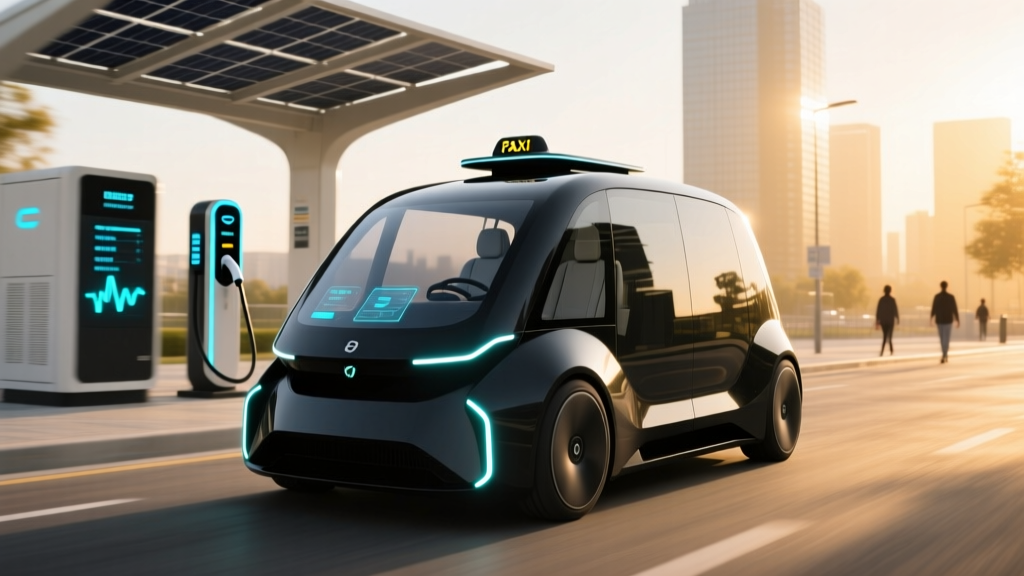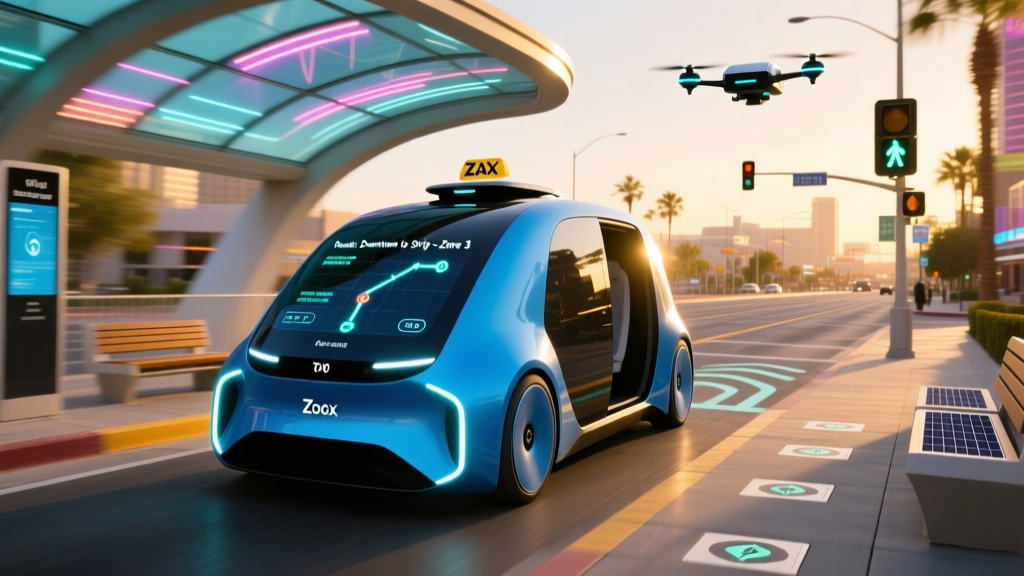
If you have been searching for Zoox Las Vegas stops to figure out where Amazon's autonomous vehicle subsidiary actually picks up and drops off passengers, you are not alone. Zoox has been testing and operating its purpose-built robotaxi on Nevada's roads longer than almost any other city, and the service footprint has expanded considerably since its early pilot days. But unlike hailing an Uber, you cannot simply type in any address. Zoox operates within a defined geofence with specific pickup and dropoff zones, and understanding that map is the difference between a seamless ride and a frustrating dead end.
This guide breaks down exactly where Zoox operates in Las Vegas as of early 2026, how the service works, what it costs, and the real safety data behind the headline-grabbing driverless rides. We will also clarify the critical distinction between Zoox's Level 4 autonomy and the Level 2 driver-assist systems found in consumer vehicles like Tesla's FSD Supervised.
Where Can You Catch a Zoox Robotaxi in Las Vegas?
Zoox's Las Vegas service area is anchored around the densely trafficked corridors between the Las Vegas Strip, downtown, and the surrounding resort and entertainment districts. The company does not publish an exhaustive street-by-street list of every Zoox Las Vegas stop, but the operational geofence covers the zones where riders are most likely to need short, point-to-point trips.
| Zone | Coverage Status | Typical Landmarks |
|---|---|---|
| Las Vegas Strip Corridor | Active | Major resorts from Mandalay Bay to The Venetian |
| Downtown / Fremont Area | Active | Fremont Street Experience, Arts District |
| Convention Center District | Active | Las Vegas Convention Center, Westgate |
| Harry Reid Intl Airport (LAS) | Limited / Testing | Select terminal pickup zones |
| Suburban Henderson / Summerlin | Not Available | — |
| North Las Vegas | Not Available | — |
The key takeaway: Zoox is a corridor service, not a city-wide rideshare replacement. If your trip starts and ends within the Strip-downtown-convention-center triangle, you are likely within the geofence. If you need to get to a suburban hotel or the far reaches of North Las Vegas, you will need Uber, Lyft, or a traditional taxi.
Zoox designates specific pickup and dropoff locations rather than allowing arbitrary street addresses. These are typically hotel lobbies, resort ride-share zones, and designated curb areas near major intersections. The Zoox app shows available stops as pins on its map when you request a ride. As of 2026, the company has been gradually expanding the number of designated stops, but the model remains zone-and-node rather than door-to-door.
Understanding Zoox's SAE Level 4 Autonomy
Before booking a ride, it is essential to understand what Zoox actually is — and what it is not. Consumer vehicles equipped with systems like Tesla's Autopilot, Ford's BlueCruise, or GM's Super Cruise operate at SAE Level 2. That means the human driver must remain engaged, hands on or near the wheel, and is legally responsible for the vehicle at all times. These are driver-assist features, not self-driving systems.
Zoox operates at SAE Level 4 — high automation within a defined operational design domain (ODD). Inside its Las Vegas geofence, the Zoox vehicle handles all driving tasks with no human behind the wheel and no steering wheel or pedals inside the passenger cabin. If the system encounters a scenario it cannot handle, it is designed to pull over safely rather than hand control to a passenger.
| SAE Level | Definition | Example | Driver Required? |
|---|---|---|---|
| Level 0 | No automation | Basic cruise control | Yes, fully |
| Level 1 | Driver assistance (steering OR speed) | Adaptive cruise control | Yes, fully |
| Level 2 | Partial automation (steering AND speed) | Tesla Autopilot, BlueCruise, Super Cruise | Yes — must supervise |
| Level 3 | Conditional automation (eyes off in specific conditions) | Mercedes DRIVE PILOT (limited markets) | Conditionally — must be ready to resume |
| Level 4 | High automation (no driver in defined area) | Zoox Las Vegas, Waymo Phoenix/SF | No — within ODD |
| Level 5 | Full automation (anywhere, any condition) | Does not exist commercially | No |
This distinction matters because marketing language around "self-driving" is often misleading. When a headline says "self-driving car," it could mean anything from Level 2 (you are still driving) to Level 4 (truly no driver). Zoox in Las Vegas is legitimately Level 4: there is no one in the front seat, and you as a passenger have zero driving responsibility.
How to Ride Zoox in Las Vegas: App, Pricing, and Wait Times
Riding Zoox is straightforward once you are inside the service area. Here is the process:
- Download the Zoox app (iOS/Android) and create an account.
- Verify your location is within the Las Vegas geofence. The app will confirm service availability.
- Select a designated pickup stop from the map — these are marked pins, not arbitrary addresses.
- Choose your dropoff stop within the service area.
- Confirm the ride and wait for vehicle dispatch.
- Board the Zoox vehicle — it has no driver seat, just two rows of inward-facing seats for up to four passengers.
The Zoox vehicle itself is a purpose-built, bidirectional carriage-style robotaxi. It can travel in either direction without turning around, which is a unique engineering choice. Top speed is limited to approximately 75 mph, though in practice it operates well within urban speed limits on its Las Vegas routes.
| Service | Base Fare (est.) | Per-Mile Rate | Typical 3-Mi Strip Trip | Surge Pricing? |
|---|---|---|---|---|
| Zoox (Las Vegas) | Free / Promotional* | $0.00* | $0.00* | No |
| UberX (Las Vegas) | $2.50 | $1.15 | $8–$14 | Yes (frequent) |
| Lyft Standard | $2.75 | $1.10 | $8–$13 | Yes (frequent) |
| Waymo One (where available) | $3.00 | $1.25 | $9–$15 | Rare |
*As of early 2026, Zoox's Las Vegas rider service has been offered primarily as a free or heavily subsidized experience to early-access users and invitees. Zoox has not published a permanent commercial pricing structure. Amazon, Zoox's parent company, has signaled that competitive pricing against Uber/Lyft will be a priority at full commercial launch. Check the Zoox app for current pricing in your area.
Wait times in the active service corridor typically range from 3 to 10 minutes, depending on fleet density and time of day. Friday and Saturday nights on the Strip can push wait times higher. Zoox does not currently implement surge pricing, a notable advantage over Uber and Lyft during peak Vegas hours.
Zoox Safety Record: What the Data Actually Shows
Safety is the single most scrutinized aspect of any robotaxi operation, and Zoox is no exception. As a subsidiary of Amazon since its 2020 acquisition, Zoox has operated under significant public and regulatory attention.
Zoox Safety Data Snapshot (through early 2026)
- Autonomous miles driven (testing + operations): Estimated 1M+ miles across Las Vegas and California test fleets
- Disengagement rate: Zoox has reported disengagement data to California DMV as required during its testing phases; specific per-thousand-mile rates vary by testing period and scenario complexity
- Reported at-fault collisions: Zoox has been involved in a small number of minor incidents during testing, consistent with the low-speed urban environments it operates in. NHTSA standing general orders require reporting of all Level 2+ incidents.
- Vehicle design safety: Purpose-built with crumple zones, redundant braking and steering systems, and a battery pack mounted low for stability
Sources: NHTSA Automated Vehicle Safety, California DMV AV Program
It is important to contextualize these numbers. Zoox's fleet in Las Vegas is far smaller than Waymo's operations in Phoenix and San Francisco, which have logged tens of millions of autonomous miles. Smaller fleet size means fewer total data points, which makes per-mile statistical comparisons less robust. What the data does show is that Zoox's vehicles, operating at low-to-moderate speeds in geofenced urban corridors, have not been involved in any widely reported serious injury collisions as of early 2026.
For comparison, Waymo's much larger fleet has published data showing its vehicles are involved in fewer police-reported crashes per million miles than human drivers in the same cities. Zoox has not yet published an equivalent large-scale comparative study, largely because its commercial fleet size does not yet support that volume of data.
The Technology Stack: How Zoox Sees the Road
Zoox takes a sensor-rich approach to perception, which contrasts sharply with Tesla's camera-only vision strategy. The Zoox vehicle is equipped with a comprehensive suite that provides 360-degree awareness:
- LiDAR: Multiple solid-state and spinning LiDAR units provide high-resolution 3D point clouds of the environment, enabling precise distance measurement to objects, pedestrians, and other vehicles regardless of lighting conditions.
- Cameras: A surround-camera array provides visual classification — reading traffic lights, recognizing signage, identifying pedestrian gestures, and detecting lane markings.
- Radar: Forward and side-facing radar units complement LiDAR for velocity detection of moving objects and provide redundancy in conditions where LiDAR performance may degrade (heavy rain, dust).
- Ultrasonic sensors: Close-range proximity detection for low-speed maneuvering, parking, and detecting objects near the vehicle body.
- IMU and GPS: Inertial measurement units combined with high-precision GPS and HD maps provide localization accuracy within centimeters.
This multi-sensor fusion approach is the industry standard for Level 4 robotaxis (Waymo, Cruise, and Motional use similar architectures). The redundancy is critical: if one sensor modality is degraded — for instance, cameras in direct sun glare — LiDAR and radar continue to provide reliable perception data.
The vehicle's compute platform runs Zoox's proprietary prediction and planning stack, which must anticipate the behavior of pedestrians, cyclists, other vehicles, and construction zones in real time. Las Vegas presents unique challenges: jaywalking tourists, erratic shuttle buses, temporary road closures for events, and dense pedestrian traffic on the Strip all require sophisticated edge-case handling.
Regulatory Framework: Who Approves Zoox in Nevada?
Nevada was one of the first states to create a regulatory framework for autonomous vehicles, and the state's approach has been relatively permissive compared to California's more cautious rollout process.
- Nevada DMV: Issues autonomous vehicle testing and deployment permits. Zoox holds the necessary state authorization to operate its driverless vehicles on public roads in Las Vegas.
- NHTSA (federal): Oversees vehicle safety standards. Zoox received a notable exemption from certain Federal Motor Vehicle Safety Standards (FMVSS) because its purpose-built vehicle lacks traditional controls like a steering wheel, mirrors, and pedals. This exemption was granted specifically because the vehicle was designed from the ground up as a robotaxi, not a modified consumer car.
- Standing General Order: Under NHTSA's Standing General Order, Zoox and all Level 2+ AV operators must report crashes involving their vehicles. This creates a public record of incidents that did not exist in earlier AV testing eras.
The regulatory environment matters because it determines how quickly Zoox can expand its Las Vegas geofence, increase fleet size, and eventually charge commercial fares. Nevada's framework has allowed Zoox to iterate faster in Las Vegas than in some other markets, though expansion still requires demonstrating safety performance to regulators at each stage.
Current Limitations: Where Zoox Cannot Go and Why
Despite the impressive technology, Zoox in Las Vegas has hard boundaries — both geographic and operational. Understanding these limitations prevents frustration and sets realistic expectations.
Geographic and Operational Constraints
- Geofence boundary: The vehicle will not operate outside its approved service area. If a requested trip crosses the boundary, the app will not allow it.
- Highway driving: Zoox is optimized for surface streets and urban corridors. It does not currently operate on I-15 or US-95 freeway segments at highway speeds in Las Vegas.
- Weather limitations: While Las Vegas is mostly dry, heavy monsoon rain or flash-flood conditions can trigger operational pauses. LiDAR performance degrades in heavy precipitation, and the system is designed to prioritize safety over availability.
- Construction zones: Major, unmapped road construction can cause the system to reroute or pause service on affected segments. HD maps must be updated to reflect new traffic patterns.
- No airport highway route: Getting from the Strip to Harry Reid International Airport may require surface-street routing only, depending on whether the connecting freeway segment is within the geofence.
- Limited hours: Service may not operate 24/7 in all zones. Late-night availability depends on fleet deployment schedules.
- Passenger capacity: Maximum four passengers per vehicle. No car seats, large luggage, or wheelchair accessibility in the current vehicle design.
- No pets: Service animals are accommodated; personal pets are not permitted.
These limitations are not unique to Zoox. Waymo's Phoenix and San Francisco services have similar geofence and weather constraints. The difference is that Waymo's geofences cover substantially larger areas because they have been operating commercially for longer. Zoox's Las Vegas footprint is growing, but it remains a subset of the valley's total road network.
Frequently Asked Questions
Is Zoox truly self-driving, or is there a safety driver?
In its current Las Vegas passenger service, Zoox operates at SAE Level 4 with no human driver in the vehicle. The purpose-built Zoox vehicle has no steering wheel, pedals, or driver seat. Remote assistance operators can monitor the fleet and provide high-level guidance if the vehicle encounters an unfamiliar scenario, but they do not "drive" the car in real time via remote control.
How much does a Zoox ride cost compared to Uber or Lyft?
As of early 2026, Zoox's Las Vegas service has been offered at no cost or minimal cost to early-access riders. A permanent pricing structure has not been published. When commercial pricing launches, industry analysts expect it to be competitive with UberX/Lyft Standard, potentially lower due to the absence of a driver payout. For reference, a typical 3-mile UberX trip on the Strip costs $8–$14 depending on demand.
Can I use Zoox to get to the Las Vegas airport?
Service to Harry Reid International Airport (LAS) has been in limited testing phases. Whether a specific airport trip is available depends on whether both your origin and the airport pickup zone fall within the active geofence. Check the Zoox app for real-time availability — do not rely on it as your sole airport transport plan without confirming in advance.
What happens if the Zoox vehicle encounters an emergency?
The vehicle is designed with redundant braking, steering, and communication systems. If it detects a scenario it cannot safely navigate, it will execute a minimal-risk maneuver — typically pulling to the side of the road and stopping. Passengers can communicate with Zoox support via an in-vehicle intercom system at any time. In the event of a collision, emergency services are contacted automatically.
How is Zoox different from Waymo?
The biggest differences are the vehicle and the business model. Zoox designed a purpose-built robotaxi from scratch (bidirectional, no driver controls, carriage-style seating), while Waymo retrofits existing vehicles like the Jaguar I-PACE and Zeekr RT. Zoox is owned by Amazon, which could integrate robotaxi service with its logistics ecosystem. Waymo (owned by Alphabet) has a significant head start in commercial operations, with millions of paid rides completed in Phoenix, San Francisco, and Los Angeles. Zoox's fleet and service area are smaller but growing.
Where are all the Zoox Las Vegas stops listed?
Zoox does not publish a static list of all pickup and dropoff stops on its website. Available stops are shown dynamically in the Zoox app based on your current location and the active service area. Stops are concentrated around major hotels, casinos, the convention center, and downtown landmarks. As the geofence expands, new stops are added to the app map.