The Invisible Shield: Why V2X is the Missing Link in ADAS
Advanced Driver Assistance Systems (ADAS) have fundamentally changed how we drive. Features like Automatic Emergency Braking (AEB), Lane Centering, and Adaptive Cruise Control rely on a sophisticated suite of cameras, radar, and LiDAR sensors to keep us safe. However, as the automotive industry pushes toward higher levels of autonomy, engineers are hitting a hard physical limit: line-of-sight. Cameras and radar cannot see through buildings, around blind corners, or through heavy snow. This is where Vehicle-to-Everything (V2X) communication steps in.
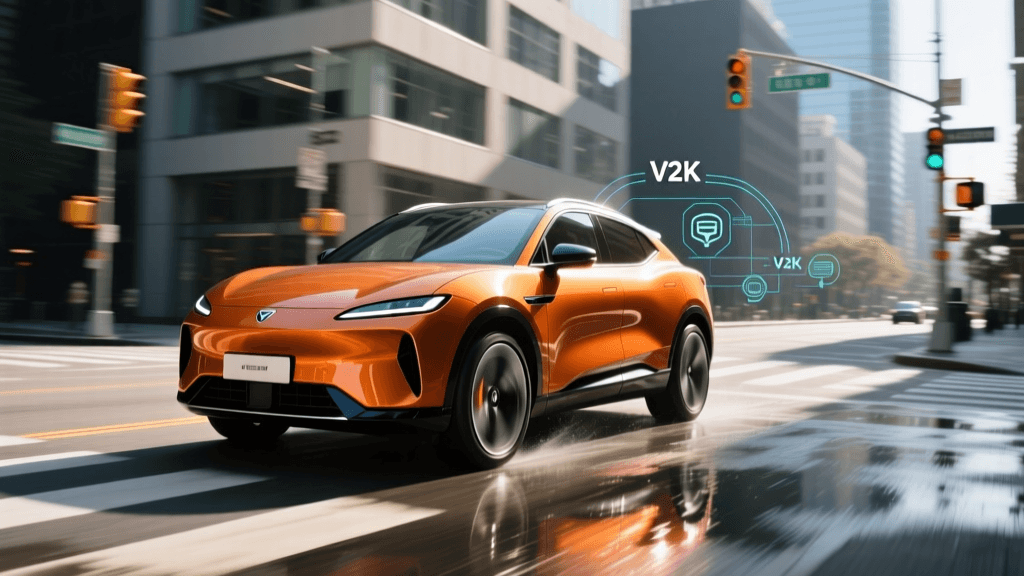
V2X allows your car to communicate with other vehicles (V2V), smart infrastructure (V2I), pedestrians (V2P), and networks (V2N). Despite its potential to eliminate thousands of intersection and blind-spot crashes annually, V2X remains misunderstood by consumers and even some automotive enthusiasts. In this guide, we will bust the most persistent myths surrounding V2X technology, highlight common mistakes drivers make, and provide actionable advice on how to leverage this tech in your next EV or smart vehicle.
Myth #1: Cameras, Radar, and LiDAR Are All You Need
The most common misconception in the ADAS space is that adding more sensors or higher-resolution cameras will eventually solve all safety challenges. While LiDAR and millimeter-wave radar are incredible at mapping the immediate physical environment, they are strictly bound by physics. If a delivery truck is blocking the intersection, your ADAS camera cannot see the pedestrian stepping off the curb on the other side.
V2X bypasses this limitation entirely by utilizing radio frequencies. According to the USDOT ITS Joint Program Office, V2X technology operates by broadcasting Basic Safety Messages (BSMs) up to 10 times per second. These messages contain vital telemetry data: vehicle speed, heading, braking status, and size. Because radio waves penetrate physical obstacles and are unaffected by blinding sun glare or dense fog, V2X effectively gives your ADAS the ability to see around corners and through solid objects. When integrated with ADAS, V2V communication can trigger pre-emptive braking for a multi-car pileup happening a quarter-mile ahead, long before your radar detects the stationary vehicles.
Myth #2: V2X is a Privacy Nightmare and Battery Drain
A frequent concern among EV owners and privacy advocates is that V2X technology acts as a government or corporate tracking device, constantly broadcasting your location, identity, and driving habits. Furthermore, there is a myth that maintaining a constant V2X data link will noticeably drain an EV battery.
Both claims are categorically false. The National Highway Traffic Safety Administration (NHTSA) has explicitly mandated that V2X communications must prioritize privacy and security. BSMs do not contain your Vehicle Identification Number (VIN), license plate, driver name, or exact destination. Instead, vehicles use pseudonymous security certificates that change multiple times per hour. To an outside receiver, your car is simply an anonymous data point moving through space. You cannot be tracked via V2X any more than you can be tracked by the heat signature of your exhaust pipe.
Regarding battery drain, the computational and radio-frequency power required to broadcast and receive BSMs via the 5.9 GHz spectrum is measured in milliwatts. The impact on an 80 kWh EV battery is virtually indistinguishable from zero. Running your vehicle's heated seats or infotainment screen consumes exponentially more power than the V2X communication module.
Myth #3: V2X Requires Perfect 5G Cellular Coverage
With the rise of Cellular V2X (C-V2X), many consumers mistakenly believe that this technology relies on cellular networks (4G LTE or 5G) and cell towers to function. The fear is that once you leave a major metropolitan area or enter a dead zone, your car's V2X safety features will disable.
This myth stems from a misunderstanding of C-V2X architecture. C-V2X operates in two distinct modes. The first is Uu mode, which uses cellular networks for long-range, cloud-based data (like mapping or traffic routing). The second, and far more critical for ADAS, is the PC5 direct communication interface. The 5G Automotive Association (5GAA) highlights that the PC5 sidelink allows vehicles to talk directly to each other and to smart roadside infrastructure without any cellular network coverage or SIM card authentication. Whether you are in downtown Los Angeles or a rural highway in Montana, your C-V2X equipped car will still instantly warn you if another vehicle is running a red light at a blind intersection.
Common Mistakes Drivers Make with V2X-Equipped Vehicles
As V2X-equipped vehicles become more common, drivers are developing bad habits that negate the benefits of the technology. Avoid these common mistakes:
- Mistake 1: Disabling V2I Alerts Due to Annoyance. Many modern vehicles feature Vehicle-to-Infrastructure (V2I) capabilities, such as Green Light Optimized Speed Advisory (GLOSA). This feature tells you the exact speed to maintain to hit the next green light. Some drivers find the constant speed-adjustment suggestions annoying and turn the feature off, thereby increasing their braking frequency, reducing EV regenerative braking efficiency, and missing out on intersection collision warnings.
- Mistake 2: Over-Relying on V2X in Low-Density Areas. V2V communication requires other vehicles in the vicinity to also be equipped with V2X hardware. If you are driving an older car, or driving in an area with very low traffic density, your car has nothing to talk to. Drivers mistakenly assume their car will warn them of all cross-traffic, forgetting that V2X only detects connected vehicles and smart infrastructure.
- Mistake 3: Ignoring Infrastructure Updates. V2I features like Audi's Traffic Light Information require municipal infrastructure to be updated and synced. Drivers often complain the feature is broken when, in reality, they have simply crossed a county line where the local Department of Transportation has not yet integrated their traffic light controllers with the V2X network.
Comparison: Line-of-Sight Sensors vs. V2X Communication
Understanding how V2X complements traditional ADAS sensors is crucial for modern car buyers. Below is a breakdown of how these technologies compare in real-world scenarios.
| Feature | ADAS Sensors (Camera/Radar/LiDAR) | V2X Communication (V2V/V2I) |
|---|---|---|
| Line-of-Sight Requirement | Strictly required. Blocked by buildings, large trucks, and sharp curves. | Not required. Radio waves penetrate obstacles and curve around terrain. |
| Weather Dependency | High. Heavy rain, snow, and fog degrade camera and LiDAR performance. | None. 5.9 GHz radio frequencies are unaffected by adverse weather. |
| Effective Range | Typically 150 to 300 meters for forward-facing radar and LiDAR. | Up to 1,000 meters (over half a mile) for direct V2V communication. |
| Data Shared | Physical dimensions, distance, relative speed, and object classification. | Intentions (turn signals), braking status, exact GPS heading, and size. |
| Primary Limitation | Blind spots and physical obstructions. | Requires the target vehicle or infrastructure to also be V2X-equipped. |
Actionable Advice: Buying and Using V2X Today
If you are in the market for a new EV or smart vehicle and want to future-proof your purchase with V2X capabilities, here is what you need to look for:
1. Prioritize C-V2X Over DSRC
The automotive industry originally debated between two V2X standards: DSRC (based on Wi-Fi) and C-V2X (based on cellular protocols). The FCC and global regulators have overwhelmingly sided with C-V2X due to its superior range, latency, and future-proofing. When reviewing spec sheets, look specifically for C-V2X compatibility. Brands like Ford have been pioneers in this space, testing C-V2X intersection collision warnings in vehicles like the Mustang Mach-E and F-150.
2. Look for V2I Traffic Light Integration
Audi is currently the market leader in consumer-facing V2I technology. Their Traffic Light Information (TLI) system is active in dozens of major US cities, including Las Vegas, Los Angeles, and New York. If you commute through smart-city corridors, an Audi equipped with TLI will display a countdown timer on your digital instrument cluster, telling you exactly when a red light will turn green, reducing idle anxiety and improving battery efficiency in stop-and-go traffic.
3. Check Local Municipal V2X Rollouts
V2X is a two-way street; your car needs a partner to talk to. Before paying extra for V2I packages, check your local Department of Transportation's smart-city initiatives. If your city is actively upgrading traffic signals with Roadside Units (RSUs), investing in a V2I-capable vehicle will yield immediate daily benefits. If your area has no plans for smart infrastructure, focus your purchasing decision on vehicles with robust V2V capabilities to protect you against other connected drivers on the highway.
Conclusion
ADAS sensors are the eyes of your vehicle, but V2X is its telepathy. By busting the myths surrounding privacy, battery drain, and cellular reliance, it becomes clear that Vehicle-to-Everything communication is not a gimmick—it is the critical bridge between today's reactive driver assistance and tomorrow's predictive, fully autonomous driving. As you evaluate your next vehicle purchase, look beyond the camera resolutions and LiDAR counts, and ensure your car has the invisible shield of V2X communication.