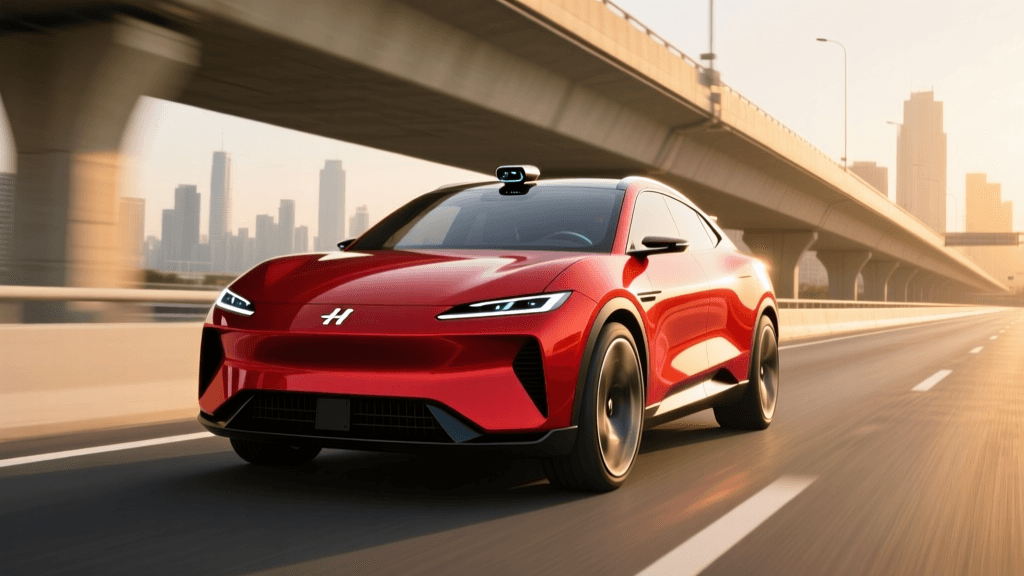
The Evolution of ACC: From Highway Cruising to Traffic Jams
Adaptive Cruise Control (ACC) was originally designed as a convenience feature for open highways, allowing drivers to set a maximum speed while maintaining a safe following distance from the vehicle ahead. However, as urbanization has increased and commute times have lengthened, the true test of ACC has shifted from the open interstate to the grueling, stop-and-go reality of heavy traffic. Modern systems, often branded as Traffic Jam Assist, Low-Speed Follow, or Stop-and-Go ACC, are now capable of bringing the vehicle to a complete halt and resuming motion without driver intervention. While this technology significantly reduces the physical and mental fatigue associated with rush hour commuting, it introduces a unique set of challenges. Misunderstanding how your vehicle's sensors interpret complex, dense traffic environments can lead to abrupt braking, dangerous cut-in scenarios, and a false sense of security.
As experts in advanced driver assistance systems (ADAS), we have compiled a comprehensive guide on how to properly use adaptive cruise control in heavy traffic. By understanding the limitations of sensor fusion and adopting proactive driving habits, you can maximize both safety and comfort during your daily commute.
Understanding the Technology: Radar, Cameras, and Sensor Fusion
To master ACC in heavy traffic, you must first understand how your vehicle perceives the world. Most modern ACC systems rely on sensor fusion, combining data from a forward-facing millimeter-wave radar (usually mounted behind the front grille or emblem) and a high-resolution camera (mounted near the rearview mirror). The radar is excellent at determining the distance and relative speed of the vehicle ahead, even in poor weather conditions. The camera, on the other hand, excels at identifying lane markings, vehicle types, and predicting when a neighboring car is about to merge into your lane.
According to the National Highway Traffic Safety Administration (NHTSA), while these systems are highly advanced, they are not infallible. Radar can sometimes bounce off metallic debris or guardrails, causing "phantom braking" where the car abruptly slows down for a non-existent obstacle. In heavy, congested traffic, the sheer volume of metallic surfaces, overlapping vehicles, and erratic pedestrian movements can occasionally overwhelm the system's processing logic. Recognizing these environmental triggers is the first step in anticipating how your car will react.
Expert Best Practices for Stop-and-Go Traffic
Using ACC in a traffic jam requires a different approach than using it on a clear highway. Here are the expert best practices for navigating dense congestion safely.
1. Calibrate Your Following Distance (Gap Setting)
In heavy traffic, the default following distance is often too long. If you leave a massive gap between your bumper and the car ahead, you are practically inviting aggressive drivers to continuously cut into your lane. Every time a car cuts in, your ACC system will aggressively apply the brakes to re-establish the following gap, leading to a jerky, uncomfortable ride and increased wear on your brake pads.
- Expert Tip: Reduce your ACC gap setting to the minimum or second-to-minimum level in heavy, slow-moving traffic (under 30 mph). This tighter gap discourages opportunistic lane-changers and results in smoother, more predictable braking and acceleration patterns.
- Highway Transition: Remember to increase the gap setting back to maximum when traffic clears and speeds exceed 55 mph to maintain a safe stopping distance.
2. Anticipate the "Cut-In" Phenomenon
Current ACC systems are reactive, not predictive. When a vehicle from an adjacent lane begins to merge into your path, the system often waits until the car's wheels cross the painted lane line before recognizing it as the new target vehicle. In heavy traffic, this split-second delay can result in a sudden, heart-pounding slam on the brakes.
- Expert Tip: Keep your foot hovering just millimeters above the brake pedal when you see a vehicle in the adjacent lane driving faster than the flow of traffic or edging toward your lane. If the car cuts in aggressively, tap the brake immediately to disengage the ACC and take manual control of the deceleration. This prevents the system's delayed, harsh braking response.
3. Master the Resume and Tap-to-Brake Functions
In gridlock where traffic comes to a complete standstill for more than a few seconds, most standard ACC systems will disengage and require driver input to resume. Depending on your vehicle's manufacturer, this might require a pull of the cruise control stalk, a press of the "RES" button on the steering wheel, or a tap of the accelerator pedal.
- Expert Tip: Avoid using the accelerator pedal to resume ACC in tight traffic. Tapping the gas pedal can sometimes cause the vehicle to lurch forward more aggressively than desired. Instead, use the steering wheel "RES" button or stalk. It provides a smoother, more measured acceleration profile that is better suited for inching forward in a traffic jam.
When to Disengage: Knowing the System's Blind Spots
While Traffic Jam Assist is a marvel of modern engineering, there are specific heavy-traffic scenarios where human intervention is not just recommended, but mandatory. The Insurance Institute for Highway Safety (IIHS) consistently highlights that driver over-reliance on ADAS features is a leading contributor to secondary collisions in complex driving environments.
You must immediately disengage ACC and take full manual control in the following heavy-traffic scenarios:
- Construction Zones: Faded lane markings, temporary concrete barriers, and stopped construction equipment confuse camera-based lane centering and radar targeting. The system may attempt to follow an old, painted-out lane line directly into a barrier.
- Intersections and Cross Traffic: ACC radar is focused forward. It will not detect a vehicle running a red light or a pedestrian stepping out from between two stopped buses.
- Severe Weather: Heavy rain, snow, or fog can blind both the radar and the camera. If your windshield wipers are on high speed, the camera's view is compromised, and the system may fail to recognize the brake lights of the vehicle ahead.
- Erratic Drivers: If the vehicle ahead is weaving, brake-checking, or driving erratically, the ACC algorithm may struggle to predict their trajectory. Disengage and increase your manual following distance.
System Comparison: Standard ACC vs. Traffic Jam Assist
Not all adaptive cruise control systems are created equal. Understanding the tier of ADAS equipped in your vehicle is crucial for setting realistic expectations in heavy traffic.
| System Tier | Common Brand Names | Stop-and-Go Capability | Lane Centering Integration | Best Use Case |
|---|---|---|---|---|
| Standard ACC | Older Base Models | Disengages below 20 mph; no auto-resume. | None (Speed & Distance only) | Light highway cruising. |
| ACC with Stop & Go | Toyota DRCC, Honda ACC with LSF | Brings car to a halt; auto-resumes if stopped under 3 seconds. Manual resume required for longer stops. | Basic Lane Keep Assist (bounces between lines) | Moderate congestion, predictable traffic. |
| Advanced Traffic Jam Assist | GM Super Cruise, Ford BlueCruise, Hyundai HDA2 | Full stop-and-go; auto-resumes after extended stops. Integrates steering to hold the vehicle perfectly centered. | Active Lane Centering (steering torque applied) | Severe gridlock, long commutes, mapped highways. |
The Human Element: Combating Automation Complacency
The most significant danger of using adaptive cruise control in heavy traffic is not a software glitch, but human psychology. When a system smoothly handles the tedious task of creeping forward and braking in gridlock, the driver's brain naturally disengages. This phenomenon, known as "automation complacency," drastically increases your reaction time when an unexpected event occurs, such as a motorcycle filtering between lanes or a truck dropping debris.
Research from the AAA Foundation for Traffic Safety indicates that drivers using ADAS features are more likely to engage in secondary tasks, like checking their phones or adjusting the infotainment system, particularly in slow-moving traffic where the perceived risk is low. To combat this, treat ACC as a co-pilot, not an autopilot. Keep your hands on the wheel, maintain your visual focus on the road ahead, and actively scan the periphery of your vehicle. By remaining an active participant in the driving process, you bridge the gap between artificial intelligence and human intuition, ensuring that your daily commute is not only less fatiguing but fundamentally safer.
Conclusion
Adaptive cruise control is a transformative tool for heavy traffic, capable of turning a stressful, ankle-aching commute into a relaxed experience. However, its effectiveness is entirely dependent on the driver's understanding of its operational limits. By tightening your following gap to prevent cut-ins, anticipating the system's reactive braking, and knowing exactly when to take over the wheel, you can leverage ADAS technology to its fullest, safest potential. Remember, the ultimate responsibility for the vehicle's safety always rests with the driver behind the wheel.