Understanding Stop-and-Go Adaptive Cruise Control
Adaptive Cruise Control (ACC) has evolved from a simple highway convenience feature into a vital tool for navigating the daily grind of stop-and-go traffic. Modern systems, often branded as Traffic Jam Assist or ACC with Stop & Go, can bring your vehicle to a complete halt and resume driving without driver input. However, relying on these systems in dense, unpredictable congestion requires a nuanced understanding of their capabilities and limitations. As automotive experts at AutoEdgeView, we have tested dozens of Advanced Driver Assistance Systems (ADAS) in gridlock conditions. This guide provides actionable, expert-level tips to maximize safety, comfort, and system efficiency when using adaptive cruise control in heavy traffic.
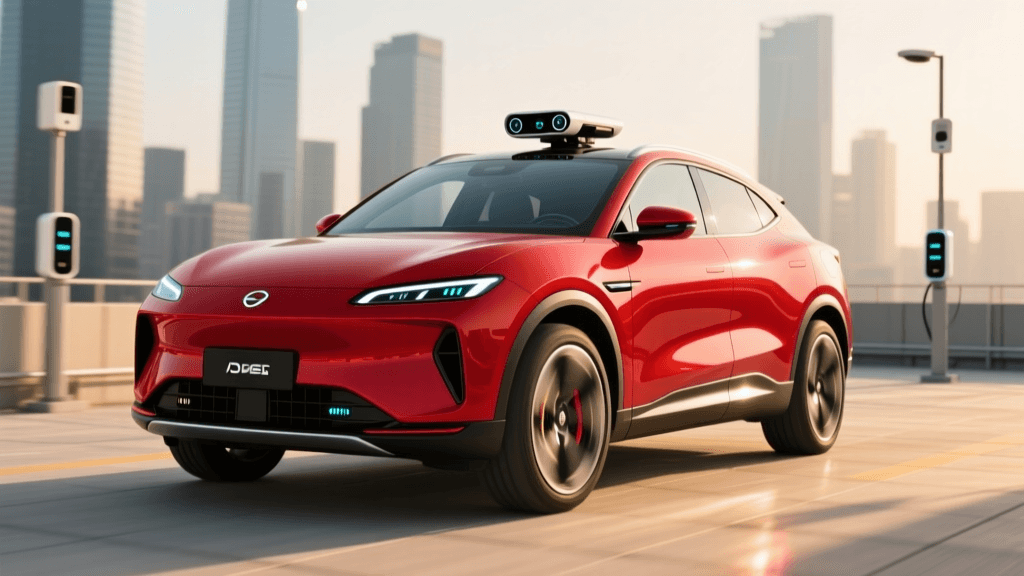
At the core of these systems is a sensor fusion suite, typically combining a 77 GHz millimeter-wave radar hidden behind the front grille or emblem with a forward-facing optical camera mounted near the rearview mirror. The radar excels at tracking the distance and relative speed of the vehicle ahead, even in poor lighting, while the camera interprets lane markings and identifies vehicle types. In heavy traffic, this fusion is constantly tested by erratic human behavior, tight gaps, and complex infrastructure.
5 Expert Best Practices for Gridlock
1. Calibrate Your Gap Setting for Human Behavior
Most ACC systems allow drivers to adjust the following distance, usually represented by bars or time intervals (e.g., 1.0 to 3.0 seconds). In heavy, slow-moving traffic, the temptation is to set the gap to the absolute minimum to prevent other drivers from cutting in. This is a mistake. A minimal gap forces the ACC to react with harsh, abrupt braking the moment the lead vehicle decelerates slightly. We recommend setting your following distance to the medium or third-tier setting (approximately 1.8 to 2.2 seconds). This provides the radar with enough computational time to smooth out braking inputs, drastically reducing the 'accordion effect' and preventing rear-end collisions from drivers behind you who may be distracted.
2. Master the Cover and Hover Technique
ACC systems are notoriously vulnerable to aggressive 'cut-ins'—when a vehicle from an adjacent lane merges into your gap. While modern predictive algorithms can detect a car's turn signal or lateral drift, the physical braking reaction often occurs later than a human driver would prefer. When driving in dense traffic alongside merging lanes or on-ramps, practice the 'cover and hover' technique. Keep your right foot hovering just above the brake pedal and your thumb resting near the ACC cancel button on the steering wheel. If you see a vehicle's wheels angle toward your lane, you can instantly override the system with manual braking, which smoothly disengages the ACC without triggering a panic alarm.
3. Differentiate Between Lane Keep and Lane Centering
Using ACC in traffic is significantly less stressful when paired with lateral steering assistance, but you must know which system your car possesses. Lane Keep Assist (LKA) is a reactive system that only applies steering torque when you cross a lane line. Lane Centering Assist (LCA), however, provides continuous, proactive steering to keep the vehicle in the middle of the lane. For heavy traffic, LCA is mandatory for a smooth experience. If your vehicle only has LKA, you will find yourself fighting the steering wheel in stop-and-go traffic as the car bounces between lane markers. Always verify your vehicle's specific ADAS capabilities in the owner's manual before relying on steering assistance in tight spaces.
4. Manage the Stop-and-Go Resume Window
Not all Stop & Go systems behave identically when traffic comes to a complete halt. Systems like Toyota's Dynamic Radar Cruise Control (DRCC) or Ford's Intelligent Adaptive Cruise Control typically feature a 'resume window' of about 3 seconds. If the lead vehicle stops and moves again within this window, your car will follow automatically. However, if the stop lasts longer than 3 seconds, the system enters a standby mode to prevent unexpected lurches. You must then tap the accelerator or press the 'Resume' button on the steering wheel. Knowing your specific vehicle's time limit prevents confusion and rear-end honking when traffic finally begins to move after a long standstill.
5. Protect Your Sensor Hardware
In bumper-to-bumper traffic, minor fender-benders are common. However, a minor tap to the front bumper of a modern EV or hybrid is no longer just a cosmetic issue. The radar sensor and its calibration bracket are often mounted directly behind the front emblem or lower grille. A low-speed collision that cracks the plastic radome or misaligns the sensor bracket by just a few millimeters can disable your entire ADAS suite. Replacing and recalibrating a front radar sensor at a dealership typically costs between $500 and $1,500. In ultra-tight, creeping traffic where bumpers are inches apart, it is often safer to disengage ACC and creep forward manually to avoid sensor-damaging contact.
ADAS Feature Comparison Chart
| System Type | Primary Function | Heavy Traffic Utility | Key Limitation |
|---|---|---|---|
| Standard ACC | Maintains set speed and distance | Low (Disengages below 20 mph) | Cannot handle complete stops |
| ACC with Stop & Go | Brings car to a halt and resumes | High (Manages longitudinal gap) | Requires driver steering input |
| Traffic Jam Assist | Combines Stop & Go with Lane Centering | Very High (Semi-autonomous creeping) | Limited to speeds under 40 mph |
The Danger of Automation Complacency
One of the most significant risks of using adaptive cruise control in heavy traffic is automation complacency. Because the system handles the tedious micro-adjustments of braking and accelerating, drivers often let their minds wander or look away from the road. The National Highway Traffic Safety Administration (NHTSA) continuously emphasizes that current ADAS technologies are designed to assist, not replace, an attentive human driver. When traffic suddenly clears or an emergency vehicle approaches from behind, a disengaged driver may not have the situational awareness required to react in time.
Furthermore, the Insurance Institute for Highway Safety (IIHS) has published extensive research showing that drivers using partial automation systems are more likely to engage in non-driving-related activities, such as checking their phones, compared to when they are driving manually. To combat this, utilize your vehicle's Driver Monitoring System (DMS). Keep your eyes on the road and your hands lightly resting on the wheel to satisfy the capacitive or torque sensors, ensuring the system remains active and you remain mentally engaged with the traffic environment.
Environmental and Infrastructure Limitations
Heavy traffic often occurs in less-than-ideal conditions, such as rush hour during a rainstorm or evening commutes through poorly lit construction zones. Millimeter-wave radar can penetrate rain and fog better than optical cameras, but heavy precipitation can still cause 'radar scatter,' leading the system to falsely detect obstacles and initiate phantom braking. Similarly, in construction zones where lane lines are painted over, shifted, or marked by temporary cones, the camera's lane-centering algorithm can become confused, potentially steering the vehicle toward a concrete barrier or an adjacent lane. In these scenarios, the ACC may also mistakenly track a stationary construction vehicle or a shadow cast by an overpass as a lead vehicle, causing sudden, unwarranted deceleration.
When to Immediately Disengage
Knowing when to turn the system off is just as important as knowing how to use it. You should immediately disengage adaptive cruise control and take full manual control in the following heavy-traffic scenarios:
- Active Work Zones: Where lane markers are faded, crossed out, or replaced by physical cones and barrels.
- Complex Intersections: If your highway traffic jam spills over into surface streets with cross-traffic, pedestrians, or traffic lights.
- Motorcycle Filtering: In regions where motorcycles or bicycles legally filter between lanes of stopped traffic, the radar may struggle to track their narrow profiles until they are dangerously close.
- Severe Weather: Heavy downpours, snow squalls, or dense fog that obscure the windshield camera and degrade radar performance.
Conclusion
Adaptive Cruise Control with Stop & Go is a transformative technology that can drastically reduce the physical and mental fatigue associated with heavy traffic commutes. By optimizing your following distance, anticipating aggressive cut-ins, understanding your vehicle's specific resume behaviors, and remaining vigilant against automation complacency, you can leverage these systems safely and effectively. Remember that ADAS is a co-pilot, not an autopilot; your judgment and readiness to intervene remain the most critical safety features in your vehicle.