The ADAS Identity Crisis: LKA vs. LCA
When shopping for a modern electric or hybrid vehicle, consumers are frequently bombarded with a dizzying array of Advanced Driver Assistance Systems (ADAS). Among the most misunderstood technologies are Lane Keep Assist (LKA) and Lane Centering Assist (LCA). Dealership sales personnel often use the terms interchangeably, and marketing brochures frequently blur the lines between the two. However, from an engineering and data-analysis perspective, LKA and LCA are fundamentally different systems with distinct operational parameters, intervention thresholds, and safety outcomes.
In this data-driven comparison analysis, we will deconstruct the telemetry, sensor dependencies, and SAE classifications that separate reactive Lane Keep Assist from proactive Lane Centering Assist. By examining the underlying metrics—such as steering torque application, Time to Lane Departure (TTLD), and lateral acceleration limits—buyers can make informed decisions about which ADAS architecture best suits their driving environment.
Defining the Baseline: SAE J3016 Classifications
To understand the difference, we must first establish the taxonomy of driving automation. According to the SAE International J3016 standard, vehicle automation is categorized from Level 0 (no automation) to Level 5 (full automation). Both LKA and LCA operate primarily within the boundaries of Level 1 and Level 2 automation, but their execution of the 'lateral control' function differs drastically.
Lane Keep Assist is classified as a Level 1 intervention system. It does not drive the car for you; rather, it acts as a digital guardrail, intervening only when the vehicle is on the verge of an unintended lane departure. Lane Centering Assist, on the other hand, provides continuous lateral control. When paired with Adaptive Cruise Control (ACC), LCA elevates the vehicle's operational status to Level 2, providing simultaneous longitudinal and lateral support. The distinction lies in the continuity of the data stream and the steering rack's actuation frequency.
Lane Keep Assist (LKA): Reactive Intervention Data
Lane Keep Assist is a reactive system designed to prevent road departure accidents. It relies heavily on the metric known as Time to Lane Departure (TTLD). TTLD is calculated by the ADAS computer using the vehicle's lateral velocity, heading angle relative to the painted line, and distance to the line.
Data from automotive safety testing indicates that LKA systems typically remain dormant until the TTLD drops below 0.5 to 0.8 seconds. At this critical threshold, the system triggers an intervention. This intervention usually takes one of two forms:
- Steering Torque Pulse: The electric power steering (EPS) motor applies a brief, high-torque pulse (typically between 2.0 and 4.0 Newton-meters) to push the steering wheel away from the departing line.
- Asymmetric Braking: In some architectures, the system applies micro-braking to the wheels on the opposite side of the departure, creating a yaw moment that pivots the car back into the lane.
Because LKA only activates at the lane boundary, the driving experience is often described as 'ping-ponging' or 'bouncing' between the lines. The system allows lateral deviation to occur, correcting it only when the data dictates an imminent departure. Furthermore, the National Highway Traffic Safety Administration (NHTSA) notes that LKA systems are designed to be easily overridden by the driver, requiring minimal steering torque to cancel the intervention if the driver is intentionally changing lanes without using a turn signal.
Lane Centering Assist (LCA): Proactive Steering Metrics
Lane Centering Assist operates on a completely different algorithmic philosophy: continuous error correction. Instead of waiting for the TTLD to approach zero, LCA constantly calculates the vehicle's lateral position relative to the mathematical center of the lane.
Telemetry from LCA-equipped vehicles shows that the EPS motor is engaged up to 100 times per minute, applying micro-adjustments of less than 1.0 Newton-meters of torque. The goal of the LCA algorithm is to keep the vehicle's lateral acceleration as close to 0.0 m/s² as possible while traversing curves. When entering a highway sweep, LCA does not wait for the car to drift to the outside edge; it preemptively calculates the required steering angle based on camera-detected lane curvature and, in advanced systems, GPS-linked map data.
This continuous engagement requires a higher tier of sensor fidelity. While LKA can function adequately with a standard-definition forward-facing camera detecting high-contrast lane lines, LCA requires high-dynamic-range (HDR) cameras, advanced neural network processing for edge detection (even when lines are faded), and often sensor fusion with radar to track the vehicle ahead as a secondary reference point for lane positioning.
Data Table: LKA vs. LCA Technical Comparison
The following table summarizes the core engineering and operational differences between the two systems based on aggregated ADAS telemetry data.
| Metric / Feature | Lane Keep Assist (LKA) | Lane Centering Assist (LCA) |
|---|---|---|
| SAE J3016 Classification | Level 1 (Intervention / Warning) | Level 1 or Level 2 (Continuous Control) |
| Engagement Trigger | Imminent Departure (TTLD < 0.8s) | Continuous (System Active > 15 mph) |
| Steering Input Type | Pulsed / Corrective Torque (2-5 Nm) | Continuous Micro-Adjustments (< 2 Nm) |
| Lateral Acceleration Target | N/A (Only corrects extreme deviation) | Maintain ~0.0 m/s² lateral drift |
| Driver Experience | Reactive 'Ping-Pong' Bounce | Proactive 'On-Rails' Centering |
| Primary Sensor Dependency | Forward-facing Camera (Line detection) | Camera + Sensor Fusion / HD Maps |
| Turn Signal Logic | Cancels intervention immediately | Suspends centering to allow lane change |
Sensor Dependency and Environmental Degradation Rates
A critical factor in ADAS performance is environmental degradation. How do these systems perform when the data inputs are compromised by weather? Analysis of camera-based ADAS performance reveals distinct failure modes for LKA and LCA.
Lane Keep Assist is highly susceptible to 'line fade.' If a highway's painted lines are worn, obscured by snow, or washed out by direct sun glare, the camera's confidence score drops below the intervention threshold, and the LKA system will silently disengage. Because LKA relies entirely on the physical presence of a line to calculate TTLD, it offers zero protection on unmarked rural roads.
Lane Centering Assist, particularly in premium EV implementations like Tesla's Autopilot or Ford's BlueCruise, utilizes 'sensor fusion.' If the camera loses the painted line, the LCA algorithm can fall back on radar tracking of the lead vehicle, or LiDAR/HD map data to infer the lane's geometric path. Data shows that LCA systems maintain lateral control up to 30% longer in degraded visual conditions compared to standalone LKA systems, though both will ultimately issue a 'Take Over' warning if the sensor array becomes completely blinded by heavy rain or fog.
Real-World Brand Implementation Analysis
Automakers approach the LKA/LCA spectrum differently based on their hardware architectures and software philosophies.
Subaru EyeSight
Subaru's EyeSight system historically relied on stereo cameras rather than a mono-camera + radar setup. Early iterations were purely LKA, but the latest generation utilizes advanced stereo depth mapping to provide highly accurate Lane Centering Assist, even on winding roads where mono-cameras struggle to calculate the curve radius far enough ahead.
Tesla Autosteer
Tesla's vision-only architecture is heavily weighted toward LCA. Autosteer aggressively centers the vehicle and utilizes neural networks to identify 'drivable space' rather than just painted lines. This allows Tesla's LCA to function on unmarked roads by inferring lane boundaries from the edges of the asphalt, curbs, and surrounding traffic flow—a capability traditional LKA systems entirely lack.
GM Super Cruise
General Motors takes a geofenced approach to LCA. Super Cruise utilizes LiDAR-mapped HD data combined with real-time camera feeds to provide hyper-accurate Lane Centering, but only on pre-mapped divided highways. This data-heavy approach eliminates the 'ping-pong' effect entirely, offering the smoothest lateral acceleration metrics in the industry, albeit with strict operational design domain (ODD) limitations.
The Human Factor: Driver Monitoring System (DMS) Integration
The transition from LKA to LCA introduces a significant human-factors challenge: automation complacency. Because Lane Centering Assist handles the steering continuously and smoothly, drivers are statistically more likely to disengage from the driving task compared to the jarring, reactive nature of Lane Keep Assist.
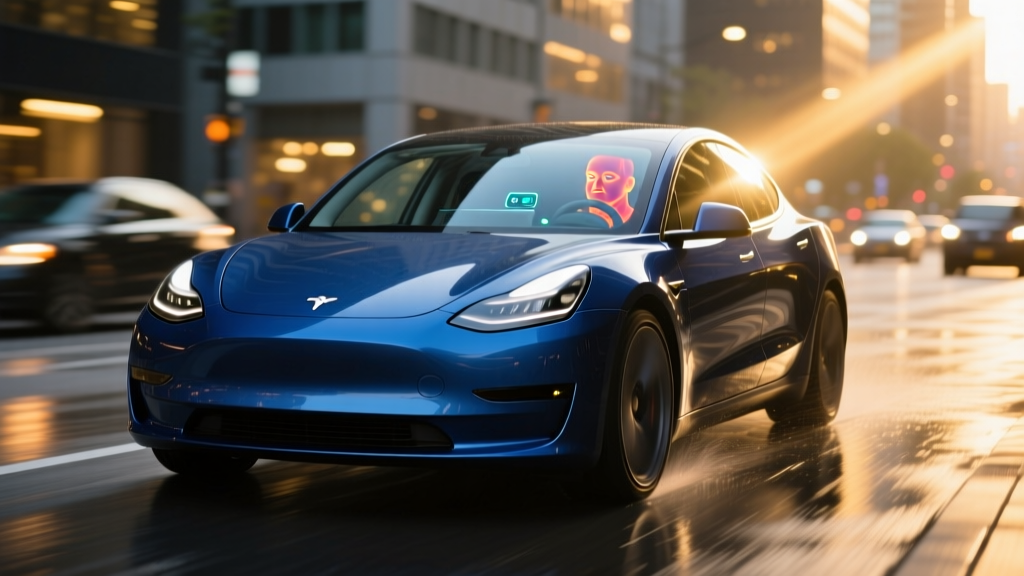
Research highlighted by the Insurance Institute for Highway Safety (IIHS) indicates that drivers using continuous LCA systems are significantly more prone to visual and manual distraction. To counteract this data-driven reality, modern LCA systems are increasingly being paired with infrared Driver Monitoring Systems (DMS). While an LKA system might rely on simple steering wheel torque sensors to ensure the driver's hands are present, a robust LCA system requires eye-tracking cameras to verify that the driver's gaze remains directed at the road ahead. When evaluating vehicles, buyers should prioritize LCA systems that include DMS, as the continuous nature of the steering assist demands a higher tier of driver accountability.
Conclusion: Choosing the Right Lateral Control
The distinction between Lane Keep Assist and Lane Centering Assist is not merely semantic; it is a fundamental difference in software logic, sensor utilization, and driver experience. LKA is a vital, reactive safety net designed to prevent catastrophic road departures, operating on strict TTLD thresholds. LCA is a proactive, continuous comfort and convenience feature that reduces driver fatigue on long highway journeys by managing lateral acceleration and steering torque in real-time.
For urban commuters dealing with faded lines and erratic traffic, a robust LKA system may be sufficient and less intrusive. However, for frequent highway travelers and long-distance EV road-trippers, a high-fidelity LCA system—supported by sensor fusion and infrared driver monitoring—represents a vastly superior investment in both comfort and active safety. By understanding the data behind the steering wheel, consumers can look past the marketing jargon and select the ADAS architecture that truly aligns with their driving needs.